
Add ₹999 more to unlock FREE SHIPPING!
Your sacred cart is currently empty.
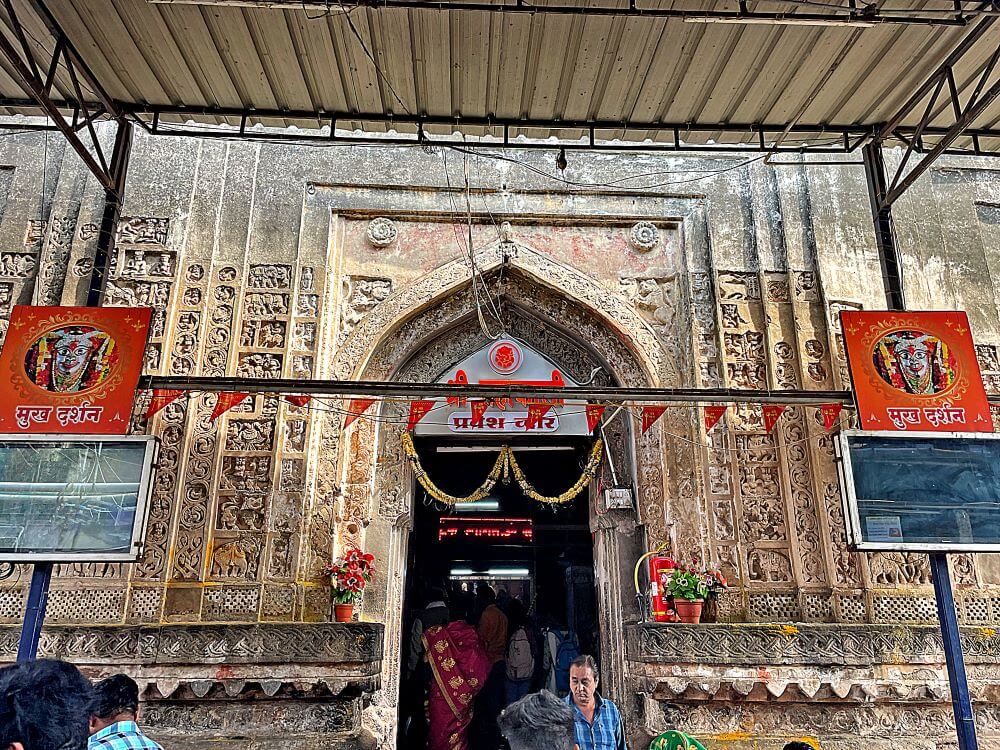
Shop Photo FramesThe ancient Mahakali Devi Temple in Chandrapur city is considered one of the most important Shakti Peethas in Vidarbha. As the presiding deity (Gramadevata) of the city, Goddess Mahakali is the focal point of faith for millions of devotees. It is said that this temple was built in the sixteenth century by the Gond King Ballarshah and Queen Hiratani. The sculptural art on the walls of the Mahakali Devi Temple showcases a beautiful blend of Tibetan and Hindu traditions. Every Tuesday, the temple premises take on the vibrant atmosphere of a fair.
Anchleshwar Mahadev and the Mahakali Temple are the prominent temples in Chandrapur. Historically and mythologically, both these temples are interlinked. According to a legend, where the city of Chandrapur stands today was once a dense forest. This region was then ruled by the Gond dynasty, with King Ballarshah on the throne. The king was afflicted with numerous wounds on his body, locally known as “Khanduk,” which earned him the name “Khandkya Ballarshah.” One day, while on a hunt, the king came to the vicinity of the Jhrapat River here and noticed a water-filled reservoir in the dry riverbed. After drinking the water from this reservoir, he also applied it to his face. Upon returning to the palace in the evening, Queen Hiratani noticed that the wounds on the king’s face had healed and the wounds on his body had significantly reduced.
The king realized that drinking and applying the water from the reservoir on the riverbank had cured his wounds. The next day, accompanied by the queen, the king went there and bathed in that reservoir, upon which he was completely cured. Recognizing that the water possessed miraculous healing properties, the king and queen had the surrounding forest cleared. While cleaning the area, a short distance to the south of the reservoir, the king discovered an underground cave containing an idol of Mahakali carved in rock. The king had the cave cleaned and built a temple dedicated to Mahadeva (today’s Anchleshwar Temple) at the site of the reservoir and a temple dedicated to Mahaki at the site of the cave. Considering the reign of this king, both these temples must have been built between 1495 and 1497. Later, Queen Hirai, the wife of King Virshah who ascended the Gond imperial throne, carried out the restoration and renovation of these temples. To commemorate the valiant King Virshah, Queen Hirai initiated the tradition of holding a festival at the Mahakali Temple on Chaitra Paurnima, a practice that continues to this day. The queen also built a temple dedicated to Goddess Ekvira near the Mahakali Temple. The queen’s reign spanned from 1704 to 1719, suggesting that the restoration of these temples likely took place in the early eighteenth century.
According to another legend, in the Treta Yuga, in place of Chandrapur city, there was a large city named “Lokpur” . King Kritadhwaj of that place had a son named Sunand. The Goddess appeared to him in a dream and instructed him to excavate a specific location, whereupon he beheld a magnificent idol of Mahakali situated on a slab inside a cave. He carved a grotto out of the stone and consecrated the idol right there. Later, Parashurama destroyed many kingdoms in his quest to rid the earth of the Kshatriya warrior class, and the kingdom of Lokpur was also destroyed in the process. It is said that the idol of Mahakali and its site discovered by King Khandkya Ballarshah are the very same.
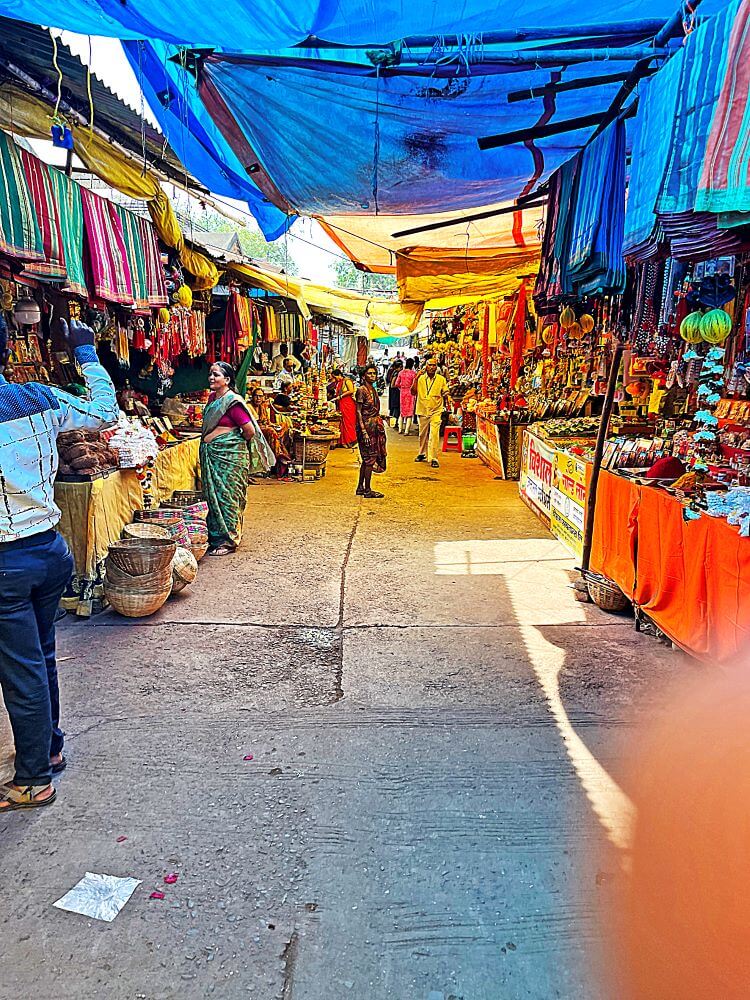
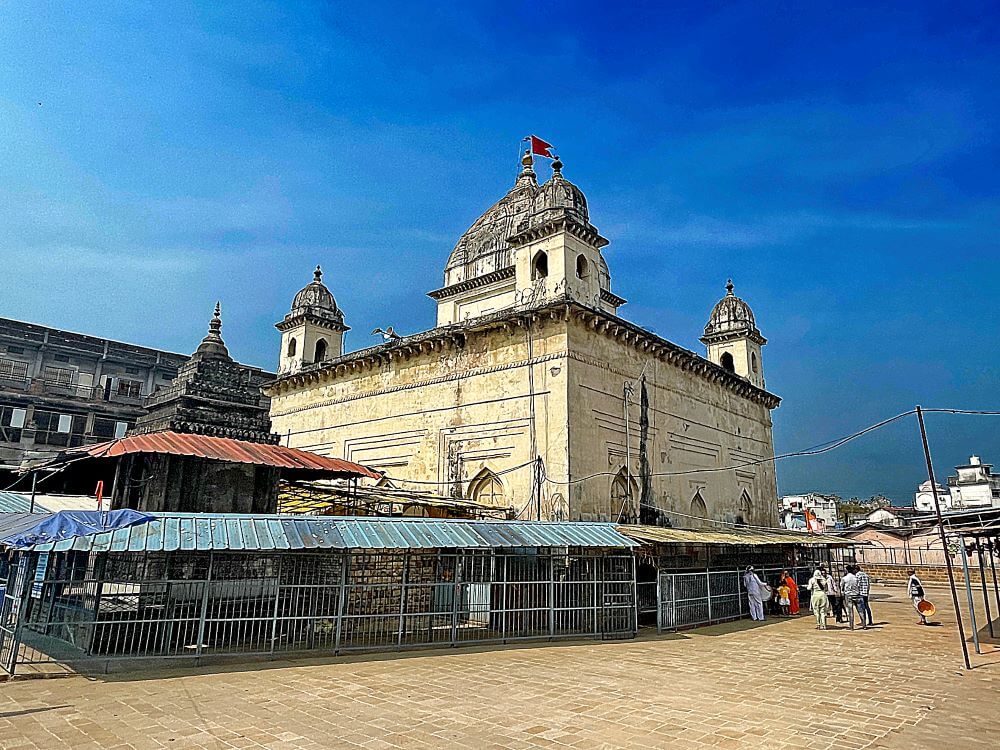
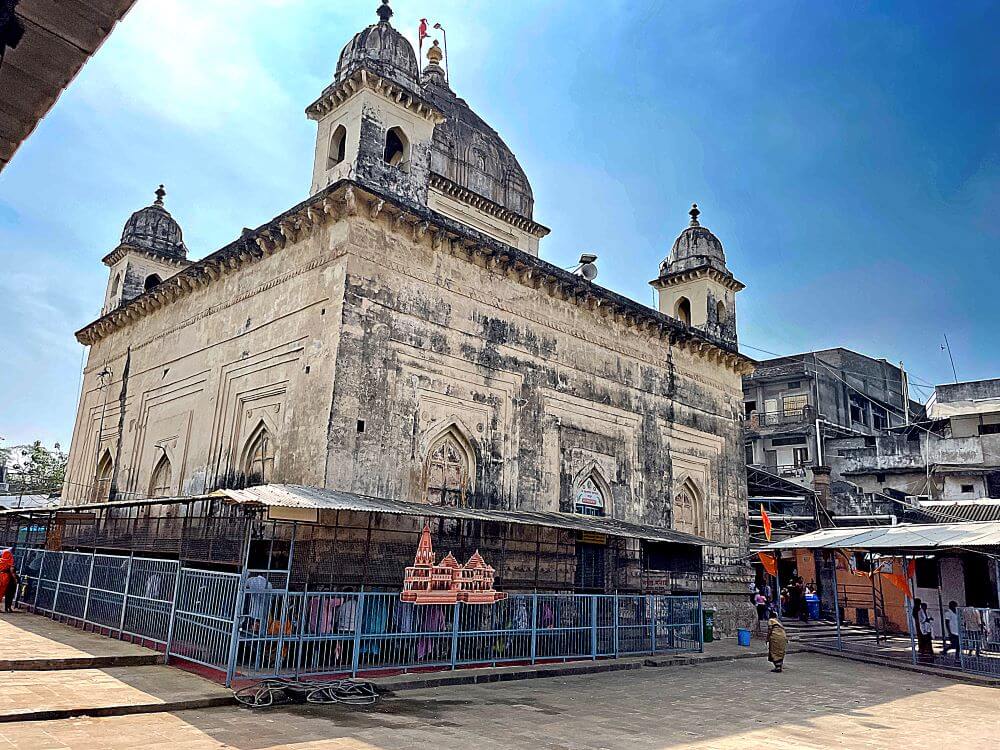
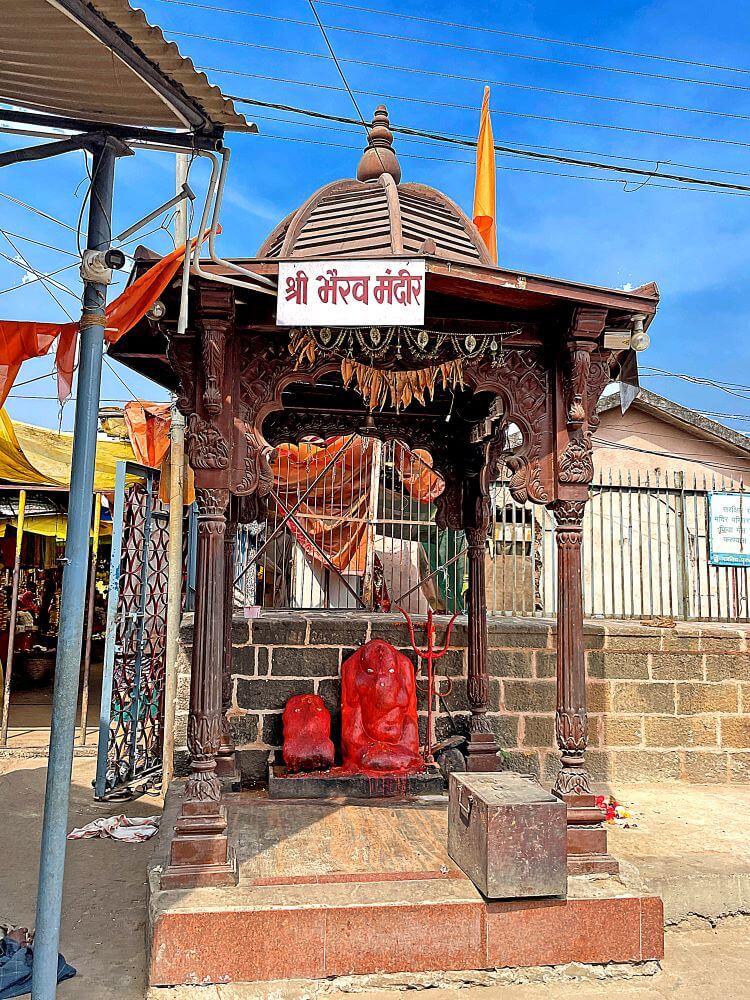
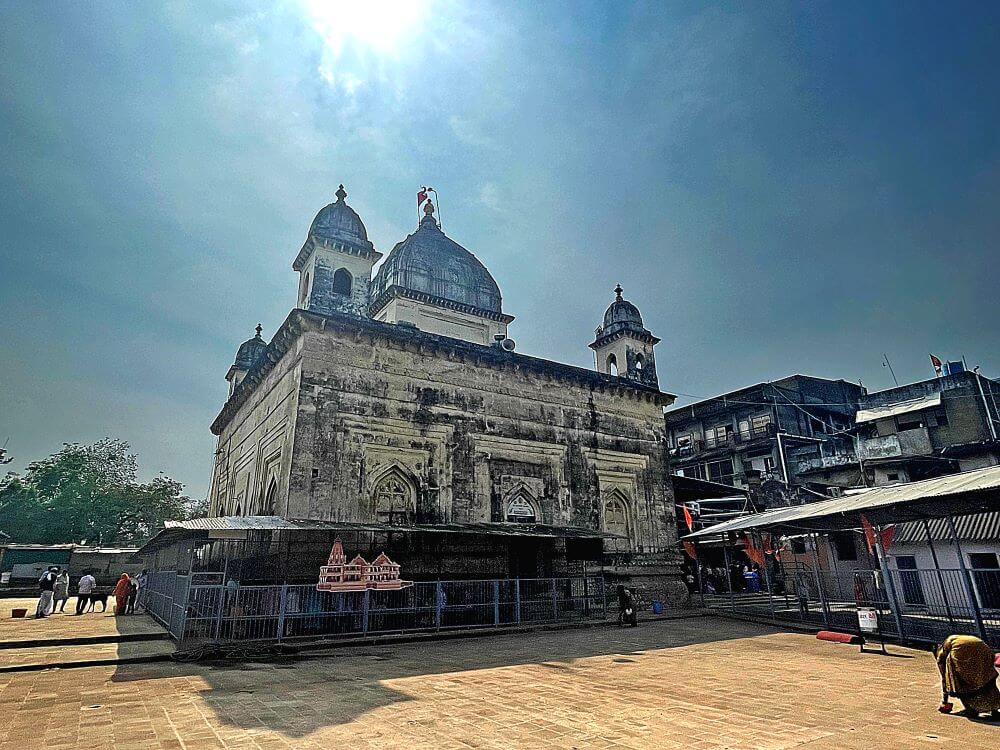
The Mahakali Devi Temple is situated in the central part of Chandrapur city. The temple is surrounded by a fortification wall, which records indicate was built by Superintendent Captain Pitt during the British regime. There are 2 entrance gates in the fortification wall to access the temple. Around these entrance gates, there are about 100 to 150 permanent shops selling worship materials. Furthermore, during the festival season, the number of these shops doubles. Within the temple courtyard, there are shrines dedicated to Sri Ganesha, Shani Dev, and Lord Hanuman. The Mahakali Devi Temple is square in architectural design, and this entire stone temple is approximately 50 feet in height. The temple’s architecture bears the distinct imprint of the Mughal style. Atop the temple, there are 4 domes at the 4 corners and 1 large dome in the center. Descending 8 to 10 steps from the assembly hall (Sabhamandapa) leads to a cave-like stone hall, in the center of which rests the vermilion-anointed idol of Mahakali. This idol is 5 feet tall and carved from a single, unbroken piece of stone. The Goddess wears a crown on her head, a silver mask on her face, and holds a sword in one hand and a shield in the other. Directly in front of the idol, in the open space of the sanctum sanctorum (Garbhagriha), is a Shiva Linga.
The Navaratri festival is celebrated here following Ghatasthapana from the day of Ashwin Shukla Pratipada. This festival is also observed with prayers and rituals at the Ekvira Devi Temple during this period; however, the Navaratri festival commencing from Chaitra Shuddha Pratipada and the grand fair held during that time are considered the most significant festival in Chandrapur. Alongside Vidarbha, millions of devotees—especially members of the Gond community—participate in this fair from Nanded, Parbhani, Bidar, and Yavatmal in Marathwada, as well as from Chhattisgarh and Andhra Pradesh.
Regarding the large influx of devotees arriving from Nanded during the fair here, a legend is narrated. Hundreds of years ago, Rajabai Devkarin, a devout worshipper of the primordial divine energy (Adishakti) from Talegaon Umri in Nanded district, received a divine vision in a dream where the Goddess stated, “I am in Chandrapur.” Consequently, Rajabai, accompanied by hundreds of devotees, came to have the divine darshan of the Goddess. Since then, the tradition of the people of Nanded undertaking a pilgrimage to the Mahakali Temple in Chandrapur has commenced. Devotees arrive here in large numbers via private vehicles, buses, trains, and even freight train carriages.
The priests of this temple were provided with a regular honorarium system dating back to the Bhonsle era. This arrangement was continued during the British colonial period and remains a tradition to this day. The temple trust has made provisions here for pilgrim accommodation facilities, a Mahaprasadalaya, and a hospital.
This sacred temple stands as a testament to deep spiritual devotion, ancient architectural grandeur, and rich local cultural traditions.
The sanctum sanctorum houses the divine idol consecrated according to ancient Vedic traditions, surrounded by serene courtyards and traditional temple architecture.
Navratri, Maha Shivratri, Annual Temple Jatra & Deepotsav
Compare and book flights, secure top-rated local hotels near the temple, hire reliable guides, and rent cars instantly.
Extend your pilgrimage by visiting other highly sacred temples located nearby.


Add ₹999 more to unlock FREE SHIPPING!
Your sacred cart is currently empty.
Shop Photo FramesFill in your delivery details below to place your order.
Add comment