
Add ₹999 more to unlock FREE SHIPPING!
Your sacred cart is currently empty.
Shop Photo FramesMallikarjuna is considered the second of the twelve Jyotirlingas. It is situated on the Srisailam mountain in the Kurnool district of Andhra Pradesh. This temple has a connection with Maharashtra in many ways. The Krishna River, on whose banks the temple stands, originates at Mahabaleshwar in Maharashtra. The construction of the gopuram of this second-century temple was carried out in the year 1667 by Chhatrapati Shivaji Maharaj, the revered deity of Maharashtra. It is said that, pleased by the devotion of a devotee from Maharashtra, the deity established himself in the form of a replica at Achler in the Dharashiv district. Devotees believe that the awakened deity here grants their prayers.
This temple is said to date back to the twelfth century. Looking at the stone construction in the Hemadpanti architectural style and the intricate carvings, one is convinced of the temple’s antiquity, although no written evidence is available. The legend of the temple states that a supreme devotee of Lord Mallikarjuna from this village used to regularly visit Srisailam in Andhra Pradesh for the darshan of the Lord. Later, due to old age, it became impossible for him to travel to Srisailam, and he prayed for the Lord to come to his village. According to the devotee’s plea, the Lord himself came and established himself at this place, and subsequently, the temple was built.
The first welcome arch of the temple is on the road leading to the temple, located at some distance from the village. On the cornice of the arch, there are two Nandi sculptures on both sides and a sculpture of Lord Mallikarjuna in the center. The road leads from here to the temple. At some distance from the temple, on both sides of the road, there are two stone platforms with circular lamp towers (deepmalas) on them. There is a spacious parking lot in front of the temple. A short distance from the parking lot is a tall, square observation tower. It is said that there used to be a nagarkhana (drum house) on this tower. Next to the tower is an ancient stone temple of a local deity. This temple has a pyramid-like shikhara with descending steps.
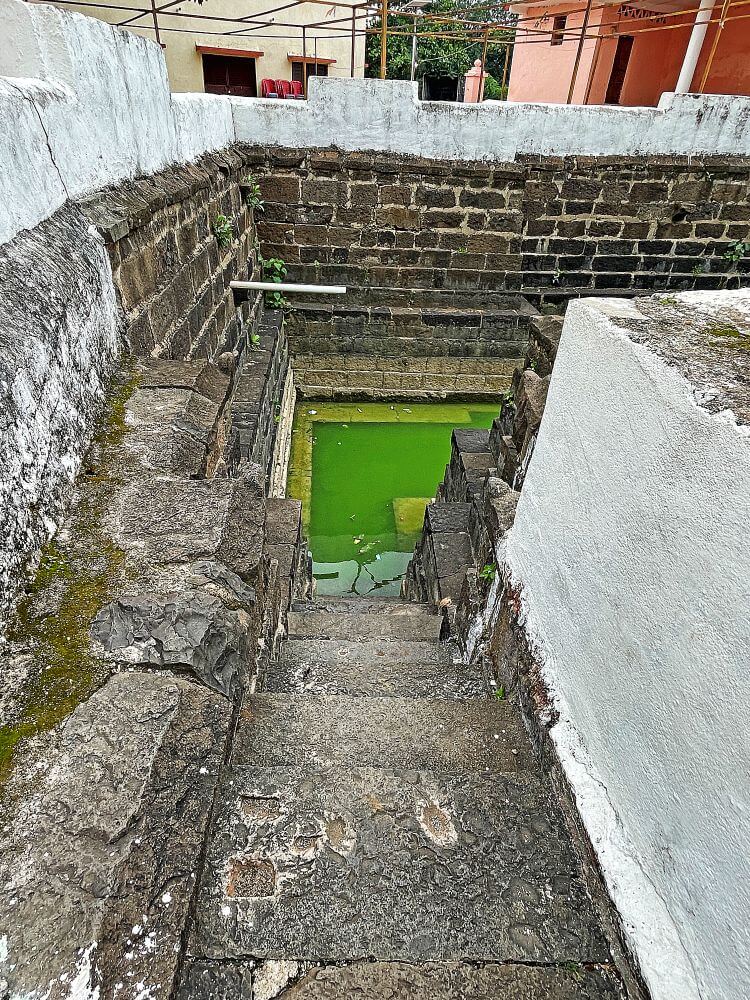
The paver-block-covered courtyard of the temple is about ten to twelve feet below the road level, and there are two stairways to descend. The old stairway has one-foot-high steps built of carved stone. To the right of this stairway is a new stairway. The steps here are lower and wider, making it easier to climb up and down. The courtyard is surrounded by a strong fortification. In the courtyard, there are two stone-carved lamp towers and an ancient well. There are steps to descend into this well. Near the parapet of the well, there is a six-foot-tall brass trident and an octagonal Tulsi Vrindavan next to it.
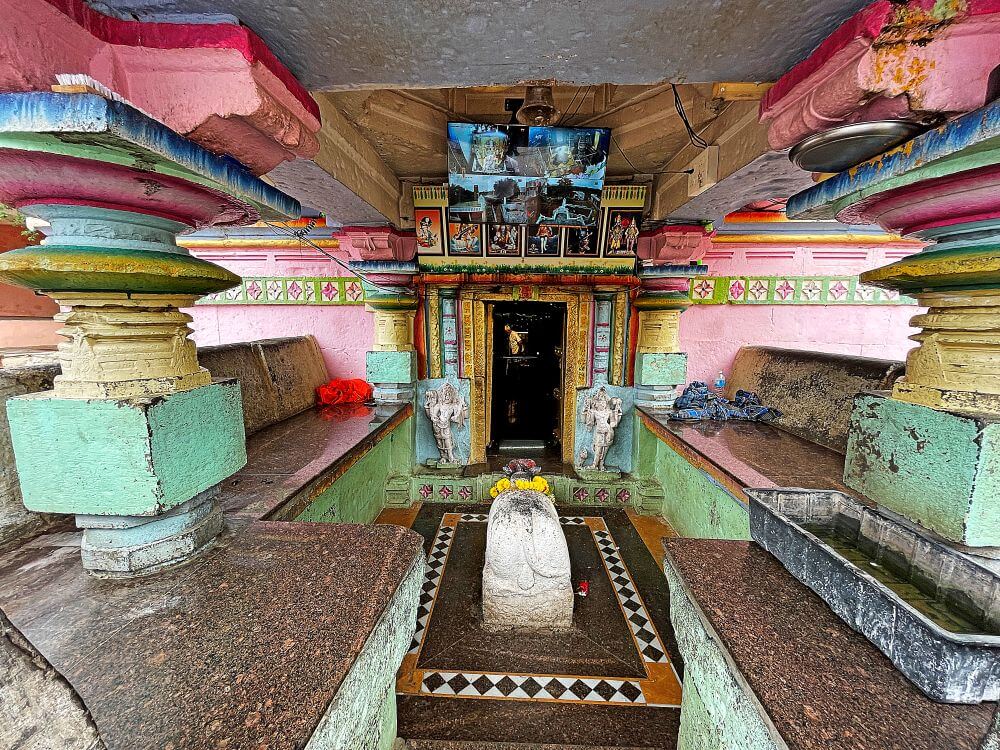
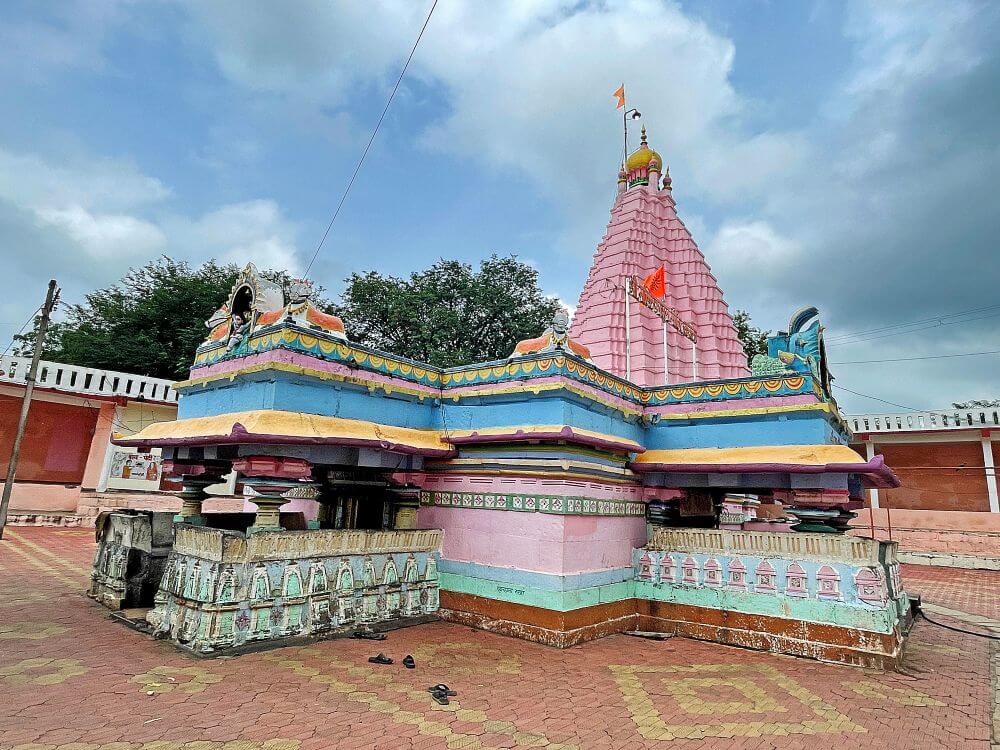
The temple structure consists of three entrance halls (mukhamandapas), a main assembly hall (sabhamandapa), an antarala (vestibule), and the sanctum sanctorum (garbhagriha). There are entrance halls on the front, left, and right sides of the assembly hall. Each entrance hall has railings on three sides. There are stone benches for devotees to sit in the entrance halls. In the front entrance hall, facing the entrance of the assembly hall, there is a Nandi on a pedestal. On the door frames of the assembly hall, there are carvings of leaves, flowers, and pillars, with an image of Lord Ganesha on the lintel. The arch above the upper section features shikhara sculptures. On both sides of the entrance, there are Bhairava gatekeeper sculptures holding a trident and a damaru. There is a carved stone threshold.
The enclosed assembly hall has four rows of four ornate pillars. The outer pillars are embedded in the walls. All pillars stand on square bases. The lower part of the pillar shafts, about two feet high, is square, while the upper part features various geometric shapes such as hexagonal, octagonal, dodecagonal, and circular. These are intricately carved. On the octagonal ceiling here, there are circular patterns in the center. There is a brass tortoise on the floor of the assembly hall. A queue system has been arranged for the convenience of devotees. There are two more doors on the right and left sides of the assembly hall.
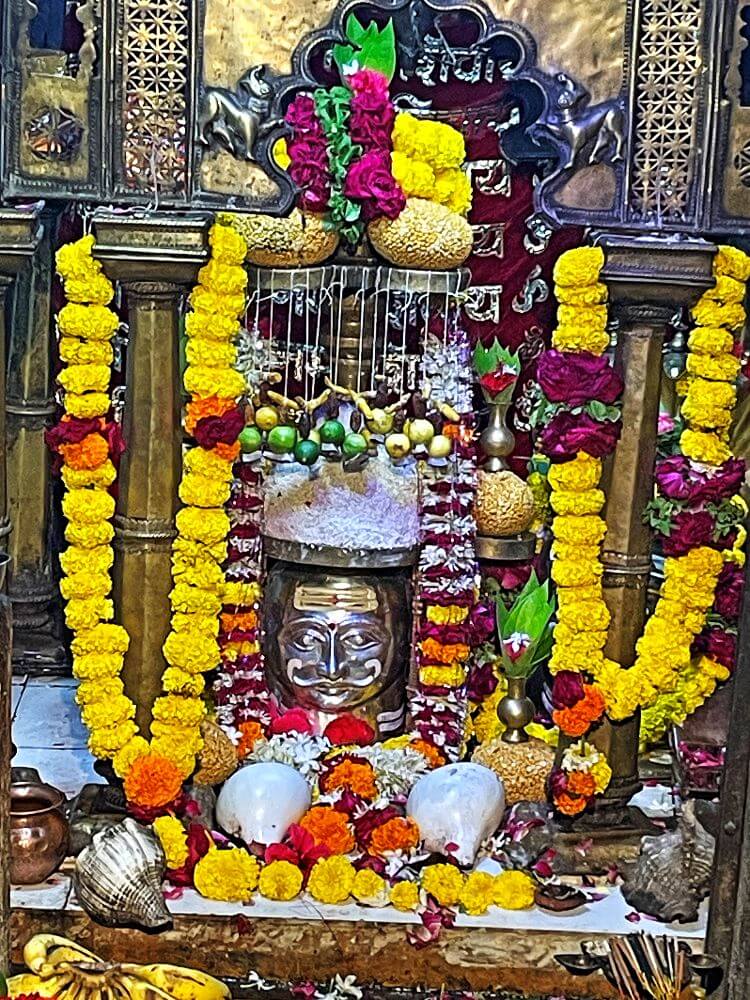
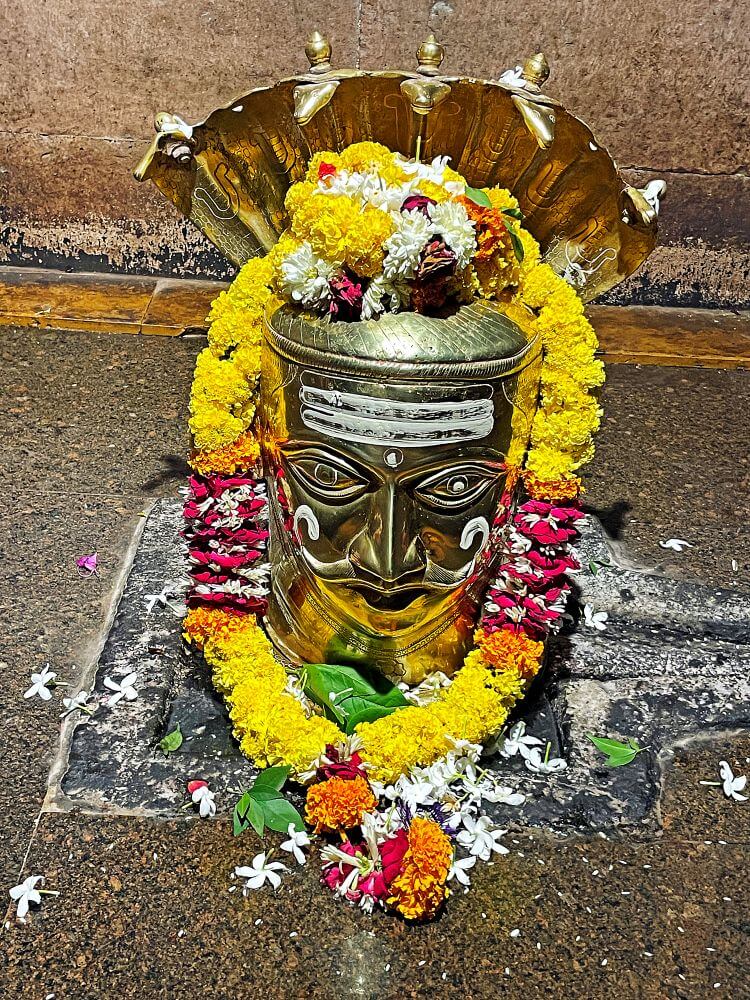
On both sides of the entrance to the vestibule, there are ornate windows. The entrance features carvings of leaves, flowers, and pillars. There is an image of Lord Ganesha on the lintel and shikhara sculptures in the arch. There is a moonstone (chandrashila) at the threshold. On both sides of the entrance, there are gatekeeper sculptures. Further, the entrance to the sanctum sanctorum has five door frames with various carvings. There are arches on the pillar frames with shikhara sculptures. On both sides of the entrance, there are gatekeeper sculptures. Inside the sanctum, there are idols of Mahadeva and Parvati in the form of Mallikarjuna, along with silver masks, placed in a brass shrine on a pedestal.
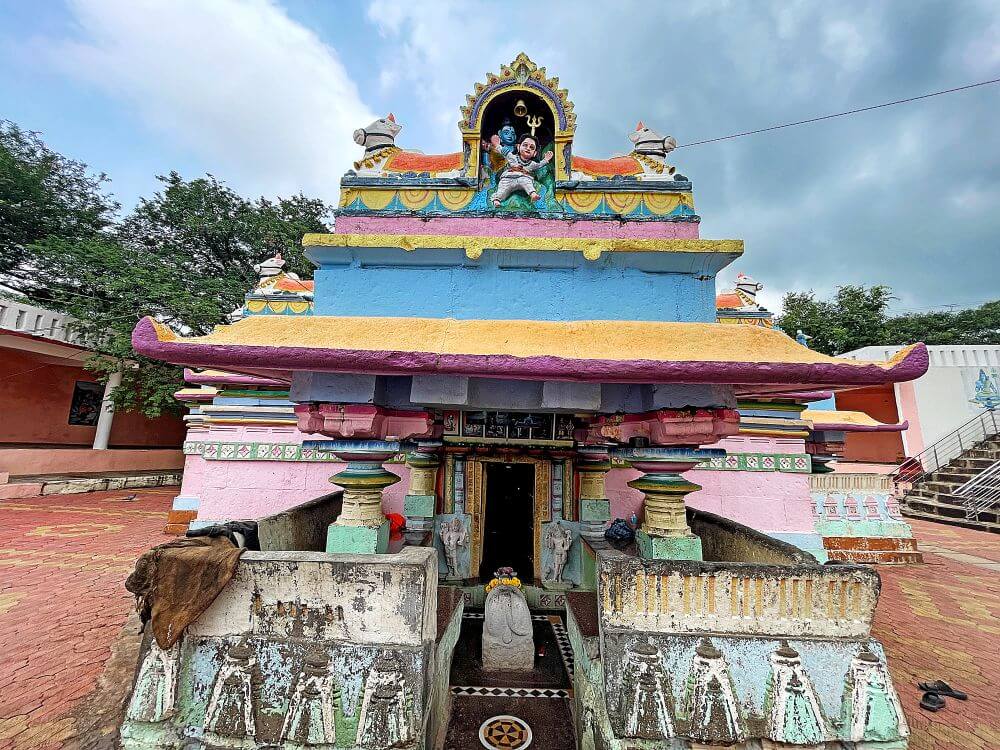
There is a circumambulation path (pradakshina marg) around the exterior of the temple. On the outer walls, there is a floral band in the center. In the niches on the outer walls of the sanctum, there are ancient idols of local deities. The roof of the temple has safety railings on all four sides, with Nandi sculptures at each corner of the railing. On the roof of the entrance hall, in a niche within the railing, there is an idol of Mahadeva. Below Mahadeva, there is a sculpture of a small baby leaping downwards. During the festival, there is a tradition of dropping small babies from the roof to be caught below. This sculpture symbolizes that tradition. On both sides of this niche, there are Nandi sculptures on the railings.
In the temple courtyard, there is a two-story building for a cultural hall. On the second floor, there is a pilgrim residence (bhaktanivas) for the convenience of devotees. Near the temple, there is a wrestling arena. Wrestling competitions are held here during the festival.
The annual temple fair begins on Phalguna Amavasya and lasts for five consecutive days. On Phalguna Amavasya, the Nandi palanquin procession of the deity takes place. The deity is taken in a procession to the village monastery and returns to the temple on the second day, which is Padwa. On the third day, the ‘Kavad’ of five rivers arrives, and the deity is anointed with the five holy waters. Coconut pieces are showered upon the deity. On the fourth day of the festival, wrestling competitions are held. Wrestlers from all over the district come to participate in these matches. During the festival, programs such as bhajans, kirtans, music, entertainment, and Mahaprasad are organized in the temple. Thousands of devotees from states like Maharashtra, Karnataka, Andhra Pradesh, and Telangana come here for the darshan of the deity and to fulfill their vows.
This sacred temple stands as a testament to deep spiritual devotion, ancient architectural grandeur, and rich local cultural traditions.
The sanctum sanctorum houses the divine idol consecrated according to ancient Vedic traditions, surrounded by serene courtyards and traditional temple architecture.
Navratri, Maha Shivratri, Annual Temple Jatra & Deepotsav
Compare and book flights, secure top-rated local hotels near the temple, hire reliable guides, and rent cars instantly.
Extend your pilgrimage by visiting other highly sacred temples located nearby.

Add ₹999 more to unlock FREE SHIPPING!
Your sacred cart is currently empty.
Shop Photo FramesFill in your delivery details below to place your order.
Add comment