
Add ₹999 more to unlock FREE SHIPPING!
Your sacred cart is currently empty.
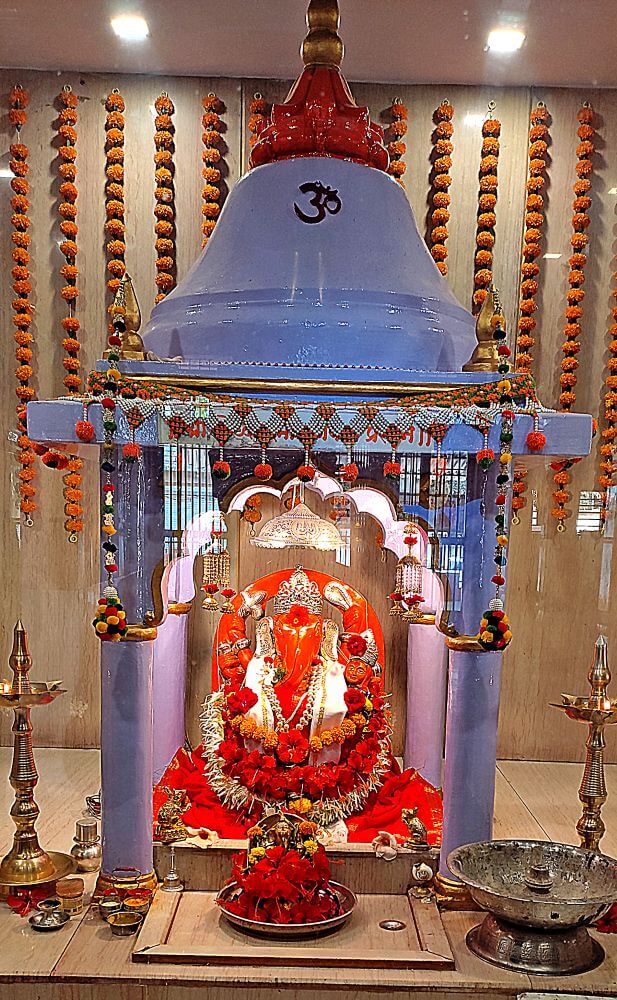
Shop Photo FramesThe village of Jambhulpada in Sudhagad taluka is situated midway between Mahad and Pali, two of the Ashtavinayak pilgrimage sites. The Peshwa-era Siddhalakshmi Mahaganapati temple here is renowned. The idol of Lord Ganesha in this temple, a place of faith for thousands of devotees, is rare, featuring a trunk turned to the right and ten arms. It is believed that the rituals and purity protocols for a right-trunked Ganesha are extremely strict. However, the villagers firmly believe that this right-trunked Ganesha, the presiding deity of Jambhulpada, is compassionate and that his divine blessings remain upon the village.
Jambulpada is a village located slightly off the Pali-Khopoli road. The temple of Siddhalakshmi Mahaganapati is situated in the heart of this village. In the past, this region was a part of the Bhor princely state. During that era, this was the private temple of Govindrao Dixit, and it has been renowned ever since. Jambulpada village gained prominence due to the devastating flood that occurred on 24 July 1989. As the Amba River, which flows through the village, assumed a fierce form, almost the entire village was washed away. Following this massive flood, which claimed the lives of more than 100 villagers, the Siddhalakshmi Mahaganapati temple played a significant role in the rehabilitation of the devastated village.
This temple also suffered damage in the great flood. All the walls of the temple were washed away, and large logs were carried down by the river. Even in such a situation, the pedestal and the idol of Ganpati remained completely untouched. This single incident doubled the villagers’ faith in this Ganpati, and through this very temple, the village stood up again after a few days. Following the flood, under the initiative of Nana Bodas, the then-chairman of the temple’s board of trustees, the villagers collected donations of 40 lakh rupees for this temple. From that amount, the silt in the Amba River was dredged. The mouth of the river was widened to make the water’s path more spacious. To prevent water from entering the village directly, a check dam was built along the riverbank. Apart from this, the government aid received was managed properly, and the village was rebuilt. Therefore, the village that was devastated by the flood and subsequently rebuilt, in this, the temple Became an important link.
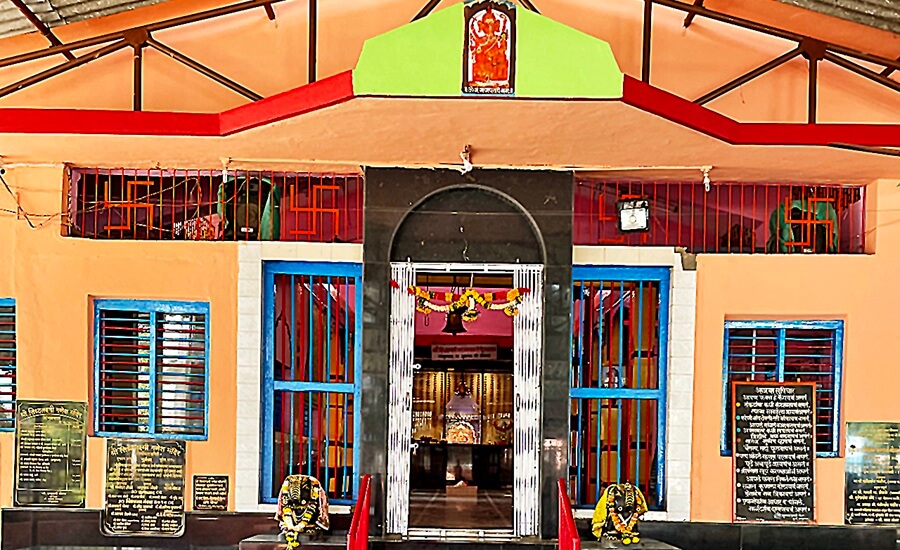
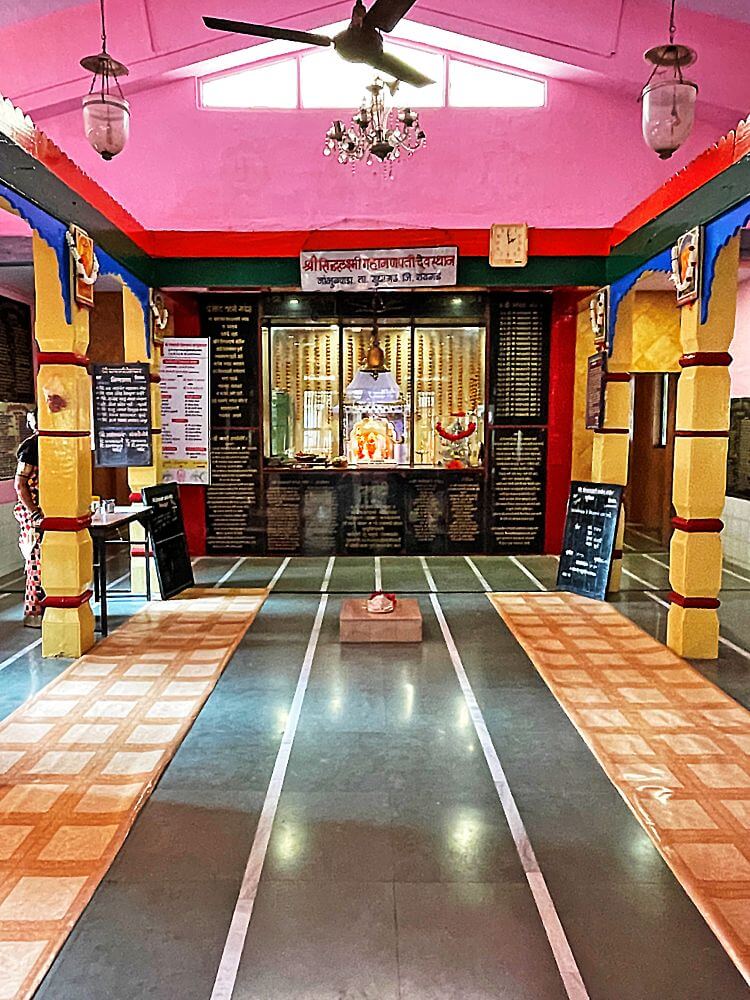
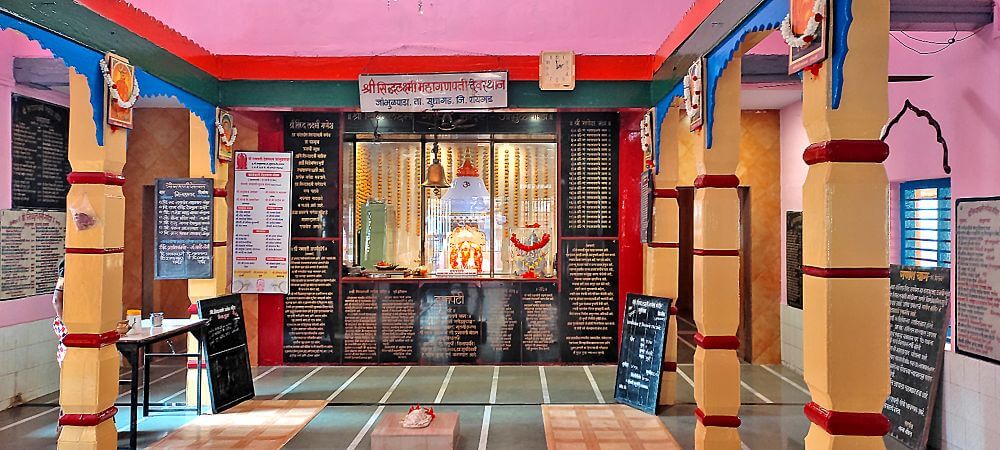
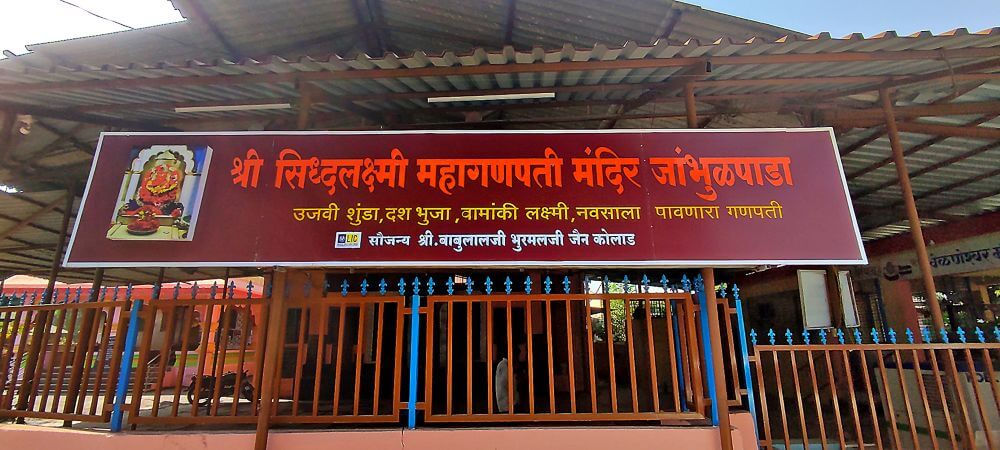
In front of this temple, which is adjacent to the road, there is an open pavilion. For the convenience of the devotees, a corrugated metal shed has been installed over it. In this pavilion, directly opposite the temple entrance, is the sacrificial fire pit (Havan Kund). The temple is situated at a slight elevation from the ground, and there are five steps to enter it. On the platforms on both sides of this stairway, there are sculptures of elephants. Above the lintel at the entrance, there is an idol of Lord Ganesha. From here, one enters the main assembly hall (Sabhamandap). The temple is structured with an assembly hall, a circumambulatory path (Pradakshina Marg), and the inner sanctum (Garbhagriha). All the pillars in the enclosed assembly hall are connected to each other. They are connected by arched gateways. The pillars in this assembly hall feature images of the Ashtavinayakas. In the assembly hall, directly in front of the sanctum sanctorum, there is a tortoise idol on the floor.
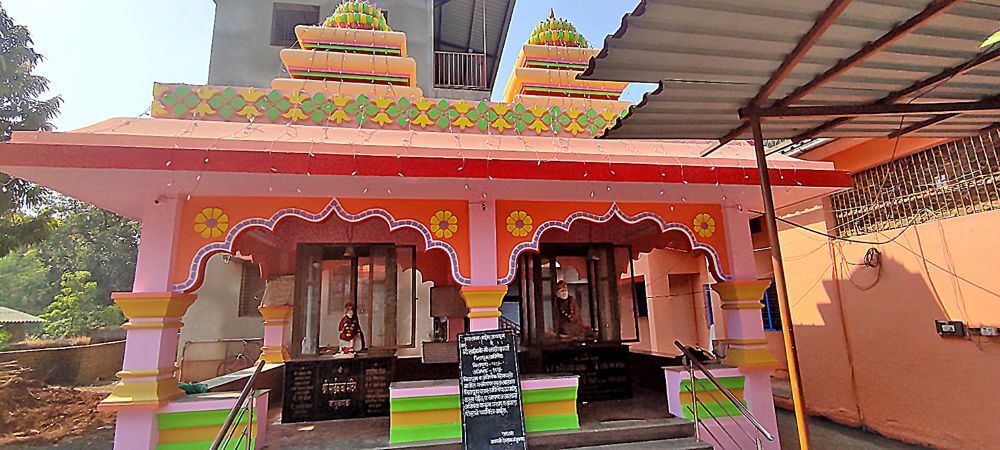
In the sanctum sanctorum, the serene idol of Siddhalakshmi Mahaganapati is enshrined within a small altar placed upon a Vajrapitha. In this form of Ganapati, who has his trunk turned to the right, Siddhalakshmi is seated upon his left thigh. Siddhalakshmi is the Goddess of Wealth. It is believed that this deity grants the desired fruits to her devotees. Due to this, the name of this Ganapati is Siddhalakshmi Mahaganapati. This is a Dashabhuja, meaning a ten-armed Ganapati, and each of his hands holds a weapon. According to mythological information, the Heramba, Uchchhishta, and Vallabha forms of Ganesha are ten-armed. Of these, four hands are considered to be Ganesha’s, while the remaining six hands are believed to belong to Brahma, Vishnu, and Mahesh. It is said that such an idol is rare in Maharashtra. Within the temple premises, there are small shrines dedicated to Saibaba, Swami Samarth, and Velaneshwar. Apart from this, there is also a Mangal Karyalaya (wedding hall) here. It is made available at a nominal fee for various functions to the tribal people from the surrounding villages.
Every year, a grand festival is held here on Maghi Ganesh Jayanti. Programs such as Kirtan celebrating the birth of Lord Ganesha, the Palkhi procession, and Mahaprasad are organized. It is the firm belief of the devotees that by rocking the cradle of Bal Ganesha during the Maghi Ganesh Utsav, those without children are blessed with progeny. Apart from this, the Ganesh Utsav in the month of Bhadrapada is also celebrated here. The temple’s anniversary is celebrated every year over two days, on December 25 and 26. During this time, Ganesh Yag is performed here, followed by Mahaprasad. In addition to these festivals, the temple committee also carries out various social initiatives in the surrounding tribal hamlets. These include the distribution of educational materials to underprivileged children, health camps for villagers, cataract screenings, and the distribution of spectacles.
This sacred temple stands as a testament to deep spiritual devotion, ancient architectural grandeur, and rich local cultural traditions.
The sanctum sanctorum houses the divine idol consecrated according to ancient Vedic traditions, surrounded by serene courtyards and traditional temple architecture.
Navratri, Maha Shivratri, Annual Temple Jatra & Deepotsav
Compare and book flights, secure top-rated local hotels near the temple, hire reliable guides, and rent cars instantly.
Extend your pilgrimage by visiting other highly sacred temples located nearby.


Add ₹999 more to unlock FREE SHIPPING!
Your sacred cart is currently empty.
Shop Photo FramesFill in your delivery details below to place your order.
Add comment