
Add ₹999 more to unlock FREE SHIPPING!
Your sacred cart is currently empty.
Shop Photo FramesThe Soljai Temple, the presiding village deity of Deorukh village in Ratnagiri district, is renowned as the ‘Supreme Court’ for the surrounding villages. As the sovereign deity of 44 villages, the Soljai Devi temple is recognized as a Shaktipeeth in the Sangameshwar taluka. If devotees are dissatisfied with the divine verdict (Kaul) given by other local deities in these villages, they come to seek the Kaul of Soljai Devi. Her verdict is considered final. This temple is famous for the Lotangan Yatra held on the day of Dev Diwali. During this time, thousands of devotees perform the Lotangan (prostration) to fulfill their vows by circumambulating the temple.
Deorukh city is the headquarters of Sangameshwar taluka. According to historical records, the headquarters of Sangameshwar taluka was originally in the village of Sangameshwar itself; however, in the year 1878, all the government buildings there were gutted in a fire. At that time, the taluka headquarters was shifted to Deorukh. The taluka Panchayat Samiti office is also located in Deorukh. It is said that in ancient times, this area had many Banyan and Peepal trees, which are considered sacred trees in our culture. Therefore, this village was called the ‘Village of Sacred Trees’. Over time, this evolved into the name Deorukh. This village is mentioned in many poems from the era of Chhatrapati Shivaji Maharaj. The village is divided into three parts: Khalchi Ali, Madhli Ali, and Varchi Ali. Goddess Soljai is recognized as the presiding deity of Deorukh and the patroness of 44 surrounding villages.
The legend of the Goddess is that She appeared in a vision to a devotee from the village and said, “I am near the Bav river here. Take me from there and install me in the village.” Following the divine vision, the devotee searched the place mentioned by the Goddess and found Her idol there. Thereafter, the villagers The Goddess was wrapped in a woolen blanket and brought into the village amidst music and celebrations; a small temple was built where the current temple stands, and She was consecrated there. This sacred site of the Goddess has been renowned since the pre-Shivaji era. Raigad and Vishalgad are the nearby forts from Deorukh. Historical records indicate that Chhatrapati Shivaji Maharaj and Chhatrapati Sambhaji Maharaj frequently visited the Soljai Devi temple in Deorukh during their travels to seek Her blessings.
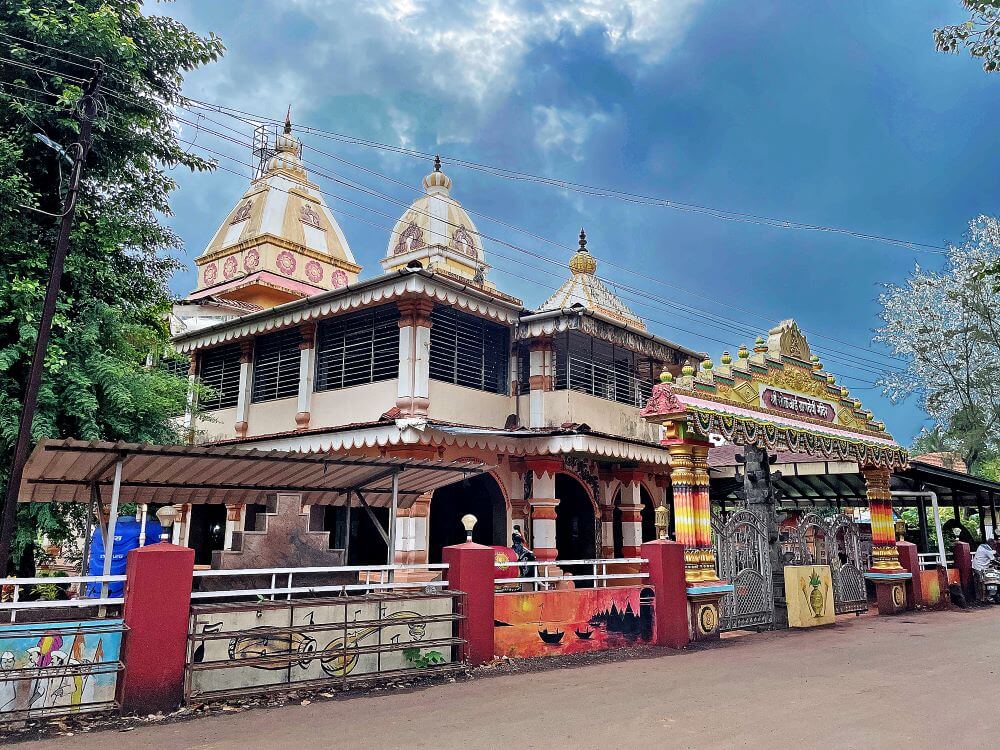
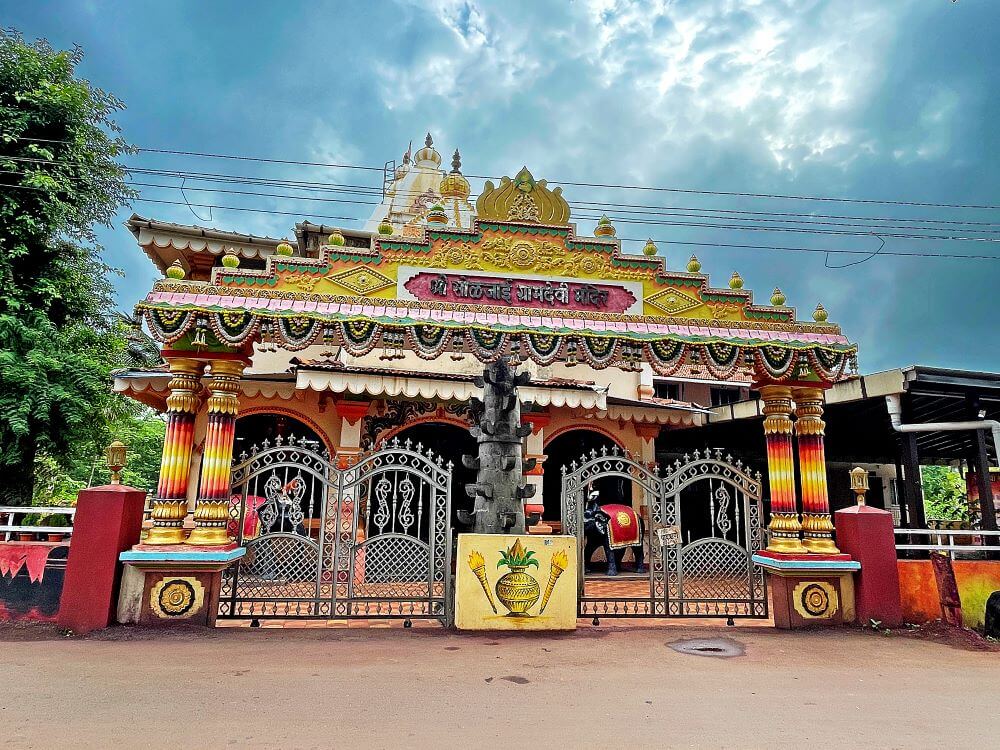
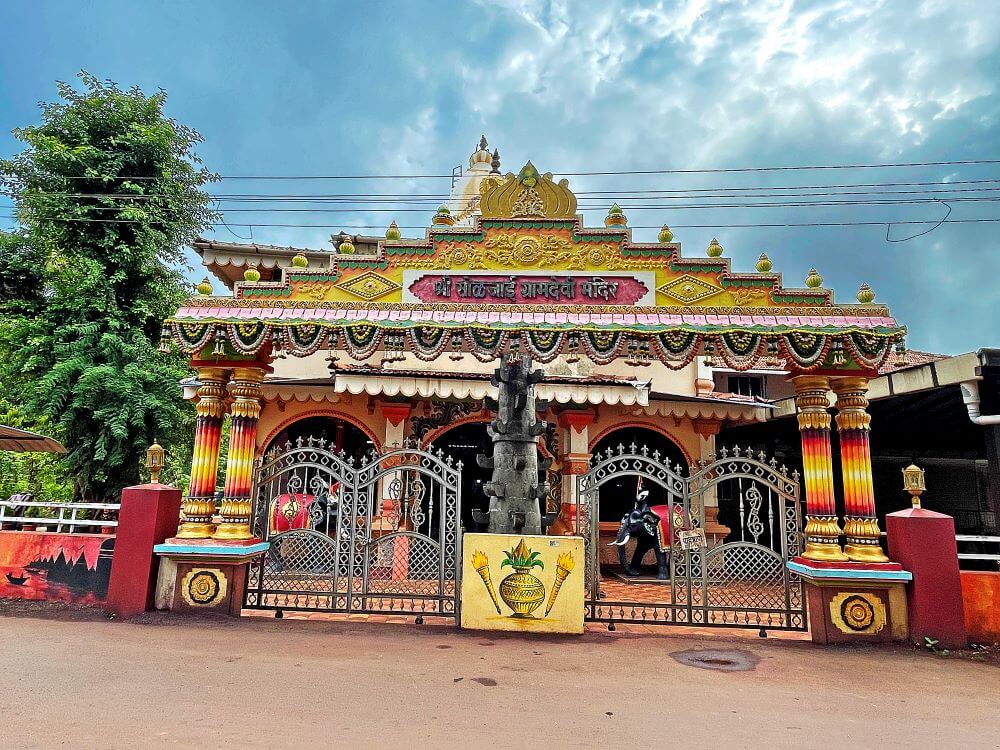
According to the temple records, in the year 1937, after a meeting of the four boundaries held by the people of the village including the Sardal, Lodh, and Devarukhkar families, the temple was renovated through voluntary labor and donations. Subsequently, after another renovation in the year 1995, the temple attained its present form. Situated in the heart of the city, the temple has been constructed in a modern and attractive style. The grandeur of the temple, its intricate craftsmanship, and its neatness are immediately striking upon viewing its exterior. Beautiful craftsmanship along the road There is an entrance gate. In the fully paved courtyard, there is a large lamp tower, a Tulsi Vrindavan, a stage for various programs, as well as a small garden with a fountain. Near a large tree in the courtyard, there are some ancient idols of gods and goddesses.
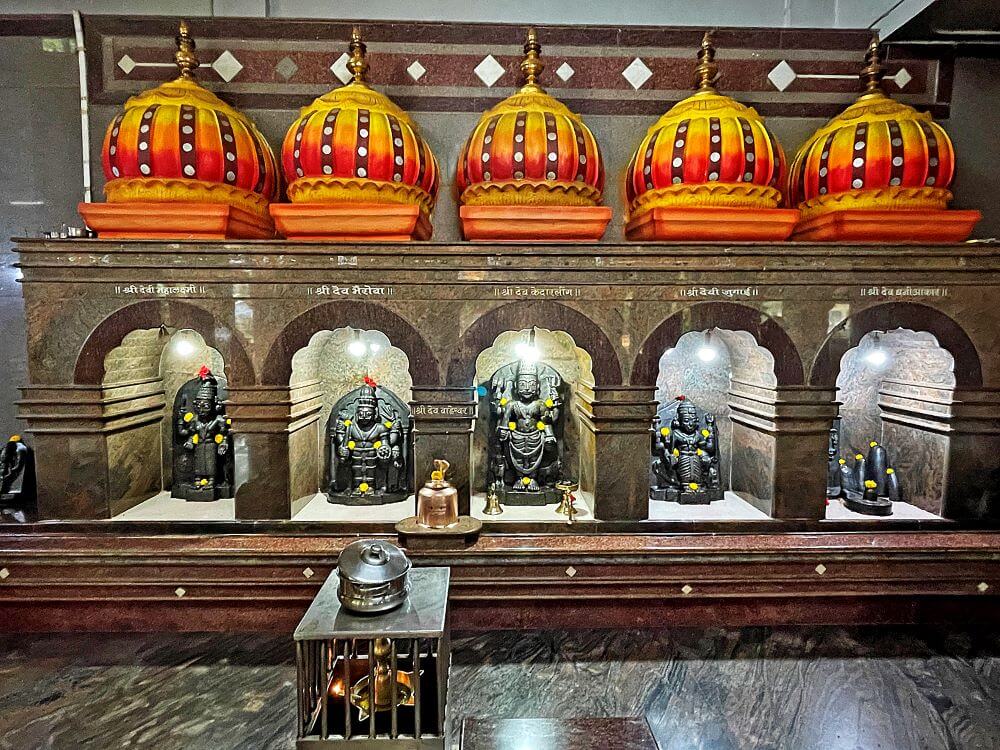
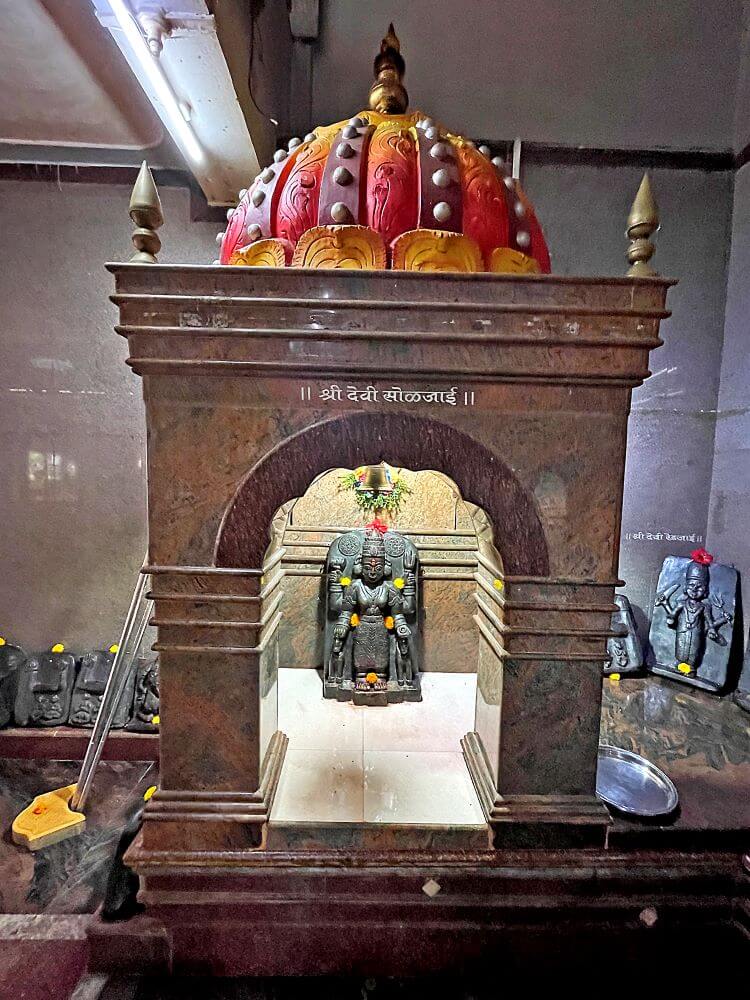
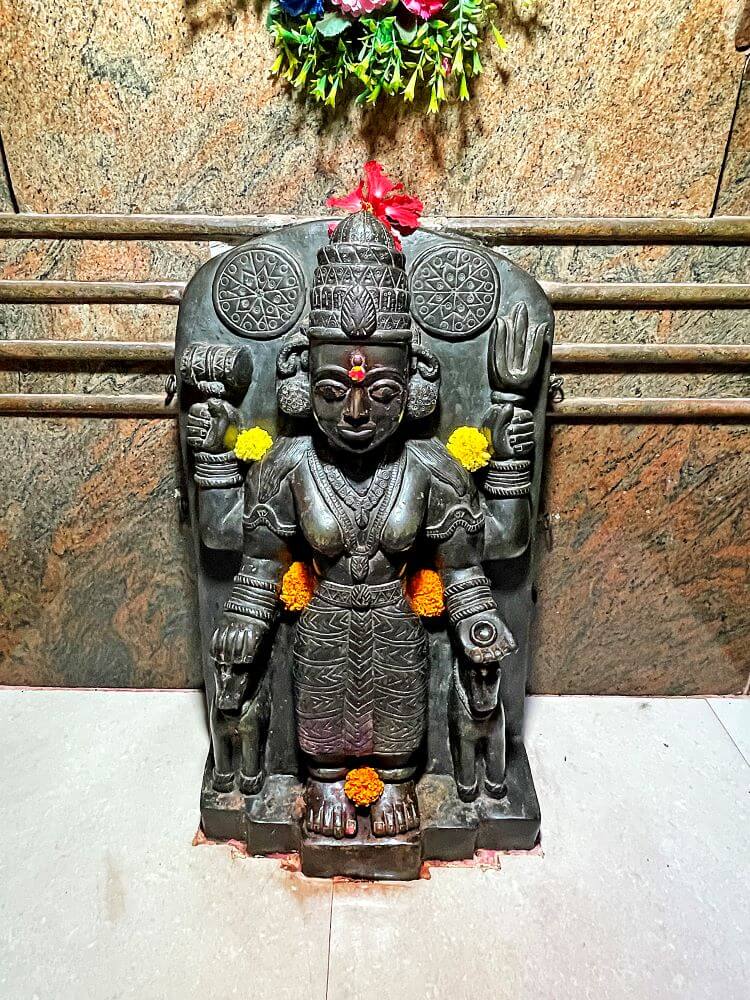
On both sides of the Darshan Mandap of the main temple, there are large sculptures of royal elephants. On the shawls upon their backs, an image of the Sun deity is carved. Mahouts holding flags are mounted upon them. Due to the painting, these sculptures of the royal elephants appear beautiful. The temple structure consists of a Darshan Mandap, a two-storied Sabha Mandap, and an open Sanctum Sanctorum. The exterior parts of the temple, including the entrance of the Sabha Mandap, feature intricate carvings. There are 18 pillars in the temple. It is said that each pillar here is named after one of the 18 honored families of the village. On the second floor of the two-storied Sabha Mandap, there is seating facility for devotees, especially for female devotees. Large glass chandeliers are installed on the ceiling of the Mandap, which enhances the beauty of this place. It opens up further. In front of the main assembly hall (Sabhamandap), there are small sanctums dedicated to Dhaniakar (Swayambhu Shankar), Jugai, Redjai, Mahalaxmi, Bhairoba, and Vadeshwar. To the left of these sanctums is the shrine of Goddess Soljai. All the idols here, including that of Goddess Soljai, are carved from single, monolithic blocks of black stone.
A grand fair is held here on Magh Vadya Panchami. Major festivals are also celebrated during Chaitra Pratipada and Navratri. The most significant festival here is the Lotangan Yatra, which takes place on Kartik Purnima, also known as Dev Diwali. On this day, after the ritualistic worship of the Goddess at dawn, Her Rupes (gold and silver masks) are adorned. Prayers are offered before the Goddess, following which the palanquin procession commences. The palanquin of the Goddess, which departs in the morning, returns directly to the temple in the evening. Devotees who have come to fulfill their vows perform Lotangan (prostrations) in the form of circumambulation in the courtyard in front of the temple. During the fair, villagers who have moved away for work or business, and women who have married into other villages, make it a point to attend.
Along with the various festivals held at the temple, the Marimay Yatra of Deorukh is one of the largest pilgrimages held in the district. To prevent the spread of disease and to protect the village from any misfortune, this Yatra is held every year on Hanuman Jayanti at the Vyadeshwar Marimay grounds near the Soljai temple. Many devotees come here to make vows and to fulfill them. A unique feature of this place is that every devotee who comes for this Yatra is served mutton and bhakri as prasad. The Shimpanotsav of the village is also famous. During the festival, a holy fire is lit at Khalchi Ali, Shivaji Chowk, Maruti Temple, Bhoiwada, Rohidas Ali, and the Soljai temple in the village.
Apart from the Soljai Temple, Deorukh is famous for its unique museum of Ganesha idols. At the Ushatai Natu Ganesha Museum here, more than two hundred small and large Ganesha idols from across the country and abroad have been collected and preserved. The place known as Chausopi is also famous in Deorukh. It is said that during the time of Chhatrapati Sambhaji Maharaj, there was a horse stable at this location, and Kavi Kalash used to oversee all the arrangements there. At a short distance from Deorukh, there are also famous holy shrines like Marleshwar, Tikleshwar, and Karneshwar.
This sacred temple stands as a testament to deep spiritual devotion, ancient architectural grandeur, and rich local cultural traditions.
The sanctum sanctorum houses the divine idol consecrated according to ancient Vedic traditions, surrounded by serene courtyards and traditional temple architecture.
Navratri, Maha Shivratri, Annual Temple Jatra & Deepotsav
Compare and book flights, secure top-rated local hotels near the temple, hire reliable guides, and rent cars instantly.
Extend your pilgrimage by visiting other highly sacred temples located nearby.


Add ₹999 more to unlock FREE SHIPPING!
Your sacred cart is currently empty.
Shop Photo FramesFill in your delivery details below to place your order.
Add comment