
Add ₹999 more to unlock FREE SHIPPING!
Your sacred cart is currently empty.
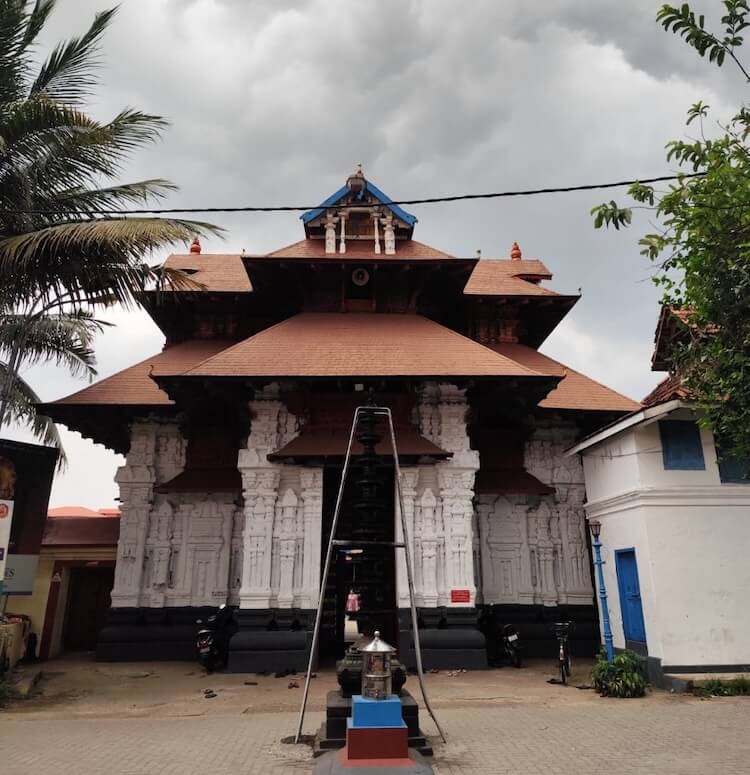
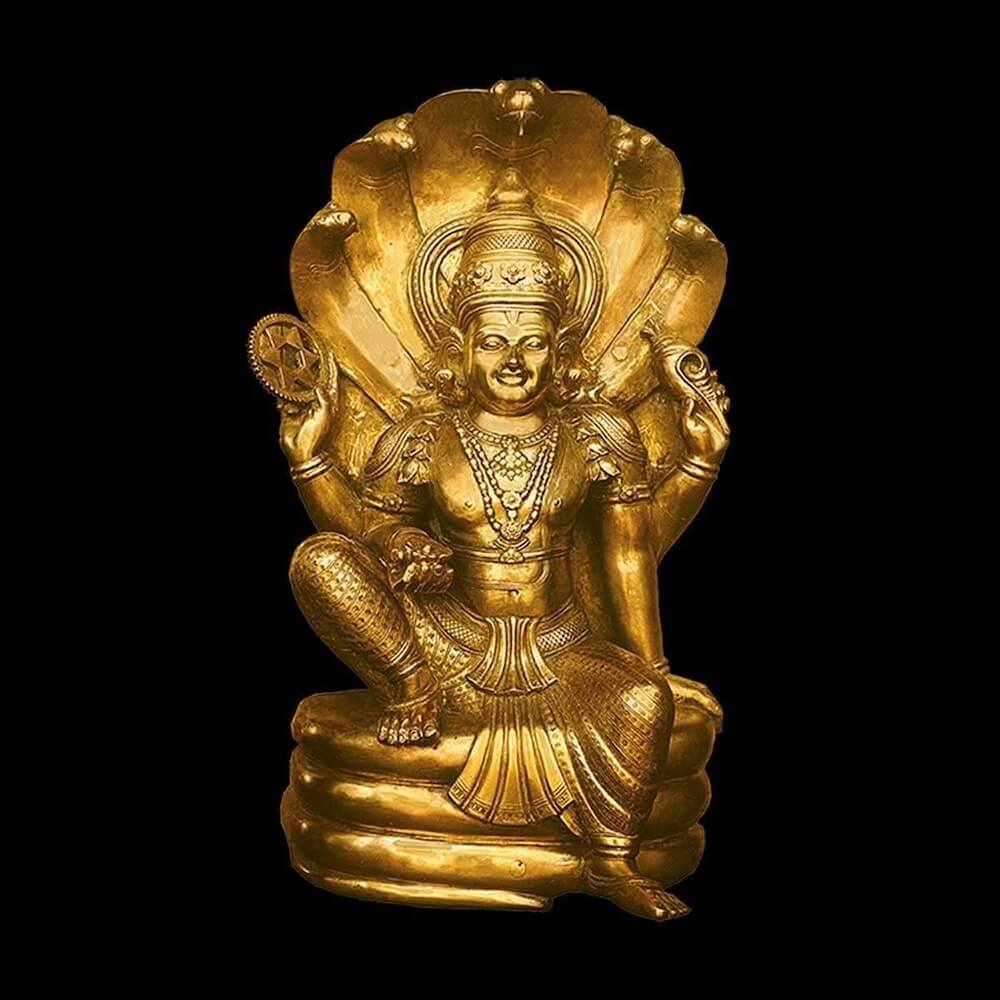
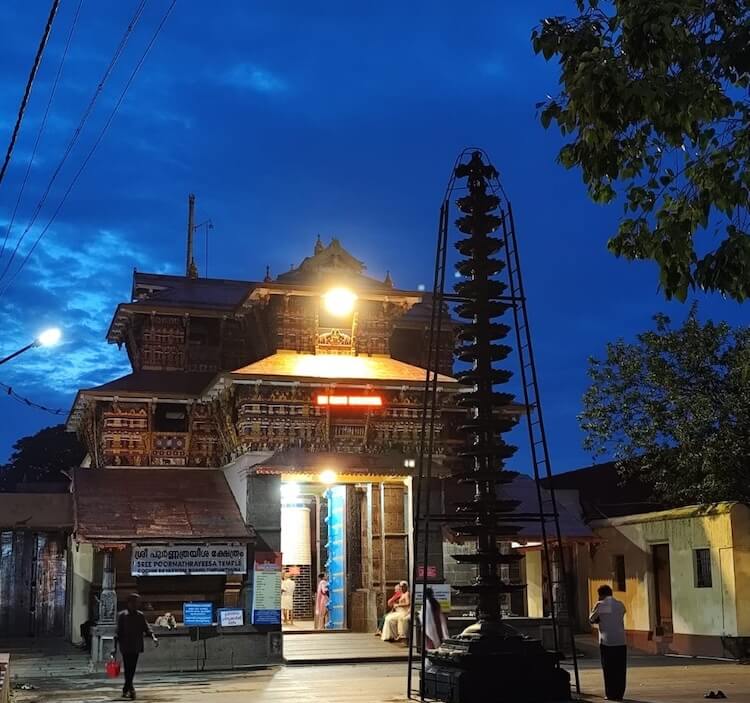
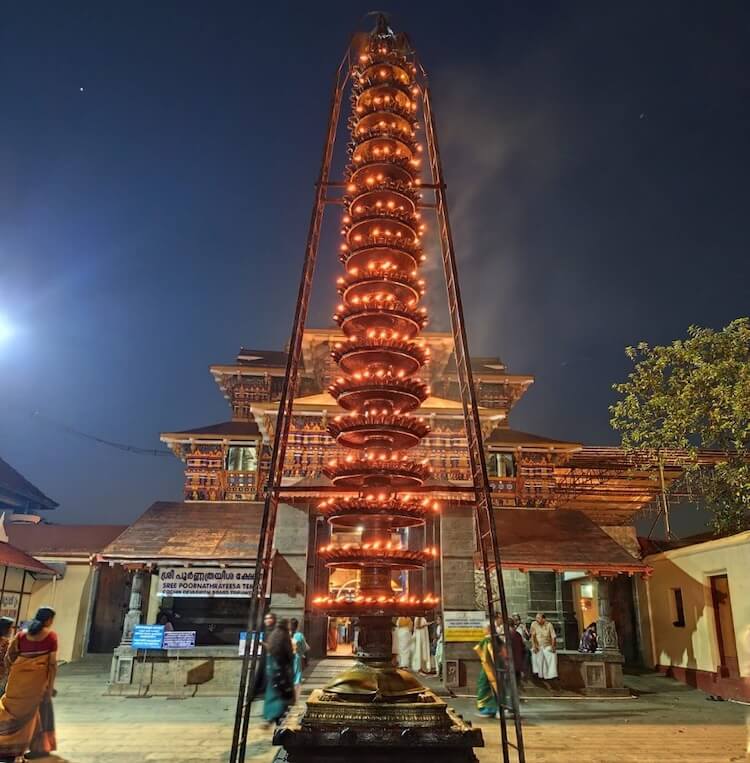
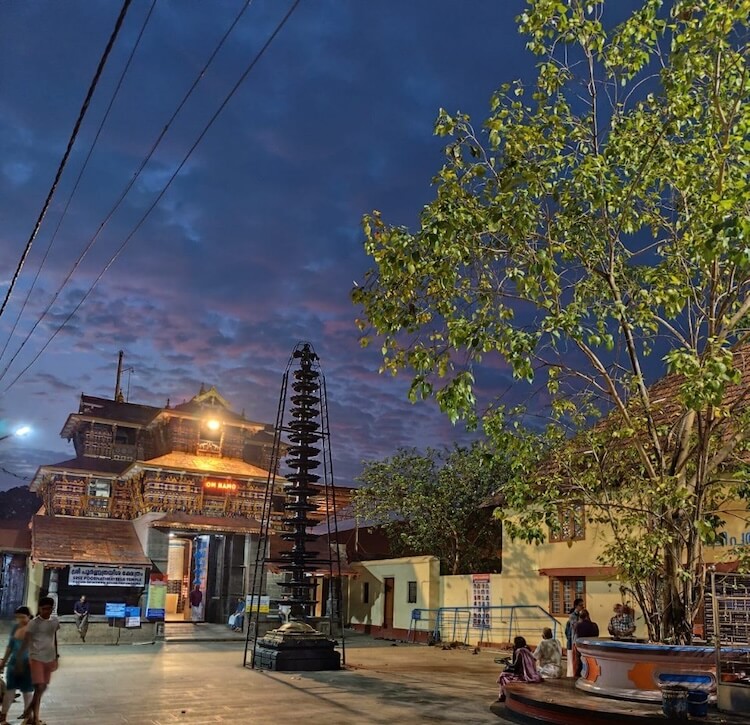
Shop Photo FramesSree Poornathrayeesa Temple Kottakakom, Tripunithura, Dist. Ernakulam Situated in Thrippunithura of Ernakulam district, Sree Poornathrayeesa Temple is an ancient and historically renowned Vishnu temple. Thrippunithura was the capital of the former princely state of Kingdom of Cochin. The main deity of the temple is Lord Mahavishnu seated on Anantha (the serpent Adishesha). The deity is worshipped by the name “Poornathrayeesan.” The word “Poornam” signifies completeness, while “Thrayeesan” means the lord of the Vedas. Therefore, devotees worship the Lord as the giver of wisdom, prosperity, and abundance. The deity is also conceived as Santhanagopala Moorthy, and devotees believe that offering prayers here is especially beneficial for the well being, prosperity, and growth of children, as well as for removing childhood afflictions and obstacles. Today, this great temple is under the administration of the Cochin Devaswom Board. The history of Sree Poornathrayeesa Temple in Thrippunithura is immensely rich, blending centuries of tradition with royal grandeur. Although the exact year of establishment is not clearly recorded, the construction phases of the temple as seen today are believed to have taken place during different periods between AD 952 and AD 1849. It is also believed that the present idol of Lord Sree Poornathrayeesan was reinstalled in AD 1270. The temple is said to have originally belonged to the old Kuriyoor Swaroopam. When that lineage declined, the region and the temple came under the control of the Cochin Royal Family. Among the eight royal temples of the Cochin royal family, this temple is considered the most important. During the time when Thrippunithura served as the capital of the Kingdom of Cochin, this temple stood as the spiritual centre of the royal family. Lord Poornathrayeesan was worshipped as the guardian deity of the kingdom. The King’s important rituals, royal ceremonies, and grand festivals were all centered around this temple. A major fire that occurred in 1920 caused severe damage to many parts of the temple, but remarkably, the sanctum sanctorum and the main deity remained unharmed. The temple was later reconstructed and regained its former glory. Preserving more than a thousand years of spiritual heritage, this temple still shines in the heart of Thrippunithura as a rare meeting point of devotion, history, and royal tradition. The legend of Poornathrayeesa Temple is closely associated with the Mahabharata period and Arjuna. It is believed that Arjuna, one of the Pandavas, reached this place during his pilgrimage and worshipped Lord Mahavishnu here. While performing penance, Lord Vishnu is said to have granted him divine vision. According to legend, in order to preserve the sanctity of that divine experience, Arjuna himself installed the Vishnu idol here. Devotees believe that this divine presence continues to bless them today in the form of “Poornathrayeesan.” That is why this temple is regarded not merely as a place of worship, but as a sacred land filled with divine grace, royal heritage, and spiritual radiance. The temple is located in the heart of Thrippunithura town. From the road, the first sight is the majestic entrance gateway and the tall gopuram built in traditional Kerala style. The vast temple complex spread within the compound walls gives a royal appearance. Men are allowed to enter the temple only after removing their upper garments such as shirts and banians, though an upper cloth (melmundu) may be worn. Near the entrance, the temple courtyard, the tall lamp pillar (Deepasthambham), and the golden flagstaff immediately attract the attention of devotees. Around them stands the Nalambalam, built in traditional style with beautiful wooden craftsmanship. Entering the Nalambalam, one can see the Namaskara Mandapam. This hall, built with wood and stone, has a sloping roof. Strong wooden pillars and stone carvings display mythological figures, floral patterns, and divine decorations. Beyond the Namaskara Mandapam lies the main sanctum (Sreekovil), built in the traditional Kerala architectural style. Its strong foundation and exquisite wooden carvings enhance its beauty. The main deity, Lord Mahavishnu, appears here in a rare form. Facing east, Lord Poornathrayeesan is seen in a divine posture beneath the hood of the five-headed Anantha. The coils of Anantha are considered the Lord’s seat. The idol is made of Panchaloha (five-metal alloy). The Lord holds the conch and discus in a divine form. Unlike the reclining Ananthasayana form, this is a majestic standing vision directly blessing the devotees. Among the sub-deities, Lord Ganapathi holds an important place, with the shrine located near the temple entrance. There are also shrines for Goddess Bhagavathy, Lord Sastha, serpent deities (Naga Devathas), Hanuman, and in some sections, forms of Lord Krishna. All these are installed around the main sanctum. The main festival of the temple is the famous Vrischikotsavam celebrated during the Malayalam month of Vrischikam. This grand festival lasts for eight to ten days. Special poojas, Deeparadhana, and Seeveli processions are conducted daily. Decorated elephants, Panchavadyam, Chendamelam, and Nadaswaram add royal grandeur to the celebrations. The most important ritual of the festival is the “Arattu.” On the final day, the idol of the Lord is taken in a grand ceremonial procession for the sacred ritual bath. This festival is considered a rare union of devotion, royal tradition, and cultural magnificence. Other important celebrations observed in the temple include Sree Krishna Jayanthi, Vishu, Ashtami Rohini, Navaratri, Thiruvonam, and Deepavali. In addition, the famous Thrippunithura Athachamayam is also closely associated with the temple. The Athachamayam procession marks the beginning of the Onam celebrations during the Malayalam month of Chingam. At Sree Poornathrayeesa Temple, daily poojas and special rituals are conducted with great discipline and according to traditional customs. The temple opens at 4:00 AM for Nirmalya Darshanam, the sacred first viewing of the deity in the early morning. This is followed by Abhishekam and morning offerings such as Malar Nivedyam. At 5:00 AM, Ganapathi Homam is performed, followed by Usha Pooja at 6:30 AM. After this, Seeveli takes place at 7:00 AM. At 9:00 AM, special offerings and Archana are conducted for devotees. Ucha Pooja (midday worship) is held at 10:00 AM, followed by Seeveli, and the temple closes at 11:00 AM. In the evening, the temple reopens at 5:00 PM and the evening rituals begin. Deeparadhana is performed at 6:30 PM, followed by Athazha Pooja at 7:00 PM and the final Seeveli. The temple closes for the day at 8:00 PM. During festival days and special occasions, there may be slight changes in the pooja timings. Among the main offerings (Vazhipadu) at Sree Poornathrayeesa Temple, the most famous is “Olpenna.” This is a special ritual unique to the temple, in which sesame oil is offered to the Lord in a small container made from coconut palm leaf (Thengola). The oil offered by devotees is used for lighting the temple lamps, and this offering is considered highly auspicious. Apart from this, other important offerings include Paal Payasam, Koottu Payasam, Kalabham, Niramala, Appam Nivedyam, Ada Nivedyam, Pushpanjali, and Thulabharam. These vazhipadus are performed by devotees seeking blessings, prosperity, and divine grace.
This sacred temple stands as a testament to deep spiritual devotion, ancient architectural grandeur, and rich local cultural traditions.
The sanctum sanctorum houses the divine idol consecrated according to ancient Vedic traditions, surrounded by serene courtyards and traditional temple architecture.
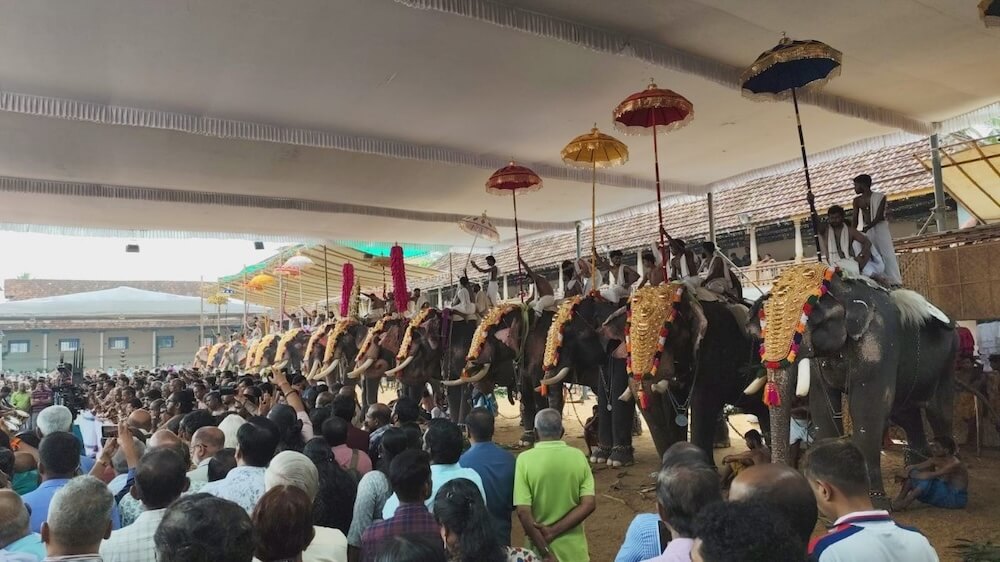
Navratri, Maha Shivratri, Annual Temple Jatra & Deepotsav
Compare and book flights, secure top-rated local hotels near the temple, hire reliable guides, and rent cars instantly.
Extend your pilgrimage by visiting other highly sacred temples located nearby.


Add ₹999 more to unlock FREE SHIPPING!
Your sacred cart is currently empty.
Shop Photo FramesFill in your delivery details below to place your order.
Add comment