
Add ₹999 more to unlock FREE SHIPPING!
Your sacred cart is currently empty.
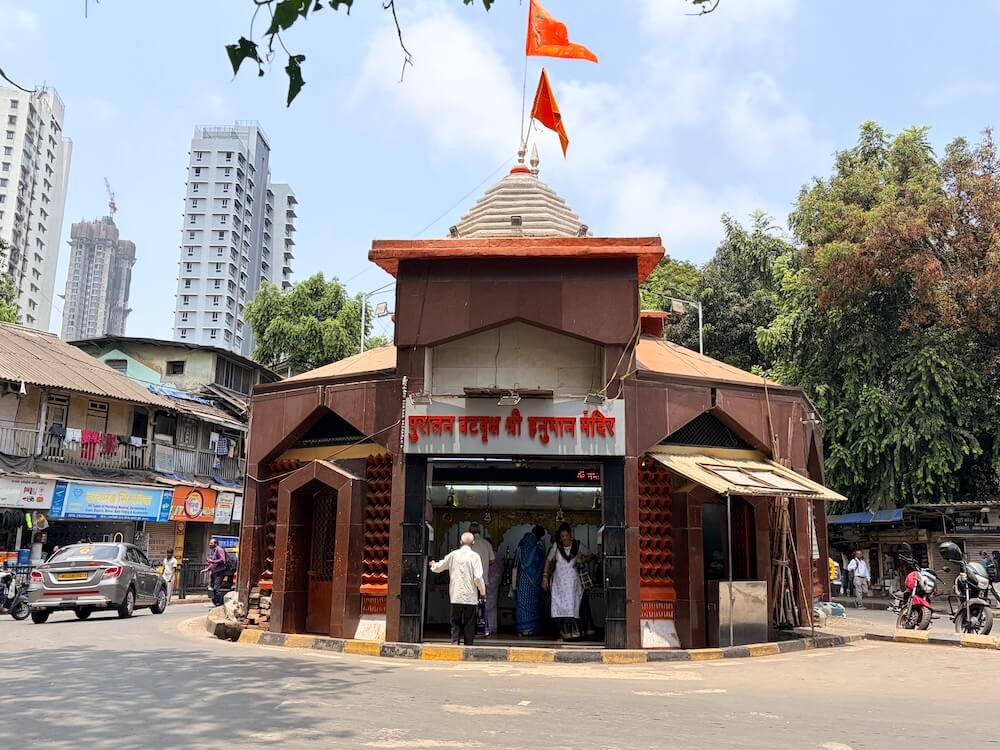
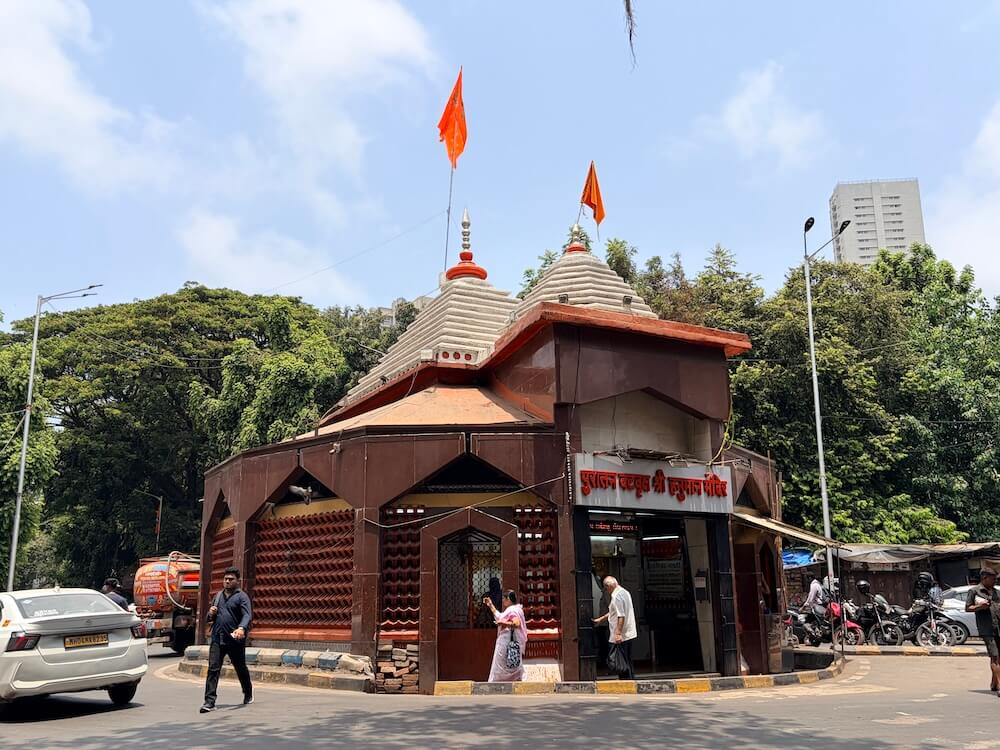
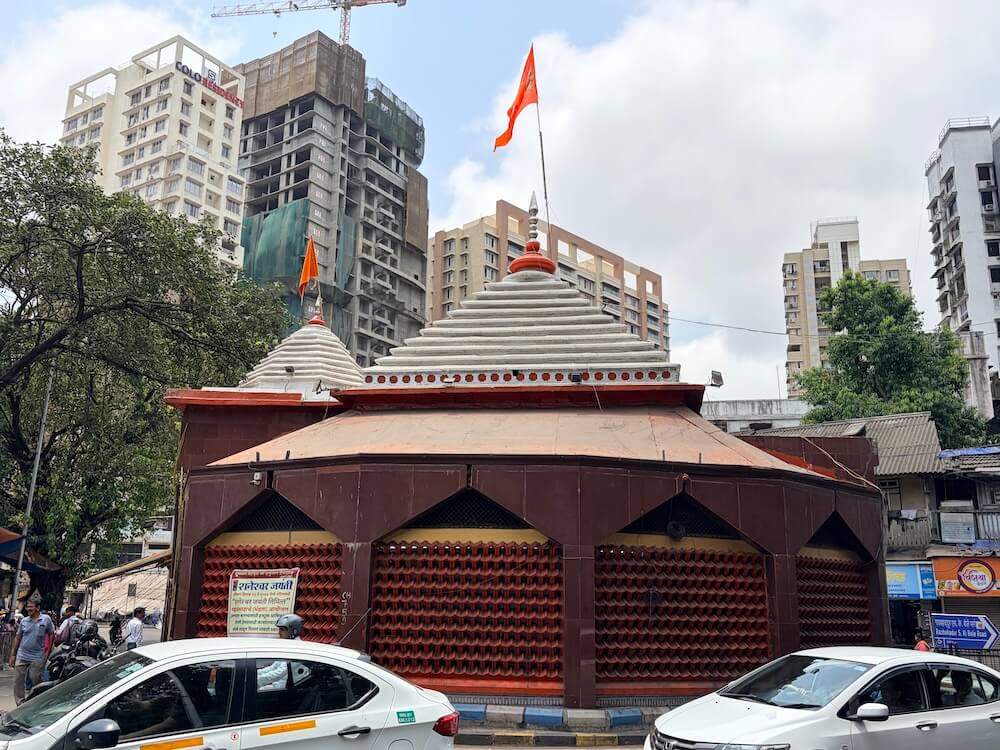
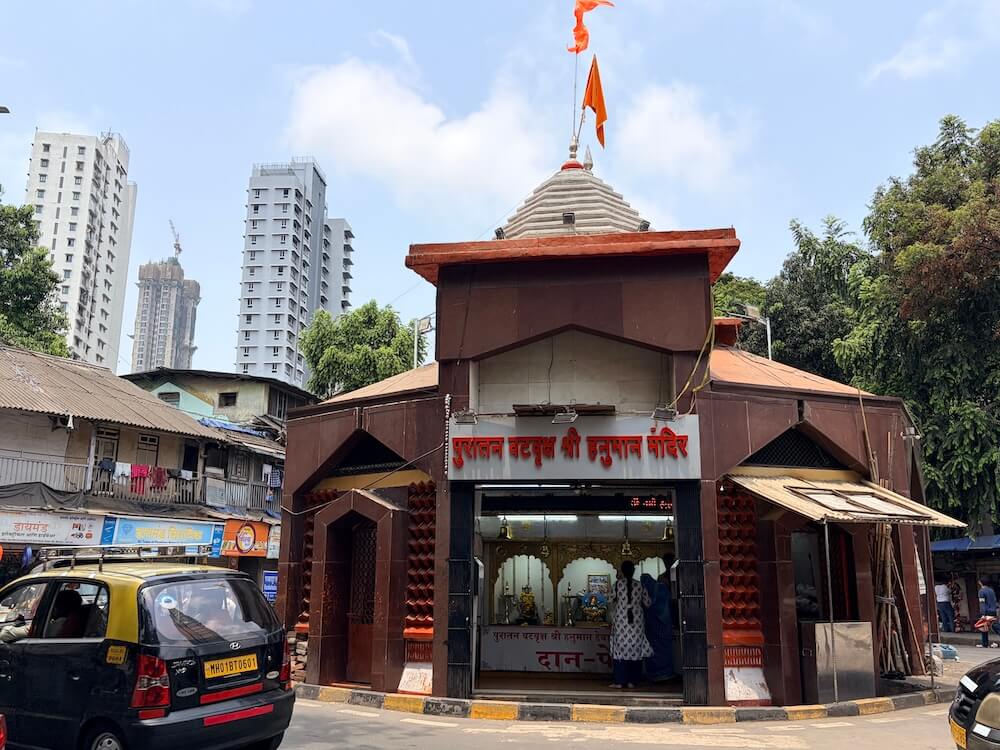
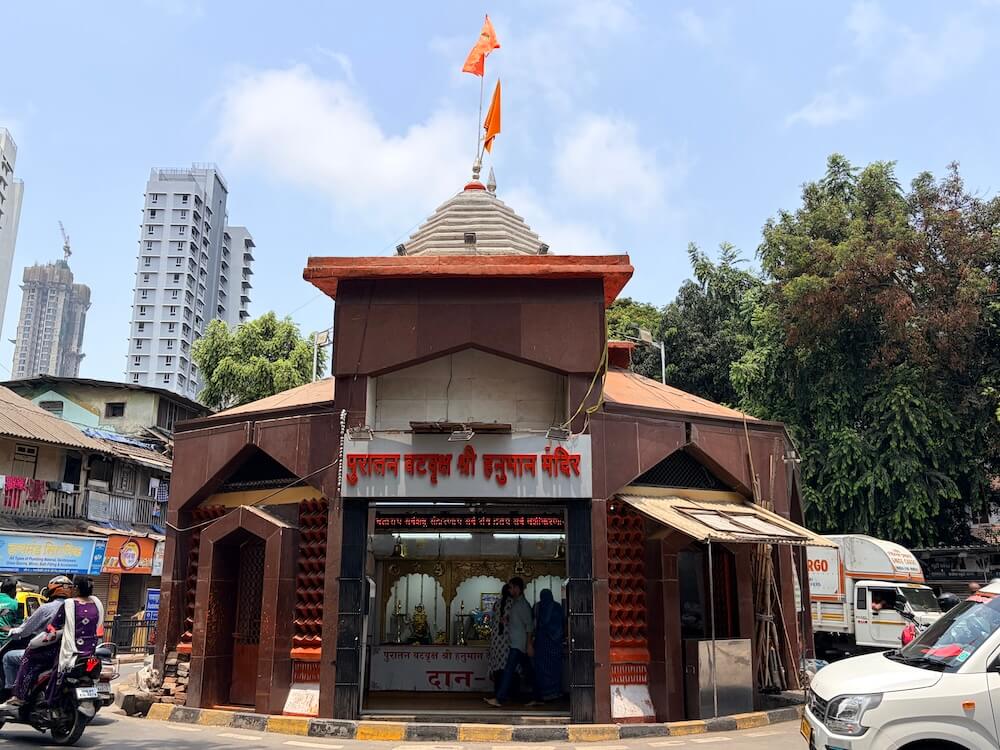
Shop Photo FramesThe ancient Vatavruksha Hanuman Mandir, embodying the culture of religious harmony, is situated at the junction of three roads in the western part of Mumbai’s Dadar suburb. This temple is a revered place of worship for many devotees of Hanuman, including the hardworking people of this area. Due to its distinctive circular shape, the temple is known as ‘Gol Deul’ (Round Temple). The abode of Hanuman here is considered ancient. Devotees believe that the idol of Hanuman in this temple is ‘jagrut’ (living and responsive). Devotees have faith that sincere worship here grants desired boons.
The Dadar area, where this temple is located, has a history dating back to at least the twelfth century. Previously, this small settlement was located in the forested part of one of the barren islands that formed the seven islands of Mumbai. In 1138 AD, King Pratap Bimba, who arrived on this island, established his capital here. He named this capital ‘Mahim’, also known as ‘Mahikavati’. Pratap Bimba is considered the original king of Mumbai. He settled many families here. All these families came from the earlier capital region of Mahim-Kelwe. They gave the names of their original places to the new settlements here. According to the findings in ‘Adnyat Mumbai’ (Unknown Mumbai), a book by Mumbai history researcher Nitin Salunkhe, the name ‘Dadarpada’, which is found in the Kelwe-Mahim-Palghar area, was given to a settlement in Mumbai-Mahim at that time. That very area is known as Dadar today.
Later, during the British period, this village developed. Four years before the Revolt of 1857, on April 16, 1853, the first railway ran between Bori Bunder in Mumbai and Thane. Following this, within the next four to five months, i.e., between August and October 1853, the ‘Mahim Road’ railway station was opened. Subsequently, on October 1, 1856, this station was renamed ‘Dadar’. Thereafter, in 1867, the Dadar station of the then ‘Bombay Baroda and Central India’ (BB&CI) Railway, on today’s Western Railway line, became operational. During that period, Dadar was much like a small village. Prabodhankar Keshav Sitaram Thackeray came to reside in the newly built ‘Miranda Chawl’ in Dadar in 1910. According to his autobiography ‘Majhi Jeevangatha’ (My Life Story), by 1918, Dadar’s original village form rapidly transformed. It is said that this Hanuman temple in Dadar was established during this very period.
According to the temple’s legend, in earlier times, this idol of Hanuman was installed beneath a large banyan tree in an area covered by dense forests of Dadar. Devotees from the vicinity used to worship this Hanuman. Over time, some devotees decided to build a temple here. Accordingly, a small temple was erected here in 1920. According to information from local senior citizens, at that time, Prabodhankar Thackeray had become widely known due to his book ‘Kodandacha Tankar’. He used to engage in social work in this area, and the idol of Hanuman in this temple was consecrated by his hands. Due to subsequent renovations, the temple has acquired its present beautiful form.
The temple is situated in the heart of Dadar, near Kabutarkhana, at the confluence of three busy roads. As this temple is somewhat circular, it is also called ‘Gol Deul’. Although there is no banyan tree here currently, the memory of that ancient banyan tree remains in the temple’s name. The temple’s architecture is unique. On the walls of the sabhamandapa (assembly hall) here, a distinctive latticework design has been created within triangular arches. The sabhamandapa has a total of three entrances: one main and two subsidiary. The main entrance is wide. Above it is a closed structure resembling a nagarkhana (drum house), and on the roof, there is a pyramid-shaped kalasha (finial). The garbhagriha (sanctum sanctorum) also has a broad, stepped, pyramid-shaped shikhara (spire). Upon it are installed a circular kalasha and a four-tiered kalasha.
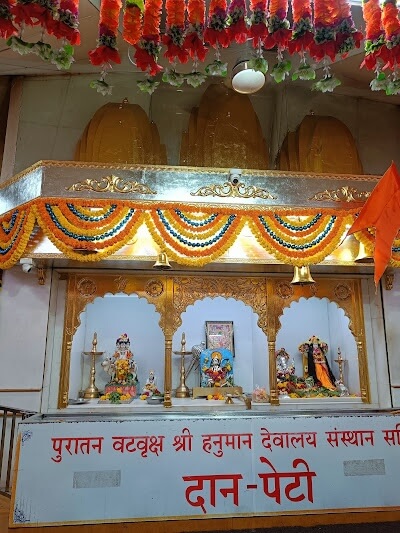
Inside, on a high pedestal, there is a golden makhar (altar frame) with three arched niches. In the center, the idol of Hanuman is enshrined. This Hanuman idol, carved from stone, is adorned with a silver covering. Here, Hanuman is seen in a posture of flight.
He holds a mace (gada) in one hand. Behind this idol is a silver mace weighing approximately 15 kg, and behind the idol is a large image of Shri Ram, Lakshman, and Janaki. To the right of Hanuman’s idol is a marble idol of Trimukhi Datta (three-faced Dattatreya), while to the left, a silver lingam representing Ganapati, Parvati, and Shankar is installed. A few years ago, an idol of Shani was also consecrated in this temple.
A significant feature of this temple is the presence of a Christian cross in a large niche on the outer wall at the back of the temple. An idol of Jesus Christ is installed on that cross. Additionally, a Jain Derasar is located a short distance behind the temple, and directly across the road in front, there is a large Muslim Dargah. Due to all these religious sites, this area is considered a symbol of Mumbai’s inclusive spirit, embracing people of all faiths.
A large number of devotees visit the Ancient Vatavruksha Hanuman Mandir daily for darshan (sacred viewing) in the mornings and evenings. As this temple is located on the main road, passersby always bow before Hanuman.q43There is a large crowd of devotees every Friday and Saturday. On Saturdays, oil is offered to Shani and Maruti (Hanuman) here.
The festival of Hanuman Jayanti is celebrated grandly in this temple. The celebrations commence from the day before Jayanti. On the eve of Jayanti, the Hanuman Jayanti Utsav begins with the recitation of the ‘Hanuman Chalisa’, composed by Saint Tulsidas in the 16th century. On the day of Jayanti, Hanuman’s birth anniversary is celebrated at 6:29 AM.
Bhajan and Kirtan programs are organized in the temple on both these days. During this period, many devotees from the surrounding area come for darshan. Shani Jayanti is also celebrated with enthusiasm in the temple. On that day, Mahaprasad (sacred food offering) is arranged here. The temple remains open for darshan daily from early morning until late at night.
This sacred temple stands as a testament to deep spiritual devotion, ancient architectural grandeur, and rich local cultural traditions.
The sanctum sanctorum houses the divine idol consecrated according to ancient Vedic traditions, surrounded by serene courtyards and traditional temple architecture.
Navratri, Maha Shivratri, Annual Temple Jatra & Deepotsav
Compare and book flights, secure top-rated local hotels near the temple, hire reliable guides, and rent cars instantly.
Extend your pilgrimage by visiting other highly sacred temples located nearby.


Add ₹999 more to unlock FREE SHIPPING!
Your sacred cart is currently empty.
Shop Photo FramesFill in your delivery details below to place your order.
Add comment