
Add ₹999 more to unlock FREE SHIPPING!
Your sacred cart is currently empty.
Shop Photo FramesChandrapur district is blessed with a rich historical and mythological heritage. While many ancient structures here bear witness to the Gond Empire, a history spanning thousands of years lies buried beneath its soil. The village of Bhatala in Warora taluka is famous for these ancient structures. The village is renowned in the district as a ‘Shilpagram’ (Village of Sculptures). The architectural style of the two-story Mahadev temple from the 10th century located here remains an unsolved puzzle for scholars. The magnificent and unique Shiva Linga in this temple is considered the largest Shiva Linga in Vidarbha.
Located in eastern Vidarbha, Maharashtra, the village of Bhatala in Chandrapur district has existed since the year 45 AD, as evidenced by the sculptures found here. Historical records show that the Mauryan, Satavahana, Vakataka, Gupta, Paramara, Chalukya, and Nagavanshi kings ruled over this land. These kings commissioned the construction of many structures and temples during their reign. It is said that in ancient times, stone sculptures carved in Bhatala were even exported to foreign lands. Even today, stone sculptures and idols are found in many places throughout the village. Furthermore, the unique sculptures on the ancient Bhavani temple here and the carved caves in the nearby Rishi Lake area confirm this. For this very reason, the Government of Maharashtra has declared Bhatala village a tourist destination.
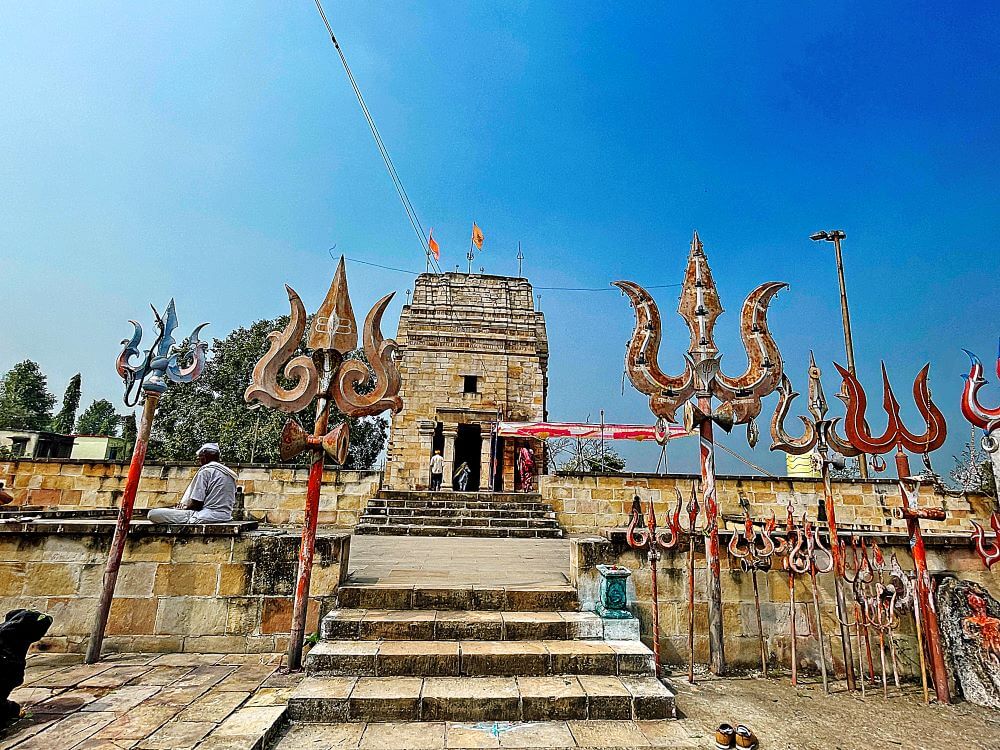
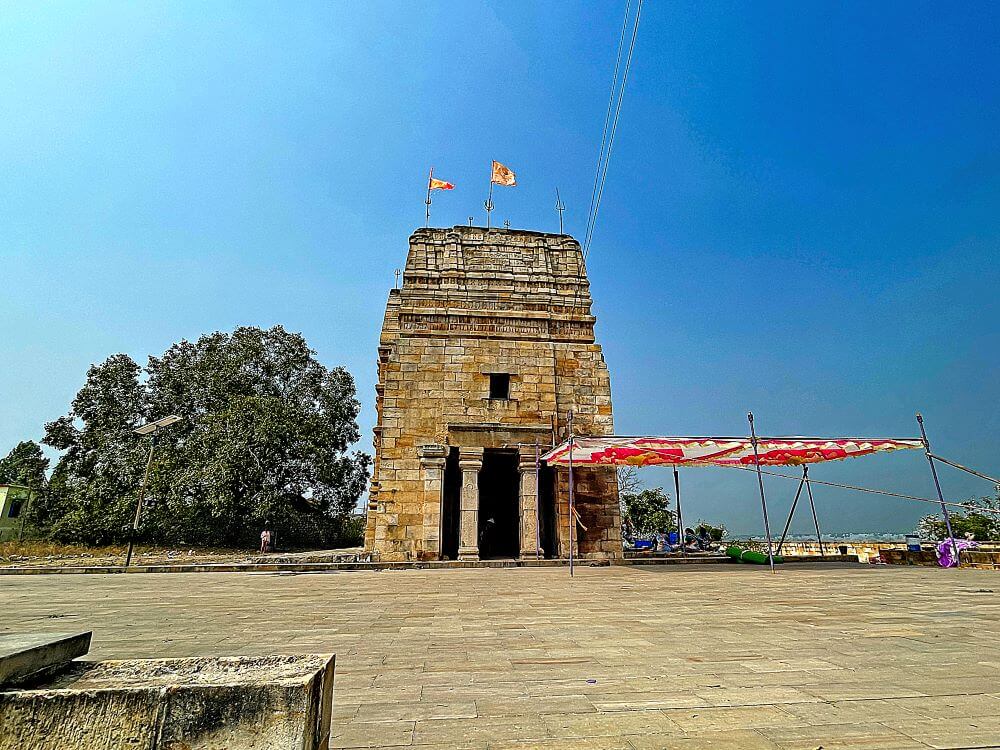
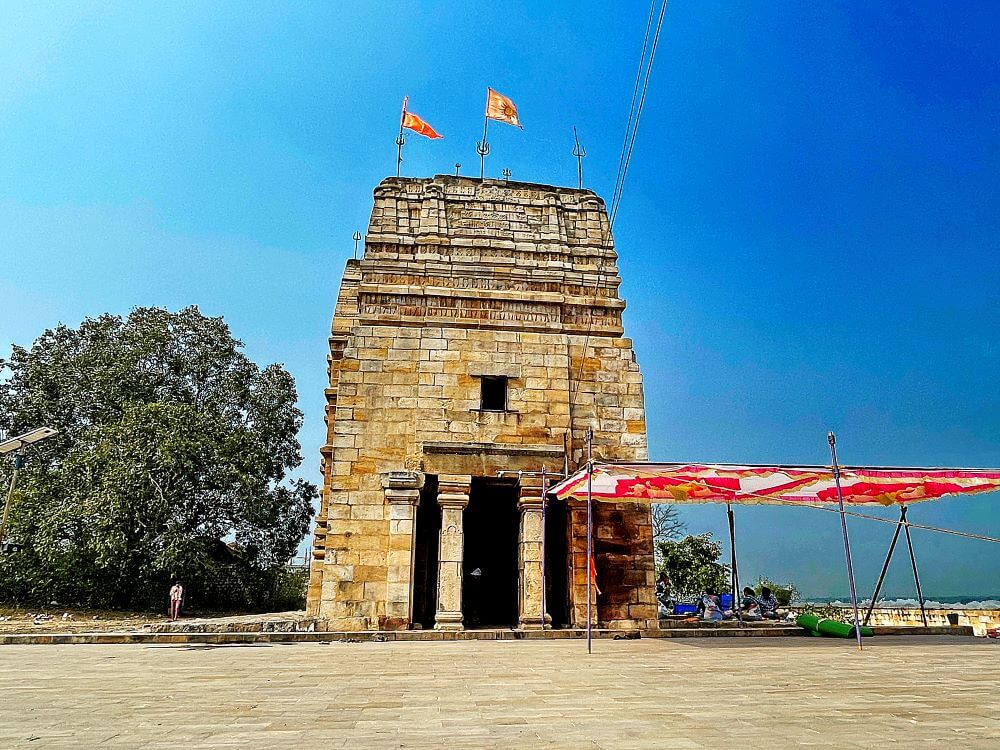
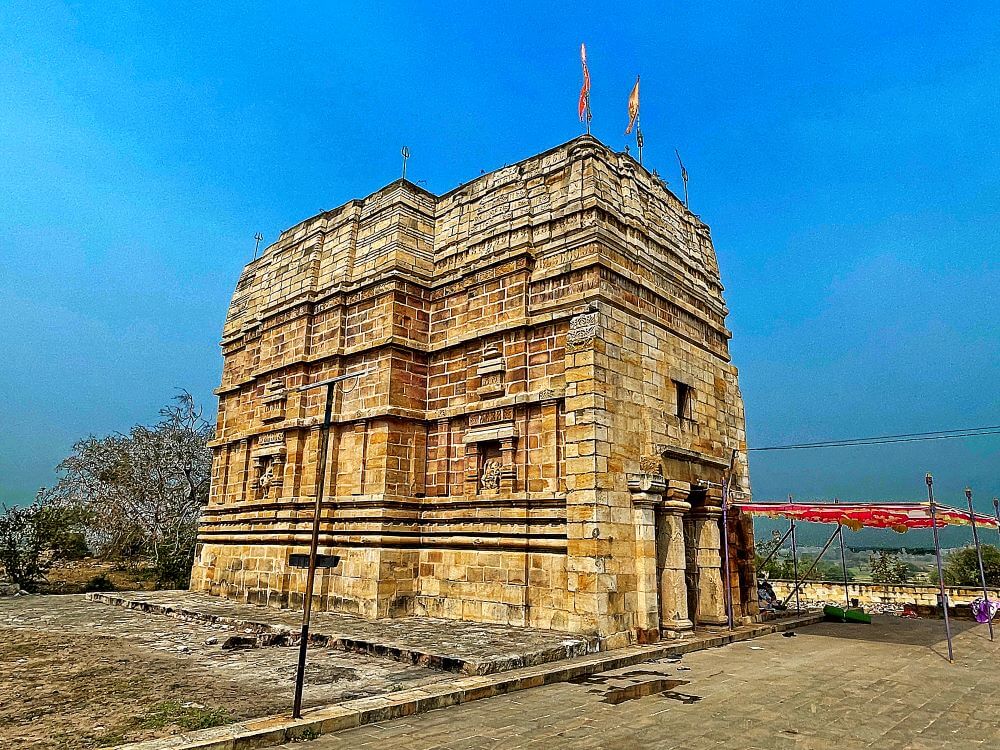
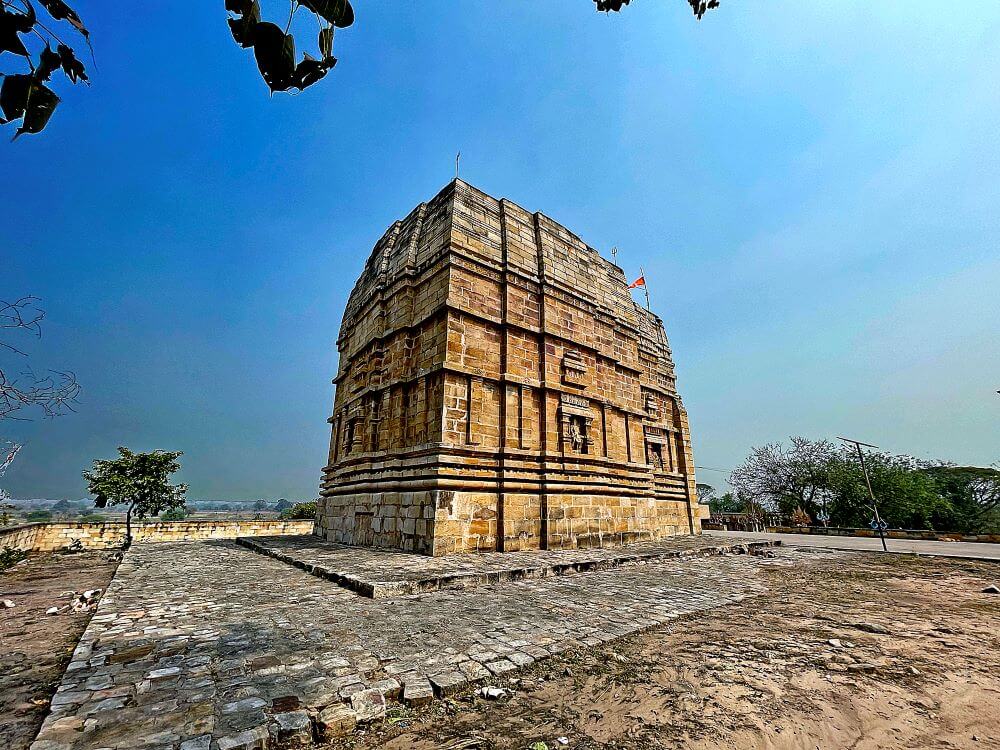
To the west of the village stands an east-facing temple of Lord Mahadeva. Built from reddish-yellow sandstone, this temple is one of the most ancient in the district. A unique feature of this temple is that it is double-storied and lacks a shikhara (spire). A legend is associated with this: hundreds of years ago, lightning struck the temple, damaging the structure along with its shikhara, kalasha, and amalaka. During the reconstruction, the temple was rebuilt without the shikhara. Consequently, it came to be known as ‘Bhonda Mahadeva’, meaning the temple without a spire.
The temple measures fifty-two feet from east to west and thirty-six feet from north to south. Its structure consists of an antarala (vestibule) and a garbhagriha (sanctum sanctorum). The architectural design regarding the height of this temple is particularly extraordinary. The temple is already elevated, and there is an additional floor above the antarala and garbhagriha. There is no provision from below to access this upper floor, leading to the belief that it was designed this way purely for architectural reasons; however, such a design is rare, and the mystery of this second floor remains unsolved for the archaeology department, historians, and scholars.
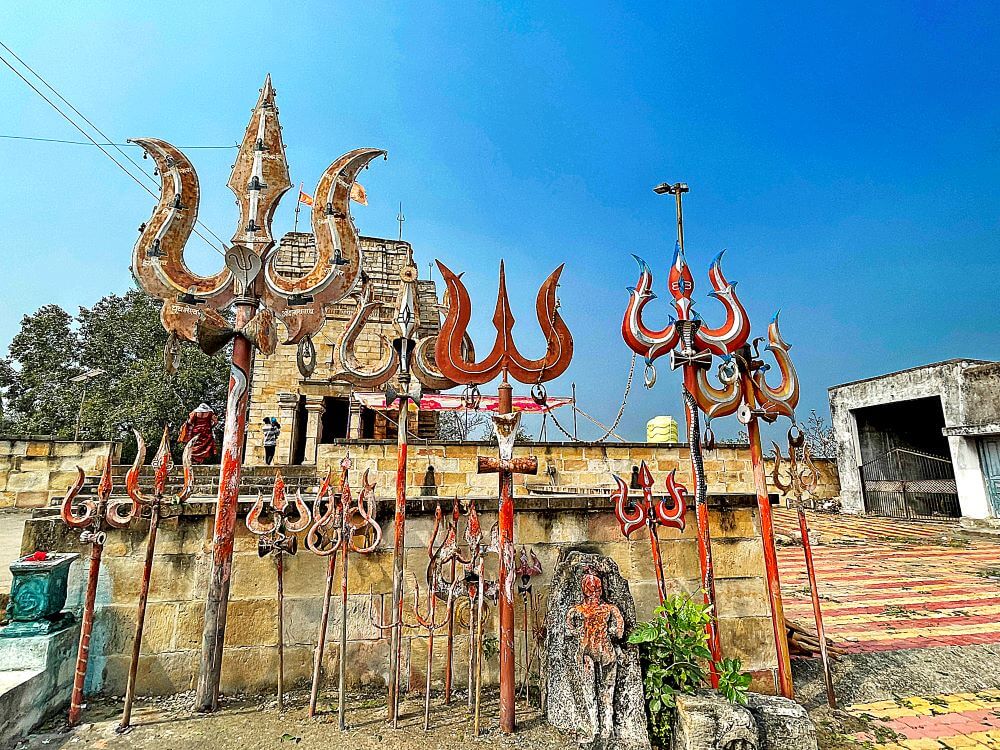
The temple stands at a height of seven to eight feet from the ground. Upon entering the temple premises, one sees many large tridents. It is said that devotees place them there after the fulfillment of their vows. The courtyard is entirely paved, leading directly into the antarala of the temple. The temple has no entrance door, and inside the antarala, there are four stone pillars arranged one behind the other. The inner pillars feature intricate carvings, while the outer pillars do not show any significant engravings. The antarala here is rectangular and elongated, with a Nandi made of black stone situated in the center. The ceiling of the antarala is also adorned with carvings.
The Antarala leads into the Garbhagriha. The Garbhagriha here is large and features four pillars. The pillars are adorned with carvings of Kalash and Gavaksha symbols dating back to the Rashtrakuta era. In the center of these pillars stands a magnificent, monolithic Shivlinga carved from black stone, measuring four feet in height and approximately ten feet in length. Since the Varimarga (the channel for the outflow of water or Tirtha) of the Shivlinga leads directly into the wall, circumambulation is naturally obstructed here. (Circumambulation is not performed around this Shivlinga; considering this, the tip of the Linga may have been placed against the wall of the sanctum.) This Shivlinga is the unique feature of this temple and is considered the largest Shivlinga in the Vidarbha region. The surrounding area consists entirely of reddish-yellow sandstone. It remains a mystery to scholars how such a massive, monolithic black stone Shivlinga was brought here, given that no black stone exists anywhere in the vicinity.
The outer walls of the temple are flat in some places and feature intricate carvings in others. There are Devakoshtakas (niches) on the left and right sides of the outer walls of the Antarala; however, the idols within them cannot be clearly identified. The Devakoshtakas on the three walls of the Garbhagriha contain idols of Kartikeya, Shiva, and Chamunda. Since there is no tapering Shikhara over the Antarala and the Garbhagriha, it is difficult to determine the exact period of the temple; however, based on the various stone sculptures and idols found in the village, experts believe the temple dates back to approximately the tenth century, which is the Rashtrakuta period. A chariot procession (Rathyatra) departs from this temple on Mahashivratri. A three-day fair is held here on this occasion.
This sacred temple stands as a testament to deep spiritual devotion, ancient architectural grandeur, and rich local cultural traditions.
The sanctum sanctorum houses the divine idol consecrated according to ancient Vedic traditions, surrounded by serene courtyards and traditional temple architecture.
Navratri, Maha Shivratri, Annual Temple Jatra & Deepotsav
Compare and book flights, secure top-rated local hotels near the temple, hire reliable guides, and rent cars instantly.
Extend your pilgrimage by visiting other highly sacred temples located nearby.
No other temples found nearby.
Add ₹999 more to unlock FREE SHIPPING!
Your sacred cart is currently empty.
Shop Photo FramesFill in your delivery details below to place your order.
Add comment