
Add ₹999 more to unlock FREE SHIPPING!
Your sacred cart is currently empty.
Shop Photo FramesThe village of Karade Khurd is situated in the vicinity of the Patalganga industrial area in Panvel taluka. Despite being in an industrial belt, this village has preserved its traditional identity and historical heritage to this day. Located on the banks of the Patalganga River, the village is home to the ancient temple of the village deity, Goddess Garmata. As one enters Karade village from Panvel via Rasayani, the temple can be seen on the left side, adjacent to a vast lake. Local belief suggests that because the flow of the Patalganga River kept the soil and atmosphere of Karade village fertile and cool, the Goddess came to be known as ‘Garmata’ (Cool Mother). According to the faith of the villagers, Goddess Garmata is the protector of the entire village and rushes to the aid of her devotees in times of crisis. Consequently, the tradition of beginning every auspicious task with the Goddess’s blessings has been followed here for generations.
The history of the Garmata temple is ancient, and this sacred site is believed to be centuries old. The period of the temple is linked to the history of medieval Maharashtra and primarily to the local regimes of the Konkan. When studying the historical context of this area, the nearby Karade Garhi (fortress) is mentioned. On the banks of the Patalganga River stands a historical fortress called ‘Chauburji’. This fortress was built during the late Peshwa period, specifically during the reign of Peshwa Bajirao II. Although this fortress was not used much for military campaigns, it held importance in the administrative system of that time. Formerly owned by the Kulkarnis, the fortress was purchased by the Vaidya family in an auction after independence. The Garmata temple, located in the vicinity of this fortress, has been a major place of worship ever since.
According to historical records, this temple dates back to the Peshwa era and is said to have been built by Malhar Ragho Kulkarni, the Diwan of Mankoji. However, the wooden carvings currently visible in the temple date back to approximately Shake 1823 (1901 AD). The renovation of this temple likely took place during the transitional period marking the decline of the Maratha Empire and the growing influence of British rule. From a historical perspective, Karade Khurd was known as a prosperous settlement during the Peshwa period. The stone ghat built on the banks of the Patalganga River and the Peshwa-era Shiva temple there add to the historical significance of the Garmata temple. Mentions of this area, its villages, and rivers are also found in British-era gazetteers and records of temples in the Raigad district.
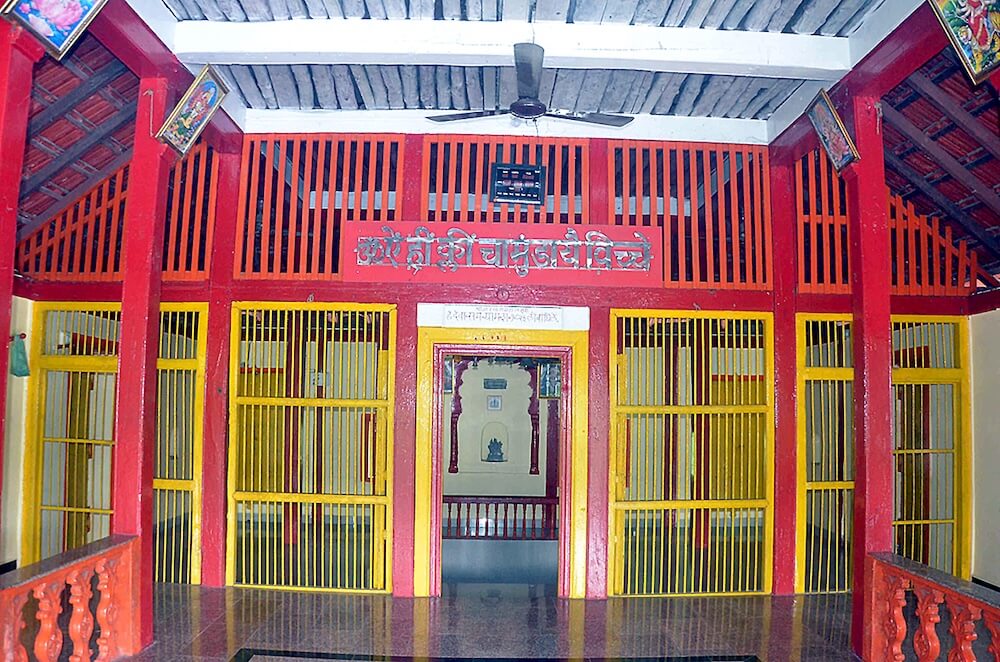
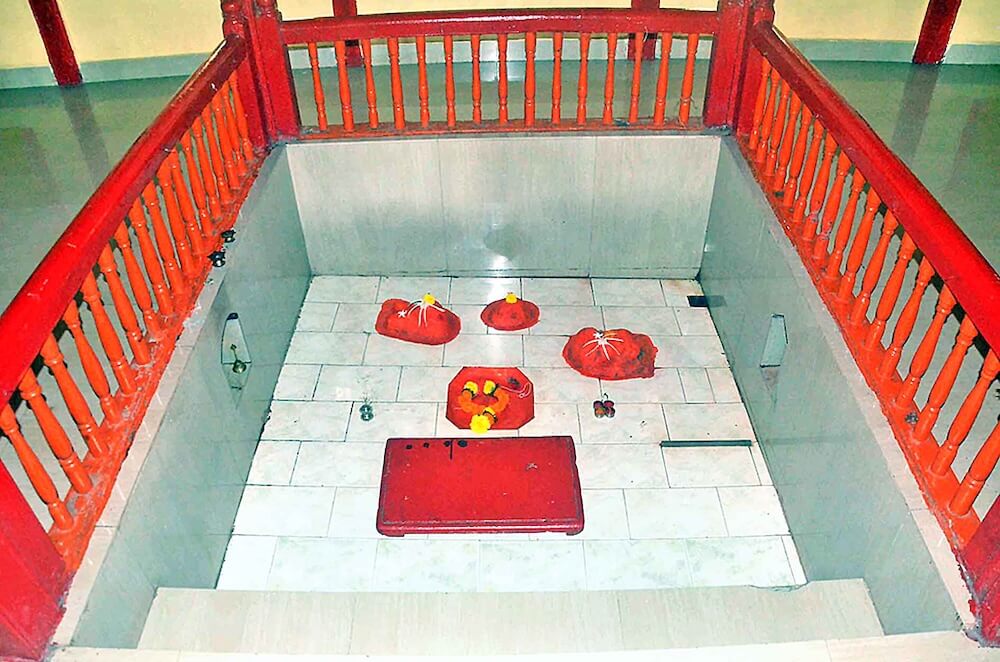
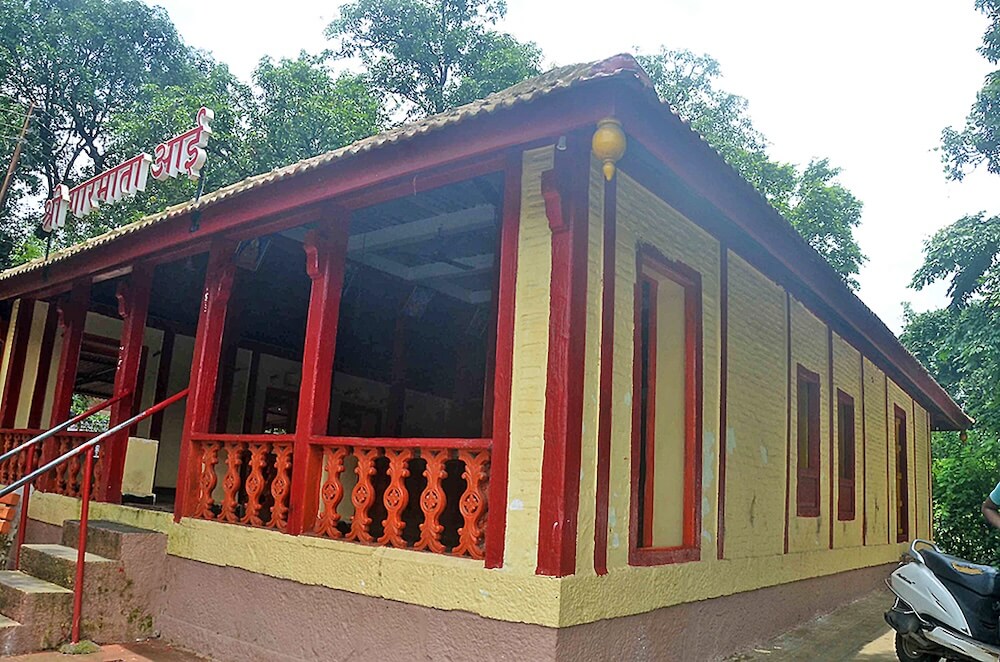
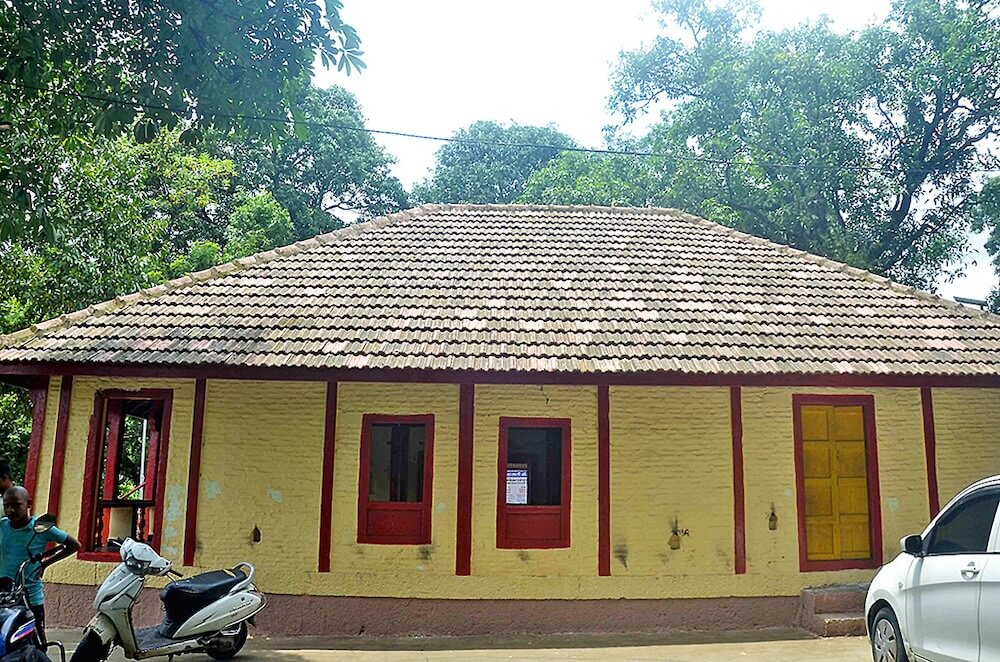
Nestled in a picturesque setting on the edge of the lake, this temple is built in the architectural style of traditional Konkani tiled houses. The construction of the temple was carried out using stone, brick, and wood, and the structure built in 1901 has been maintained exactly as it was. The roof of the temple is made of traditional red tiles. The reflection of the temple in the lake water looks extremely captivating. One enters the assembly hall (sabhamandap) of the temple, which stands on a high plinth, by climbing five steps from the main entrance near the lake. The temple is designed with a semi-open assembly hall, an antarala (vestibule), and a garbhagriha (sanctum sanctorum). There are stone benches for devotees to sit in the assembly hall. Lamp niches and old-fashioned pegs can be seen on the walls of the hall. Ahead of the assembly hall is the antarala. On the lintel of the entrance to the antarala, text is inscribed referencing who built the temple and when. In the center of the antarala, leaving space for circumambulation, the garbhagriha is designed in a square, recessed area. In this sanctum, along with Garmata, idols of Goddesses Mahakali, Mahalakshmi, and Mahasaraswati in the form of ‘tandala’ (aniconic stones) are enshrined. The temple’s architecture makes effective use of teak woodwork.
The annual festival of Shri Garmata Devi at Karade Khurd is celebrated with great enthusiasm every year on Chaitra Shuddha Navami, i.e., Ram Navami. On this day, a palanquin procession of the Goddess is taken out. The palanquin is carried through the entire village with music, and devotees from the surrounding five villages attend this ceremony in large numbers. During the festival, various religious and cultural programs are organized at the temple. Apart from this, a festival is also celebrated here on Hanuman Jayanti. During Navratri, special pujas, archana, and aartis are organized in the temple for nine days. On the day of Vijayadashami, a palanquin procession of the Goddess is held. It is the deep-seated belief of the devotees that the Garmata of Karade Khurd actually ‘partakes of a meal’ on the day of Dussehra. On this day, a plate of naivedya (offering) is placed in the sanctum, and the sanctum is closed for half an hour. During this time, all devotees in the assembly hall chant with devotion. When the sanctum is opened afterward, the meal kept for the Goddess is examined. Devotees have experienced that on such occasions, impressions of the Goddess’s hands can be seen on some of the food items. During the festival, people from nearby villages like Rasayani, Mohopada, Gulsunde, and Vasambe come here in large numbers for the Goddess’s darshan. During the festival, the temple is illuminated, and bhajan-kirtan programs are held. This temple is open for devotees 24 hours a day, and classical puja is performed here morning and evening.
This sacred temple stands as a testament to deep spiritual devotion, ancient architectural grandeur, and rich local cultural traditions.
The sanctum sanctorum houses the divine idol consecrated according to ancient Vedic traditions, surrounded by serene courtyards and traditional temple architecture.
Navratri, Maha Shivratri, Annual Temple Jatra & Deepotsav
Compare and book flights, secure top-rated local hotels near the temple, hire reliable guides, and rent cars instantly.
Extend your pilgrimage by visiting other highly sacred temples located nearby.


Add ₹999 more to unlock FREE SHIPPING!
Your sacred cart is currently empty.
Shop Photo FramesFill in your delivery details below to place your order.
Add comment