
Add ₹999 more to unlock FREE SHIPPING!
Your sacred cart is currently empty.
Shop Photo FramesSituated at an altitude of १५०० feet above sea level, nestled in the lap of lush green hills and on the banks of the Shastri River, the ancient temple of Lakshmikeshav at Kolisare in Ratnagiri is one of the famous temples in the district. It is also known by the name Keshraj. A unique feature of this place is the perennial spring with medicinal properties flowing from right beneath the deity’s feet. It is said that even if this water is filled in a glass bottle and kept for any number of years, it never spoils. Lakshmikeshav is the family deity (Kuldaivat) of the Kane family as well as several other families here.
The legend of the temple goes that between the period of इ.स. ७५० and ९७३, Vishnu-bhakta kings of the Rashtrakuta dynasty built many temples in Maharashtra. Later, this region came under the rule of the Yadavas. Years later, during the tyrannical and iconoclastic Mughal rule, the idols in many temples were moved to secret locations to protect them. Among them, the idol of Lakshmikeshav was concealed in the Rankala Lake of Kolhapur. Years later, three men from the Kane, Joshi, and Vichare families of village Varhavde simultaneously received a divine vision (Drishtant) that this idol was in the Rankala Lake. Following this, they went to Kolhapur and retrieved the idol from the lake. They had decided to consecrate this idol in the nearby village of Reel.
While bringing this idol from Kolhapur in a wooden box, they stopped at Kolisare for a night halt. When they set out again in the morning, they felt that the box containing the idol had become tremendously heavy. Even the labourers were unable to lift the box. Eventually, they realised that the deity wished to stay right here. Around the same time, Bhanuprabhu Teredesai, the Kiledar (fort commander) of Gopalgad in Anjanvel , received a divine vision from the deity instructing him, “Consecrete me here at Kolisare.” Accordingly, Teredesai built this temple in १५१०. After the renovation carried out in November २००८, the temple acquired its present form.
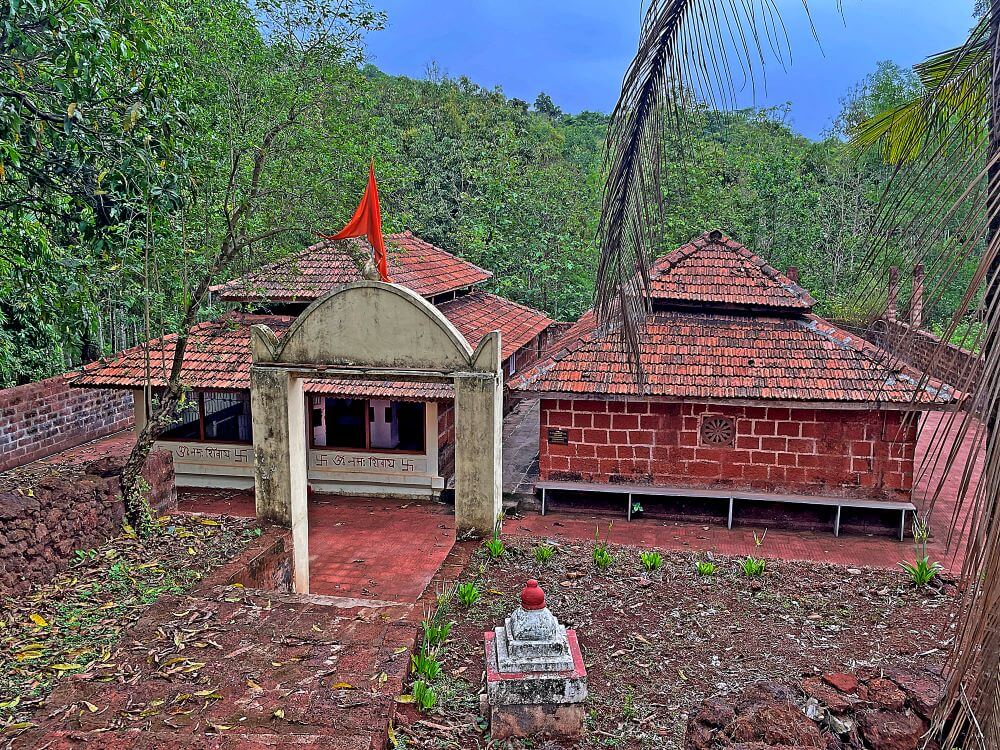
While coming from Jaigad towards Chafe, one encounters the Kolisare Phata on the left. From there, one can walk up to the Pakhadi (flight of steps) of the temple in Kolisare village. While descending this Pakhadi of ४० to ५० steps, the pinnacle (Kalash) of the temple can be seen from a distance. The temple premises are surrounded by dense foliage. At the lower side of the temple is a perennial spring. When excavation was started to build this temple, a stream of water gushed out at one spot. Therefore, it is believed that this spring emerged from beneath the deity’s feet. It is said that before taking Samadhi, Swami Swarupanand of Pawas had a devotee who would bring ४० litres of water daily for him from this spring.
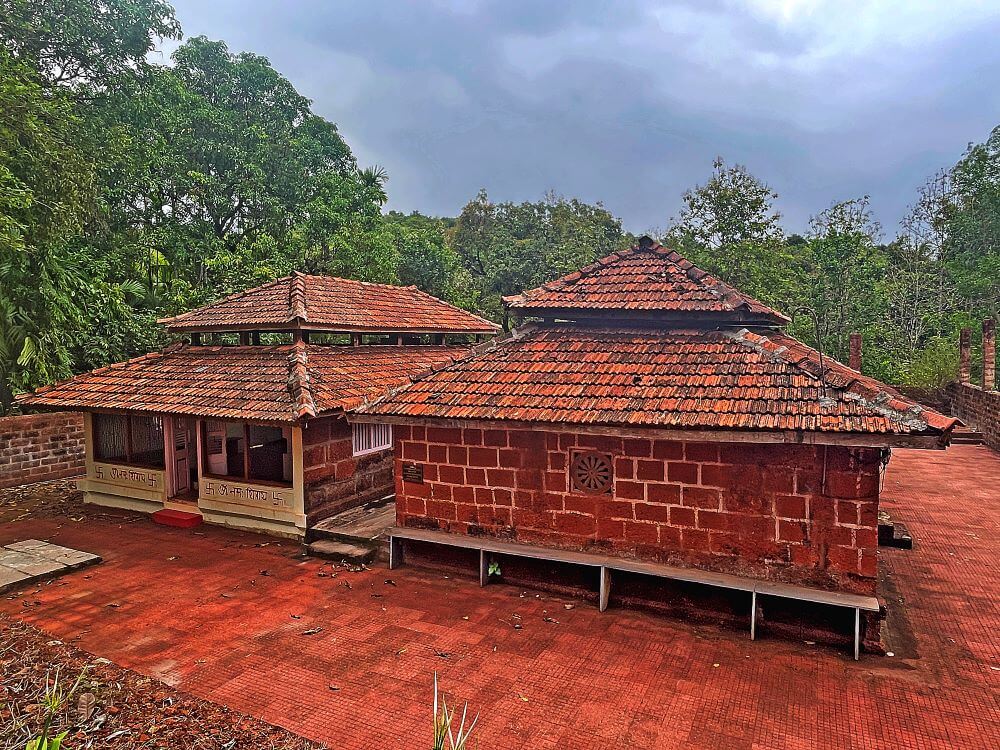
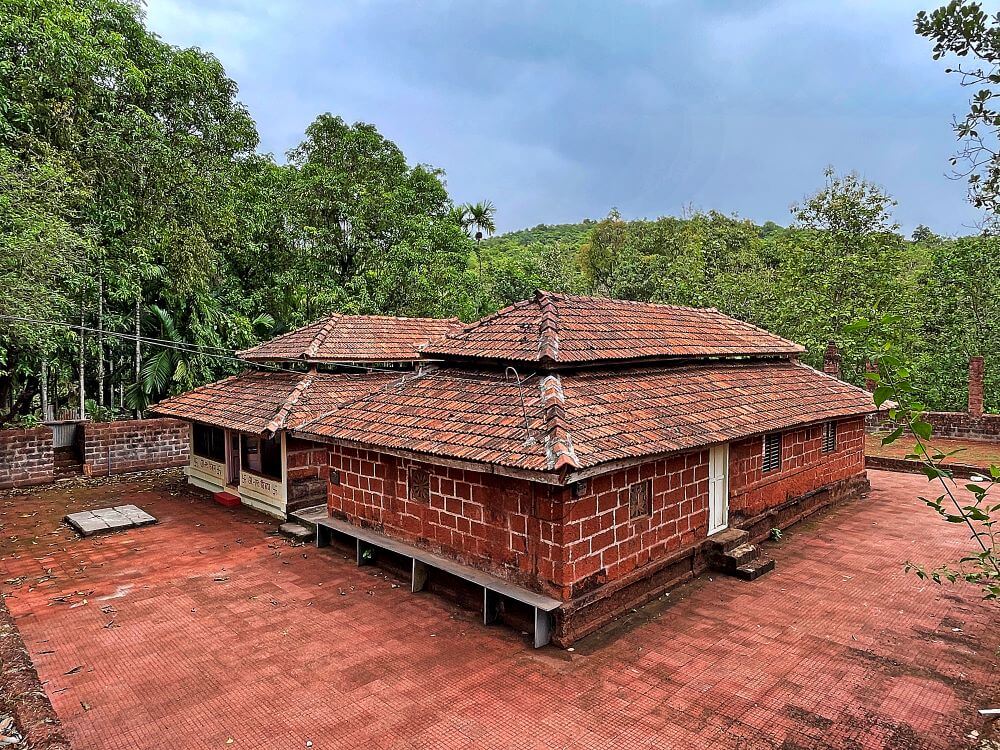
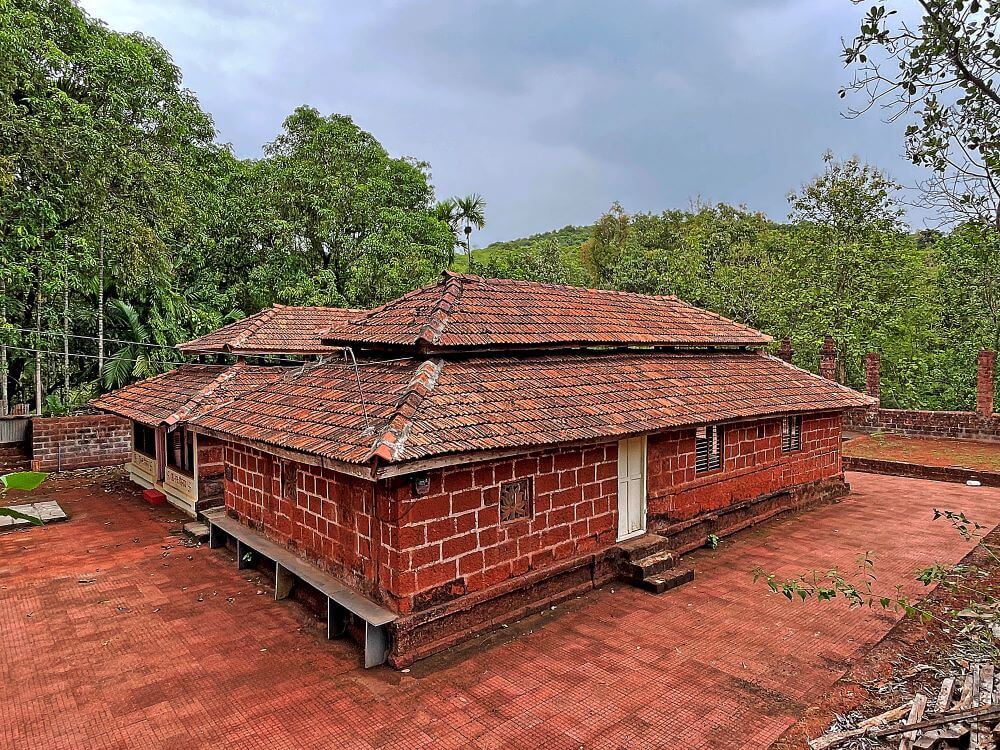
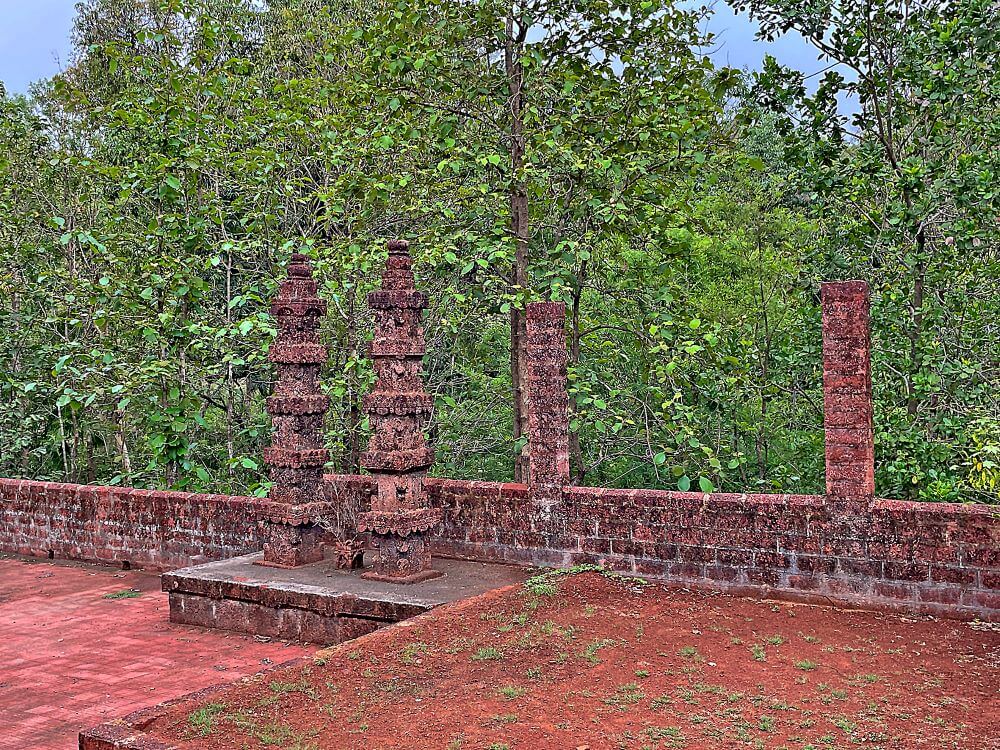
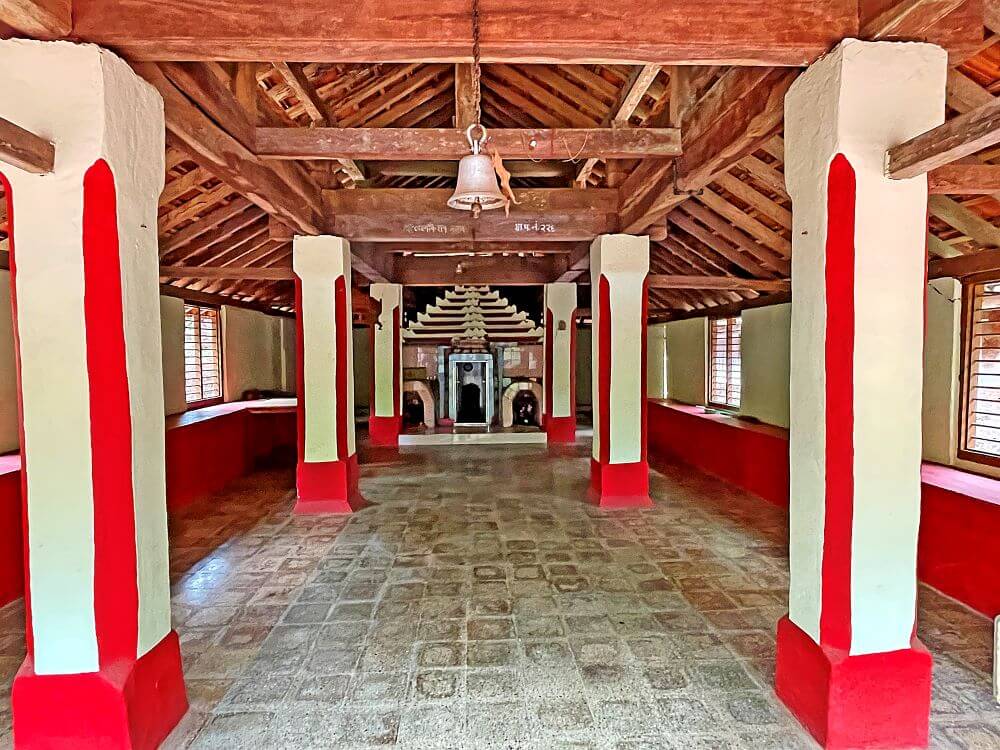
Wood and laterite stone have been used in the construction of the tiled-roof Lakshmikeshav Temple. Its architecture consists of an open Sabhamandap (assembly hall), Antaral (vestibule), and Garbhagriha (sanctum sanctorum). The Sabhamandap has carved wooden pillars, and there are Kakshasanas (stone benches) for devotees to sit. Near the entrance of the Antaral in the Sabhamandap, there are elephant statues on both sides. In the Garbhagriha is the idol of Lakshmikeshav sculpted from a dark reddish-brown Shaligram stone from the Gandaki River in Nepal. Measuring about five and a half feet tall and two and a quarter feet wide, all the weapons and attributes are intricately carved on this ancient idol. The smooth polish of the idol is of a beautiful kind.
This family idol of Lord Vishnu stands on a chariot-carrier in Samabhar (balancing equal weight on both feet). On the head is a Karandak (vertical-shaped) crown, with strings of pearls emerging from the crown, Skandapatra (shoulder ornaments) on the shoulders, Keyura (armlets) on the upper arms, bangles on the wrists, and rings on the fingers. Below Vishnu’s left hand is Lakshmi, and below the right hand is Garuda. On the pillar of the back slab, above the Karandamukuta, a Makartorana with a Kirtimukha is carved. On the Prabhavali (arch) behind the idol, the Dashavatara (ten incarnations) of Vishnu are carved, five each on the left and right sides. To the left of this idol is the idol of Ganesha.
The annual festival (Varshikotsav) of the temple is held from Kartika Shukla Dashami to Purnima. During this time, programs such as Abhishek, Mahapuja, Mantrapushpanjali, Aartis, Bhovatya (traditional dance), Kirtan, drama performance, Mahaprasad, etc., are held. During Shravan, a special Bhajan program is also held. This festival has been celebrated here since the year १८५०. In addition to this, devotees can perform the Abhishek of Lakshmikeshav here by giving prior notice to the Devasthan Trust. (Contact: Umaji Vichare, President, Lakshmikeshav Devasthan Trust, Mob. ९४०४३३५४१३). For the convenience of devotees, a well-equipped Bhakta Niwas (pilgrim guest house) is available here through the temple trust. This also includes air-conditioned rooms.
This sacred temple stands as a testament to deep spiritual devotion, ancient architectural grandeur, and rich local cultural traditions.
The sanctum sanctorum houses the divine idol consecrated according to ancient Vedic traditions, surrounded by serene courtyards and traditional temple architecture.
Navratri, Maha Shivratri, Annual Temple Jatra & Deepotsav
Compare and book flights, secure top-rated local hotels near the temple, hire reliable guides, and rent cars instantly.
Extend your pilgrimage by visiting other highly sacred temples located nearby.


Add ₹999 more to unlock FREE SHIPPING!
Your sacred cart is currently empty.
Shop Photo FramesFill in your delivery details below to place your order.
Add comment