
Add ₹999 more to unlock FREE SHIPPING!
Your sacred cart is currently empty.
Shop Photo FramesHaving been a place of reverence for the Marathas since historical times, including Shahajiraje Bhosale, the Lingsheshwar Mahadev Temple is where the sacred resolve to establish Hindavi Swarajya was first made. Although Shahajiraje’s initial endeavors towards establishing Swarajya at Lingdev in Akole taluka of Ahilyanagar district did not meet with immediate success, Chhatrapati Shivaji Maharaj drew inspiration from these efforts and successfully established Hindavi Swarajya. Nestled in the lap of the Sahyadri mountain ranges on the banks of the Mula River, this holy abode of Lingsheshwar Mahadev is a place of deep faith for thousands of devotees.
It is said that Shahajiraje Bhosale frequently visited this place to have the darshan of the Swayambhu (self-manifested) Lingsheshwar, which is steeped in rich historical tradition. While traveling from Pemgiri Fort to Shivneri via Lingdev when Jijau was pregnant, she experienced labor pains. At that time, Shahajiraje prayed to Lingsheshwar to safely guide Jijau to Shivneri. By the grace of Lingsheshwar, Jijau safely reached Shivneri, where Shivba was born.
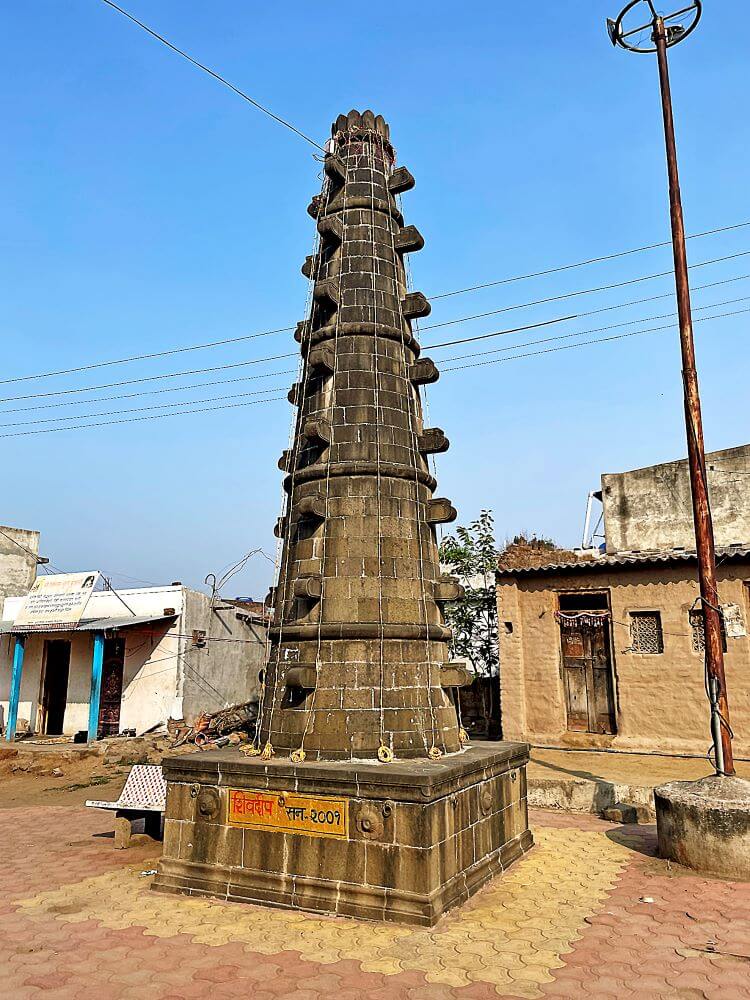
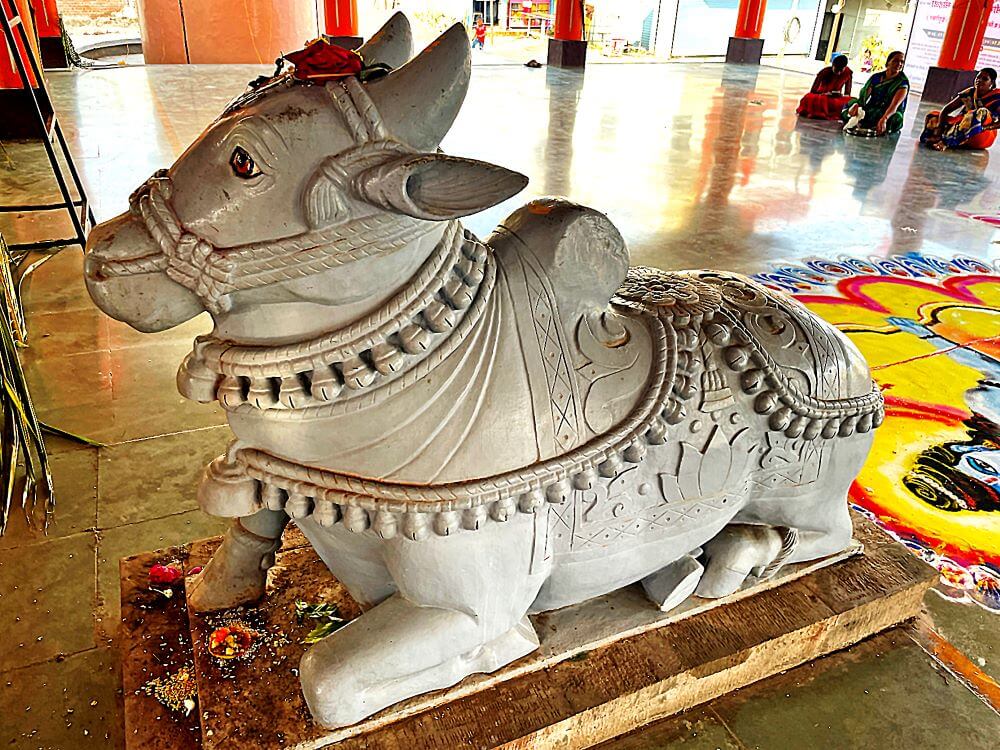
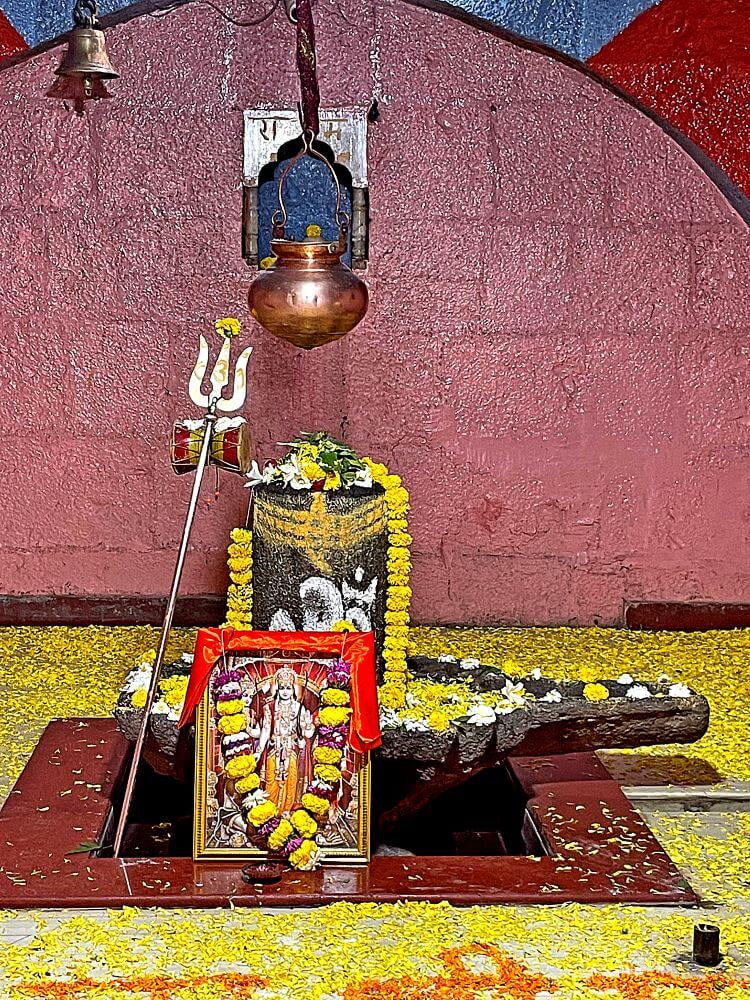
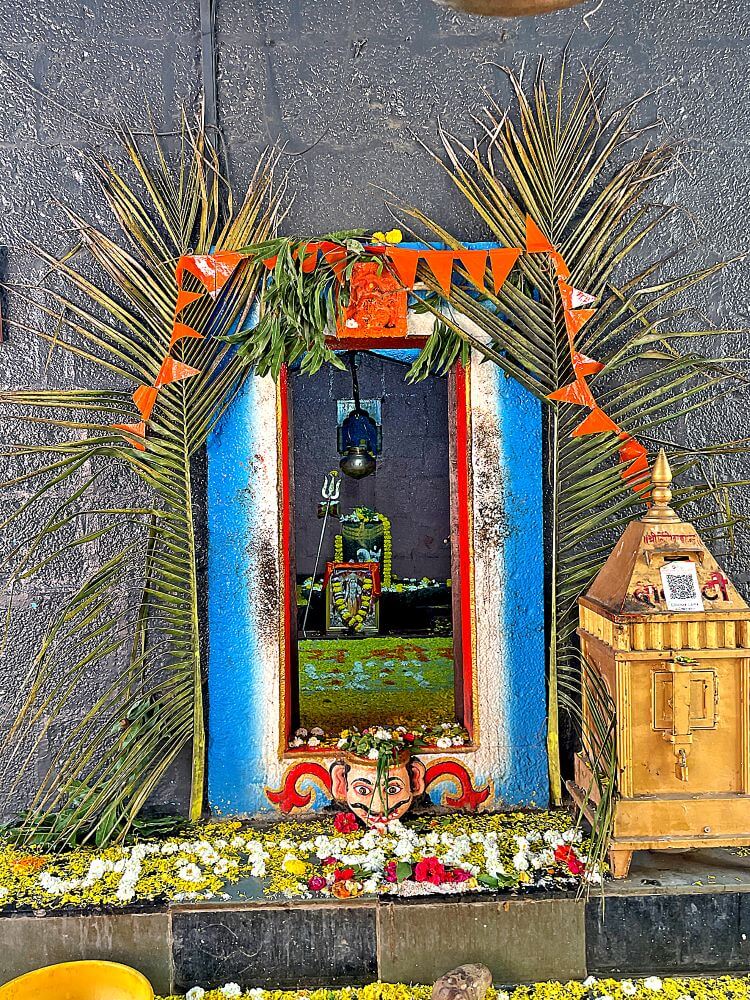
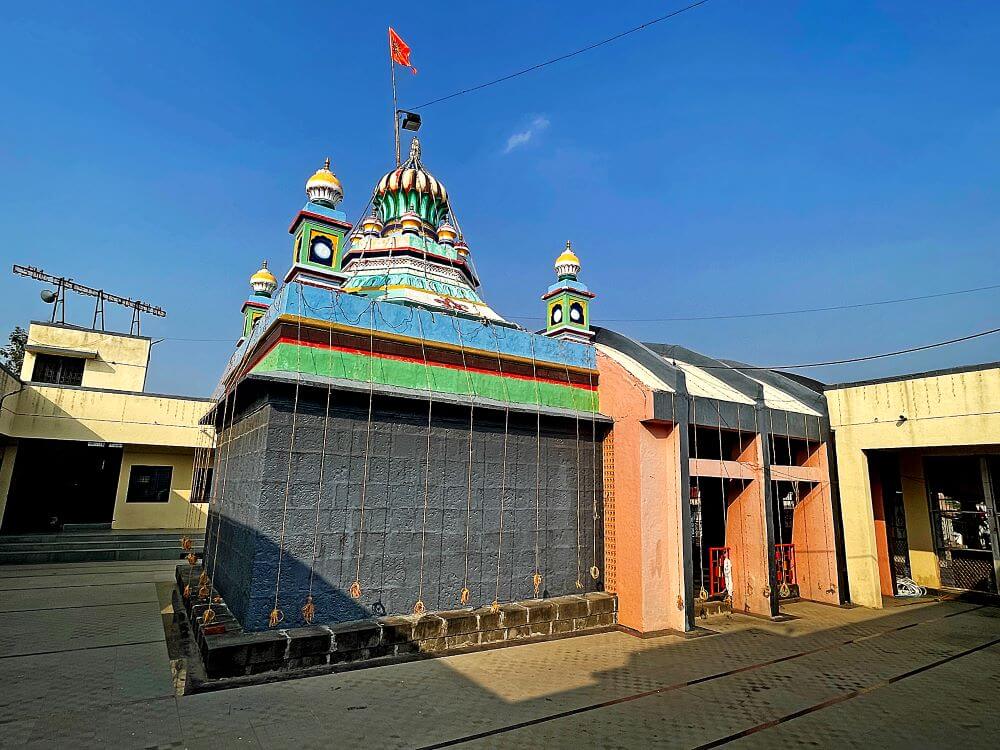
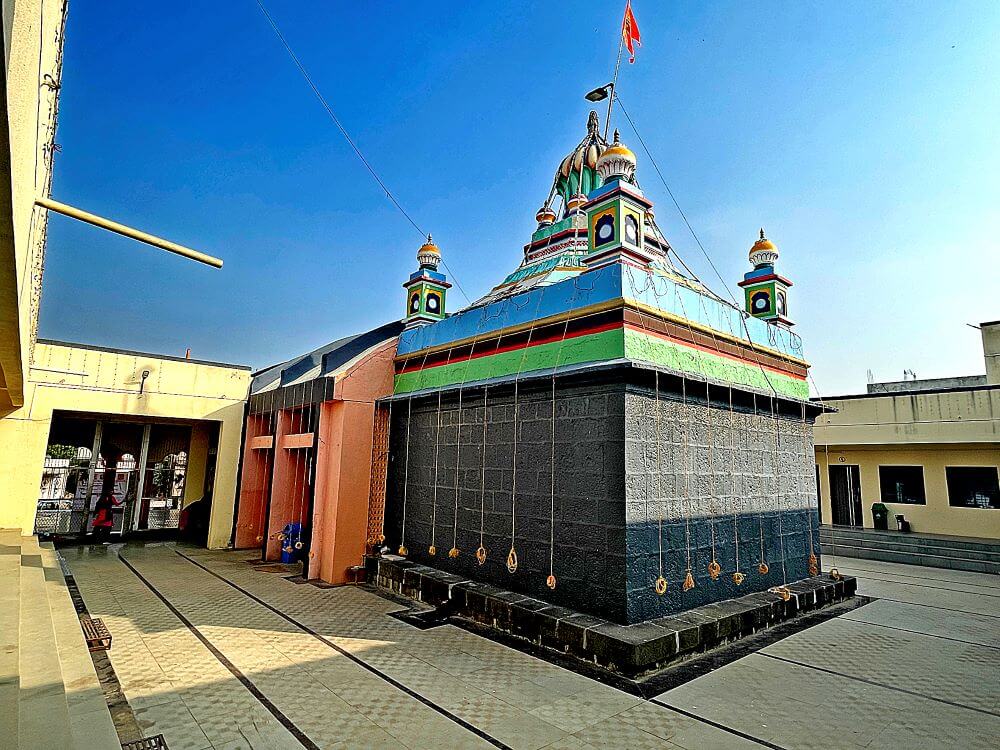
The Lingsheshwar Mahadev Temple is ancient, and records indicate that between the years 1775 and 1790, Ahilyadevi Holkar renovated this temple and built a stepped well (barav) here for drinking water. The temple complex is spacious, and in front of the temple entrance stands an ancient stone lamp pillar (deepmal) on a raised platform. The temple is situated at a height of four to five feet from the ground level. Following renovation work carried out in 2018, the temple acquired its present form. The architectural layout of the temple consists of a main porch (mukhamandap), a assembly hall (sabhamandap), and the sanctum sanctorum (garbhagriha). It appears that the sabhamandap was constructed subsequent to the original temple. In the center of the sabhamandap sits a pristine white Nandi adorned with distinctive craftsmanship. On the lintel (lalatbimba) above the entrance of the sanctum is an image of Lord Ganesha, while the lower section features a Kirtimukha sculpture. Inside the sanctum, the Shiva linga appears to emerge from a square, recessed depression. Additionally, marble idols of Lord Ganesha, Lord Bhairavnath, Radha-Krishna, Rama-Lakshmana-Sita, Lord Hanuman, and Vitthal-Rukmini are installed here. Adjacent to the main temple is a temple dedicated to Sri Dattatreya.
Devotees firmly believe that the Lingsheshwar shrine is a powerful and wish-fulfilling (navasala pavnari) holy site. The grand annual fair (yatrotsav) held here on the auspicious day of Gudi Padwa is celebrated as one of the largest festivals in Akole taluka. On this day, early in the morning, sacred rituals including the Mahapuja of Lingsheshwar, offering of the crown, adorning the deity with garments and ornaments, Maharati, the seasonal calendar recitation ritual (rutuman ukalvidhi), a grand procession, and a musical horse dance program are held. In the evening, the traditional musical arena (Sangeet Akhadi) commences. As the beat falls on the traditional drum (daf), the resonant sound of the wind instrument (tutari) echoes through the air. The cry, “Meherban salam, bazuse baju, kadamse kadam, sutradharachi swari aali. Galbala mat karos,” reverberates through the atmosphere, marking the grand entrance of the master of ceremonies (sutradhar) and the commencement of the Sangeet Akhadi. The musical performances continue all through the night, concluding at 7 in the morning.
The Sangeet Akhadi program held here is renowned, featuring dramatic street-play-style enactments of scenes from the Ramayana, Mahabharata, and Vishnu Purana. The prominent characters famously portrayed include the Sutradhar (narrator), Vidushak (jester), Ganapati, Saraswati, Rama Avatar, slaying of Tataka and Shurpanakha, the war between Sri Rama and Ravana, Satyavan-Savitri, the war between Arjuna and Karna, the war between Duryodhana and Bhima, Bhasmasura, and Mohiniraj. Hindus and Muslims have lived here harmoniously in peace and brotherhood for many years. Muslim youths have often portrayed the character of Lord Rama in the Sangeet Akhadi. Moreover, Hindu devotees enthusiastically participate in the Urs festival of the local Peer Baba. On the following day, the fair concludes with traditional wrestling competitions (kushti spardha). Renowned wrestlers from Kolhapur, Satara, Pune, Nashik, and Ahilyanagar grace this competition with their presence.
A fair is held on every Monday during the holy month of Shravana. On these days, Lingsheshwar Mahadev is worshipped with ritualistic offerings of one and a quarter lakh bel leaves. The temple premises also take on a festive fair-like atmosphere on the auspicious day of Maha Shivaratri. Mahaprasad is distributed to all visiting devotees throughout the day. A palanquin circumambulation procession takes place between 3 and 7 in the afternoon, in which thousands of devotees participate. This shrine has been included in the Maharashtra state government’s ‘C’ grade list of pilgrimage centers. (A shrine visited by more than one lakh up to four lakh devotees annually is granted the ‘C’ grade pilgrimage center status.)
This sacred temple stands as a testament to deep spiritual devotion, ancient architectural grandeur, and rich local cultural traditions.
The sanctum sanctorum houses the divine idol consecrated according to ancient Vedic traditions, surrounded by serene courtyards and traditional temple architecture.
Navratri, Maha Shivratri, Annual Temple Jatra & Deepotsav
Compare and book flights, secure top-rated local hotels near the temple, hire reliable guides, and rent cars instantly.
Extend your pilgrimage by visiting other highly sacred temples located nearby.

Add ₹999 more to unlock FREE SHIPPING!
Your sacred cart is currently empty.
Shop Photo FramesFill in your delivery details below to place your order.
Add comment