
Add ₹999 more to unlock FREE SHIPPING!
Your sacred cart is currently empty.
Shop Photo FramesSituated in the Sahyadri mountain ranges of Pune district, the city of Lonavala is famous for its natural beauty and religious structures. Narayani Dham, located in this picturesque area, is a beautiful confluence of modern temple architecture and ancient Indian craftsmanship. Established in the year 2002 in the Tungarli area, this temple is considered an important pilgrimage site in Maharashtra. Spread over an area of four and a half acres, this temple complex holds special significance among devotees due to its serenity, disciplined management, and the continuous religious and social activities conducted here.
The construction of Narayani Dham Temple was undertaken with a broad social and spiritual vision. The initial concept for building this magnificent temple was proposed in the late 1990s, and actual construction began in the year 2000. It took approximately two years to complete the main structure of the temple. In May of the year 2002, the idol of Narayani Devi was consecrated here. The entire complex is managed by a public trust named ‘Shri Narayani Seva Sansthan’. The foundation stone of the temple was laid under the guidance of the chief founding trustee, Shri Madhusudan Jhunjhunwala. After the initial construction, the complex was expanded, and the entire premises were officially inaugurated on 24 May 2010. Not limiting itself to religious rituals, the organization, inspired by the motto ‘Society First’, also contributes to the fields of health and education.
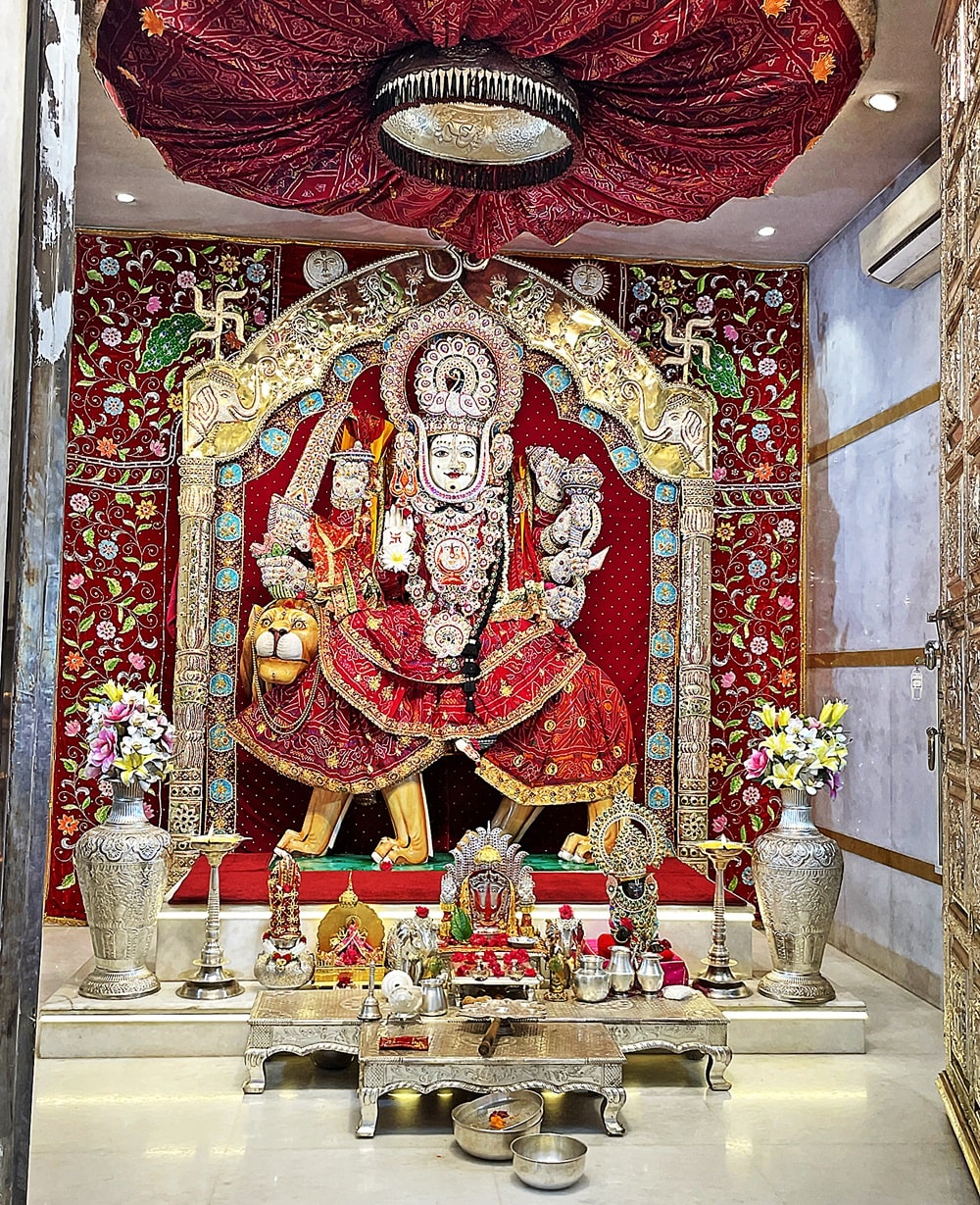
The presiding deity of Narayani Dham is Narayani Devi. This Goddess is worshipped in Rajasthan by the name ‘Rani Sati’ or ‘Dadi’. In the ‘Narayani Stuti’ found in the eleventh chapter of the ‘Durga Saptashati’ from the Markandeya Purana, special importance is given to this Goddess, who is considered a form of the Adi Shakti (Primal Energy) that creates and protects the world. According to the boon granted by Lord Shri Krishna to Uttara in the Mahabharata, she was born in the Kali Yuga in the form of Narayani Devi. Later, she became famous as ‘Rani Sati’. Born into a religious family in Rajasthan, she was married to Tandhan Das. After her husband attained martyrdom, Narayani Devi is considered a form of Shakti due to the immense courage she displayed. Following the original tradition from Jhunjhunu in Rajasthan, devotees worship this Goddess, who is a symbol of devotion and female power, as ‘Dadi’. The idol installed at Shri Narayani Dham in Lonavala is inspired by the tradition of Jhunjhunu. This idol is believed to be a form of Lakshmi. Devotees believe that reading the ‘Dadi Mangal Path’, a scripture describing the life of the Goddess, brings happiness, peace, and prosperity.
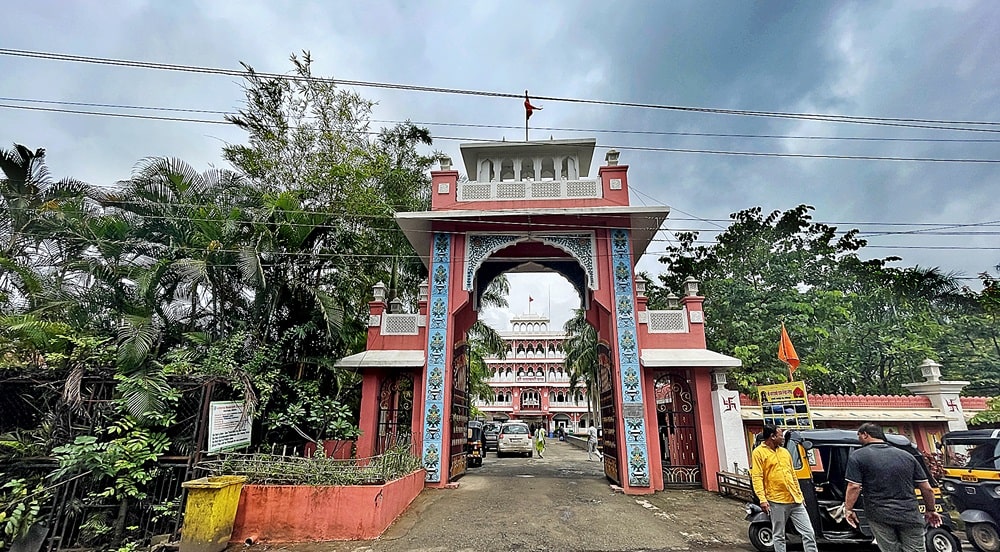
This temple of Narayani Devi is located on the outskirts of Lonavala city in the Tungarli area. Situated at an altitude of approximately 622 meters above sea level, the climate here remains pleasant and refreshing throughout the year. One enters the temple courtyard through a grand archway adjacent to the main road. The premises are extremely clean and well-maintained. On both sides of the entrance path, there are beautiful gardens planted with rose bushes specially brought from Kashmir, along with other indigenous and exotic flowers. There is a beautiful fountain on this path. In the center of the courtyard stands a large meditative statue of Lord Shiva.
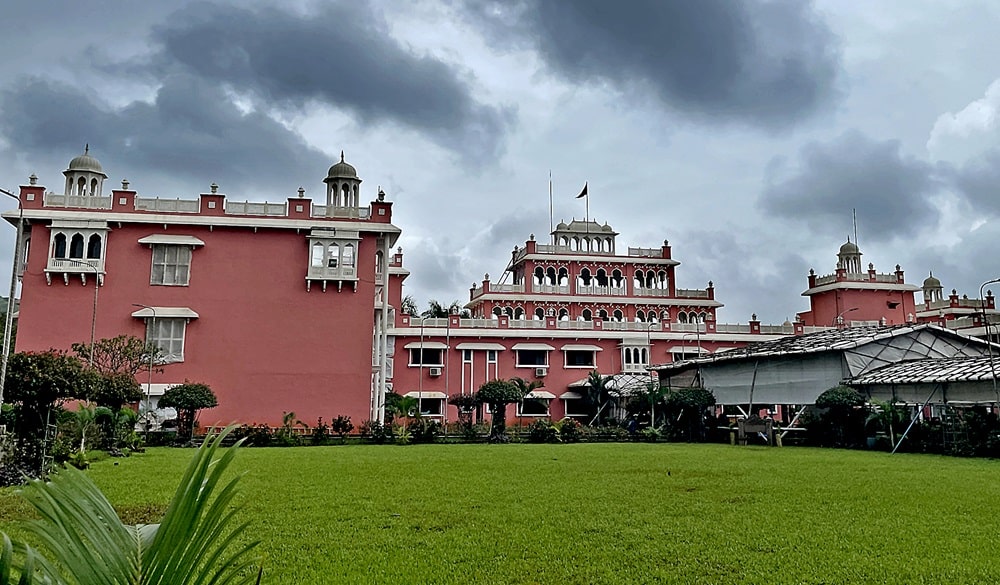
Shri Narayani Dham Temple is an excellent example of Rajasthani Marwari style and modern Hindu temple art. Special white marble from Rajasthan has been used for the construction of this temple. This structure has been realized through the tireless efforts of experienced artisans from that region. The entrance path begins with a grand four-story main gate, which resembles the entrance of a palace carved in white marble. To enter the main temple structure, devotees must climb 21 marble steps. Upon climbing these steps, one enters the spacious front hall (Mukhamandapa) of the temple.
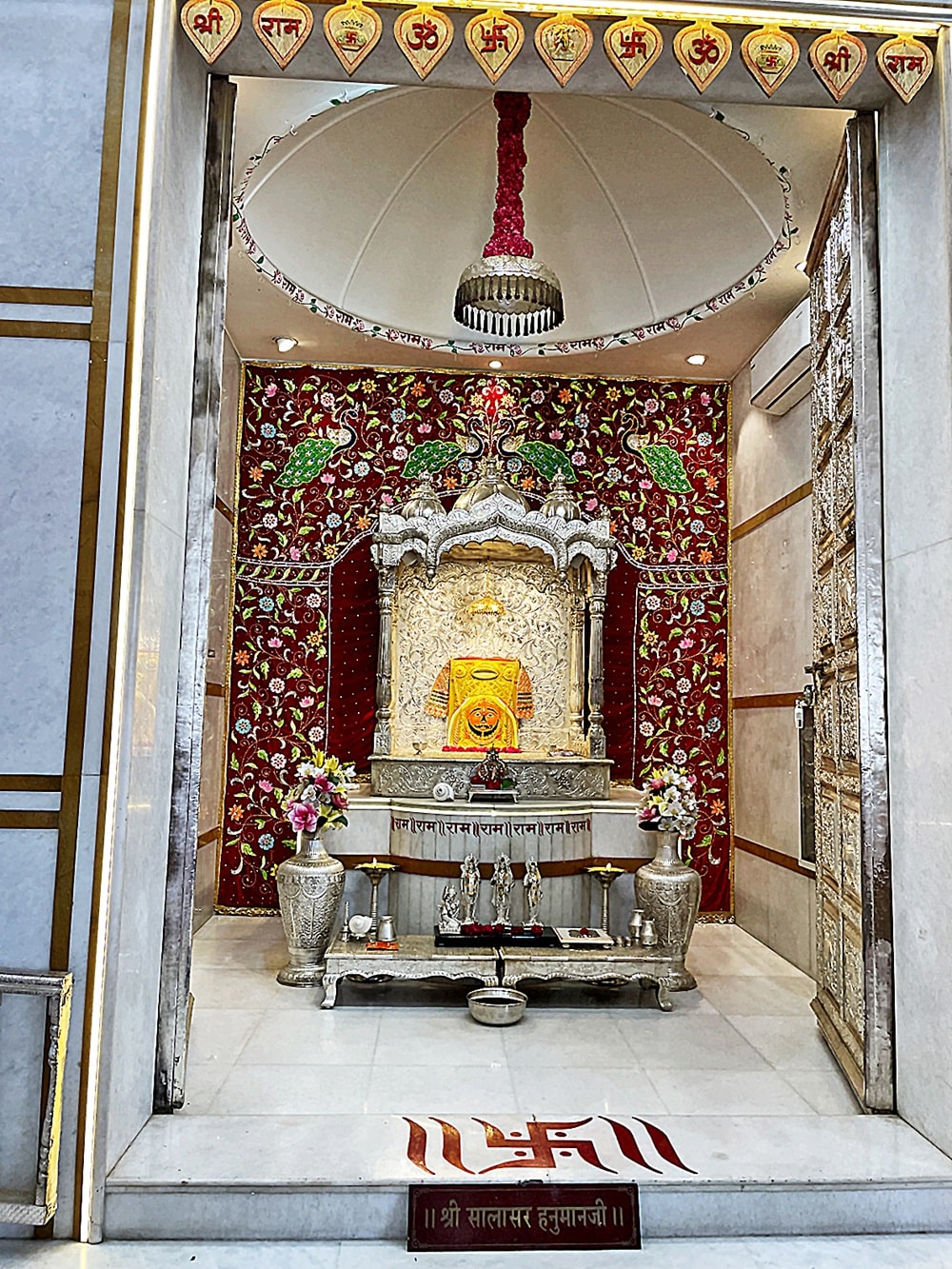
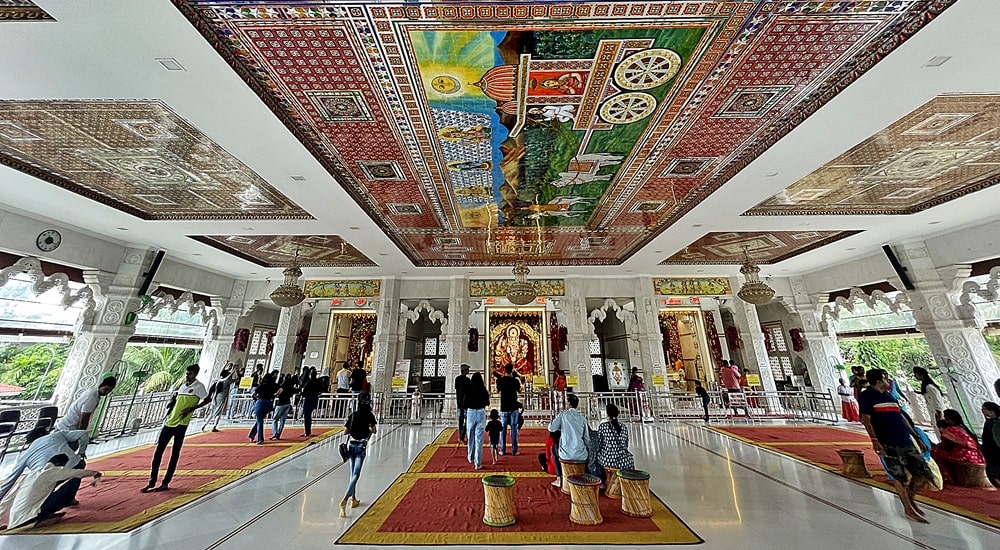
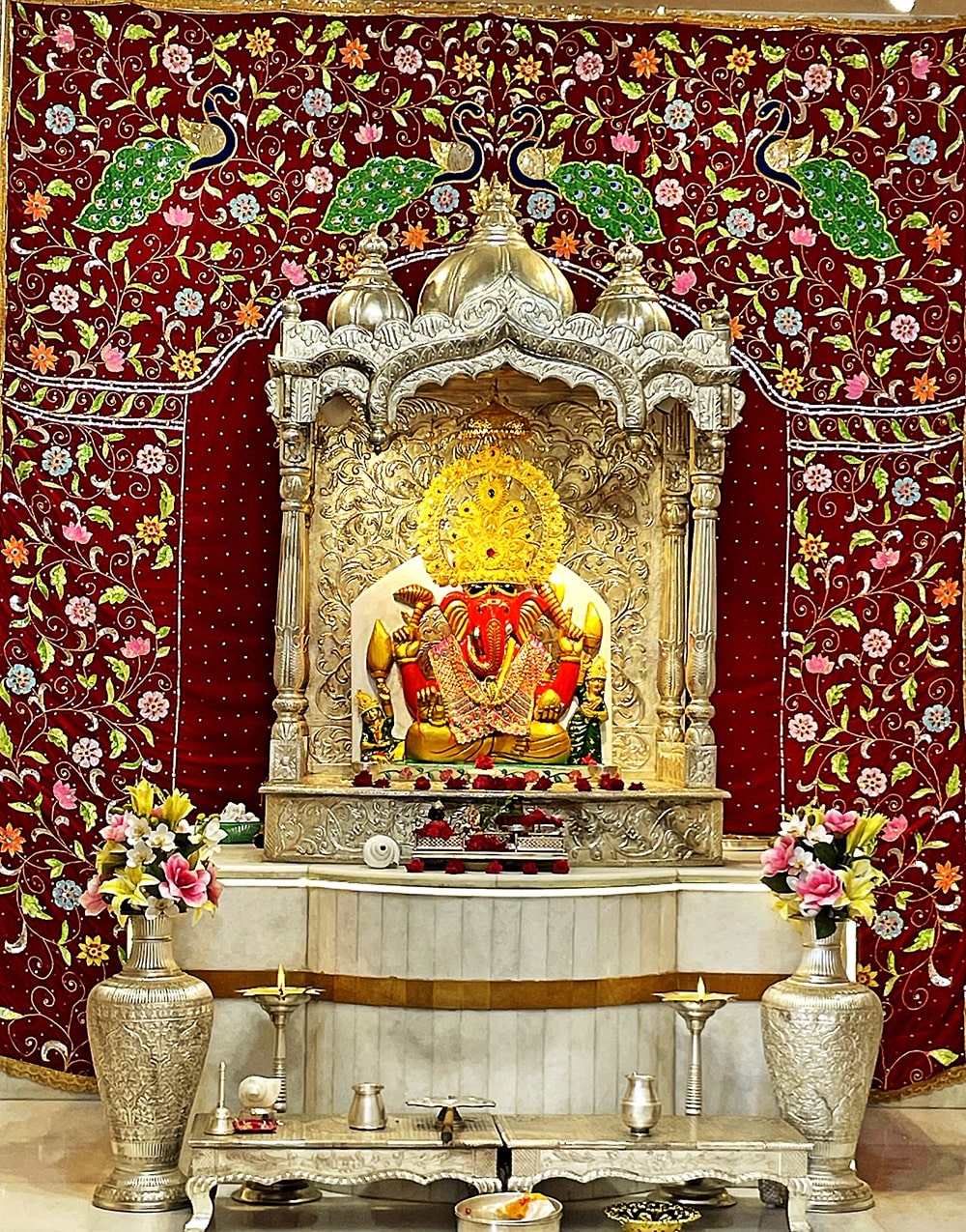
The main assembly hall (Sabhamandapa) is very spacious. On every pillar of the assembly hall, idols of gods and goddesses, flowers, and various geometric patterns are intricately carved. The ceiling of the assembly hall is decorated with the use of various colors and attractive designs. In the assembly hall, there are separate sanctums for Siddhivinayak on the left and Salasar Hanuman on the right. Both these idols are seated in beautiful silver thrones. The entrance to the main sanctum features gold-plated carvings. Inside the sanctum, an eight-foot-tall idol of Narayani Devi is installed in a golden throne. This idol is carved from a single, unbroken piece of marble. The Goddess is depicted riding a lion. The Goddess is adorned with precious jewelry. The exterior of the temple features tall spires in the Rajasthani style, topped with golden finials. The attractive lighting on the temple at night makes its appearance even more enchanting.
Several auxiliary structures have been built in this temple complex for the convenience of devotees. Next to the main temple is a Yajnashala, where various religious rituals and fire sacrifices (Homa-Havan) are performed. There is a well-equipped cowshed (Goshala) in this area, where 40 to 50 cows are nurtured. The milk from these cows is used for the temple’s Prasad. The Satsang Bhavan here has a large hall with a seating capacity of 10,000 devotees. Religious and social programs are often organized here. For visiting devotees, there are facilities including 62 rooms, 4 luxury cottages, and a dormitory. The medical center in the complex provides free check-ups for patients daily. In particular, regular camps are held here for cataract surgeries.
At Narayani Dham, various festivals are celebrated with great enthusiasm throughout the year. During the Navratri festival in the month of Ashwin, the Goddess is adorned with special decorations for nine days, and an Akhand Jyot (eternal flame) is lit. Festivals such as Ganesh Chaturthi in the month of Bhadrapad, Hanuman Jayanti in the month of Chaitra, and Shri Krishna Janmashtami in the month of Shravan are celebrated with immense fervor. During Diwali, the entire temple premises light up with a grand Deepotsav (festival of lights). In the month of Margashirsha, ‘Mangsir Badi Navami’ is celebrated as a special festival of Narayani Devi. At the end of December, an eight-day Bhagwat Saptah is organized here, in which a large number of devotees participate. The daily rituals at the temple include the early morning Mangal Aarti, Shringar Aarti, Madhyanha Aarti, evening Aarti, and the nightly Shayan Aarti. Devotees can have Darshan of the Goddess from 7:00 AM to 12:00 PM and from 3:15 PM to 9:30 PM.
This sacred temple stands as a testament to deep spiritual devotion, ancient architectural grandeur, and rich local cultural traditions.
The sanctum sanctorum houses the divine idol consecrated according to ancient Vedic traditions, surrounded by serene courtyards and traditional temple architecture.
Navratri, Maha Shivratri, Annual Temple Jatra & Deepotsav
Compare and book flights, secure top-rated local hotels near the temple, hire reliable guides, and rent cars instantly.
Extend your pilgrimage by visiting other highly sacred temples located nearby.


Add ₹999 more to unlock FREE SHIPPING!
Your sacred cart is currently empty.
Shop Photo FramesFill in your delivery details below to place your order.
Add comment