
Add ₹999 more to unlock FREE SHIPPING!
Your sacred cart is currently empty.
Shop Photo FramesBhavani, the fierce yet benevolent embodiment of Shakti, is known for protecting her devotees and destroying evil. Worshipped as the Kuldevi of Maharashtra, her primary Shakti Peetha is located in Tuljapur, which is why she is known as Tuljabhavani. A renowned temple dedicated to this powerful goddess stands in the village of Ranu in Vadodara district. With a history stretching back nearly 800 years, this temple is revered as the spiritual center for many families in Vadodara. Just like the Tuljabhavani of Tuljapur, the deity here is considered ever-present and responsive by thousands of devotees, drawing worshippers from both Gujarat and Maharashtra.
According to local lore, Ranu was once the site of an ashram belonging to Lord Parshuram. A 10th-century sculpture of the sun god was unearthed here, which is now housed in the sculpture museum at the EME Temple complex in Vadodara. This discovery hints that the history of Ranu dates back at least to the 10th century. Art historian Prof. Deepak Kannal, former Dean of the Faculty of Fine Arts at Maharaja Sayajirao University, believes that the region around the Tuljabhavani Temple had a settled population since medieval times. Based on architectural remnants, he suggests the temple was likely constructed in the 11th or 12th century, with the idol itself possibly belonging to the Chalukya era.
A compelling legend surrounds the temple’s origin. Around 900 years ago, a devout sage named Vishwambhar Maharaj arrived in Ranu. Inspired by a divine vision, he kindled a sacred fire that has never been extinguished and dug a small lake for the people’s benefit. During the excavation of this lake, known as Manasarovar, he discovered a self-manifested idol of the goddess. With proper rituals, he enshrined the idol and its fame soon spread across nearby regions. Even Swaminarayan, the founder of the Swaminarayan tradition, visited this temple around 200 years ago, held spiritual discussions with the then-head of the temple, Prabhatgiri Maharaj and addressed devotees. A blanket (godhadi) he gifted to Prabhatgiri Maharaj is still preserved in the temple.
Between 1870 and 1875, the ruler of Baroda state, Maharaja Malharrao Gaekwad, expressed his deep devotion to Tuljabhavani. Before him, his elder brother Khanderao Gaekwad had reigned. According to a biography of Sayajirao Gaekwad III written by Daji Nagesh Apte in 1936, Malharrao had allegedly plotted to assassinate Khanderao, resulting in his arrest and confinement in Padra in 1863. During his imprisonment, Malharrao vowed to offer magnificent jewelry to the goddess if he were released. On November 28, 1870, on the day of Champa Shashti, Khanderao passed away from an abdominal ailment and Malharrao was released and ascended the throne. In fulfillment of his vow, he presented the goddess with a crown studded with diamonds, a necklace, earrings, anklets and bangles. During the grand Navratri festivals in Chaitra and Sharad, the goddess is adorned with these royal ornaments. At other times, they are securely stored in the government treasury.
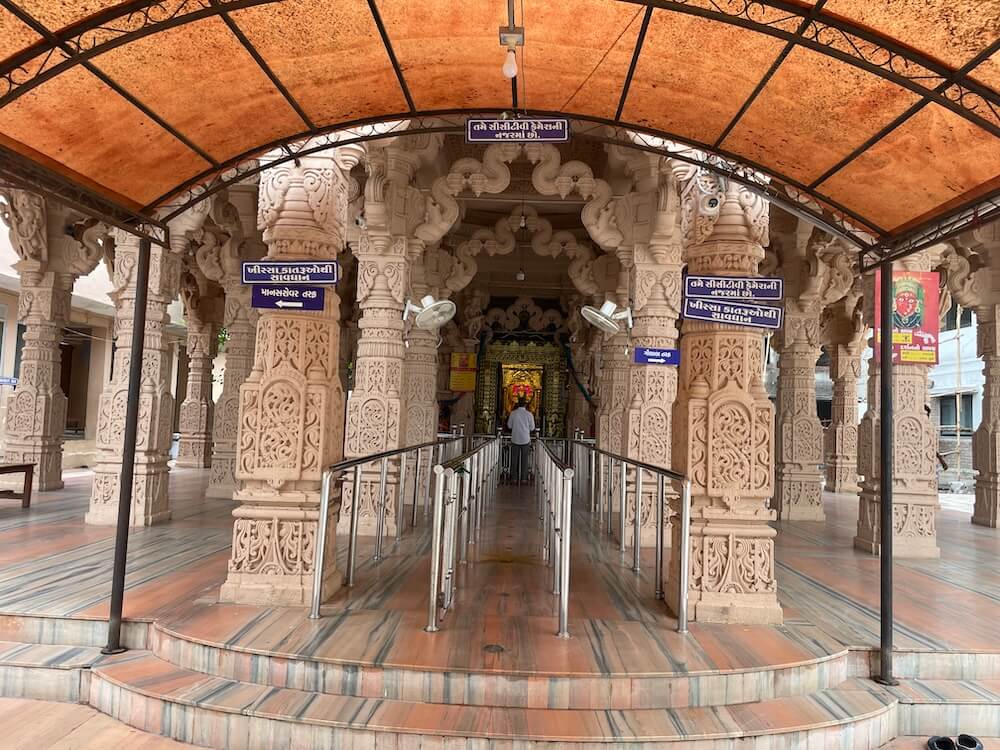
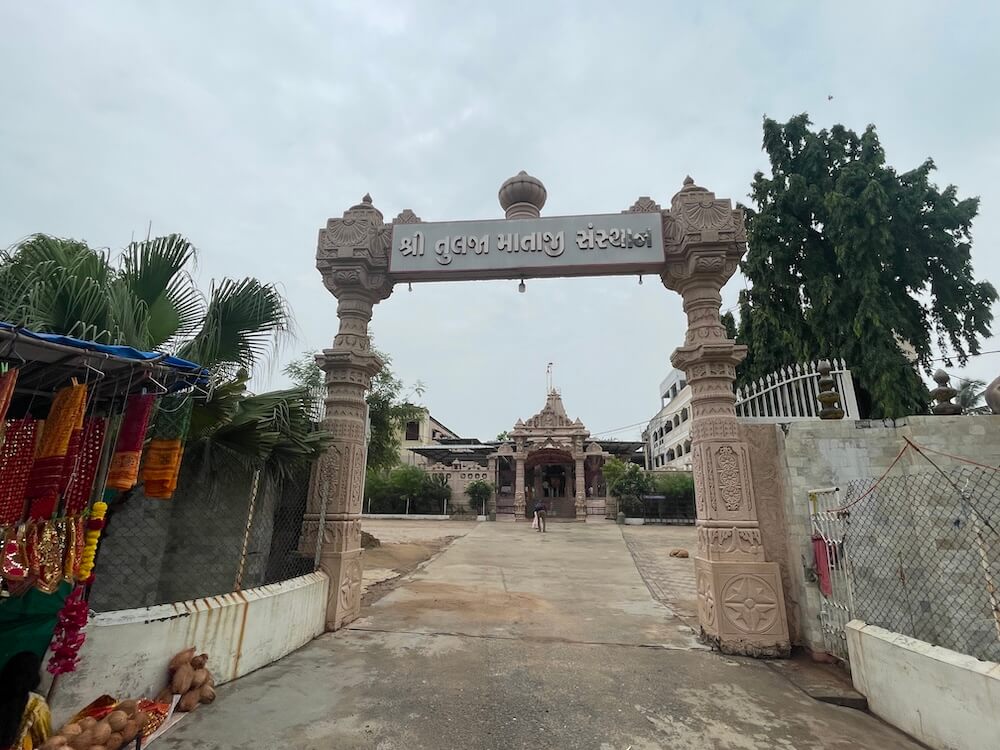
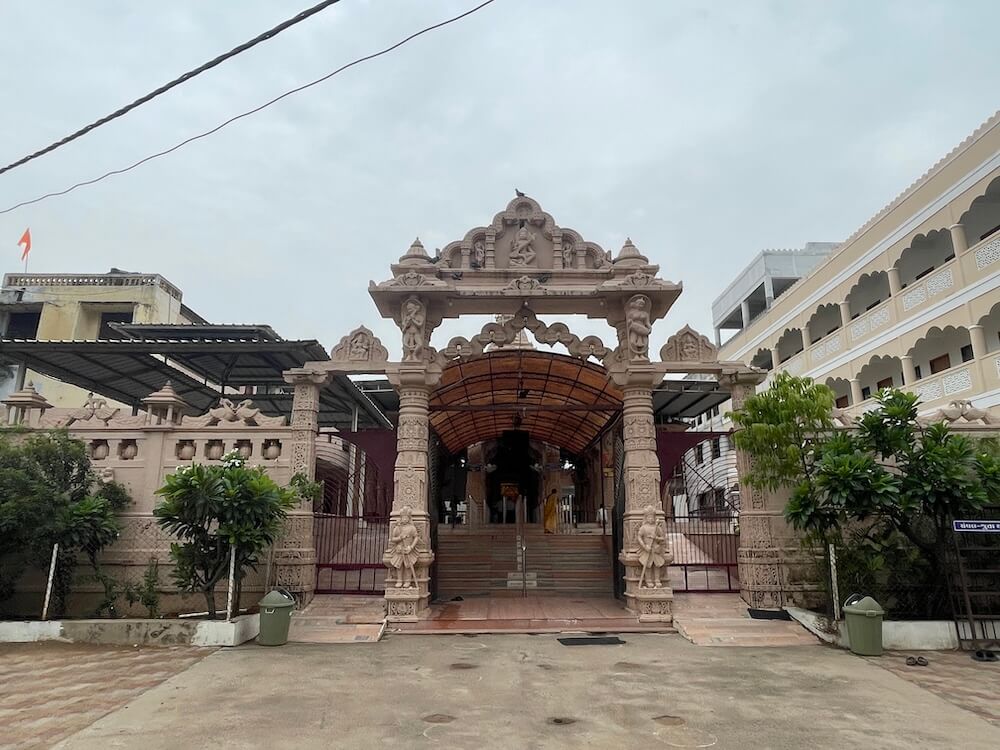
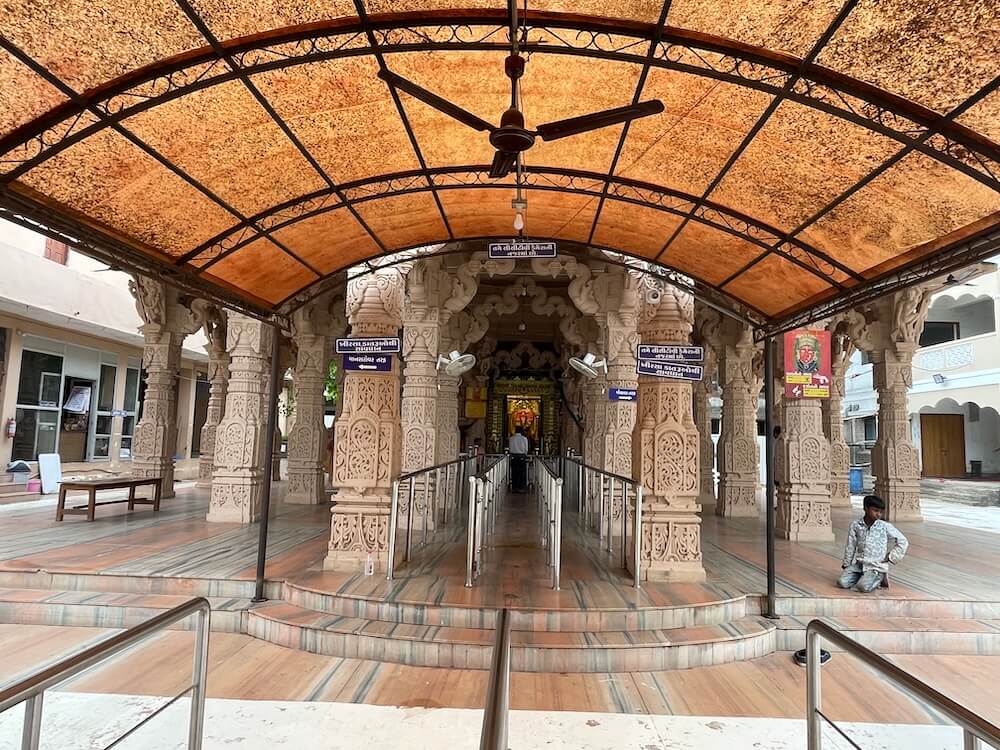
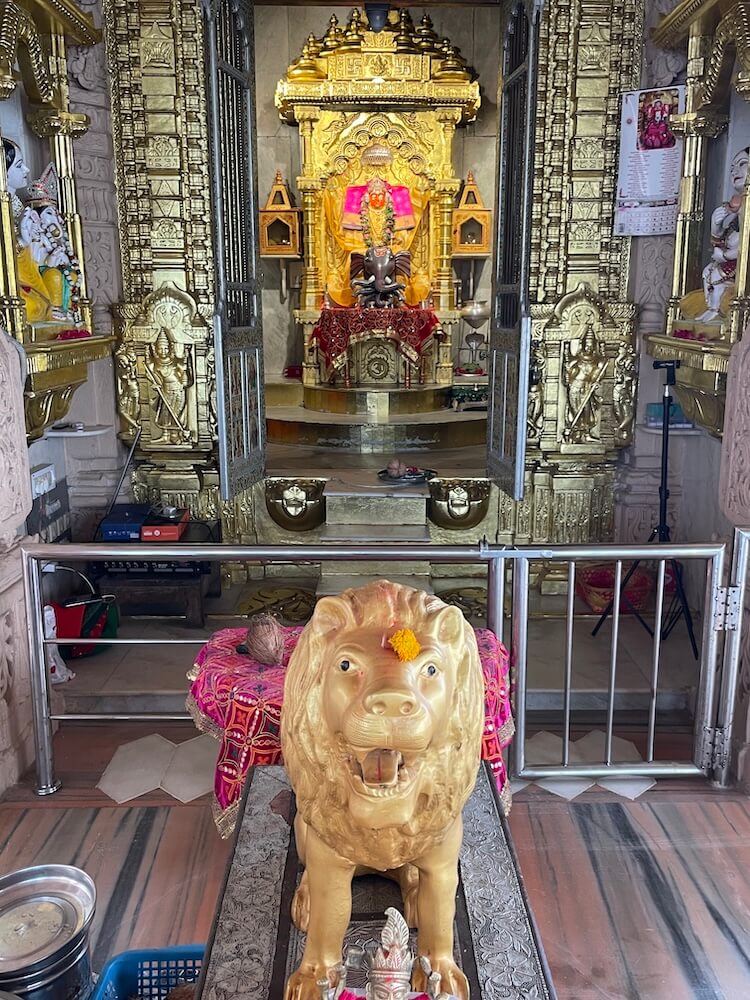
The ancient temple is nestled in a spacious courtyard in the village of Ranu. It is enclosed by a perimeter wall and features a grand entrance gate adorned with intricately carved columns, arches and ceiling panels. Statues of divine gatekeepers stand on either side to welcome visitors. Just past the eight stone steps at the entrance, a Yajna Mandap appears to the left, used for performing various religious rituals. The path to the central temple is covered with a canopy for shade. Constructed in the Nagara style using pink sandstone, the temple comprises an open hall, an antechamber and a sanctum sanctorum. The hall is topped with a domed spire, while the sanctum features a tall spire that blends both Nagara and Dravidian styles. The temple’s pillars boast delicate carvings, with makar toranas spanning between them and elegantly sculpted celestial maidens atop each column. The outer walls are adorned with figures of gods, sages and saints. A bronze lion, vehicle of the goddess, stands on a pedestal in the hall. On either side of the antechamber, one can find the image of child Ganesha seated on Parvati’s lap and child Hanuman seated on Anjani Mata’s lap. The sanctum is elevated above the hall and accessed via golden-gilded, intricately carved stone doors. On the lintel is a sculpture of Ganesha, flanked by doorkeepers and doorkeeper maidens carved into the doorposts. Two kirtimukhas are etched into the tall threshold. Ascending four steps leads into the sanctum where, on a tall brass pedestal beneath a golden shrine, the idol of Tuljabhavani rests. The idol, with a vermilion-painted face, is dressed in finery, crowned with silver and shaded by a silver parasol. In front of the goddess stands a unique sculpture of a six-trunked elephant.
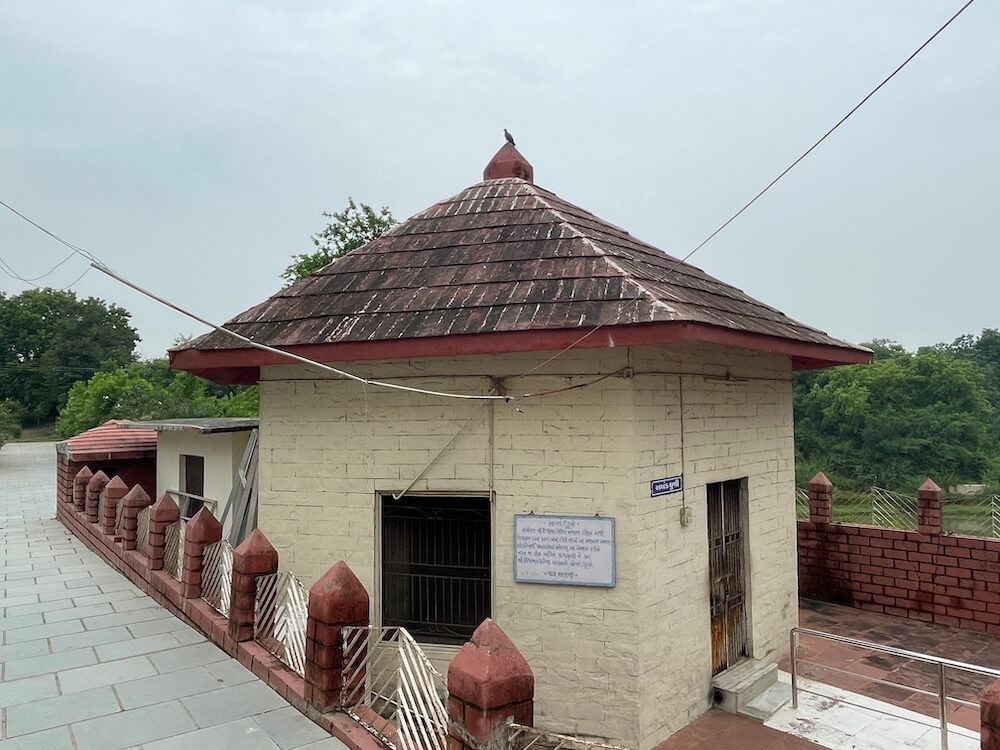
A blanket gifted by Swaminarayan to Prabhatgiri Maharaj is displayed nearby. To the left of the temple are the goshala and the trustees’ office. At the rear, a portico houses a standing idol of Ganesha and a striking image of Parshuram raising his axe. Beside Ganesha stands a preserved lintel from the original temple, likely dating back to the 11th or 12th century, bearing ancient carvings. From here, a path leads to the sacred Manasarovar. Along the way stands the ever-burning dhuni established by Yogiraj Vishwambhar Giriji Baba during his travels through Gujarat. The medieval bricks used in the construction of the lake embankment are a testament to its antiquity.
The temple is currently managed by the Tuljabhavani Sansthan. Daily darshan is available from 6 AM to 8 PM. Aartis are performed twice daily at 6 AM and 6 PM. On Sundays, the goddess is decorated in forms of Lakshmi and Saraswati and rituals like Shri Yantra puja, havans and other ceremonies are performed. Both Chaitra and Sharadiya Navratri are celebrated with great devotion, during which the goddess is adorned in various forms and large crowds of devotees gather to seek her blessings.
This sacred temple stands as a testament to deep spiritual devotion, ancient architectural grandeur, and rich local cultural traditions.
The sanctum sanctorum houses the divine idol consecrated according to ancient Vedic traditions, surrounded by serene courtyards and traditional temple architecture.
Navratri, Maha Shivratri, Annual Temple Jatra & Deepotsav
Compare and book flights, secure top-rated local hotels near the temple, hire reliable guides, and rent cars instantly.
Extend your pilgrimage by visiting other highly sacred temples located nearby.


Add ₹999 more to unlock FREE SHIPPING!
Your sacred cart is currently empty.
Shop Photo FramesFill in your delivery details below to place your order.
Add comment