
Add ₹999 more to unlock FREE SHIPPING!
Your sacred cart is currently empty.
Shop Photo FramesNestled in the Chakur taluka of Latur district, the Vatsiddha Nagnath Temple and the adjacent Sanjeevani medicinal hill (Bet) represent a unique confluence of spirituality, botany, and natural wonders. This ancient temple dates back to the twelfth century and stands as a testament to the rich historical and religious heritage of the region. The protected plateau surrounding the temple houses a vast treasure trove of rare medicinal plants. The biodiversity and deep-rooted faith of the local area have bestowed special significance upon this region. Known for its spiritual tranquility and healing natural landscape, this site is a vital center for devotees, botanical researchers, and traditional healers.
According to the text ‘Navnath Bhaktisar’, Vatsiddha Nagnath is an incarnation of ‘Avirhotra’ Narayana, one of the Navnarayanas. At the beginning of the Kali Yuga, Lord Vishnu commanded the Navnarayanas to incarnate on Earth to establish Dharma. Accordingly, Avirhotra Narayana took the form of Nagnath. As per the legend in the text, a serpent consumed the semen of Lord Brahma. Narayana’s divine energy entered her womb, and she laid an egg in the hollow of a Banyan tree. In time, the egg hatched, and a child was born. At that moment, a poor but Vedic scholar named Koshadharma, an Atharvavedi Gaud Brahmin, was collecting Banyan leaves. Hearing the child’s cries and recognizing him as a divine being, he brought the child home. His wife, Suradevi, raised the boy. Because he was born in the hollow of a Banyan tree and performed miracles under its shade, he came to be known as ‘Vatsiddha Nagnath’ or ‘Vadval-Siddha’. His thread ceremony (Maunjibandhan) was performed at the age of seven, and later, Guru Dattatreya initiated him into the Nath tradition. Interpreting the mythological metaphors scientifically, it is believed that Vatsiddha Nagnath would sit in the hollow of the Banyan tree, using a serpent’s sloughed skin as a seat, to perform the rigorous yoga practice known as ‘Bindu Trataka’. Vatsiddha Nagnath attained Sanjeevan Samadhi at Vadval in Latur district upon completing his divine mission. A tradition is observed every Friday of applying an ash paste made from cow dung to this Samadhi.
It is believed that according to the Ramayana, Lakshmana fell unconscious after being struck by the Shakti arrow during the war between Rama and Ravana. Hanuman was sent to fetch the Sanjeevani herb. Hanuman brought the Sanjeevani herb from this very hill to save Lakshmana’s life, which is why the hill is named Sanjeevani Bet. The rich red soil of Vadval village, located at the foothills of Sanjeevani Bet, is considered fertile for tomato cultivation. Vadval is famous as the ‘Village of Tomatoes’. Farmers here have brought about a major revolution in tomato production. Tomatoes from here are exported to states like Delhi, Uttar Pradesh, and Andhra Pradesh, as well as to international markets. This agricultural trade generates an annual economic turnover of eighteen to twenty crore rupees in the village.
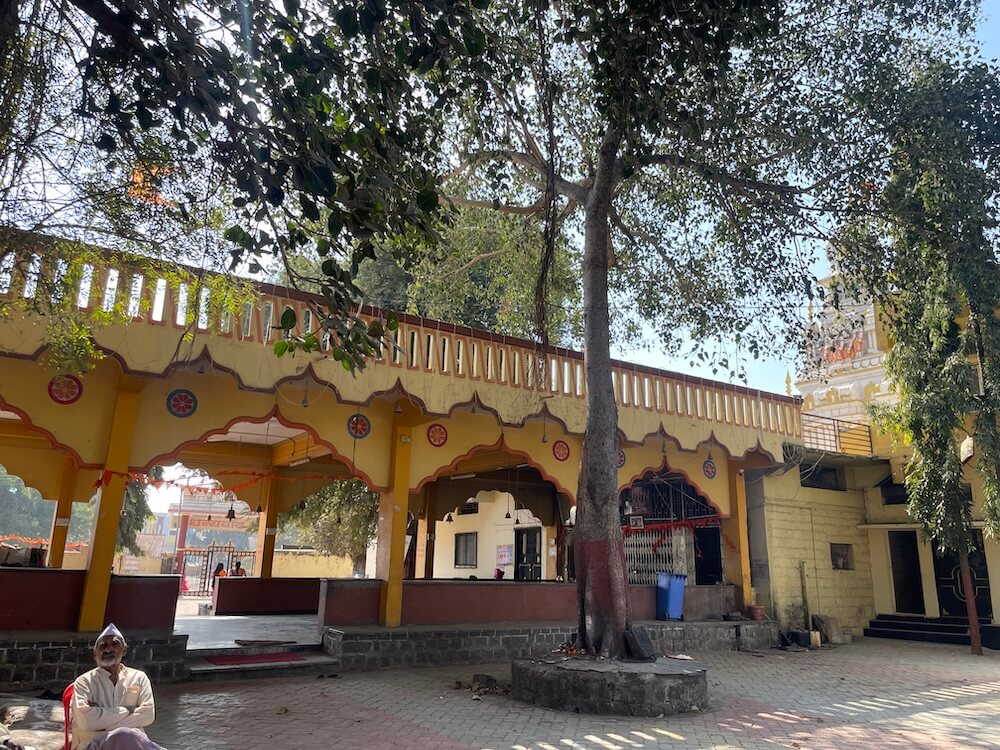
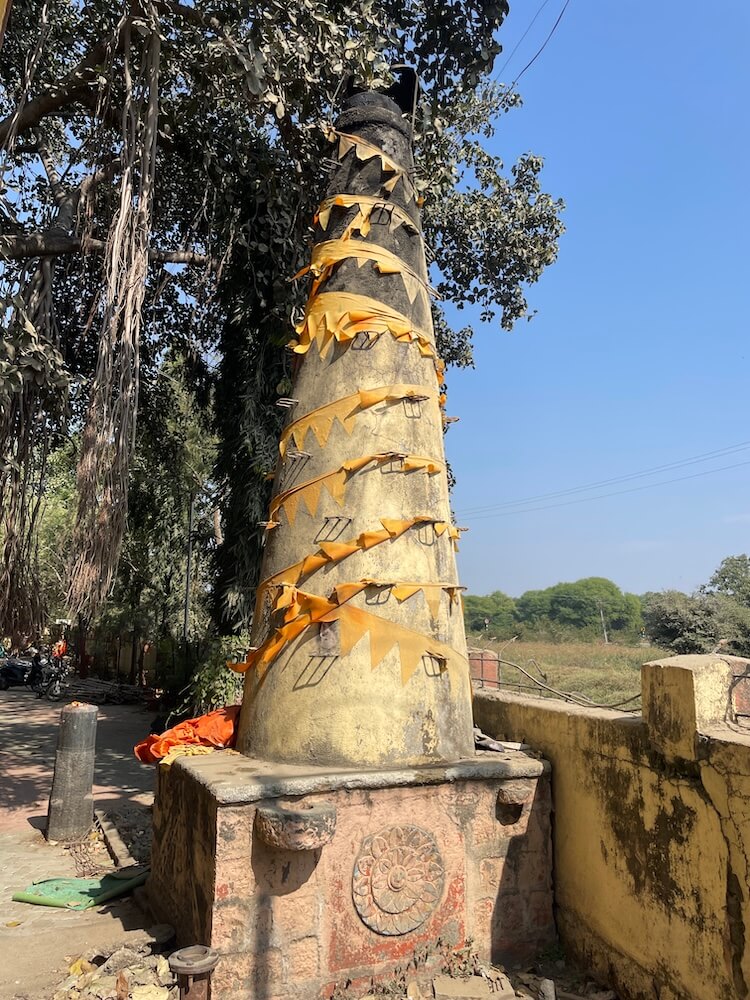
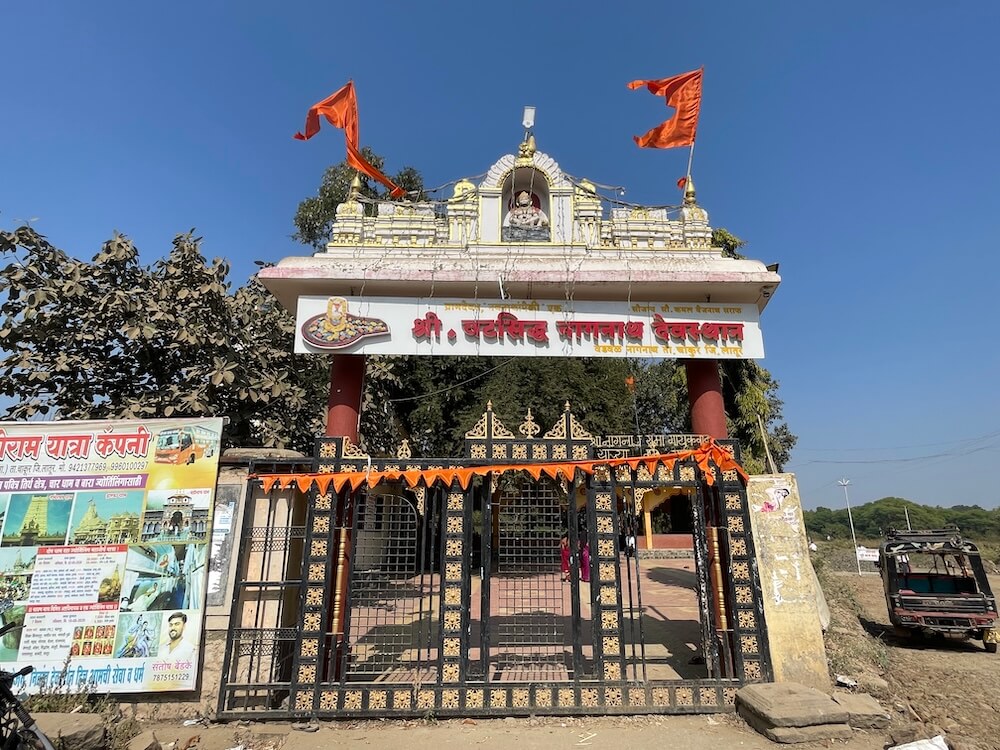
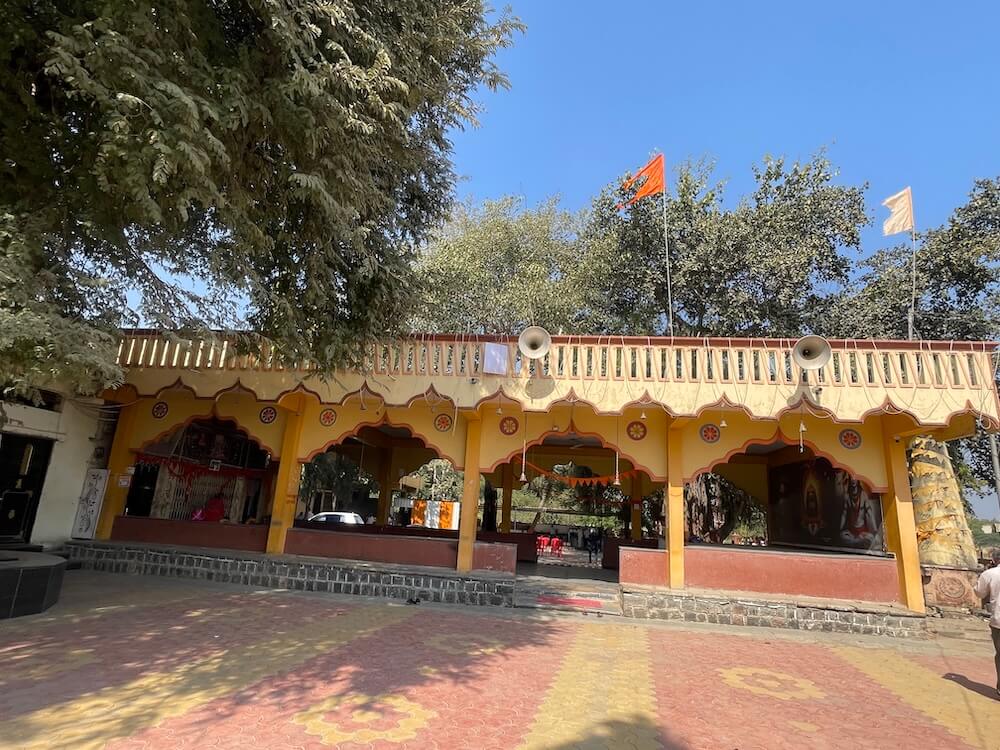
There is a direct road leading to the temple in the village. The temple is enclosed by a sturdy fortification wall, which includes an entrance gate and a welcome arch. Two circular pillars stand on either side of the entrance. The welcome arch features a Dravidian-style horizontal spire (Shikhara) atop the balcony of the pillars. In the center of the spire is a niche (Devakoshthaka) carved with a meditative idol of Nagnath. On both sides of the niche, there are turret and wall structures topped with finials (Kalash). The temple’s paver-blocked courtyard has seating arrangements for devotees under the shade of trees. There is an ancient well in the courtyard, which is said to have an inexhaustible water supply. Additionally, the courtyard houses residences for temple attendants and other structures. A Banyan tree stands in the courtyard, and under this tree, an idol of Nagnath is installed on a platform.
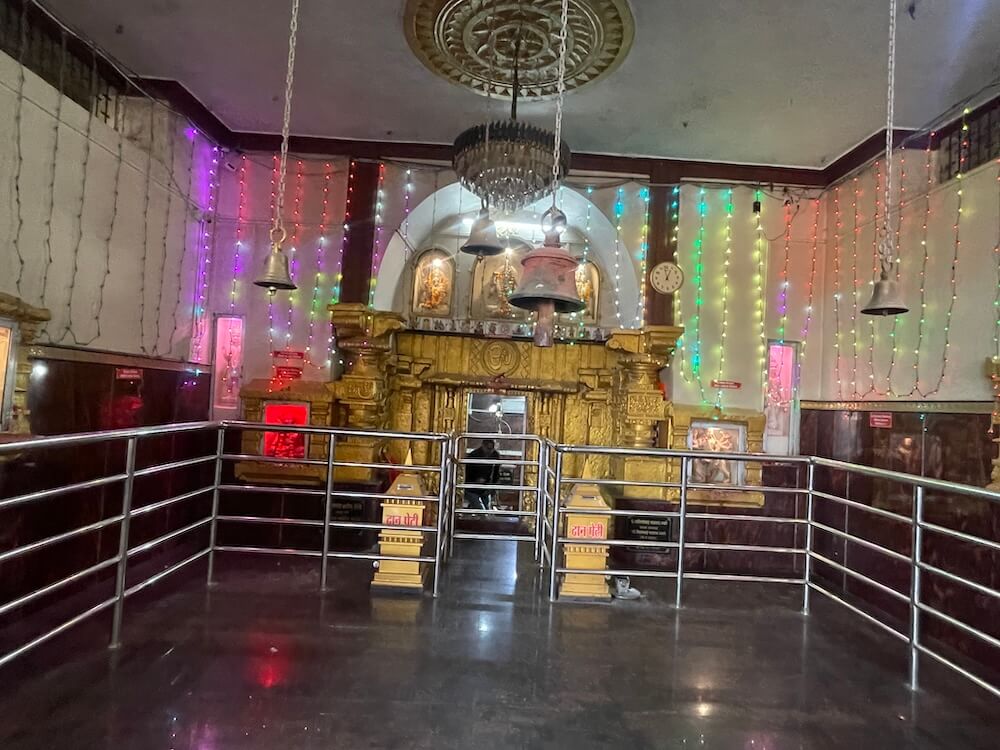
The temple structure consists of a Darshan Mandap (viewing hall), Sabha Mandap (assembly hall), and Garbhagriha (sanctum sanctorum). The Darshan Mandap was added to the original temple in recent times. The semi-open Darshan Mandap has a railing on the outer side, featuring pillars connected by arched toranas. In the Darshan Mandap, facing the entrance of the Sabha Mandap, there is a Shiva Linga and an idol of Nandi on a Vajrapitha. The enclosed Sabha Mandap has niches on the walls containing idols of various deities. The entrance to the Garbhagriha features ornate door frames and sculptures of gatekeepers (Dwarapalas). A sculpture of Lord Ganesha is carved on the lintel, with the symbol of Om inscribed above it. There are three niches above the entrance containing idols of Mahadeva, Ganapati, and Dattatreya.
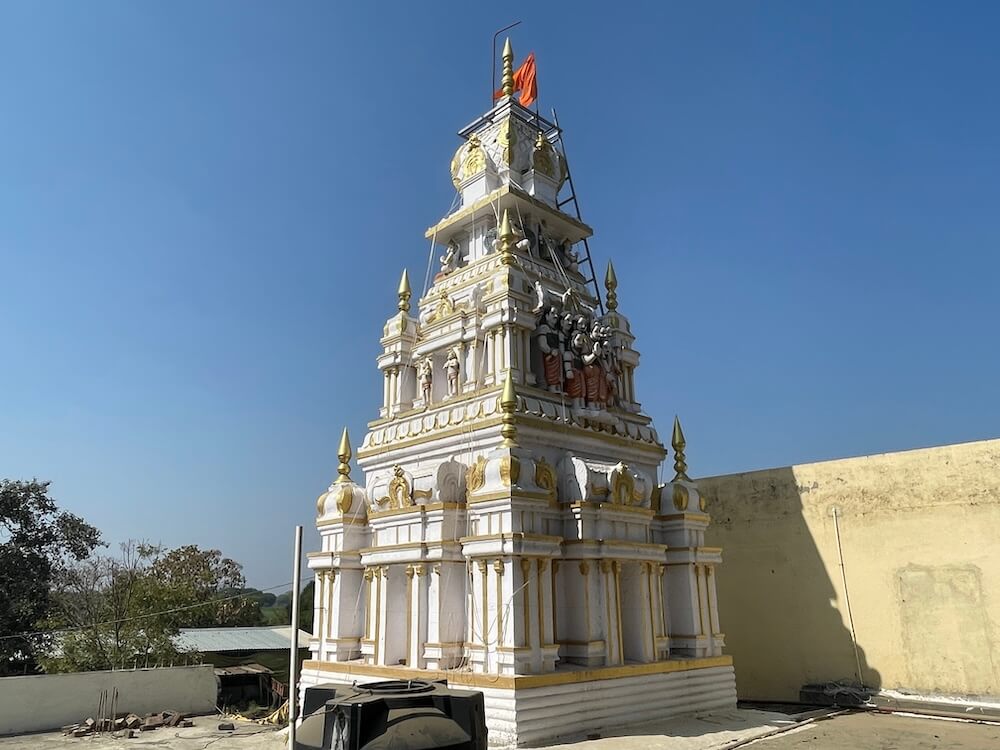
The Garbhagriha is situated lower than the Sabha Mandap, requiring one to descend about five steps. Inside the Garbhagriha, the Samadhi of Nagnath Maharaj lies beneath the ground, with a Shiva Linga placed on the surface. A silver replica of a serpent is installed over this Shiva Linga. An Abhishek vessel, which drips water onto the Shiva Linga, is suspended from the ceiling. The roof of the Garbhagriha features a four-tiered square spire. Each tier of the spire has turret structures at the four corners, topped with finials. The second tier of the spire features sculptures of the Navnathas on the front wall, while the third tier contains sculptures of other deities. The topmost tier of the spire is square and dome-shaped.
Ancient sculptures, idols of deities, and memorial stones (Veergals) are found scattered around the temple premises and the nearby Sanjeevani Bet. These physical remains indicate that a battle took place here in ancient times. Sanjeevani Bet is a hill rich in medicinal plants, with carved stone steps leading to its summit. Sanjeevani Bet is the only protected plateau in all of Maharashtra adorned with medicinal herbs and biodiversity. Approximately one hundred and seventy-seven types of rare medicinal plants grow naturally on this hill. Due to the unique soil, mineral-rich rocks, and climate of this hill, the plants growing here possess potent medicinal properties. A rare plant called ‘Dagad Pimpal’ is found here, which is useful for kidney ailments and internal body purification. The ‘Punarnava’ plant found here is a natural stimulant that helps reduce swelling and is effective in treating liver and urinary tract disorders. ‘Shivlingi’, a rare climbing plant, is a useful medicine for female infertility and uterine diseases. ‘Damvel’ is a respiratory-clearing medicine effective against asthma, cough, and other lung diseases. In addition, medicinal plants such as Adulsa, Gulvel, Somlata, Jakhamjodi, and Kapoor Madhuri are found here in abundance.
The scientific attraction of Sanjeevani Island is the ‘Lotangan Point’ on its plateau. A unique magnetic field with a diameter of more than one hundred feet is active on this plateau. When a person lies flat on the ground at this spot, keeps their body and mind completely still for two minutes, and takes three to four turns, they lose control over their own body and automatically slide forward along the ground. The person continues to slide forward due to the gravitational pull of the earth until another person catches and stops them. The influence of magnetic and gravitational forces is believed to be behind this physical phenomenon. On this island, there is a narrow cave about thirty to thirty-five feet long, which narrows down and closes at the end. Traces of square and rectangular stone masonry are visible on the sides of the cave. Historical remains indicate that this was a residence for soldiers or sages in ancient times. There are three large wells carved into the rock on the plateau to store water. Apart from this, there are round pits of various sizes in the rocks, which were used by ancient physicians like a mortar and pestle to extract juice from medicinal plants. There are small temples of Vitthal-Rakhumai and other deities on the plateau.
Every year, a fifteen-day health pilgrimage (Arogya Yatra) is held on Sanjeevani Island during the ‘Uttara Nakshatra’. Patients, physicians, Ayurvedic researchers, and experts in forest herbs from all over the country come in large numbers for this pilgrimage. Patients who come to this island consume only rare plants and leaves for three consecutive days. After three days of consuming medicine, a tradition of cooking and eating ‘black rice’ is followed to balance the digestion and metabolism of the medicine in the body. During this period, the water flowing from the island is collected in a pond below the mountain, and it is believed that bathing in the water of this pond during the Uttara Nakshatra cures skin diseases. The Government of Maharashtra has established a ‘Medicinal Plant Research Center’ here for the conservation of these medicinal herbs.
Chaitra Purnima is the main annual fair at this temple, and festivals like Mahashivratri, Shravan month, Nag Panchami, Dussehra, and Diwali are celebrated regularly in the temple. Additionally, an Akhand Harinam Saptah is organized in the month of Vaishakh. During all festivals, religious programs such as traditional Bhajans, Kirtans, and discourses are organized in the temple, and Mahaprasad is distributed to the devotees who arrive here. Devotees can have Darshan here daily from six in the morning to nine at night.
This sacred temple stands as a testament to deep spiritual devotion, ancient architectural grandeur, and rich local cultural traditions.
The sanctum sanctorum houses the divine idol consecrated according to ancient Vedic traditions, surrounded by serene courtyards and traditional temple architecture.
Navratri, Maha Shivratri, Annual Temple Jatra & Deepotsav
Compare and book flights, secure top-rated local hotels near the temple, hire reliable guides, and rent cars instantly.
Extend your pilgrimage by visiting other highly sacred temples located nearby.


Add ₹999 more to unlock FREE SHIPPING!
Your sacred cart is currently empty.
Shop Photo FramesFill in your delivery details below to place your order.
Add comment