
Add ₹999 more to unlock FREE SHIPPING!
Your sacred cart is currently empty.
Shop Photo FramesAmbika Devi, the Mother Goddess of Akola, is also renowned by names such as Bagatil Devi (Goddess of the Garden), Reserve Mata, and Rizora Mata. This Goddess, originally Marimata, is worshipped here as Ambika Mata. It is said that the idol of the Goddess here is Swayambhu (self-manifested). Millions of devotees believe that this Goddess, who manifested here approximately 425 years ago, is Jagrut (ever-awake and responsive). Therefore, hundreds of devotees bow at her feet daily. During the Navratrotsav (Navratri festival), the area takes on the appearance of a fair due to the thousands of devotees who come from various parts of the district.
According to a mythological legend, a Rajput chieftain named Akolsingh founded this village. In earlier times, he used to reside in Katheeri, located six miles from Akola. The area where Akola is currently situated was once a dense forest. Over time, Akolsingh established a settlement in this area and also built his fort (gadhi) here. Later, at the very site of this fort, Aurangzeb’s Wazir-e-Azam (Grand Vizier) Asad Khan built a new fort in 1697 CE. Aurangzeb had granted the jagir (fiefdom) of Akola to Asad Khan. Until then, this was a small hamlet, while Balapur, located approximately 30 km away, was a prosperous village. Therefore, during that period, Akola was known as Akola-Balapur. It is said that the Swayambhu idol of Ambika manifested here around the same time, during the Mughal rule.
Local devotees in Akola still refer to this Goddess as Marimata. Marimata is a fierce folk deity known for curing epidemic diseases. Over time, this deity was elevated and began to be worshipped here in the form of Ambika. However, her original identity remains intact even today. A legend about this temple states that in 1853 CE, the East India Company took over the administration of Akola from the Nizam. During British rule, the temple premises were designated for building a police station. Consequently, a British police officer ordered the removal of the Ambika temple here. Accordingly, the demolition of the temple commenced. But at the same time, many members of that officer’s family fell ill. Even after treatment by many doctors, their condition did not improve. It was then that the temple’s priest at the time told the officer, ‘If you stop the demolition of the temple, your family members will recover.’ Initially, the officer did not believe the priest’s words. However, he later canceled the decision to demolish the temple. After that, the priest performed a puja in the temple and sprinkled the remaining sacred water (pavitra jal) from the puja on the sick members of the officer’s family, and they immediately recovered. Following this incident, the officer expressed a desire to offer some gifts to the priest’s family. However, refusing these gifts, the priest’s family took a promise from him that the temple would never be removed. Subsequently, the officer installed iron bars on all four sides of the temple. These bars are still visible today. From this incident, the Goddess in this temple came to be known as ‘Reserve Mata’ or ‘Rizora Mata’. Previously, there was a large garden in this area. Therefore, this temple is also known as ‘Bagetlya Deviche Mandir’ (Temple of the Goddess in the Garden).
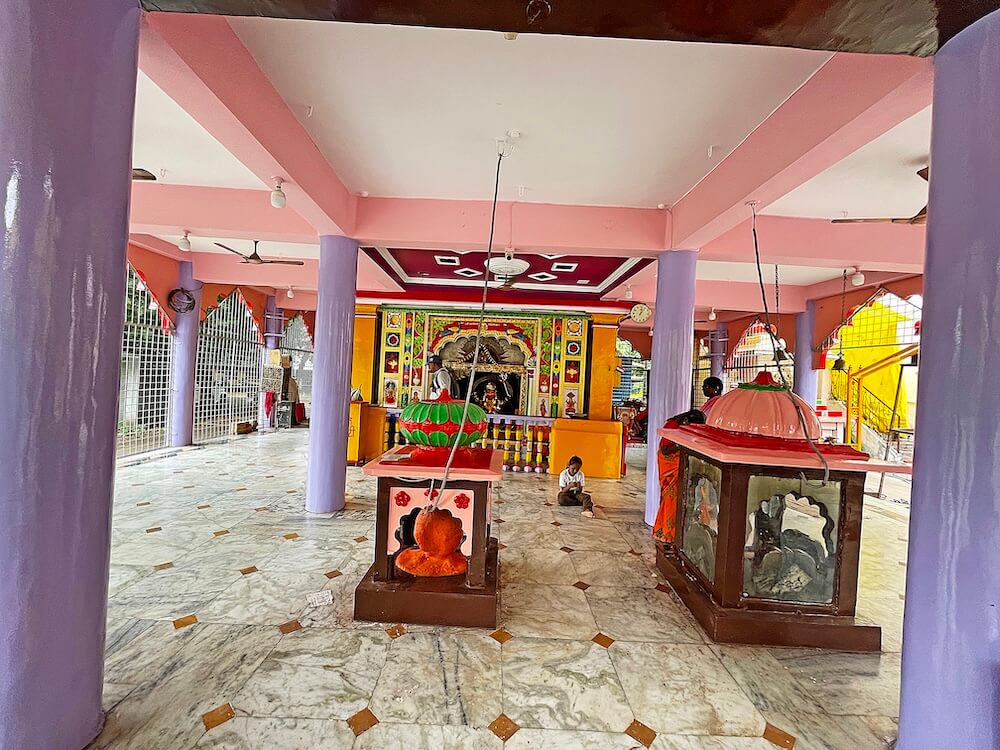
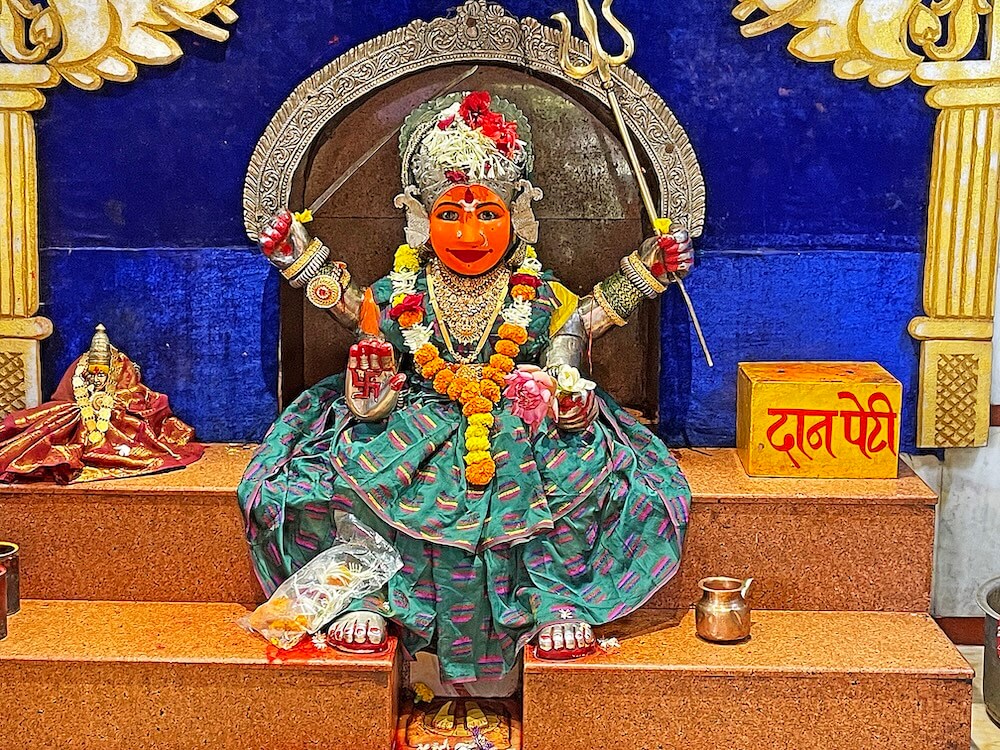
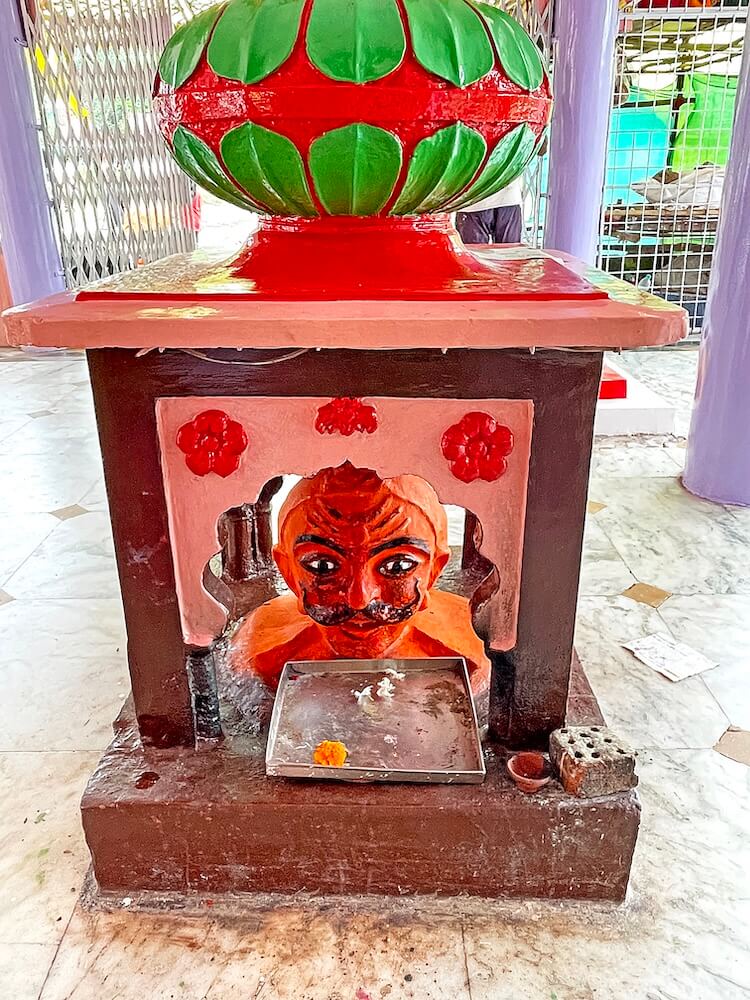
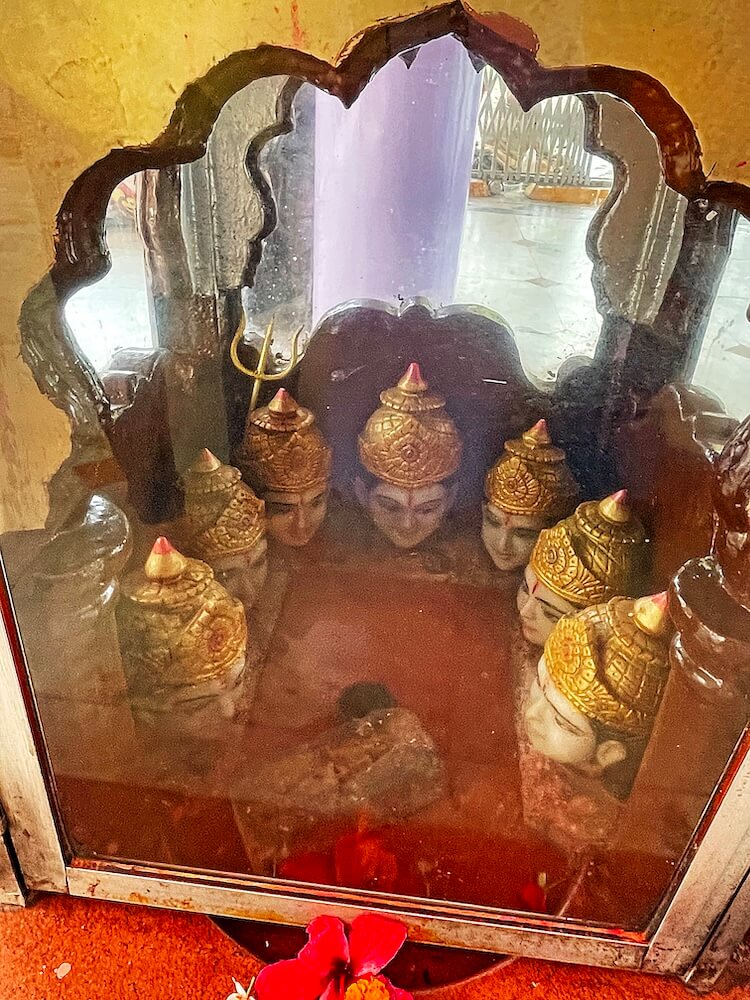
Entry into the courtyard of this temple, located in the central part of the city, is through its two-storied entrance. There are many shops selling puja items and prasad in this vicinity. Within the temple courtyard, there are small shrines dedicated to Kashivishwanath and Ganpati. The temple’s structure comprises a Sabhamandap (assembly hall) and a Garbhagriha (sanctum sanctorum). In the center of the Sabhamandap, there is a small shrine-like temple dedicated to Shitalamata. Here, there are masks of the Saptamatrukas (Seven Mother Goddesses) and adjacent to them, a shrine of Bhairavnath. On the window grilles of the Sabhamandap walls, there are hundreds of ‘otya’ (offerings, often small cloth pouches or coconuts) tied by devotees as fulfillment of vows. Beyond the Sabhamandap, leaving space for a Pradakshina Marg (circumambulation path), is the structure of the Garbhagriha. Wooden railings have been installed outside the Garbhagriha to manage the crowd of devotees. The walls on both sides of the Garbhagriha entrance feature attractive carvings. At the Lalatabimba (lintel) of this entrance, there is an idol of Ganesha. The idol of Ambika Mata is enshrined on a Vajrapitha (diamond pedestal) inside the Garbhagriha. The face of this Mother Goddess, adorned with a silver crown, is smeared with sindoor (vermilion). This four-armed (Chaturbhuj) and adorned Goddess holds a sword in her upper left hand, and her lower left hand is in Abhaya Mudra (gesture of fearlessness). In her upper right hand, she holds a Trishul (trident), and in her lower right hand, a rose flower. There is also intricate artwork on the Prabhavali (halo) behind the idol.
This Goddess is renowned as ‘Navasala Pavnari’ (one who fulfills vows). Therefore, many devotees from Akola district come here for Darshan (sacred viewing). The number of devotees coming for Darshan is higher on Tuesdays. Ashadhi Ekadashi and Navratrotsav are the main festivals celebrated here. During this Navratrotsav, various religious programs are organized here for all nine days. During this period, the temple premises take on the appearance of a fair.
This sacred temple stands as a testament to deep spiritual devotion, ancient architectural grandeur, and rich local cultural traditions.
The sanctum sanctorum houses the divine idol consecrated according to ancient Vedic traditions, surrounded by serene courtyards and traditional temple architecture.
Navratri, Maha Shivratri, Annual Temple Jatra & Deepotsav
Compare and book flights, secure top-rated local hotels near the temple, hire reliable guides, and rent cars instantly.
Extend your pilgrimage by visiting other highly sacred temples located nearby.


Add ₹999 more to unlock FREE SHIPPING!
Your sacred cart is currently empty.
Shop Photo FramesFill in your delivery details below to place your order.
Add comment