
Add ₹999 more to unlock FREE SHIPPING!
Your sacred cart is currently empty.
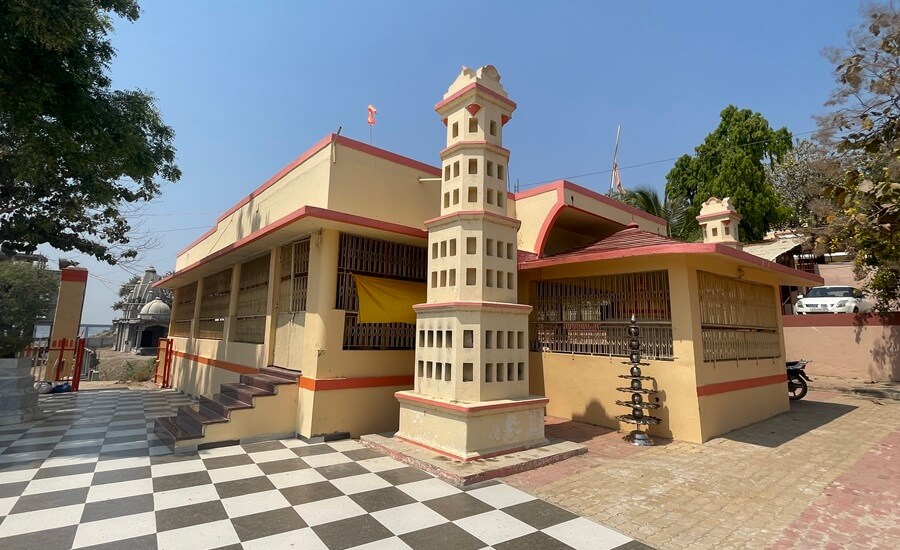
Shop Photo FramesThe sacred place where Vasudevanand Saraswati (Tembe) Swami Maharaj, who gave the Datt Sampradaya the great mantra ‘Digambara Digambara Shripad Vallabh Digambara’, took Samadhi is known as the Garudeshwar Datt Temple. This temple is located at a short distance from the ancient Garudeshwar Mahadev Temple, which is part of the Narmada Parikrama. The Samadhi of Tembe Maharaj is also present here. Devotees believe that performing a 52-Thursday vow and worshipping Lord Dattatreya here fulfills their wishes. It is also believed that those suffering from skin diseases, mental distress, trauma, or grief find solace after visiting this place.
Vasudevanand Saraswati Swami (Tembe Maharaj), a revered figure in the Datt Sampradaya, was a devout follower of Lord Dattatreya and an author of numerous works in Sanskrit and Marathi on this deity. He was born in 1854 at Shri Kshetra Mangaon in Maharashtra on the day of Shravana Shuddha Shashti. By the age of 12, he was renowned as a Dashgranthi Brahmin. It is said that he lived his life guided by the divine light of Devvani Sanskrit. After undergoing the ritual of Danda Sannyasa, he was renamed Vasudevanand Saraswati. He promoted devotion to Lord Dattatreya by establishing idols of the deity at various places. His writings such as Shri Dattamahatmya, Saptashati Gurucharitrasar, Shri Gurudev Charitra, Shikshatrayam, Shri Dattachampu, Shri Satyadatta Poojakatha, Dattalilamrutabdhisar, Dwisahasri Gurucharitra, Shri Dattapurana, and Nitya Upasanakram provided both devotional and philosophical foundations to the Datt Sampradaya.
He undertook 23 Chaturmas (a four-month period of spiritual observance) across India, with his final one being at Garudeshwar. According to legend, Lord Dattatreya instructed him to come to Garudeshwar. Unaware of the route, he was guided to the southern bank of the Narmada River by a tribal man (Bhil), whom he later realized was a divine being – Ashwatthama himself. After receiving Ashwatthama’s blessings, Tembe Maharaj prayed to the Narmada River for guidance and was miraculously shown a path through its waters to reach Garudeshwar.
He installed a Datt idol gifted by Vitthal Soni from Baroda (Vadodara), which continues to be worshipped today.
Realizing that his earthly life was nearing its end, Tembe Maharaj summoned his disciple Yoganand Saraswati (Ganda Maharaj) from Bharuch and instructed him to either take the idol of Lord Dattatreya to Narasobawadi or Gangapur or entrust it to a worthy devotee after his passing. However, that same night, Lord Dattatreya appeared in Ganda Maharaj’s dream and expressed his wish to remain at Garudeshwar for eternal play (Leela). Ganda Maharaj shared this divine message with others and began preparations for constructing a temple without soliciting funds from anyone.
Upon learning about this development through Ganda Maharaj’s letter seeking permission for temple construction, Tembe Maharaj remarked that his own plan had not been approved by Lord Dattatreya but acknowledged the deity’s desire to stay at Garudeshwar. Consequently, he instructed them to proceed with building the temple. On Vaishakh Shuddha Saptami in 1914 CE, Tembe Maharaj’s disciple Chhaganlal Kuberlal Bhatt laid the foundation stone for the temple’s construction under the supervision of engineer Bhagwandas Dalal from Nanded.
Before completing construction, Tembe Maharaj attained Samadhi on Ashadha Shuddha Pratipada in 1914 CE. A shrine (Samadhi Mandir) was built on the site where he took Samadhi. The main temple was later inaugurated on Magha Vadya Dwitiya by Swami Brahmanand Saraswati (of Karmali Ashram). The sacred footprints (Padukas) of Tembe Maharaj were installed outside the sanctum by Parshubhai Kuberram Bhatt.
Translation in English:
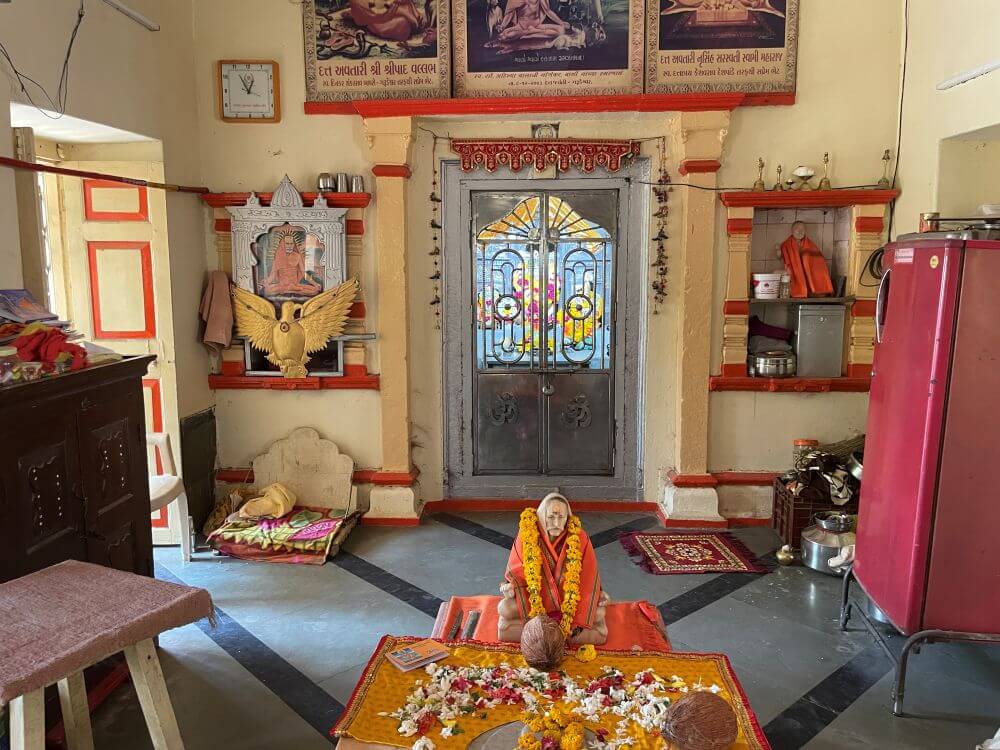
In front of the temple entrance, there is a large Audumbar tree. On both sides of the entrance, there are gatekeepers (dwarpala), and the upper section is adorned with intricate carvings. There are four additional entrances to reach the assembly hall (Sabhamandap). The upper walls of the assembly hall feature paintings depicting the glory of Lord Dattatreya, while other walls display numerous images, including those of Swami Samarth and Shripad Vallabh. Behind the donation box in the temple, outside the sanctum (Garbhagriha), lies the Vasudev Sabhamandap, which houses a statue of Vasudevanand Saraswati along with his sacred footprints (Padukas) placed in front of it.
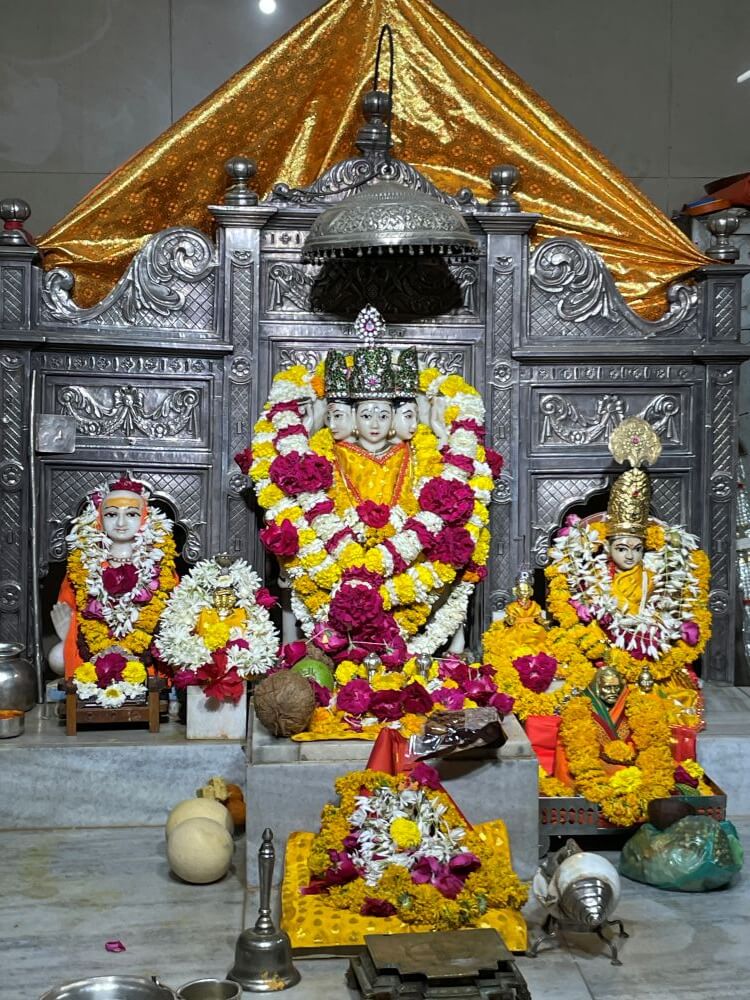
Above the entrance to the sanctum, there are images of Lord Dattatreya along with Vasudevanand Saraswati and Adi Shankaracharya. The sanctum’s entrance is decorated with golden-plated carvings. Inside the sanctum, on a pedestal in the center, stands the idol of Lord Dattatreya adorned with a silver crown and canopy. To the left of this idol is a marble statue of Adi Shankaracharya, and to its right is a marble statue of Goddess Saraswati. Additionally, there is an idol of Lord Dattatreya that is believed to have conversed with Vasudevanand Saraswati, as well as a single-faced Dattatreya idol gifted by the Queen of Indore and a Ganesh idol. Behind these idols, there is silver-carved decorative work.
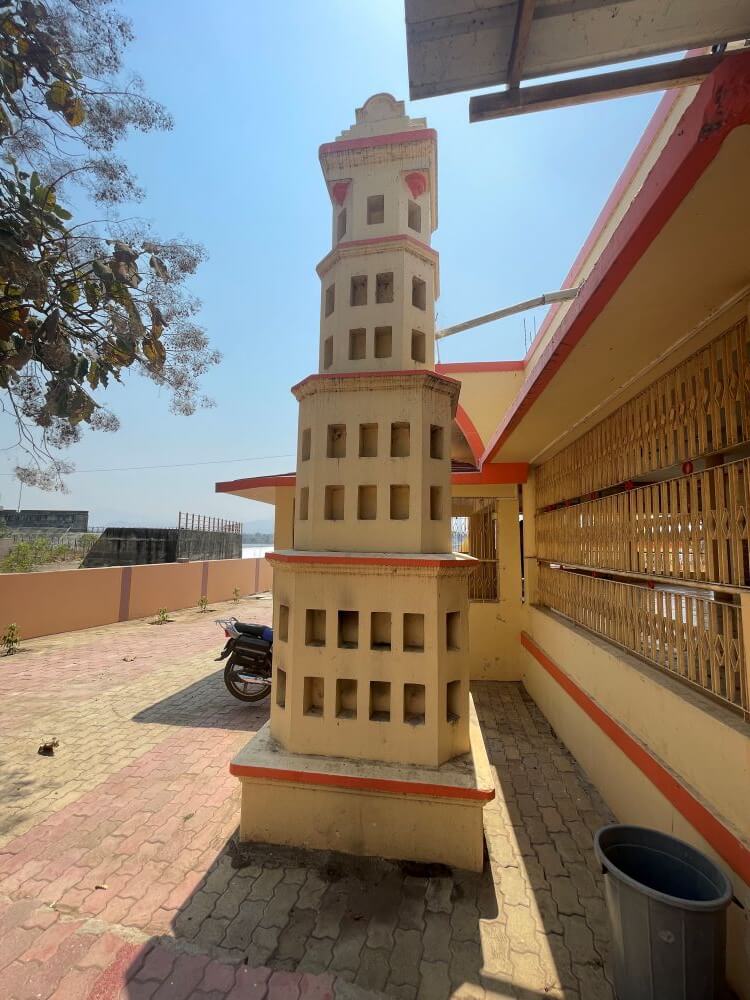
The Samadhi Mandir (shrine) of Tembe Maharaj is located to the right of the Datt Temple and can be accessed by descending steps. On both sides of its entrance are lamp towers (Deepmalas). The Samadhi Mandir has a dome-shaped spire (Shikhar) and an assembly hall (Sabhamandap) with latticework. The walls here feature images of Tembe Maharaj and various forms of Lord Dattatreya. The upper walls depict Tembe Maharaj’s life story in paintings, while another wall displays his final message. At the center, above the doorway to the sanctum within this shrine, lies an image of Lord Ganesh. Inside, behind the Samadhi, there is a photograph of Tembe Maharaj and his sacred footprints (Padukas) in front. On the left side of this sanctum lies a small pedestal housing a miniature idol of Lord Dattatreya alongside a statue of Tembe Maharaj.
The Samadhi Mandir also contains Tembe Maharaj’s Nirgun Padukas. During his final days, he offered his servant items such as his water pot (Kamandalu) or clothing as keepsakes. However, the servant insisted on receiving only his Padukas. Despite explaining that he could not wear footwear due to his spiritual practice, Tembe Maharaj eventually asked him to fetch a large stone from the river. After standing on this stone for three hours, his footprints were imprinted on it. The servant chose not to take these Padukas home but instead installed them in front of the temple. During renovations at the Samadhi Mandir, these Padukas were relocated to their current position in front of the shrine. From here, devotees can descend steps leading directly to the riverbank.
This temple conducts daily rituals such as Morning Kakad Aarti at 5:30 am, Shringar Aarti at 8:45 am, Maha Naivedya & Aarti at 12 pm, Evening Aarti at 7 pm, Bhajan at 7:45 pm and Shej Aarti at 8 pm. Festivals celebrated include Shivratri, Holi, Gudi Padwa, Tembe Maharaj’s Punyatithi (Ashadha Shuddha Pratipada), Janmashtami, Datta Jayanti, among others. Devotees can also partake in meals served as Prasad during afternoons (12:30–1:30 PM) and evenings (8–8:30 PM). Passes for Prasad must be obtained by 11 AM or 6:30 PM from the temple office.
This sacred temple stands as a testament to deep spiritual devotion, ancient architectural grandeur, and rich local cultural traditions.
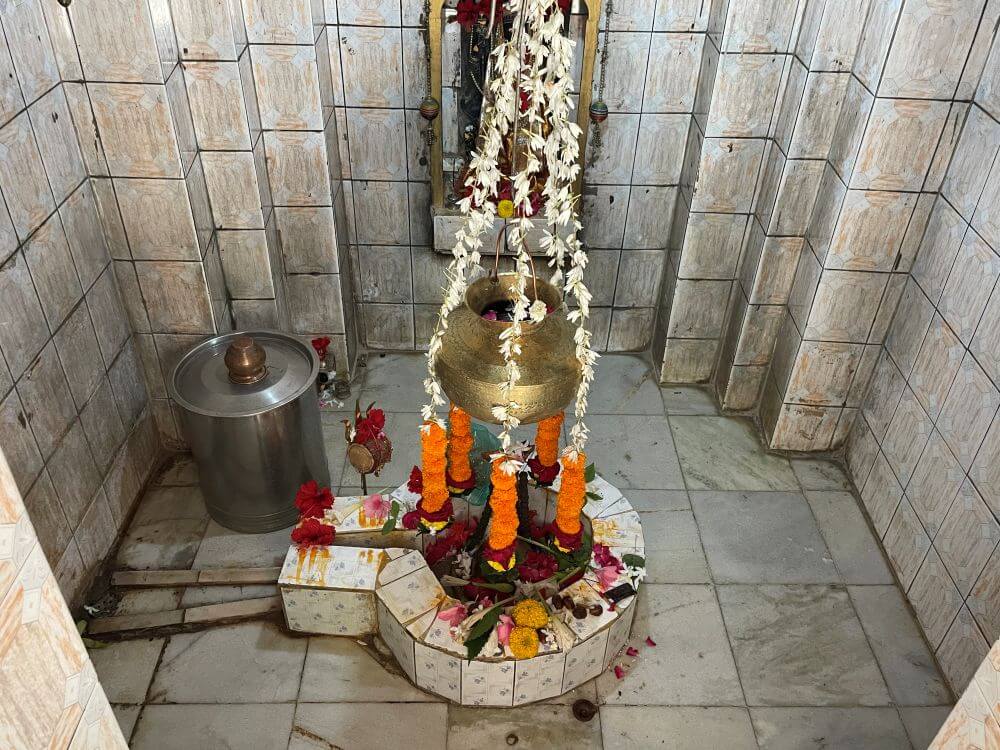
The sanctum sanctorum houses the divine idol consecrated according to ancient Vedic traditions, surrounded by serene courtyards and traditional temple architecture.
Navratri, Maha Shivratri, Annual Temple Jatra & Deepotsav
Compare and book flights, secure top-rated local hotels near the temple, hire reliable guides, and rent cars instantly.
Extend your pilgrimage by visiting other highly sacred temples located nearby.


Add ₹999 more to unlock FREE SHIPPING!
Your sacred cart is currently empty.
Shop Photo FramesFill in your delivery details below to place your order.
Add comment