
Add ₹999 more to unlock FREE SHIPPING!
Your sacred cart is currently empty.
Shop Photo FramesLocated at Chandranagar in Dapoli Taluka, the sacred abode of the Swayambhu (self-manifested) Ghanekarin Devi is a revered place of devotion for devotees across the surrounding region. The Goddess is renowned as Jagrut (awakened) and fulfilling the vows of her devotees. A major attraction during the Shimga festival is the Tamasha-like ‘Gomu Dance’ performed alongside the palanquins, where young men and women dress in traditional Rajasthani women’s attire and dance to traditional folk songs. Villagers state that this sacred seat of the Goddess is nearly 500 years old.
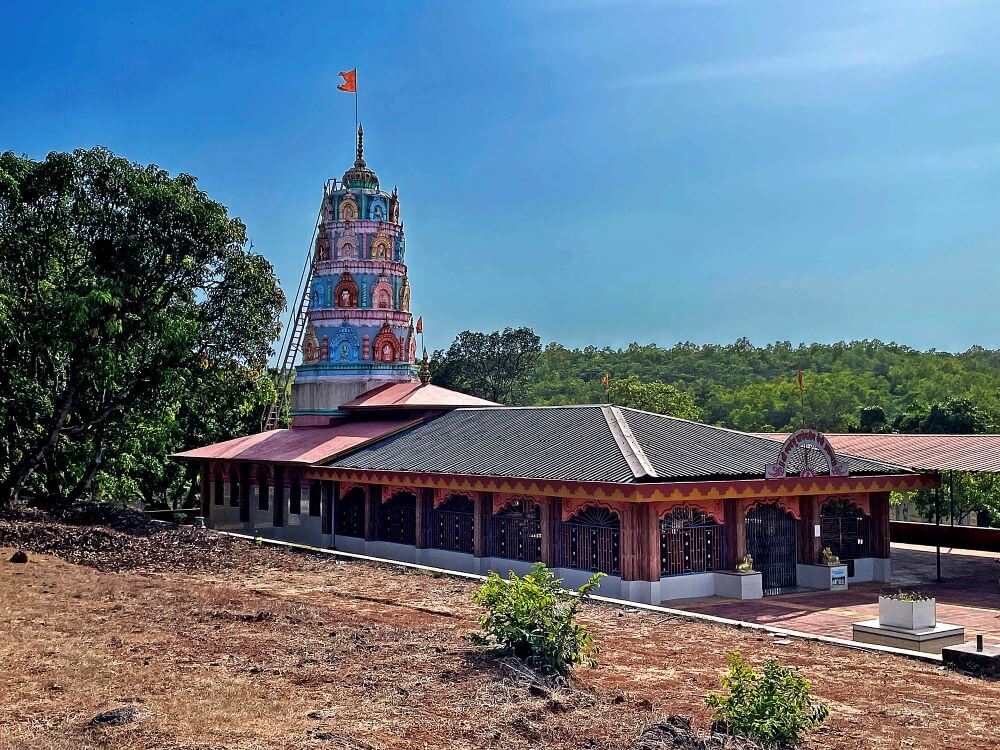
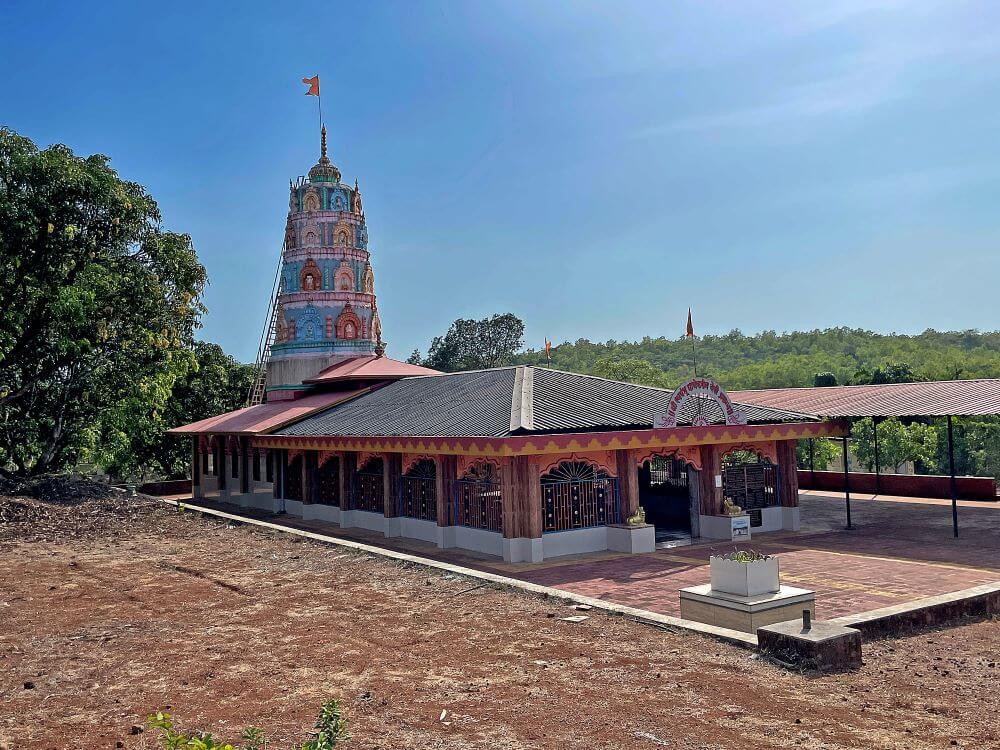
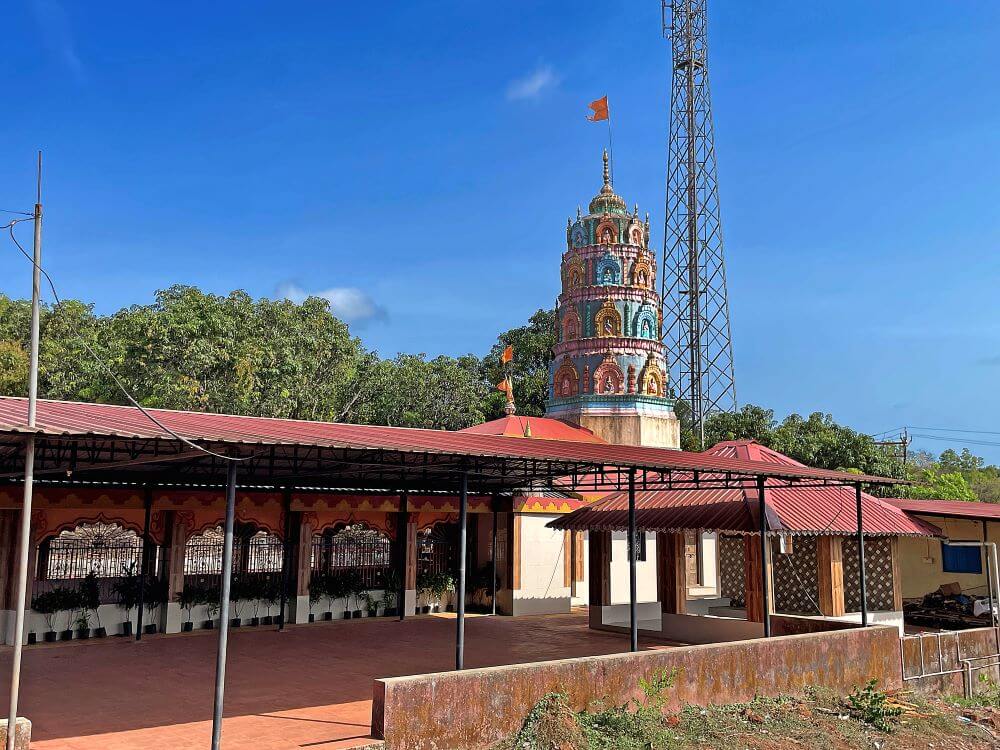
Chandranagar village is situated a short distance from Dapoli town. Adjacent to the main road in this village stands the beautiful temple of Ghanekarin Devi. It is said that in ancient times, this temple was like a thatched hut covered with grass. The walls of the temple were made of coconut palm leaves, but every year, due to some reason or another, the temple would catch fire and be completely consumed by the flames. Consequently, the temple had to be rebuilt anew every year. Approximately 350 years ago, a temple with stone and wooden pillars, mud walls, and a tiled roof was constructed. Later, following renovations again in 2017, the present grand temple took shape.
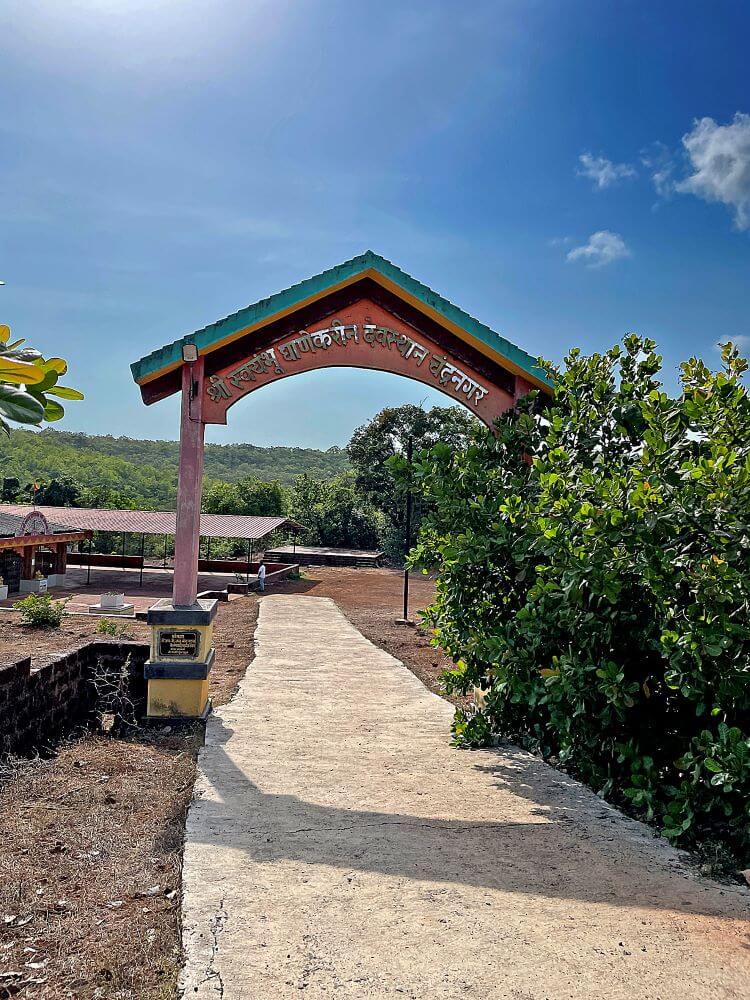
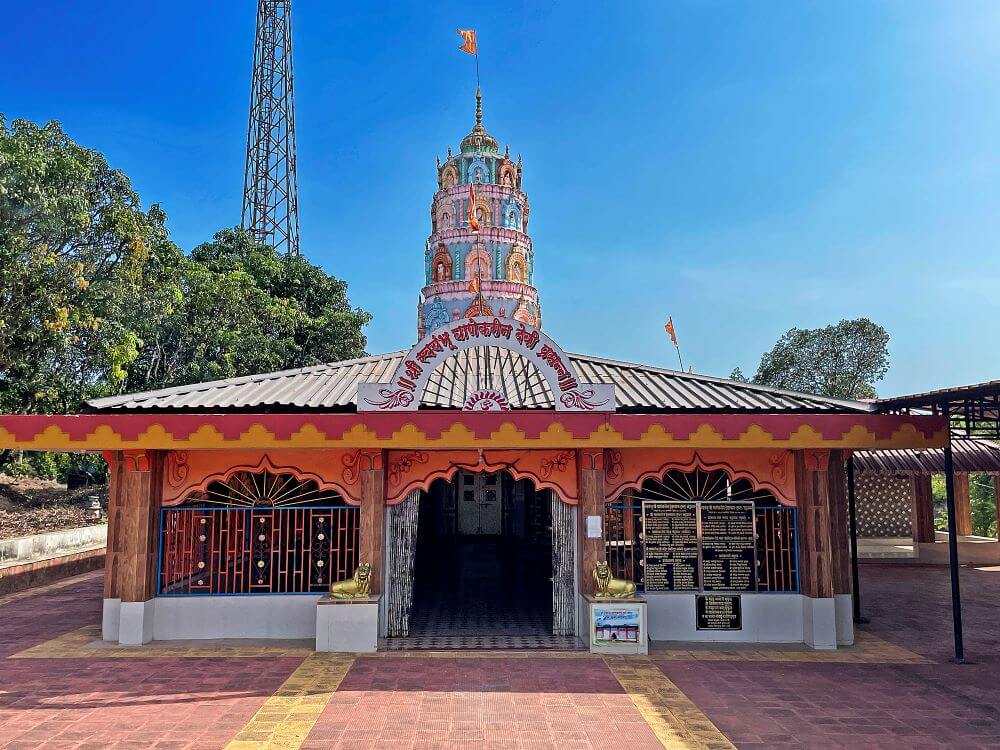
One enters the temple courtyard through an arched gateway located by the roadside. Apart from the main temple, the shrines of Goddess Waghjai and Goddess Kalika alias Kalkai are also present in the courtyard. The area in front of the temple is paved, and a stone platform (Sahan) has been constructed to place the Goddess’s palanquin. During the festival, after performing ritualistic and solemn worship of the palanquin, the Goddess’s Shimga festival concludes on this very platform. Additionally, a tin shed has been erected on the right side of the temple for the convenience of devotees. The temple structure consists of a Sabhamandap (assembly hall) and a Garbhagriha (sanctum sanctorum). On both sides of the entrance stand statues of the Goddess’s vehicle, the lion. From here, one enters the Sabhamandap. This Sabhamandap is designed as a semi-hall with bench seating on three sides for devotees. Religious events such as Kirtan-Bhajan, Pravachan (discourses), and Harinam Saptah are held in this hall.
On the doorframe of the Garbhagriha, there are figures of women fanning fly-whisks (chowries) on both sides. Inside the sanctum sanctorum rests the ancient idol of Ghanekarin Devi carved from black stone. Along with the main deity, stone idols of Goddess Mahamai and Goddess Manai are also enshrined here. Deities such as Bapdev, Jogeshwari, and Lingayatdev are present as well. Since all these are ancient stone idols, Vajralepa (a protective ritual coating) is applied to all the idols in the sanctum sanctorum to ensure their preservation. It is said that since the Goddess’s seat was embedded in the ground, during the temple’s renovation, it was decided to consecrate her on a raised pedestal; however, despite numerous attempts, the self-manifested stone of the Goddess did not move at all from its place. Therefore, the temple renovation was carried out while retaining the Goddess in her original place. There is a spacious circumambulatory path (Pradakshina marga) around the Garbhagriha.
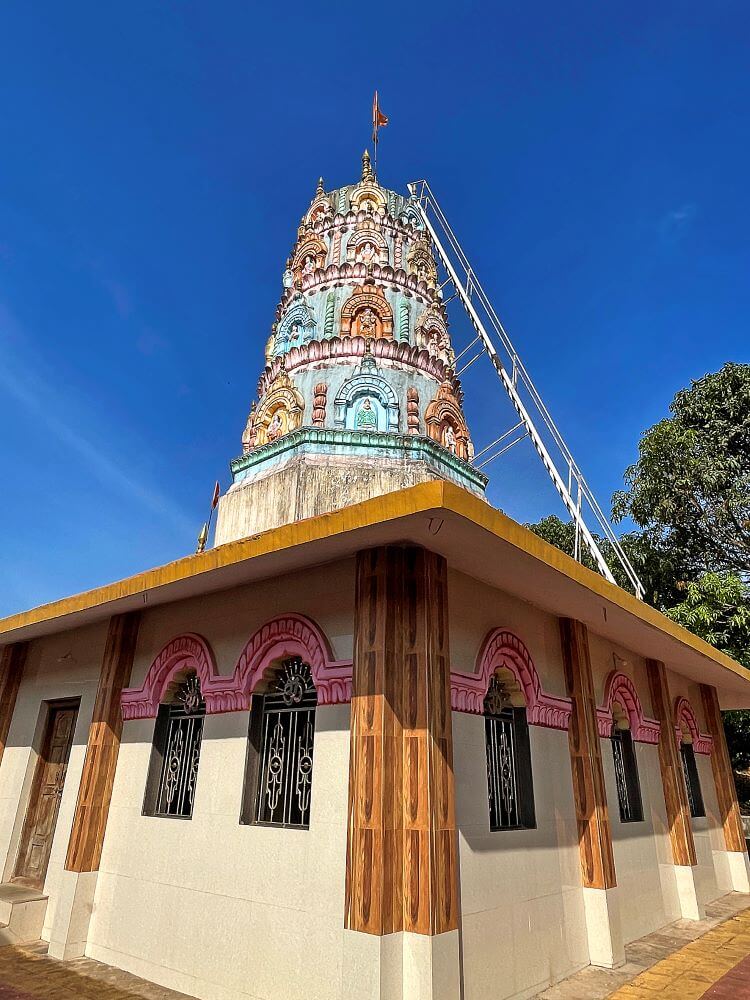
The current temple of the Goddess is an RCC structure. The temple features square and domed pillars, a tall Shikhara (spire) over the inner sanctum, and a beautiful Kalash (pinnacle) atop it. Significantly, this spire also features unique carvings, predominantly depicting sculptures of deities and saints. During festivals and celebrations, gold and silver Rupe (masks) are adorned on the Goddess. Likewise, silver masks are placed on all other deities in the temple. Night vigils (Jagar) for the Goddess are celebrated from Ghatasthapana to Dasara by all nine hamlets (wadas) of the village by organizing cultural and religious events such as Jakhadi dance and Dandiya dance. The Goddess’s Navratri festival concludes on Vijayadashami after symbolic distribution of ‘gold’ (Apta leaves) to all deities.
The Shimga festival of Chandranagar village is renowned throughout the region. This festival of the Goddess commences from Phalguna Shuddha Panchami. During the Shimga festival, two palanquins move together through the village. The first palanquin carries the silver idols of Goddess Ghanekarin, Goddess Mahamai, and Goddess Manai, while the second palanquin carries the silver idols of Goddess Waghjai of the Mulukh lineage and Goddess Kalika of the Misal lineage. The Tamasha-style ‘Gomu Dance’ performed alongside the palanquins is the main highlight of this festival. Young men and women dressed in Rajasthani women’s attire dance to traditional folk songs. Many people specially visit during this festival to experience this heritage preserved even in modern times. Finally, on the day following the Shimga festival, the ritual of ‘Aardhan’ (Mahaprasad) takes place. Its unique feature is that this Mahaprasad is non-vegetarian. The Naivedya offered to the Goddess is also non-vegetarian.
According to local legend, this area was once a dense forest inhabited by tigers. These tigers would hunt an animal here only with the permission of Goddess Ghanekarin. However, if on any day they failed to find prey, the tigers would roar loudly and lash their tails heavily against the temple steps. Thereupon, the Goddess would arrange prey for them.
This sacred temple stands as a testament to deep spiritual devotion, ancient architectural grandeur, and rich local cultural traditions.
The sanctum sanctorum houses the divine idol consecrated according to ancient Vedic traditions, surrounded by serene courtyards and traditional temple architecture.
Navratri, Maha Shivratri, Annual Temple Jatra & Deepotsav
Compare and book flights, secure top-rated local hotels near the temple, hire reliable guides, and rent cars instantly.
Add ₹999 more to unlock FREE SHIPPING!
Your sacred cart is currently empty.
Shop Photo FramesFill in your delivery details below to place your order.
Add comment