
Add ₹999 more to unlock FREE SHIPPING!
Your sacred cart is currently empty.
Shop Photo FramesShivlingas established on riverbanks or within riverbeds can be seen at many places. Across India, Shiva temples, meaning Shivlingas, have been situated on riverbanks for thousands of years. One such famous Lakeshwar Shiva Temple is located on the banks of the Purna River at Lakhpuri in Murtizapur taluka. It is believed that Lakshmana, the younger brother of Lord Shri Rama, installed the Linga of Lakeshwar Mahadeva here. Shri Rama’s son Lava had established a Shivlinga containing eleven and a half Jyotirlingas in this very area and performed worship of Lord Shiva. Because of this, this region is renowned as Ardha Kashi or the Kashi of Vidarbha.
According to mythological tales, while in exile, upon Shri Rama’s instructions and to awaken the inner strength within himself, Lakshmana came here from the Dandakaranya forest to the banks of the Purna River. He consecrated a Shivlinga here and worshipped Lord Shiva. In course of time, both sons of Shri Rama, Lava and Kusha, while on a pilgrimage, arrived at this place and established Shivlingas containing eleven and a half Jyotirlingas in this surrounding area. It is said that the remaining half Jyotirlinga is situated on the opposite bank of the river. Sarvagya Shri Sachchidananda Swaminarayan / Shri Chakradhar Swami, during the early phase of his travels while going from Paithan to Riddhipur, had come to Lakhpuri from Yelavan and stayed here for one night. From here he proceeded to Shinganapur, is the mention found in pothi number 179 of ‘Lilacharitra’ compiled by Mhaimbhat. Therefore, this holy site holds great importance among the followers of the Mahanubhav sect as well. This temple, which previously had stone architecture, attained its present form after renovation carried out a few years ago. The remnants of the old temple can be seen within the temple premises.
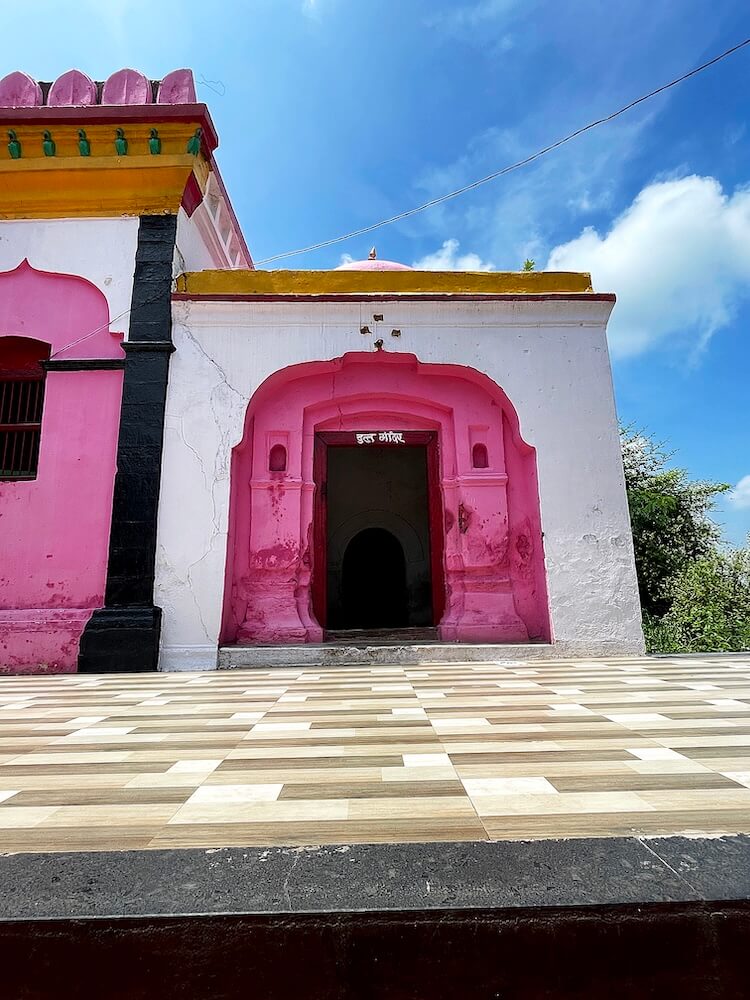
Situated near the banks of the Purna River on the border of Akola and Amravati districts, the village of Lakhpuri was known as ‘Lakshmanpuri’ in ancient mythological times. Over time, it became ‘Lakhpuri’. The temple surroundings are peaceful and serene. To the left of the attractive entrance arch of the temple, located at a higher level from the parking area, are large statues of Saint Gadgebaba and to the right, of Tukdoji Maharaj. Coming inside through this arch, one enters the courtyard paved with paver blocks.
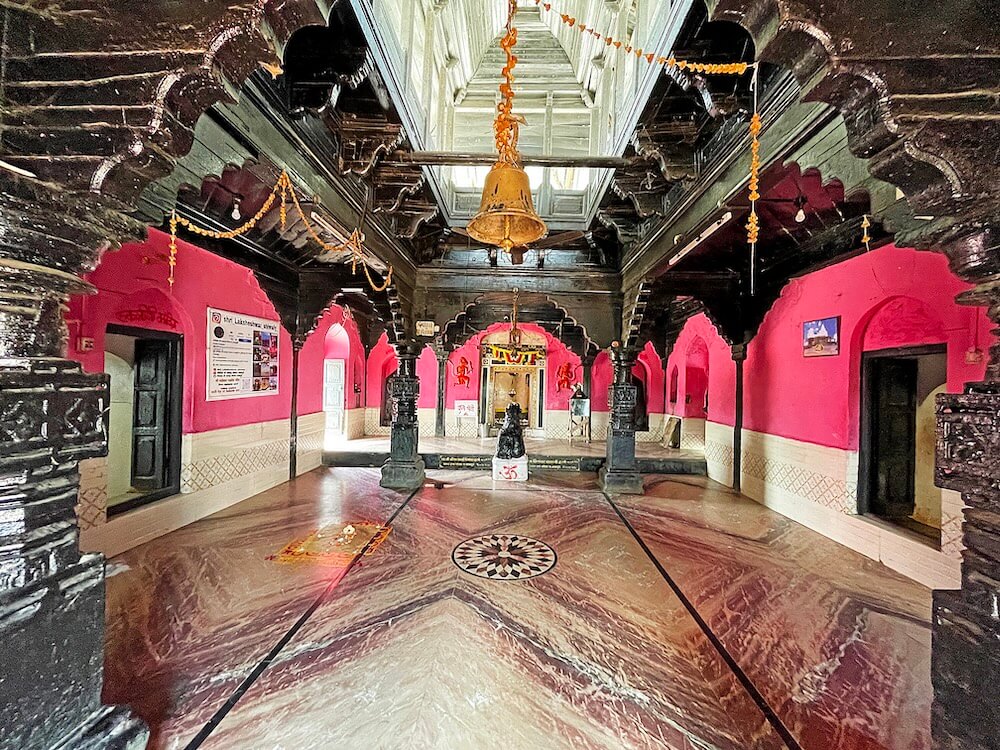
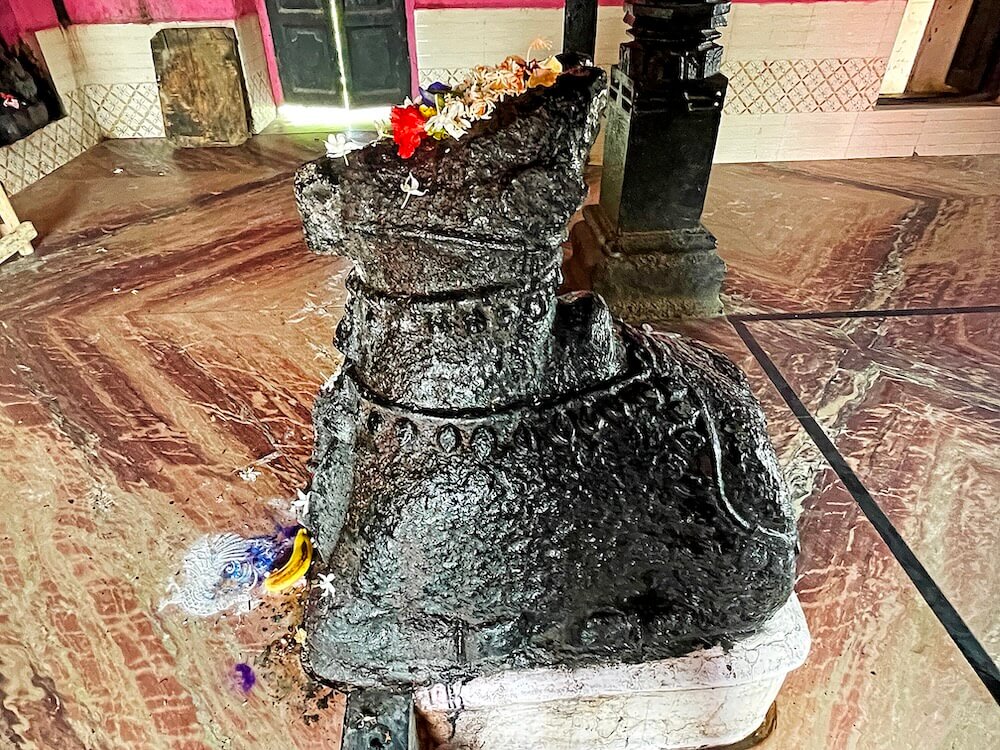
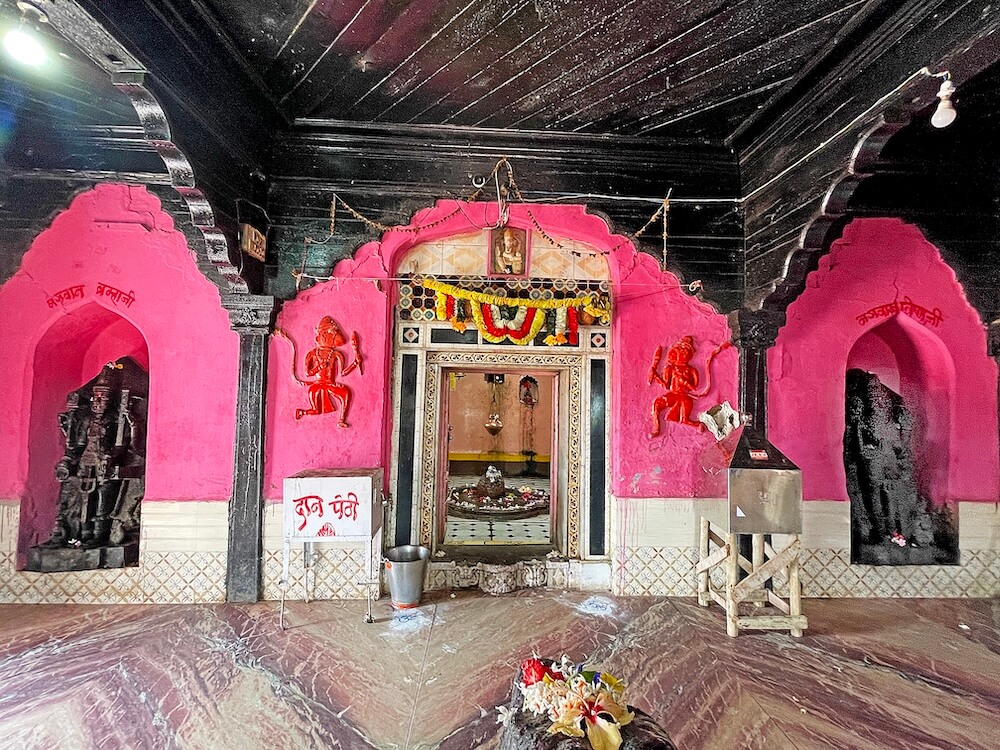
Two idols along with the Sun and the Moon are carved on a stone slab near the Tulsi Vrindavan in front of the temple. A footprint is seen carved on the lower side of this stone slab. This slab is called the ‘Smriti Shila’ (Memorial Stone). Ascending eight steps from the courtyard, one reaches near the entrance of this temple situated on a high plinth. Adjacent to this temple on the right is the temple of Shitala Mata and on the left is the temple of Shri Datta. On the jambs of the main temple entrance are lamp niches (deepkoshtak) and an idol of Lord Ganesha is on the lintel (lalatbimba). Through this entrance, one enters the enclosed assembly hall (sabhamandap) of the temple. This sabhamandap, featuring marble flooring, has intricately carved stone pillars. Kirtimukhas, animals, birds, as well as some episodes are carved on these pillars. In the sabhamandap, towards the front in the center, is an idol of Nandi on a raised platform (chautara).
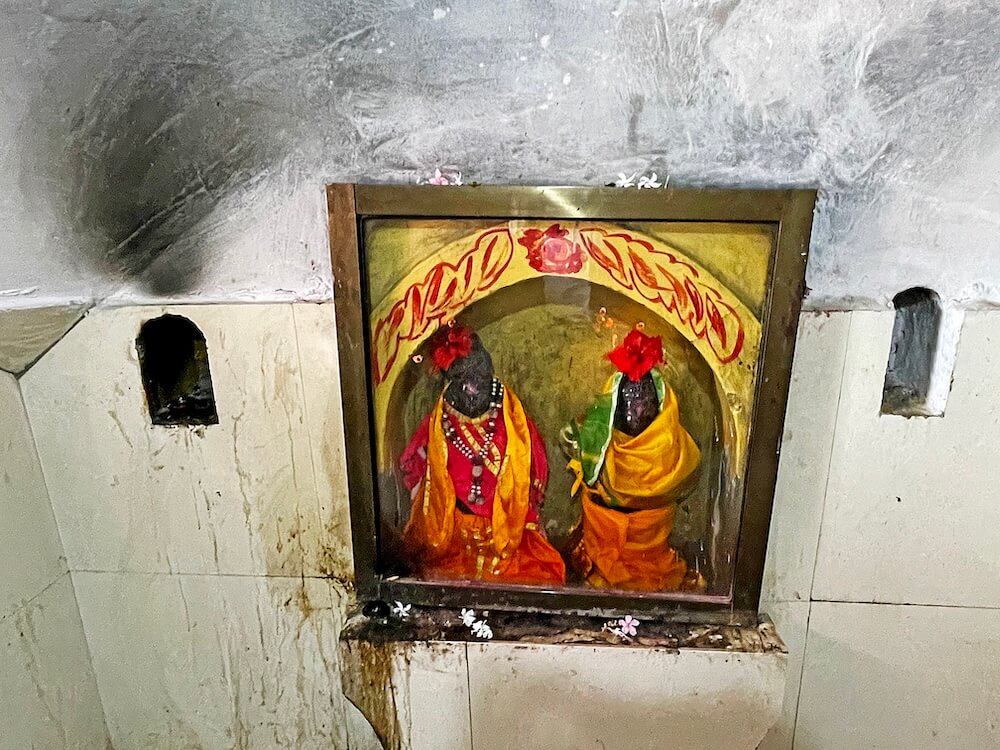
In the niche (devali) on the front wall of the sanctum sanctorum (garbhagriha) within the sabhamandap, on the left, is a stone-carved idol of Lord Brahma. In the niche on the right is a stone-carved idol of Lord Vishnu. This idol holds a conch (shankha), discus (chakra), and lotus (padma). Idols of Lord Hanuman are carved on both sides of the sanctum sanctorum entrance. An idol of Lord Ganesha is on the upper part of the door frame. In the center of the floor inside the sanctum sanctorum is a Shivpindi made of a single unbroken stone. Goddess Parvati also has her place in this sanctum sanctorum.
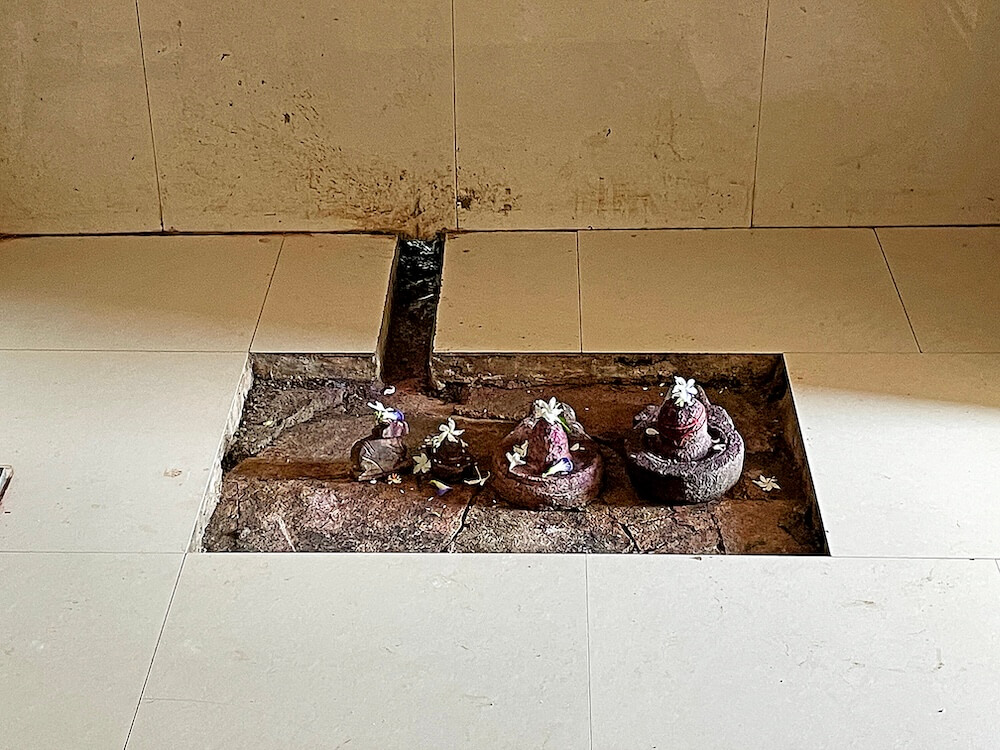
In the temple premises, there are several small Shiva temples including the Samudra Manthan Shiva Temple and the Suryamukhi Shiva Temple. In one of them, one can have the darshan of the eleven and a half Jyotirlingas established by Rama’s son Lava. There are also some Shivlingas out in the open here. The Pilgrim Guest House (Bhakta Niwas) located in the premises provides accommodation arrangements for devotees coming from outstation.
Since this is believed to be a vibrant and powerful (jagrut) abode of Lord Shiva, hundreds of devotees visit here daily for darshan. There is a huge rush of devotees here on Somavati Amavasya. Various festivals and celebrations including Datta Jayanti, Ashadhi Ekashadi, and Navratri Utsav are celebrated here with great enthusiasm. On the occasion of Maha Shivaratri, religious programs such as Shivmahapuran, bhajans, and kirtans are organized here for nine days. On the day of Maha Shivaratri, the surrounding area takes the form of a grand fair (jatra). In the holy month of Shravan, countless devotees visit here for darshan. Every Monday of this month, the premises bustles with crowds of devotees. Many religious rituals, including an uninterrupted Bhagavata Saptaha, are performed here during this month.
During the Kawad Yatra held here on the final Monday of the Shravan month, the surroundings resound with chants of ‘Har Har Mahadev’. During this Kawad Yatra, hundreds of Kawad bearers offer holy water from the Purna River to Lakeshwar Mahadeva. Afterwards, Mahaprasad is distributed to the devotees. On this occasion, hundreds of Kawad bearers carry the water of the Purna River to their respective villages and perform abhishek at the Shiva temples in their villages. Many devotees also visit the banks of the Purna River here to perform religious rituals such as Narayan Nagbali, Kalsarp Dosh Nivaran, Pitru Dosh Nivaran, and Pind Daan. Devotees can have darshan at this temple daily from morning 5.30 AM to night 8.30 PM.
This sacred temple stands as a testament to deep spiritual devotion, ancient architectural grandeur, and rich local cultural traditions.
The sanctum sanctorum houses the divine idol consecrated according to ancient Vedic traditions, surrounded by serene courtyards and traditional temple architecture.
Navratri, Maha Shivratri, Annual Temple Jatra & Deepotsav
Compare and book flights, secure top-rated local hotels near the temple, hire reliable guides, and rent cars instantly.
Extend your pilgrimage by visiting other highly sacred temples located nearby.


Add ₹999 more to unlock FREE SHIPPING!
Your sacred cart is currently empty.
Shop Photo FramesFill in your delivery details below to place your order.
Add comment