
Add ₹999 more to unlock FREE SHIPPING!
Your sacred cart is currently empty.
Shop Photo FramesIn Maharashtra, there is a village where no child is named Maruti, Hanuman, or Pawan. Not only is there no temple of Maruti in this village, but no one even utters the name of Maruti here, as it is considered an ill omen. The uniqueness of this village lies in the fact that it houses a temple dedicated to a Daitya (demon), and everyone worships him. It is said that this tradition has been followed since the time of the Ramayana. The village derives its name, ‘Daityanandur’, from this Daitya temple. Devotees believe that this Daitya fulfills their vows.
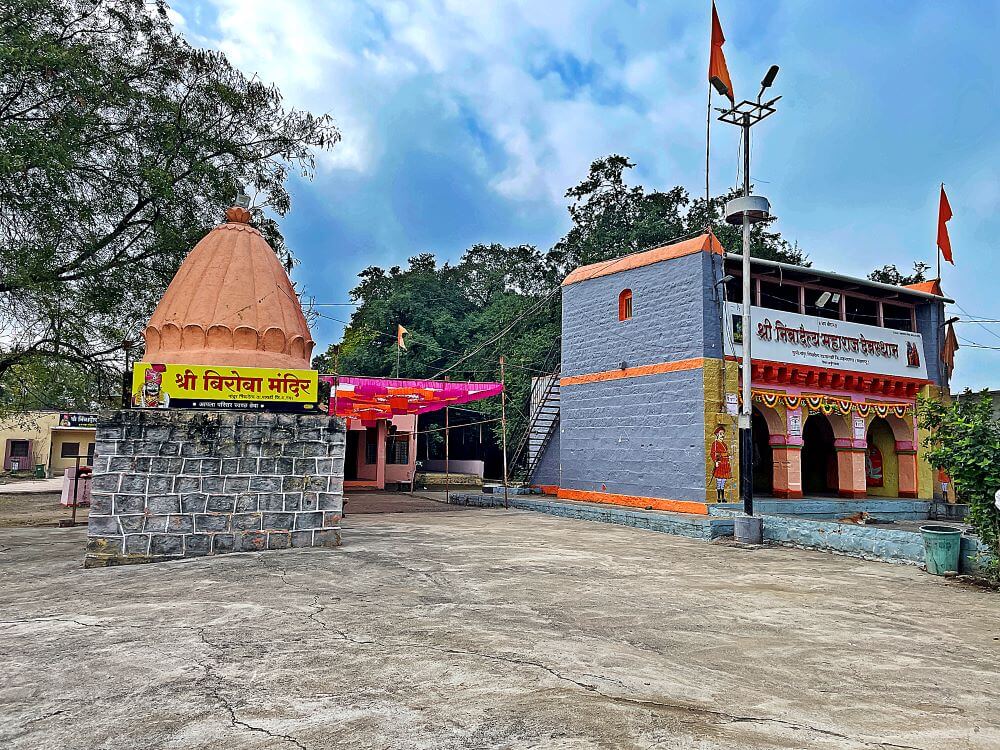
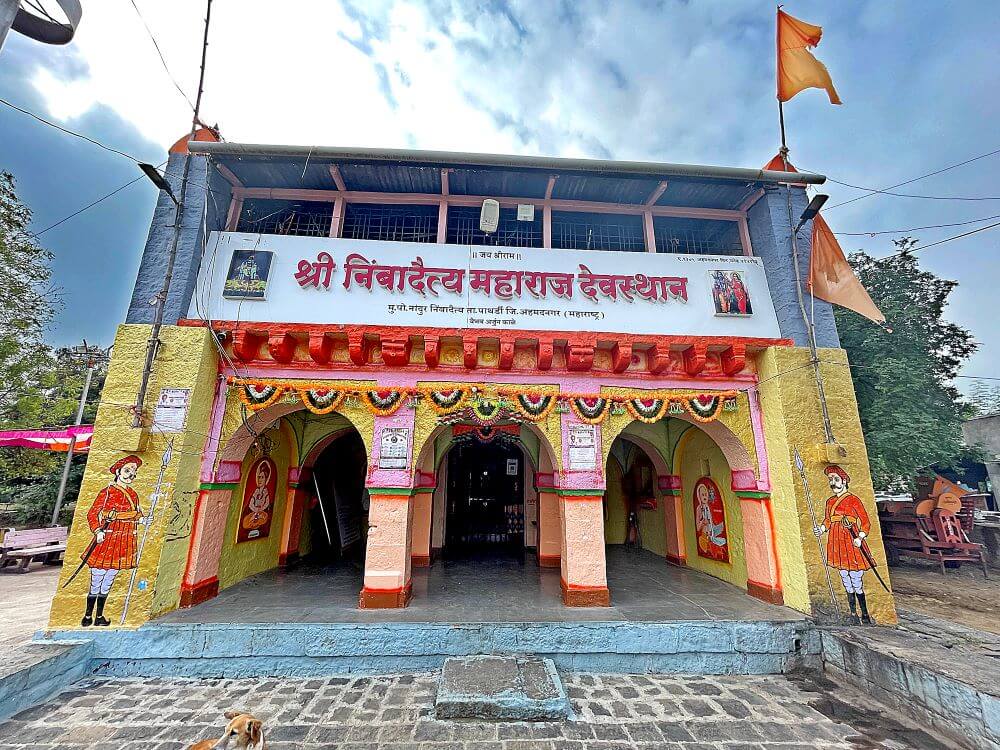
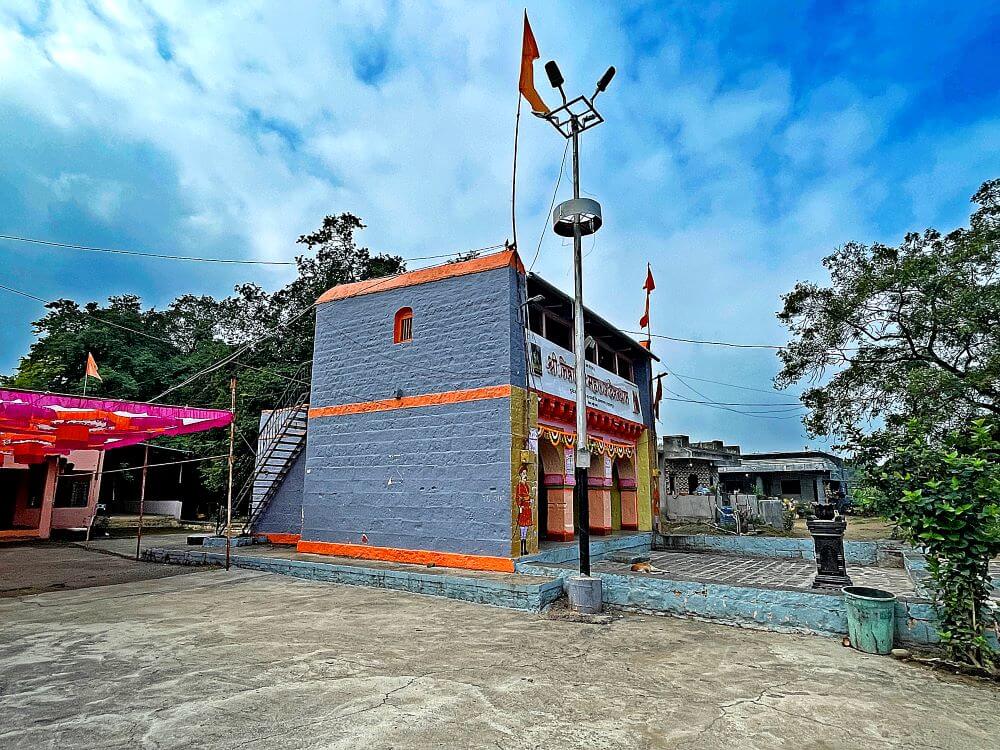
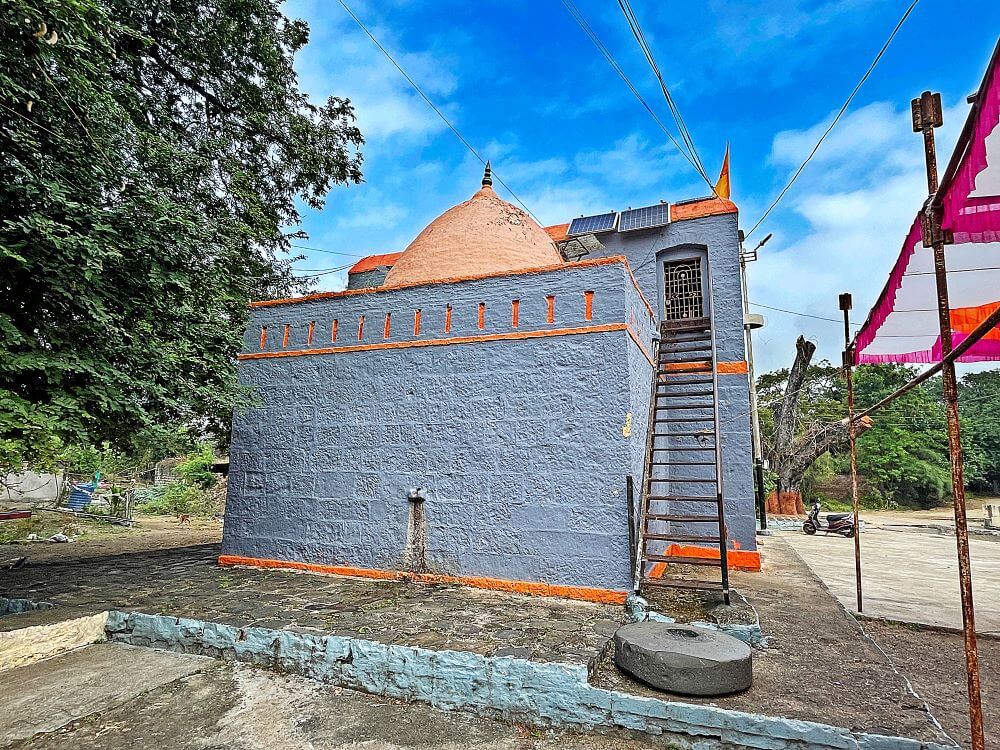
While there are numerous villages in the state that have temples of Maruti, the village of Daityanandur in the Pathardi taluka of Ahilyanagar district is an exception. This extraordinary village is nestled in the Garbhagiri mountain range and is located just a short distance from Bhagwan Gad. Another unique feature of this village is that the Nimba Daitya temple is a two-story structure. Consequently, it is said that no one in the village builds a two-story house. Furthermore, no vehicle with a name similar to Maruti is purchased.
The legend of this temple states that after achieving victory over Ravana, Lord Shriram was taking Sita from Lanka to Ayodhya. However, due to certain circumstances, he had to send Sita back into the forest. He entrusted this responsibility to Hanuman. Hanuman and Sita arrived at Kashi Kedareshwar (a place currently in Pathardi taluka) in the Dandakaranya forest. While searching for fruits for Sita, Hanuman entered the area where the demon Nimba Daitya resided and began picking fruits. Nimba Daitya realized that someone was stealing the wealth of his kingdom without permission. He became enraged and challenged Hanuman to a battle. Hanuman, wielding his mace, charged at Nimba Daitya. A fierce battle ensued between the two, leaving both injured, yet neither was defeated. At one point, the wounded Nimba Daitya called out to Lord Shriram. Hearing the name of his Lord from the mouth of the Daitya, Hanuman was astonished. At that very moment, hearing the plea of Nimba Daitya, Lord Shriram appeared. After Lord Shriram passed his hand over the body of Nimba Daitya, his wounds were completely healed. Pleased with the devotion of Nimba Daitya, Lord Shriram granted him a boon: “Henceforth, the name of Hanuman shall not be uttered in this village. Only you shall be worshipped here.”
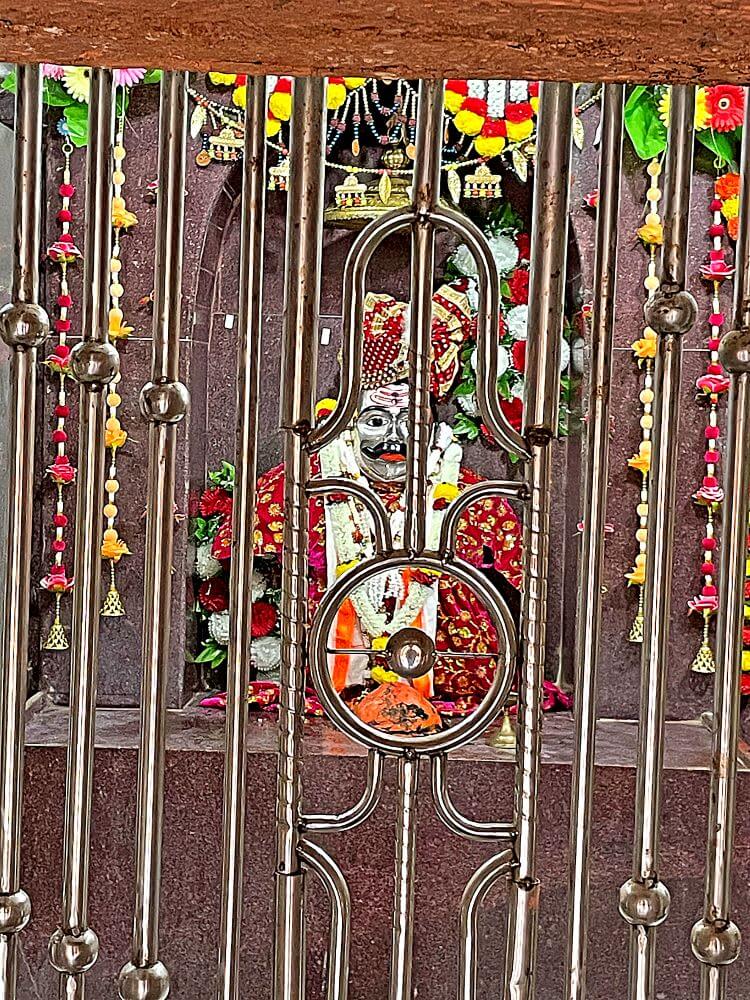
The Nimba Daitya temple, situated on the banks of the village river, is constructed of stone and is believed to date back to the 16th century. Its structure consists of a Sabha Mandap (assembly hall) and a Garbhagriha (sanctum sanctorum). The Garbhagriha houses a stone idol of Nimba Daitya. During festivals, the idol is adorned with a silver crown and ornaments.
Although Nimba Daitya Maharaj belongs to the demon clan, he is offered a vegetarian Naivedya (offering) every day. Every afternoon at 12 o’clock, a Naivedya of Puran Poli is brought here from a house in the village. Hundreds of devotees attend the Aarti held every Saturday. A distinctive feature is that many houses and vehicles here bear the inscription, “Daityachi Krupa, Daitya Prasanna” (By the grace of the Daitya, may the Daitya be pleased). Nimba Daitya Maharaj is the family deity (Kuldaivat) of many families here and is the village deity (Gramdaivat) of Daityanandur.
The Jatrotsav (fair) of Nimba Daitya Maharaj lasts for 3 days, starting from Gudi Padwa. Devotees begin their New Year with his Darshan. The main day of this 3-day fair is Gudi Padwa. On this day, the idol of Nimba Daitya Maharaj is anointed with Ganga water brought in a Kawad. Additionally, various programs such as Chhabina (procession), wrestling competitions, and Maha Aarti are held during this time. Citizens of this village who reside in other parts of the country or abroad for work or business also make it a point to visit for this festival.
This sacred temple stands as a testament to deep spiritual devotion, ancient architectural grandeur, and rich local cultural traditions.
The sanctum sanctorum houses the divine idol consecrated according to ancient Vedic traditions, surrounded by serene courtyards and traditional temple architecture.
Navratri, Maha Shivratri, Annual Temple Jatra & Deepotsav
Compare and book flights, secure top-rated local hotels near the temple, hire reliable guides, and rent cars instantly.
Extend your pilgrimage by visiting other highly sacred temples located nearby.


Add ₹999 more to unlock FREE SHIPPING!
Your sacred cart is currently empty.
Shop Photo FramesFill in your delivery details below to place your order.
Add comment