
Add ₹999 more to unlock FREE SHIPPING!
Your sacred cart is currently empty.
Shop Photo Frames
Perunna Subrahmanya Swami Temple, located at Perunna in the Changanassery Munic-ipality of Kottayam district, is one of the most ancient and renowned temples in Kerala. The main deity of the temple is Lord Subrahmanya Swamy in his fierce form after slaying the asura Tarakasura. The temple also has sub-shrines dedicated to Lord Ganesha, Lord Shiva, Lord Krishna, and the serpent deities.
The temple is also known as one of the sacred places visited by Mahatma Gandhi, the Father of the Nation. It is believed that during his visit to Kerala in 1937, he came here and spent a few days worshipping Lord Subrahmanya.The ten-day annual festival beginning with the flag hoisting on the day of Thrikarthika in the Malayalam month of Vrischikam, Thaipooyam in the month of Makaram, and Skanda Sashti in the month of Thulam are the major festivals celebrated here. In addition, every Shashti day in the bright fortnight and Tuesdays are observed as special days of worship. The temple is administered under the Travancore Devaswom Board.
The temple is believed to be more than 1250 years old. According to ancient temple records and manuscripts, the temple was constructed in AD 753, around 72 years before the beginning of the Kollam Era.
The history and legends associated with the construction and development of the temple are highly significant. According to the “Perunna Sasana,” an inscription written in Vattezhuthu script found near the western entrance of the temple and dating back to the 10th century, the temple was extensively renovated and expanded into its present form during the reign of the Kulasekhara Perumals of the Chera dynasty.
The temple also holds a special place in Kerala’s social reform history. Even before the Temple Entry Proclamation issued by Maharaja Sree Chithira Thirunal Balarama Varma of Travancore, this temple became one of the earliest temples in Kerala to open its doors to all Hindus irrespective of caste under the leadership of Mannathu Padmanabhan. Following this historic decision, Mahatma Gandhi visited the temple during his Kerala tour in 1937 and offered worship to Lord Subrahmanya. According to legend, there once existed a village called “Umbizhi” near Perunna. While the people of Perunna were known for their devotion and virtuous life, the people of Umbizhi were believed to practice black magic and evil deeds. Jealous of the prosperity and blessings received by the people of Perunna through the worship at their village temple, Keezhakkulangara Shiva Temple, the people of Umbizhi allegedly performed various harmful rituals and acts against them. However, with the blessings of Lord Shiva, the people of Perunna overcame all such hardships.
Enraged by this, the people of Umbizhi eventually attacked and destroyed the Keezhakku-langara Temple. Though the temple was ruined, the Shiva Lingam there is believed to have miraculously survived. Distressed by the destruction of their temple, the people of Perunna conducted a “Prasna Chinthanam” (astrological ritual consultation) seeking a remedy. The divine verdict revealed that a temple dedicated to Lord Subrahmanya in his fierce warrior form should be established to destroy the evil influences and hostile forces of Umbizhi.
Following this, Kumaran Namboothiri of the Padinjattumbhagam Idamanayillam family
in Perunna undertook a pilgrimage to the famous Palani Temple in Tamil Nadu to bring a suitable idol of Lord Subrahmanya. After days of intense devotion and prayers, Lord Subrahmanya appeared in his dream and said: “You need not come to Palani for the idol. A sacred idol of Subrahmanya lies in the Koduthurai river near your village. Retrieve it and consecrate it at Perunna.” Obeying the divine command, Kumaran Namboothiri returned home and discovered the idol from the Koduthurai river near Cheeramchira, close to Changanassery.
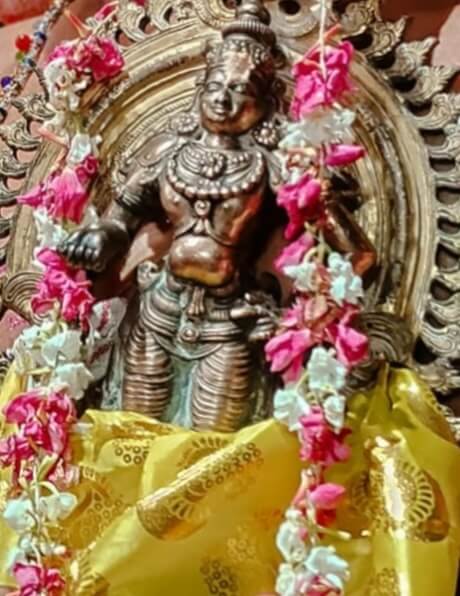
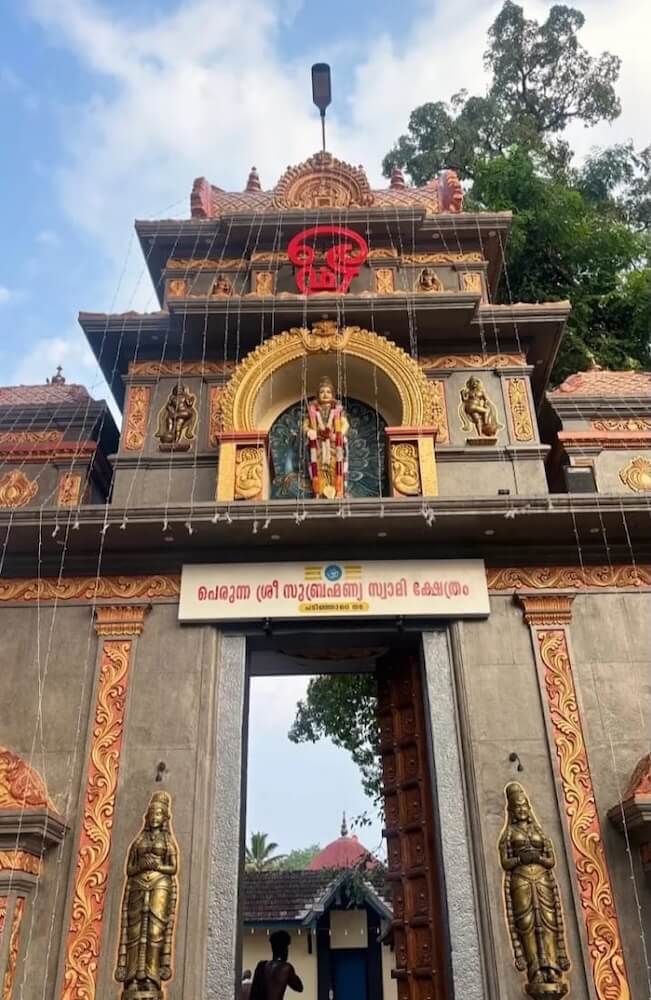
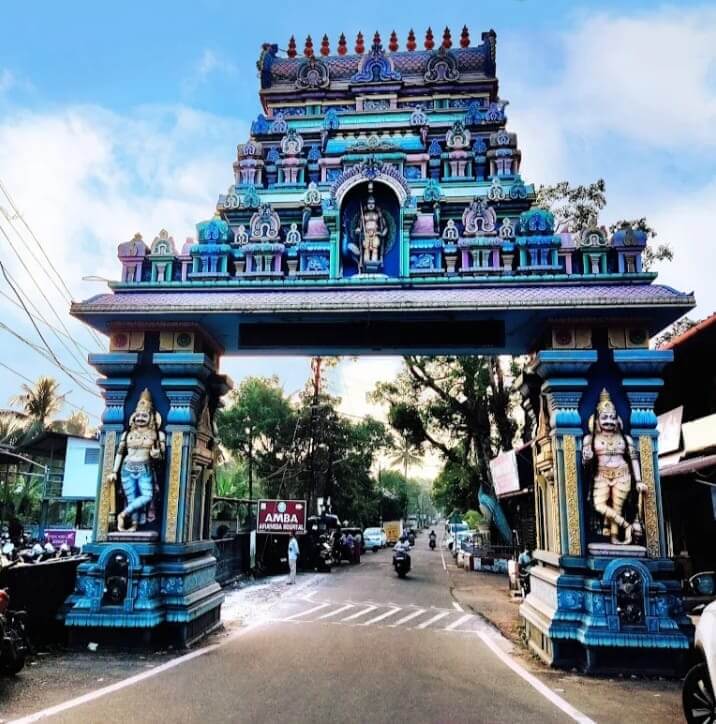
To completely destroy the evil powers and hostility of Umbizhi, Lord Subrahmanya in his fierce form after slaying Tarakasura was consecrated here. The deity is installed in a powerful posture holding the divine Vel (spear) downward, symbolizing that even after defeating the enemies, the Lord’s wrath had not subsided. According to legend, after this consecration, the village of Umbizhi perished and prosperity returned to Perunna. The temple is situated slightly west of the Main Central Road in the heart of Perunna. The temple faces east. An ornate entrance arch bearing the temple’s name marks the pathway leading to the temple. A short walk from there reveals the temple on the northern side.
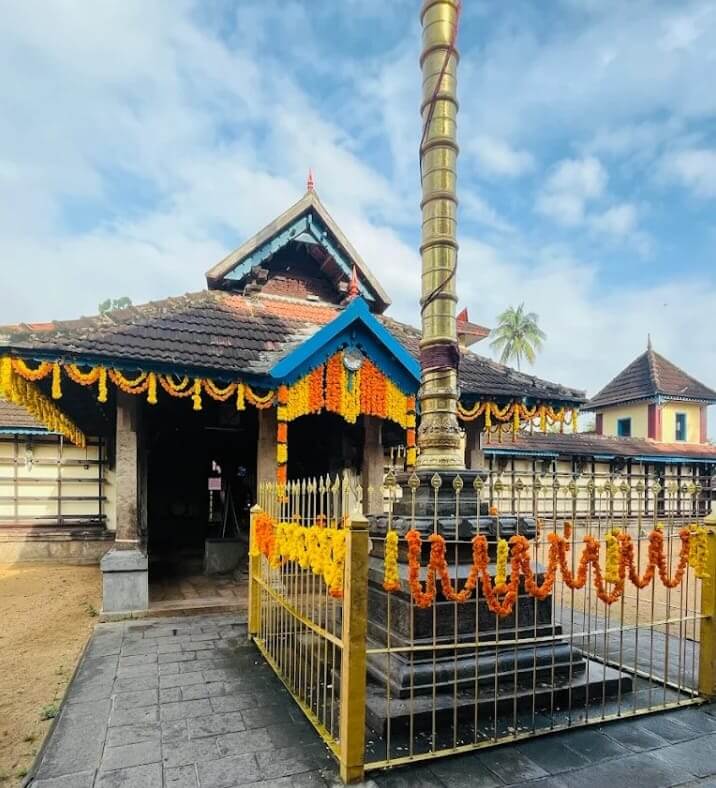
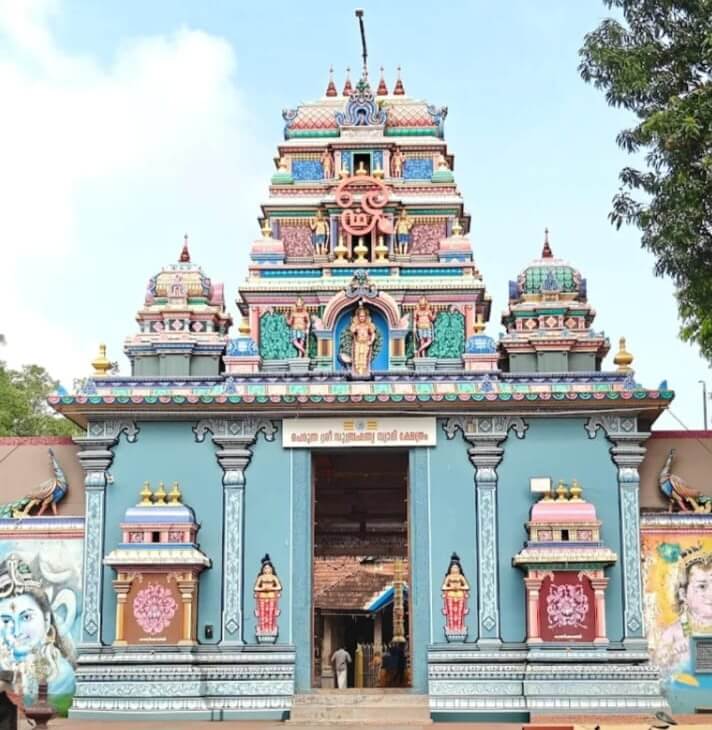
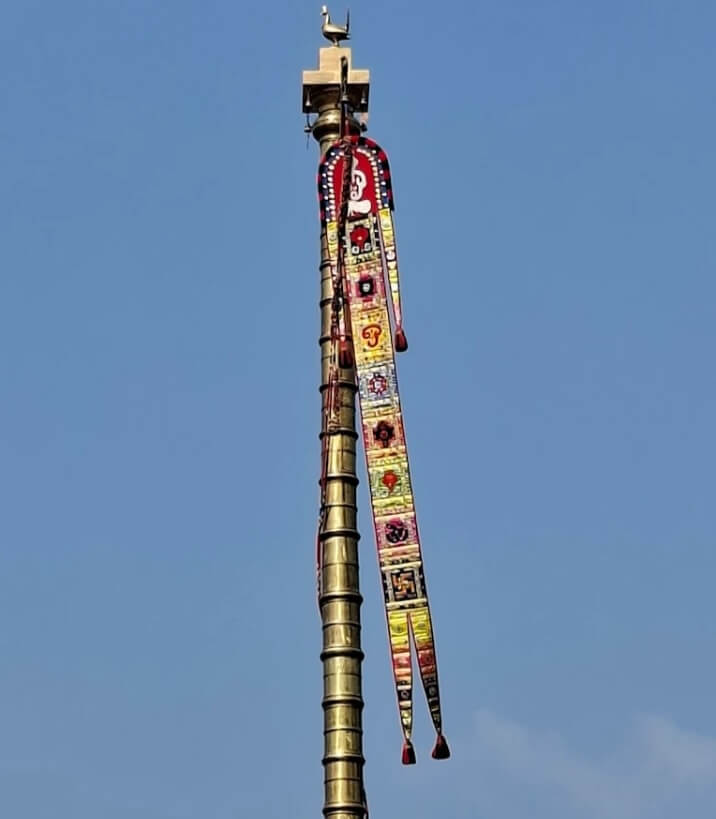
One of the major attractions of the temple is its magnificent Tamil-style gopuram. Sculp-tures of Lord Subrahmanya adorn one side of the tower, while images of Lord Shiva, Ganesha, Lord Krishna, and other deities are carved below. A large temple pond is sit-uated on the northeastern side of the temple. Entering through the eastern gopuram, devotees first see the massive elephant shelter, spacious enough to line up nearly seven elephants at a time during temple processions. Beyond this stands the golden flagstaff crowned with the image of the peacock, the divine vehicle of Lord Subrahmanya. Rising to nearly 60 feet, this flagstaff is one of the temple’s major highlights.
Beyond the flagstaff is the Balikkalpura, which houses the temple’s main sacrificial stone. The massive stone, standing nearly ten feet tall, partially obscures the inner view of the temple. It is believed to represent Skanda Sena, the commander of the Lord’s celestial army. The ceiling of the Balikkalpura features carvings of Brahma, the Ashta Dikpalakas (guardians of the eight directions), along with numerous divine figures, animal motifs, bird motifs, and mythical beings. The temple complex spreads across nearly three acres and is filled with many flourishing trees. The shrine of the serpent deities is located beneath a banyan tree in the southwestern part of the compound. Vasuki is worshipped here as the chief serpent deity along with Nagarakshi, Nagakanyaka, and Nagachamundi.
The sanctum sanctorum is a fine example of traditional Kerala temple architecture, beau-tifully combining stone, wood, and copper. The temple possesses a rare circular sanctum, seen only in a few temples of Kerala. The sanctum is a two-storeyed structure, with the lower roof covered in copper plates. The principal deity, Lord Subrahmanya, stands fac-ing east in his fierce warrior form after slaying Tarakasura. Beautiful wooden carvings and sculptures depicting scenes from Hindu mythology adorn the outer walls and roof sections of the sanctum. Ancient Kerala-style mural paintings are also preserved on the walls.
In front of the sanctum stands a beautifully built square-shaped Namaskara Mandapam decorated with intricate wooden carvings on its pillars and ceiling. The black stone idol of Lord Subrahmanya inside the sanctum is nearly six feet tall and radiates immense divine energy and heroic fierceness. One of the temple’s unique tantric and architectural features is the carving of Lord Narasimha behind the main idol, believed to balance the
intense energy of Lord Subrahmanya.
Every year, the ten-day annual festival begins with the ceremonial flag hoisting on the Thrikarthika star day in the Malayalam month of Vrischikam (November–December). Thousands of devotees participate in this grand celebration. The “Thripperunna Pakal Pooram,” held on the fourth evening of the festival, is especially famous for its majestic elephant procession, traditional percussion ensembles, and colourful umbrella displays.
The festival concludes with the grand Aarattu ceremony on the tenth day. Thaipooyam is celebrated during the Pooyam star in the Malayalam month of Makaram (January–February). Devotees participate in magnificent Kavadi processions and devotional rituals. On Kavadi Vilakku day, the golden Thidambu of the deity is carried atop decorated elephants.
Skanda Sashti is observed during the bright fortnight Sashti day in the Malayalam month of Thulam (October–November). This festival commemorates Lord Subrahmanya’s vic-tory over Tarakasura and the protection of the Devasena. Devotees observe fasting and special prayers on this sacred day. Special worship is also conducted on every Sashti day of the bright fortnight throughout the year, while Tuesdays are considered especially sacred at the temple.
Among the major offerings at the temple are Idichu Pizhijnja Payasam, Thulapayasam, Panchamritham, and Lemon Garland offerings. Devotees offer these prayers seeking relief from obstacles, enemy afflictions, illnesses, and for the fulfillment of wishes. The most unique offering here is the Idichu Pizhijnja Payasam, believed to help devotees overcome severe illnesses and gain good health. Thulapayasam is offered for success and fulfillment of desires, while Panchamritham remains one of the most important offerings associated with Lord Murugan worship. Lemon offerings hold special significance in the temple. Devotees offer lemon garlands seeking relief from enemy troubles, business difficulties, and obstacles in life. A special Tuesday ritual involves offering a lemon, coin, and white flower on a banana leaf and circumambulating the sanctum six times for six consecutive Tuesdays.
The first Tuesday offering is made to Lord Ganesha, while the remaining offerings are dedicated to Lord Subrahmanya. Milk abhishekam and sacred ash abhishekam are also important rituals performed for the deity. “Kannan Pazham” is another special offering made on auspicious occasions. During Thaipooyam, devotees carry Kavadi as part of their vows and offerings.
The temple rituals begin at 04:45 AM with the awakening ceremony and Nirmalya Dar-shanam. From 05:00 AM to 05:30 AM, various abhishekams including Vaka Charthu, oil abhishekam, and water abhishekam are performed. Malar Nivedyam is offered at 05:45 AM followed by Usha Pooja at 06:15 AM. Ethirelppu Pooja and Seeveli are conducted at 07:00 AM, while Pantheeradi Pooja takes place at 08:00 AM. Navaka Abhishekam is performed at 09:30 AM followed by Ucha Pooja at 10:30 AM. After the Ucha Seeveli at 11:00 AM, the temple closes for the afternoon. The temple reopens at 05:30 PM. Deeparadhana is conducted at 06:30 PM, followed by Athazha Pooja at 07:30 PM and Athazha Seeveli at 08:00 PM. At 08:30 PM, the “Thrippuka” ritual is performed by of-fering fragrant incense and sacred aromatic substances before ceremonially putting the deity to rest. The temple closes after this final ritual of the day.
This sacred temple stands as a testament to deep spiritual devotion, ancient architectural grandeur, and rich local cultural traditions.
The sanctum sanctorum houses the divine idol consecrated according to ancient Vedic traditions, surrounded by serene courtyards and traditional temple architecture.
Navratri, Maha Shivratri, Annual Temple Jatra & Deepotsav
Compare and book flights, secure top-rated local hotels near the temple, hire reliable guides, and rent cars instantly.
Extend your pilgrimage by visiting other highly sacred temples located nearby.


Add ₹999 more to unlock FREE SHIPPING!
Your sacred cart is currently empty.
Shop Photo FramesFill in your delivery details below to place your order.
Add comment