
Add ₹999 more to unlock FREE SHIPPING!
Your sacred cart is currently empty.
Shop Photo FramesIn Mumbai, a city formed of seven islands, there have been many small and large temples of Lord Shri Ramchandra since historical times. One of the most important and ancient among these is situated to the east of Cotton Green railway station. This Shri Ram Mandir, the presiding deity of the workers living in the Parel and Cotton Green areas, was established in the year 1940. Since then, the festival of Ram Navami has been celebrated in this temple with great religious fervor and enthusiasm. Thousands of devotees of Lord Ram participate in this festival, which spans nine days starting from Gudi Padwa.
Mumbai, formed of seven islands, was once considered the cotton capital of the world. In the year 1700, during the tenure of British Governor William Hornby, large-scale cotton trade began between Mumbai and China. In the 1860s, due to the American Civil War, the cotton and textile business here flourished. Cotton Green was a hub for this trade. According to the book ‘Bombay Place Names and Street Names’ by Samuel T. Sheppard (The Times Press, 1917), the original Cotton Green was located in the Colaba area. It is said to have been in the area now known as Badhwar Park. The area west of Churchgate had lush greenery, which is why it was called Bombay Green. Since the cotton trade was conducted through the ports to the east of this area, it came to be called Cotton Green. In 1924, the cotton trade was shifted near the Sewri-Mazgaon area. The ‘Cotton Exchange’ building was erected there, and consequently, this area began to be referred to as Cotton Green.
The Central Railway station on the Harbour line here is known by the name ‘Cotton Green’. This temple of Shri Ram is situated a short distance from this station. The temple was established by Seth Surajmal Nemani. He was originally from Rajasthan. His father, Seth Shivnarayan Nemani, was a prominent cotton merchant. He also held the honorary title of ‘Justice of the Peace’ during the British era. This position was introduced in India during the East India Company’s time. These officials were known as ‘J.P.’ and were appointed by the Governor General. They held judicial and administrative powers. This temple was built in memory of Seth Shivnarayan Nemani after his passing. The consecration of the idols in this temple was performed on the auspicious occasion of Vaishakh Shuddha 6, Monday, Samvat 1997 (13 May 1940).
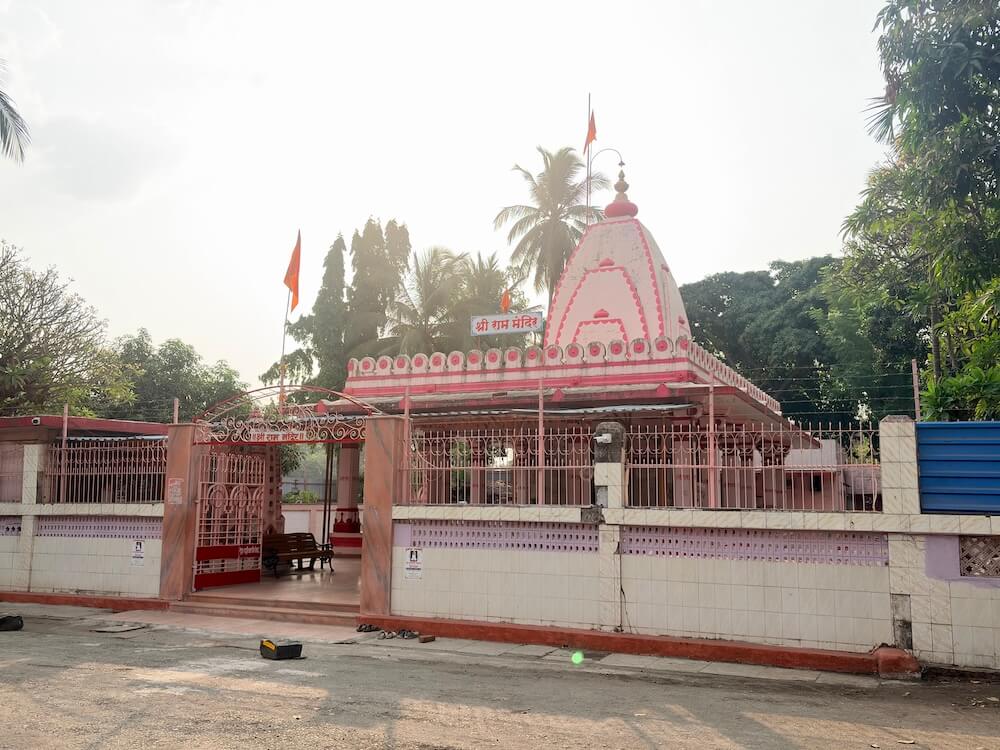
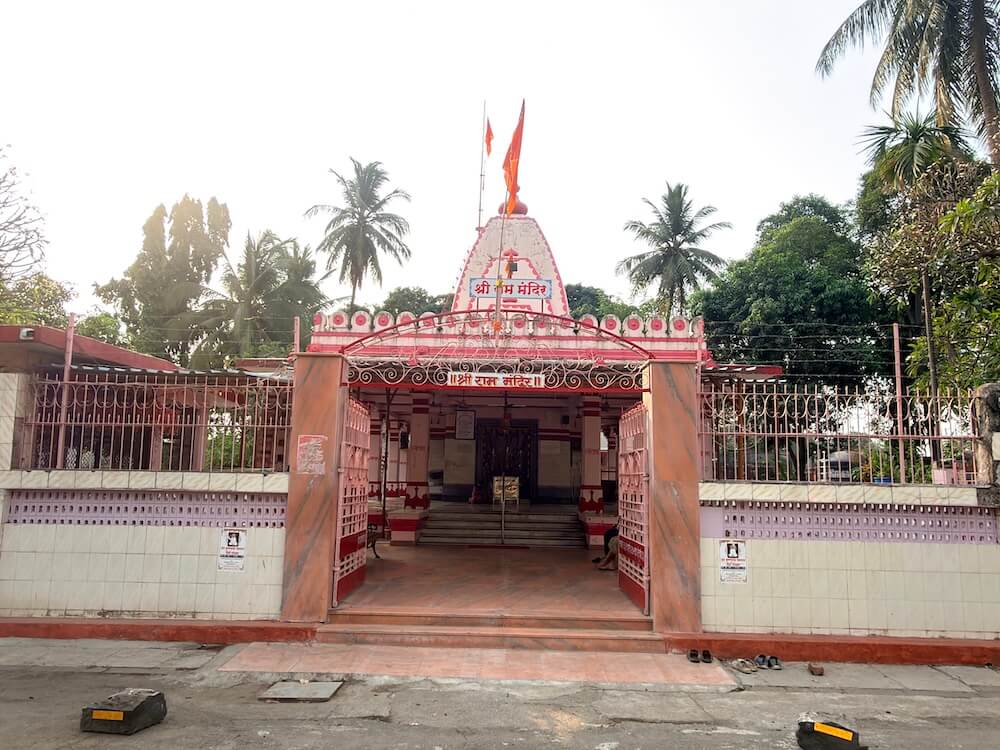
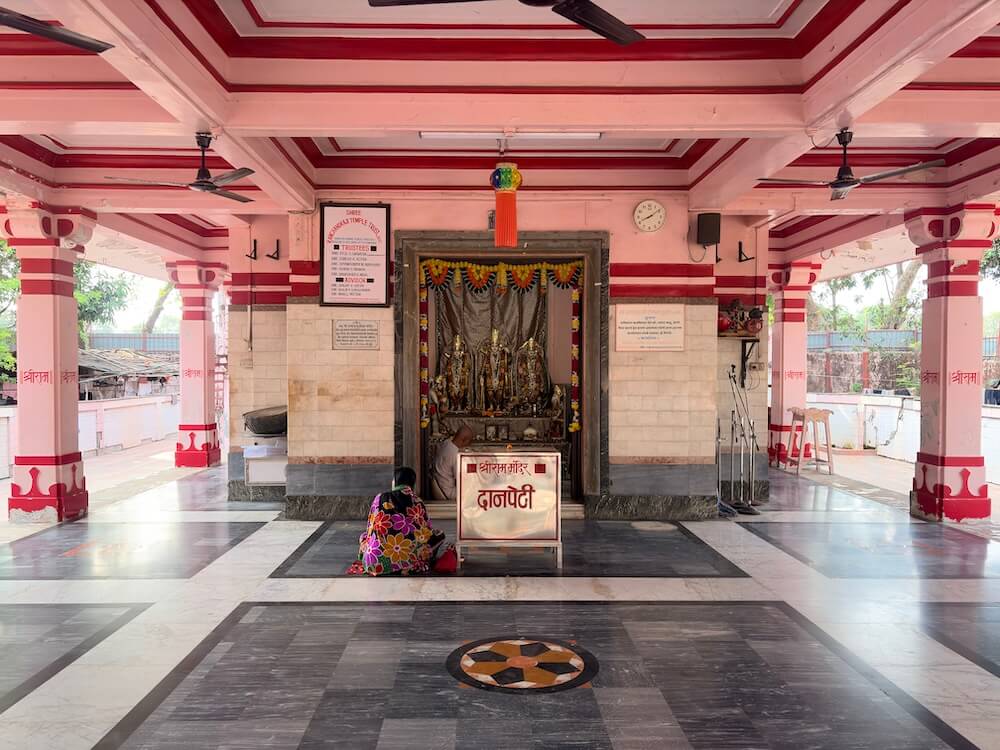
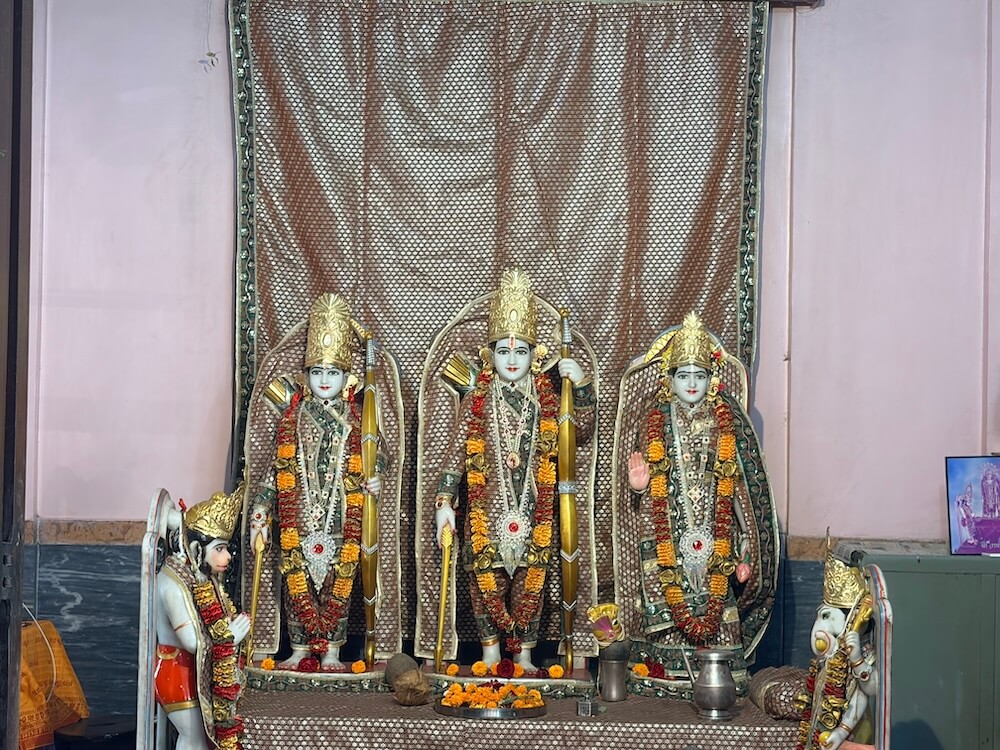
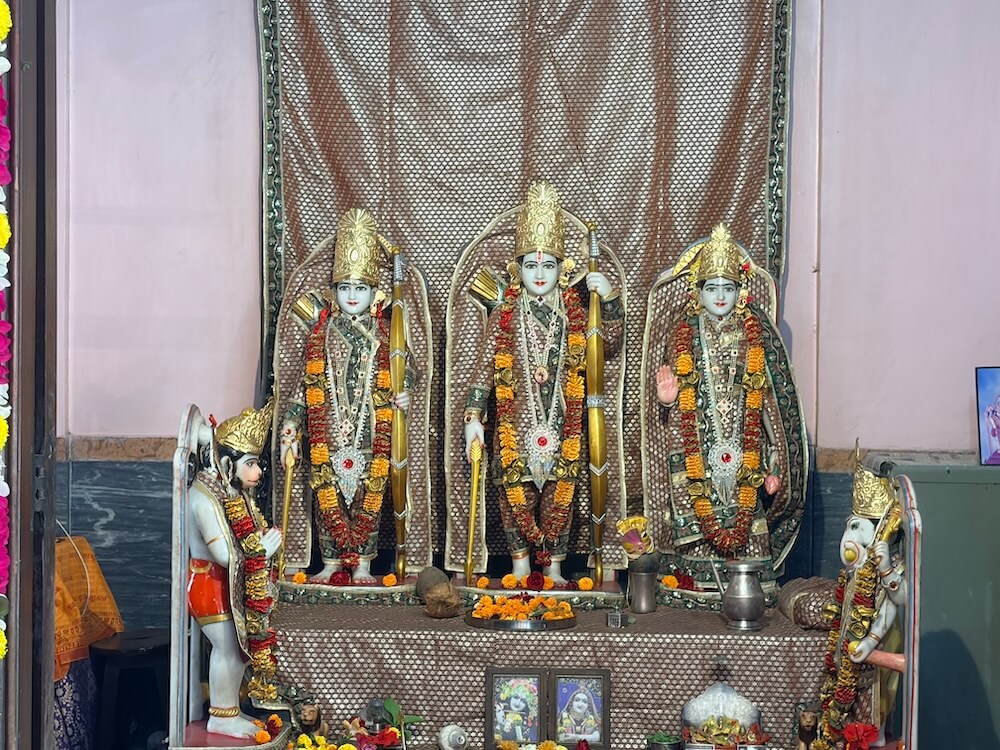
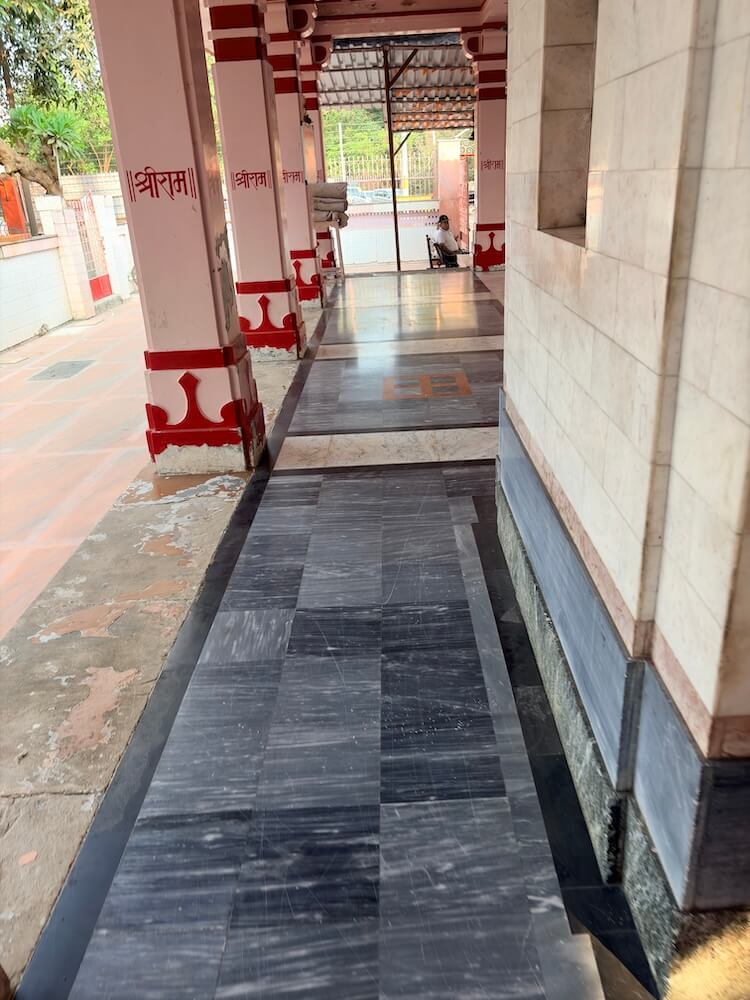
Despite being near the railway station, the temple is situated in a very quiet area. There is a large open space in front of the temple. The ‘Air Force Station’ is located nearby. The temple premises are enclosed by a wall with iron railings on top. Upon entering the premises through a small iron gate, one finds a small shrine of Hanuman and a lamp pillar (Deepstambh) to the left. In the shrine, an idol of Hanuman smeared with vermilion is seated in a golden arch. Next to this shrine is a Mahadev Pindi and Nandi. A brass cobra canopy rests over the Pindi, which also has a brass dripping vessel (Galantika) above it. Directly in front is a small brass trident. The temple structure consists of a Sabha Mandap (assembly hall) and a Garbhagriha (sanctum sanctorum). The Sabha Mandap, featuring square pillars, is open in style. One enters it by climbing four steps. The Sabha Mandap has marble flooring. The roof of the Sabha Mandap is flat and features a decorative parapet. From the Sabha Mandap, there is a circumambulation path around the Garbhagriha. The Garbhagriha has an entrance with a wooden frame, and an image of Lord Ganesha is placed at the lintel of the frame. Inside the Garbhagriha, on a high pedestal, are the smiling idols of Lord Shri Ramchandra, Lakshman, and Mother Sita. Carved in marble stone, these idols are adorned with garments, ornaments, and flower garlands. Shri Ram and Lakshman are wielders of the Kodanda bow and hold an arrow in their right hands, while the idol of Sita is in the Varada Mudra (gesture of bestowing boons). These idols wear golden crowns on their heads. Beside these idols, an idol of Hanuman in a bowing posture is seated to the left, and an idol of Ganesha is seated to the right. These idols are also made of marble stone. At the base of the pedestal are a conch, a lion figure, and a brass idol of Ganesha. Pictures of Radha and Shri Krishna are also kept here. Above the Garbhagriha is a tapering spire that creates the impression of the Urushringa style. Atop it is a modaka-shaped Amalaka and a Kalash.
Thousands of Mathadi workers in the Cotton Green area have immense faith in the Shri Ram of this temple. Because of this, there is a large influx of devotees in the temple every morning and evening. One can visit the temple for Darshan between 6.30 AM to 12.15 PM and 5 PM to 9.30 PM. Aarti is performed in the temple every day at 6.45 AM and 7.30 PM.
Various Hindu festivals and celebrations are regularly observed here. Every Sunday evening, Bhajan and Kirtan programs are held. Dnyaneshwari reading takes place here on Sundays from 9 AM to 11 AM, and Kirtan is held from 5 PM to 6 PM.
Thereafter, Bhajan is held between 6 PM and 7 PM, and Aarti is performed at 7.30 PM. At 8 PM, a Ramcharitmanas reading program is held here. Kirtans are also organized on the occasion of India’s Independence Day, Republic Day, and Gokulashtami. The Ram Navami festival week is the biggest celebration here. Thousands of devotees come for Darshan every day during the period from Gudi Padwa to Ram Navami. During this time, Bhajan and Bhagavata Parayana programs are held here every evening.
On the day of Ram Navami, food is served to about 30,000 to 40,000 devotees here. Every year on 7 January, a Warkari Dindi is taken from here to the Vitthal Mandir in Wadala, which is considered the Prati-Pandharpur. Thousands of Warkaris and devotees participate in this Dindi. The temple is managed by the ‘Shri Ramchandraji Temple Trust’, a registered charitable organization established by merchants and Mathadi workers.
This sacred temple stands as a testament to deep spiritual devotion, ancient architectural grandeur, and rich local cultural traditions.
The sanctum sanctorum houses the divine idol consecrated according to ancient Vedic traditions, surrounded by serene courtyards and traditional temple architecture.
Navratri, Maha Shivratri, Annual Temple Jatra & Deepotsav
Compare and book flights, secure top-rated local hotels near the temple, hire reliable guides, and rent cars instantly.
Extend your pilgrimage by visiting other highly sacred temples located nearby.


Add ₹999 more to unlock FREE SHIPPING!
Your sacred cart is currently empty.
Shop Photo FramesFill in your delivery details below to place your order.
Add comment