
Add ₹999 more to unlock FREE SHIPPING!
Your sacred cart is currently empty.
Shop Photo Frames
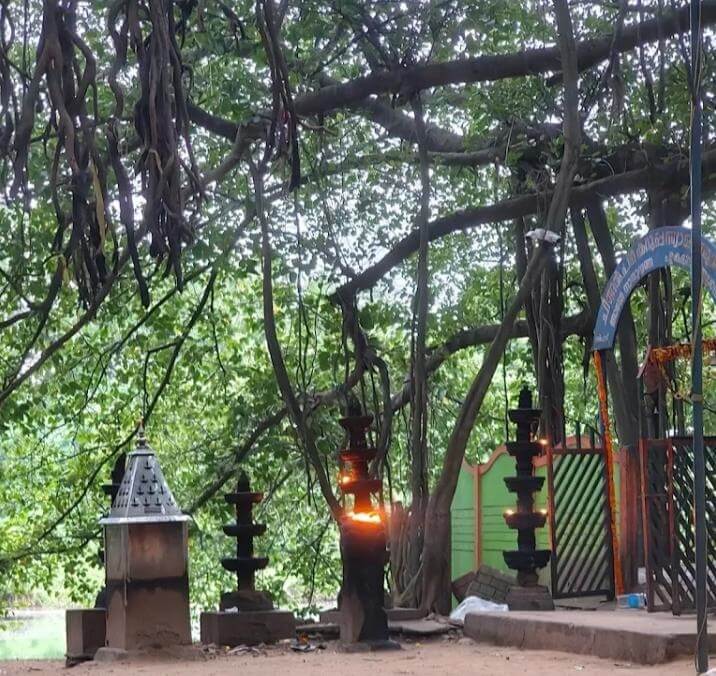
Located near Kollengode in Kerala’s Palakkad district, the Chinganchira Karuppu Swamy Temple is a unique nature temple. Unlike traditional temples, it has no roof or built structures and stands beneath a large banyan tree in harmony with its natural surroundings. Its simplicity and close connection with nature are among its most distinctive features. Karuppu Swamy, worshipped here as part of the region’s rural and Dravidian folk tradition, is regarded as the protector of devotees and the guardian of justice. The peaceful setting and the temple’s distinctive style of worship make it a remarkable place of devotion for both devotees and visitors.
The temple is believed to preserve a form of local and border-deity worship that existed in Kerala before Vedic Hindu traditions became widely established. Karuppu Swamy, worshipped as a guardian deity in the Dravidian folk tradition, represents the ancient belief of early forest and hill communities who sought protection from wild animals and enemies by worshipping the powers of nature. The absence of a roof, sanctum, or other traditional temple structures, with worship taking place beneath a large banyan tree, is considered a reflection of the antiquity of this form of worship. It is also seen as a continuation of the ancient tradition of worshipping sacred groves before temples with built sanctums became common. According to researchers, this tradition of worship beneath large banyan trees has links to some of the oldest belief systems of the Indian subcontinent.
This tradition of worship has close links with the Tamil practice of Nadukal Vazhipadu (Hero Stone Worship). In ancient times, hero stones were erected in memory of warriors who died while protecting their villages or livestock and these memorial stones gradually came to be worshipped as guardian deities. As Kollengode lies close to the Tamil Nadu border, the region reflects a blend of the cultural traditions of both states. The present form of worship developed through the merging of the Karuppu Swamy tradition of Tamil Nadu with Kerala’s local traditions of worship, including those of Vettakkorumakan and Muthappan. Beyond the influence of Brahmanical temple customs and conventional temple architecture, this remains a remarkable example of a local tradition of worship shaped by the lives and beliefs of ordinary people, farmers and warriors.
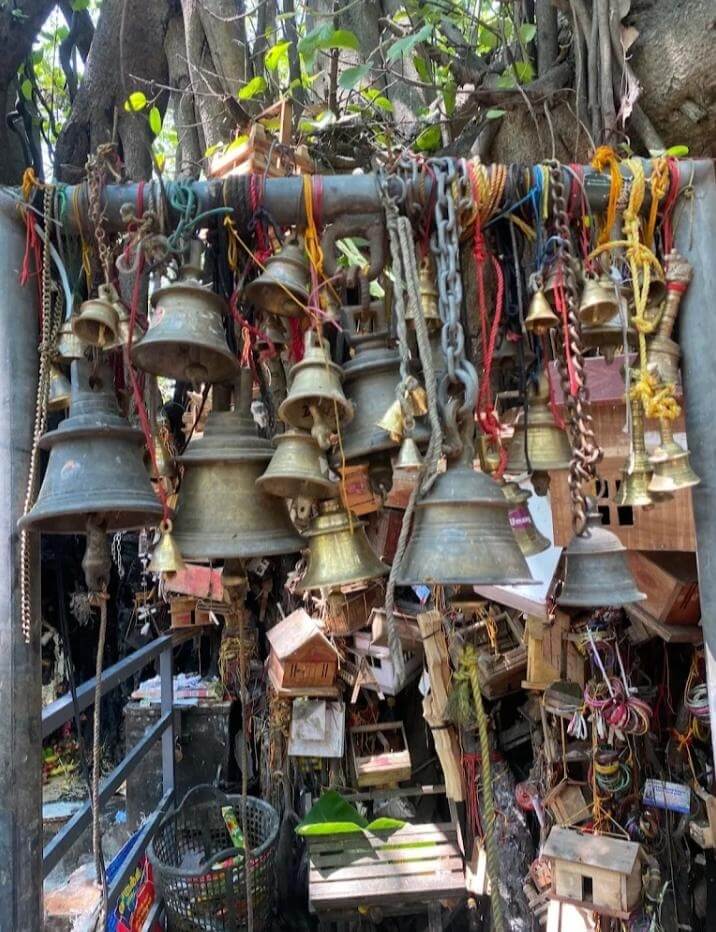
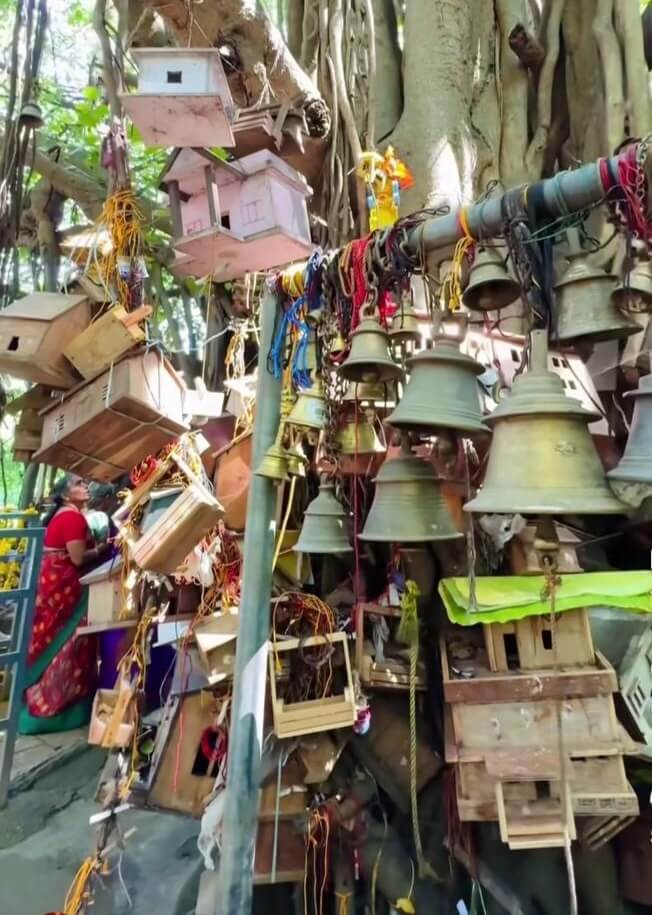
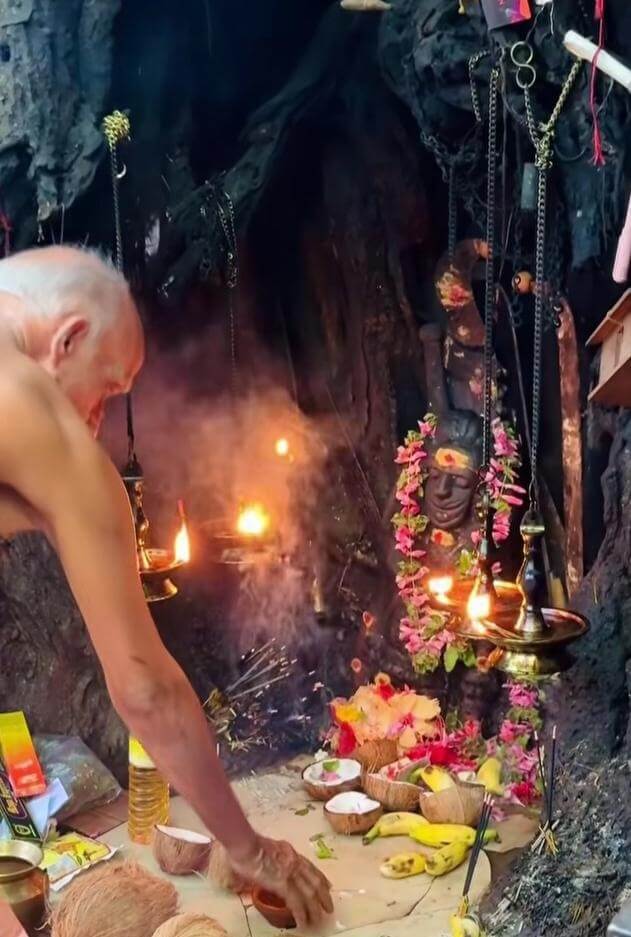
Several legends associated with the temple continue to be passed down through local tradition. The most important legend is that of Karuppu Swamy and Velamma. According to local belief they travelled across the land disguised as a hunter and a huntress. They rested in this banyan grove and later chose to remain here to bless devotees. Another legend is associated with the large banyan trees that spread across the temple grounds. It is said that a devotee once left his banyan walking stick here after resting and that it took root and over the centuries, grew into the vast banyan grove seen today. Farmers and warriors from Tamil Nadu are also believed to have prayed to Karuppu Swamy for the protection of their cattle and farmlands, offering tender coconuts in fulfilment of their vows when their prayers were answered. This offering, known as Karikkudaykkal, remains one of the temple’s principal offerings. Another long-standing custom is for childless couples to tie small wooden cradles to the branches of the banyan tree while praying for children. Those wishing to build a house also hang small wooden models of houses as a prayer for their wish to be fulfilled.
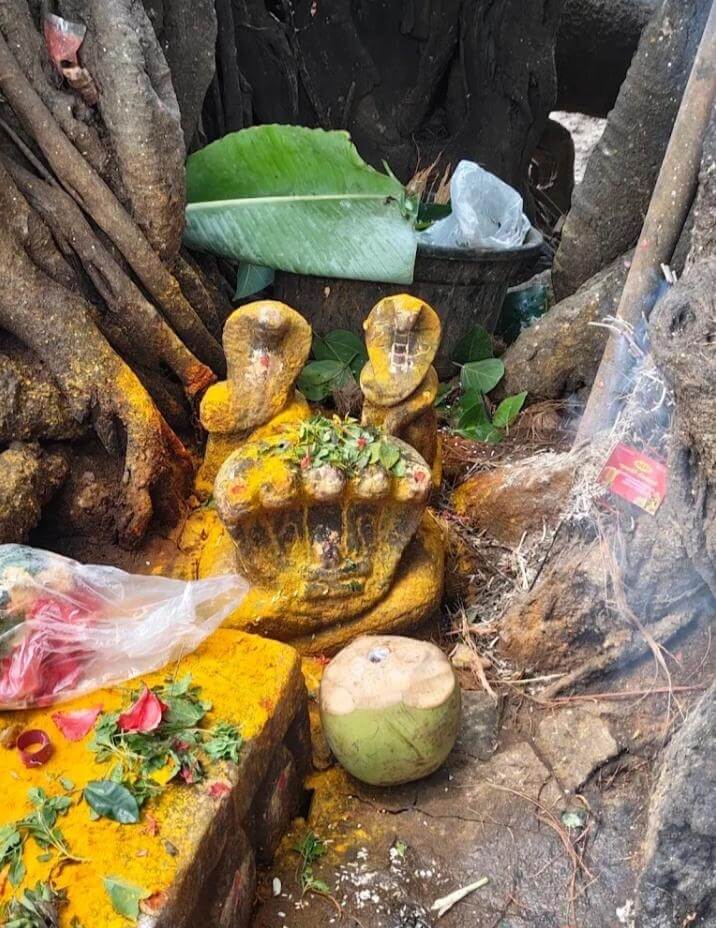
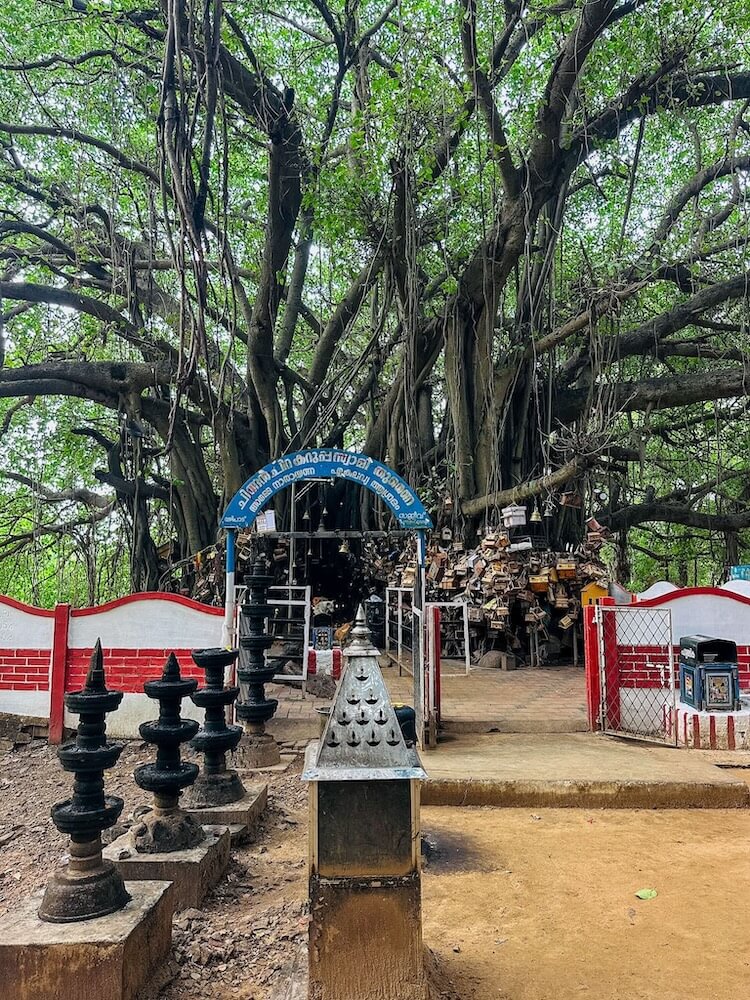
From a distance, it does not appear to be a temple. Instead, visitors first see a vast banyan grove spread across nearly two acres, with countless aerial roots reaching down into the ground to form a natural enclosure. Even from the roadside, the branches are lined with small wooden cradles and miniature wooden houses tied by devotees as offerings. As you enter the grove, the dense canopy of leaves blocks the sunlight, creating a cool environment even during the daytime. Instead of a traditional sanctum, the shrines of Karuppu Swamy and Velamma stand in the open beneath the banyan tree, without any roof above them. In front of the main shrines are large swords, spears and traditional oil lamps, while nearby are the shrines of the Seven Virgins and the naga deities.
The Mandala festival, observed from the first day of Vrischikam to the 11th day of Dhanu (November–December), is the temple’s principal annual festival. During this period, special poojas and offerings are held every day, attracting large numbers of devotees. The Tamil month of Aadi (July–August) is also of special significance, with special poojas conducted throughout the month, particularly on Fridays. Special prayers and increased numbers of devotees are also seen during the Malayalam month of Karkidakam, known as the Ramayana month and on the day of Thaipooyam, celebrated during the Malayalam month of Makaram (January–February). In addition, Tuesdays and Fridays are regarded as the temple’s weekly special worship days for Karuppu Swamy and Velamma and many devotees visit the temple for darshan on these days.
Karikkudaykkal (breaking a tender coconut) is the temple’s most important offering. Devotees break tender coconuts before the shrine of Karuppu Swamy while praying for relief from major difficulties and the fulfilment of their wishes. Couples praying for children tie small wooden cradles or wooden dolls to the branches of the banyan tree, while those wishing to build a house, or complete one without obstacles, offer small wooden models of houses. The Dravidian tradition of offering a chicken or a goat for the protection of livestock and the prosperity of agriculture also continues at the temple. Other important offerings include presenting large iron swords and traditional oil lamps to seek protection and ward off evil, as well as offering a red silk cloth to Velamma while praying for a happy married life and family prosperity.
As this is a nature temple, it does not follow the elaborate pooja rituals or strict Vedic practices found in many traditional temples. The temple is generally open for darshan from 5:00 a.m. to 11:00 a.m. and from 5:00 p.m. to 8:00 p.m. On Tuesdays, Fridays, Sundays and during special occasions such as the Mandala season and the Tamil month of Aadi, the temple remains open until late at night depending on the number of devotees. Simple deeparadhana, prayers and offerings to Karuppu Swamy and Velamma are conducted in the morning and evening. On special occasions, devotees also arrange special decorations and prayers. As the shrines stand in the open beneath a large banyan tree, devotees can offer prayers directly before the deities, making this one of the temple’s unique features.
This sacred temple stands as a testament to deep spiritual devotion, ancient architectural grandeur, and rich local cultural traditions.
The sanctum sanctorum houses the divine idol consecrated according to ancient Vedic traditions, surrounded by serene courtyards and traditional temple architecture.
Navratri, Maha Shivratri, Annual Temple Jatra & Deepotsav
Compare and book flights, secure top-rated local hotels near the temple, hire reliable guides, and rent cars instantly.
Extend your pilgrimage by visiting other highly sacred temples located nearby.


Add ₹999 more to unlock FREE SHIPPING!
Your sacred cart is currently empty.
Shop Photo FramesFill in your delivery details below to place your order.
Add comment