
Add ₹999 more to unlock FREE SHIPPING!
Your sacred cart is currently empty.
Shop Photo FramesKamadeva is the presiding deity of love in the hearts of men and women as described in the Puranas. He is also known by the names Manmatha, Atma-bhu, Ananga, Mara, Manasija, Kandarpa, Smara, Pushpadhanva, Panchashara, Ratipati, Minaketana, Darpaka, and Madana. Although this deity holds a very important place in human life, temples dedicated to him are few and far between. This includes the famous Madan Kamadeva temple in the Kamrup district of Assam, which is known as the ‘Khajuraho of Assam’. There is also a similar famous temple dedicated to Kamadeva at Rozoda in Maharashtra.
According to mythological legend, Kamadeva was first born from the heart of Lord Brahma. This story of Kamadeva’s birth is narrated in the second and third chapters of the ‘Shri Rudra Samhita’ of the Shiva Purana. In it, Brahma says, ‘A man with a captivating form was born from my mind. He was extremely beautiful and possessed a wondrous appearance. His hair was black. His teeth were as white and radiant as pearls. A fragrance emanated from his breath. Even the fine hair on his body was fragrant. His gait was like that of an intoxicated elephant.’ Lord Brahma named him Manmatha, Kama, Madana, and Kandarpa. He instructed him to enchant women and men with his five arrows.
The red lotus, blue lotus, mango blossom, Ashoka flower, and jasmine are his five arrows. According to the Shiva Purana, Kamadeva named his five arrows Harshan, Rochan, Mohan, Shoshan, and Maran. In some texts, they are also referred to as Sammohan, Unmadan, Shoshan, Tapan, and Stambhan. It is also mentioned that the bow of Kamadeva, who wields flowery arrows, is made of Ikshudanda, that is, sugarcane. is found. At the Kailasa Temple in the Ellora caves of Aurangabad district, there is a sculpture depicting Kamadeva along with his wife Rati. In it, a sugarcane bow can be seen in Kamadeva’s hand. According to the legend, he pierces the hearts of young men and women with the help of these arrows. According to another mythological story, Pradyumna, the son of Shri Krishna and Rukmini, is also considered to be Kamadeva himself. According to some stories, he has wings and his vehicle is a Shuka (parrot).
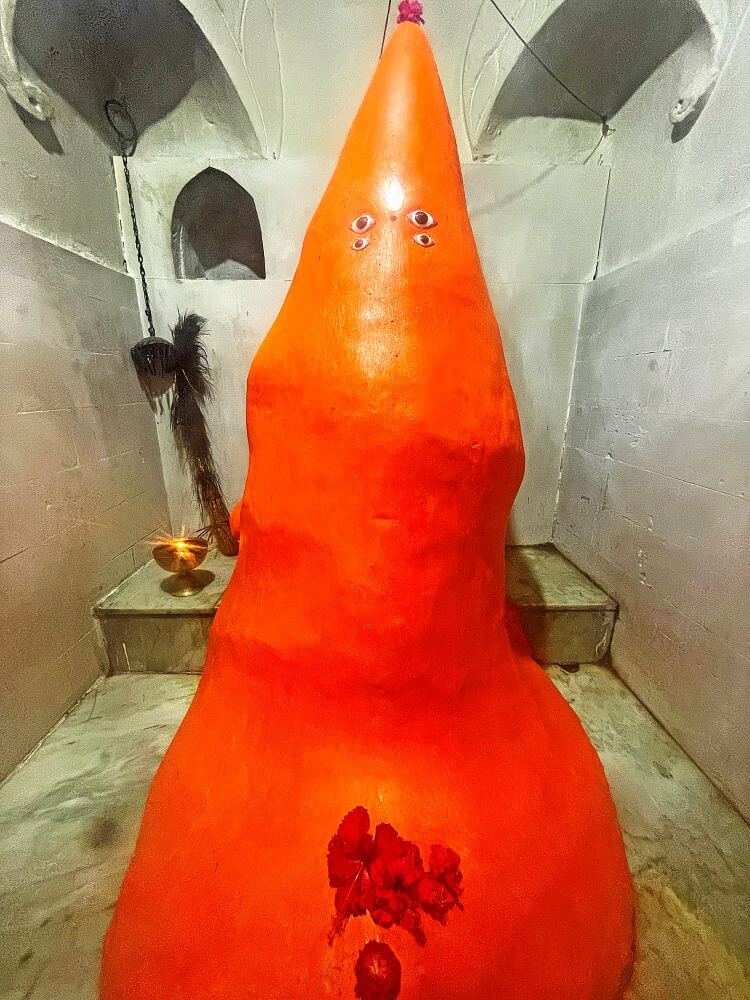
In India, the number of temples dedicated to Kamadeva is small. While some temples named Kameshwar or Kamnath are found in many places, they are dedicated to Lord Shiva. However, the Kamsiddha temple in Rozoda, located in the Raver taluka, is dedicated to Kamadeva. The legend of this temple states that many years ago, while plowing was underway in a field in this area, the plow hit an obstruction at one spot. Splashes of blood began to spray from there, which terrified the people. After the bleeding stopped some time later, the villagers excavated the site. In it, a A stone-like idol was discovered. This was the idol of Kamsiddha. The villagers built a temple and consecrated the idol within it. According to local belief, this cone-shaped idol grows bit by bit. As it grows, it automatically breaks once it reaches the dome.
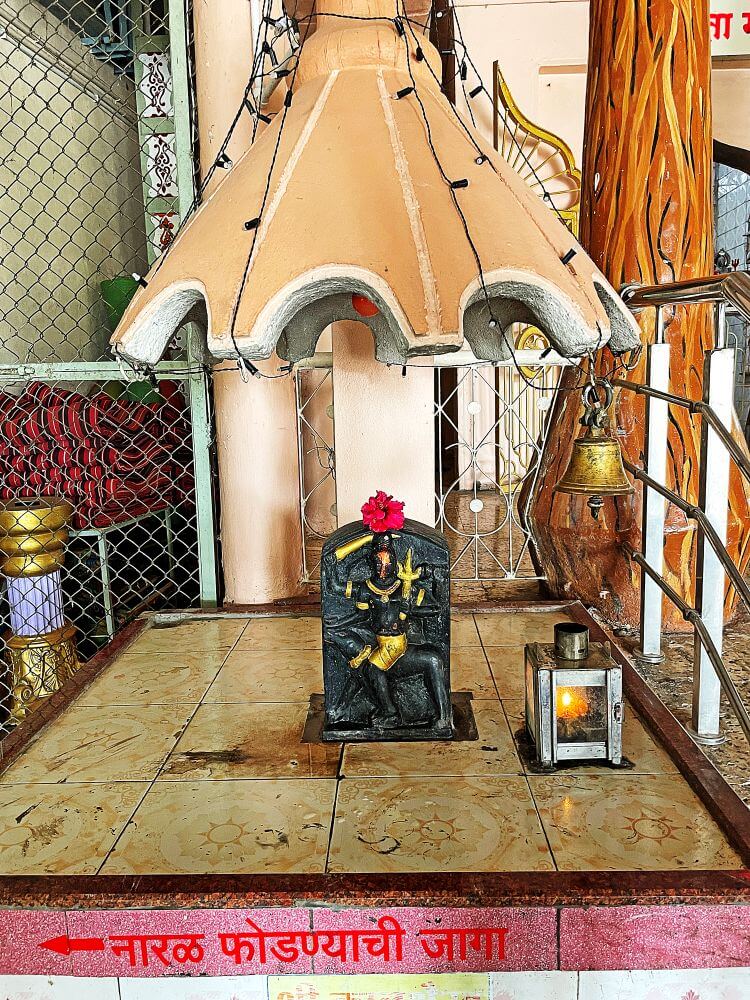
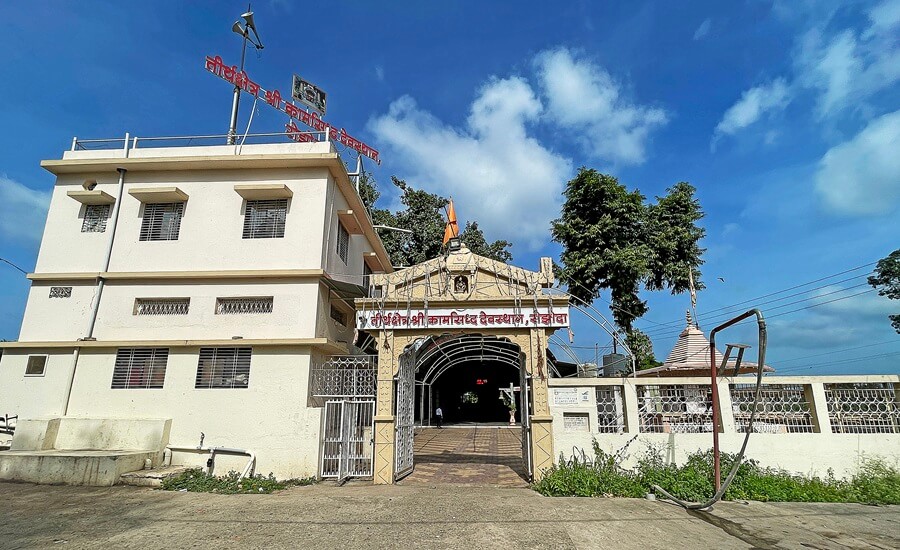
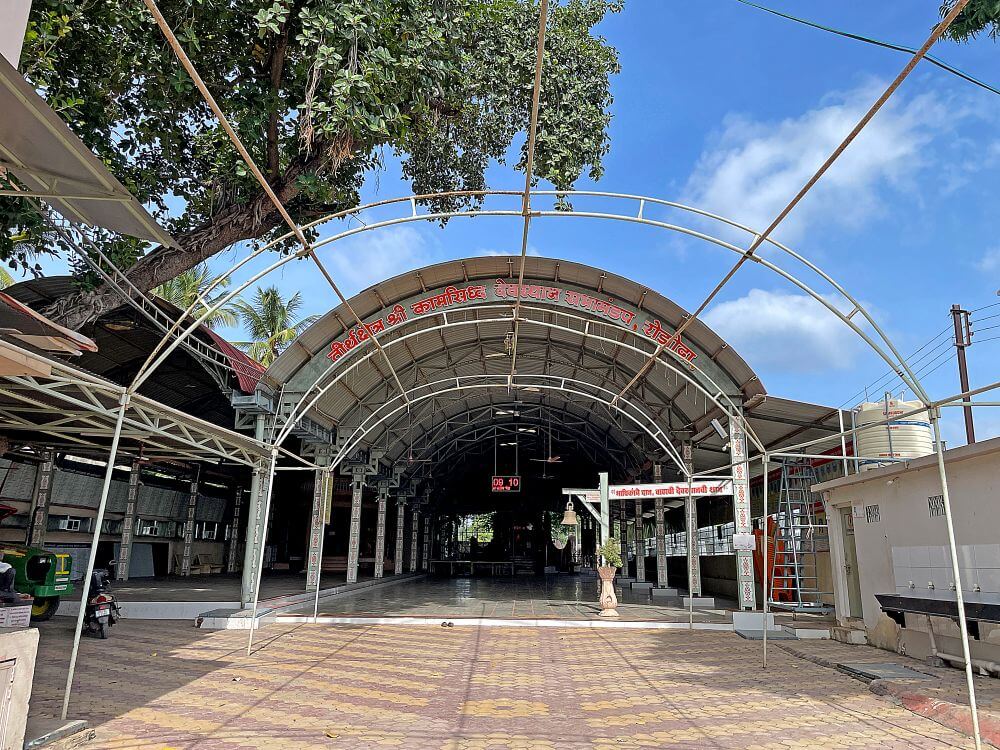
The exact history of the establishment of this temple is unknown. Although the year 1923 is inscribed as the founding year in the current temple, it is said that a temple existed here even before that. This temple is situated in a large area on the outskirts of the village. The temple complex has a large entrance gate. The temple courtyard is paved with paver blocks throughout. Ahead, there is a large pavilion with a corrugated metal roof in an apsidal (gajapristha) shape. This assembly hall (sabhamandap) is fitted with smooth flooring. On the left side of the assembly hall, there is a uniquely constructed temple of Goddess Durga. In the sanctum sanctorum (garbhagriha) of the temple, a marble idol of Goddess Durga is placed on a high pedestal (vajrapitha). Next to this idol, there is also a silver idol of the Goddess. Beside this temple, an idol of Lord Ganesha is enshrined on a raised platform.
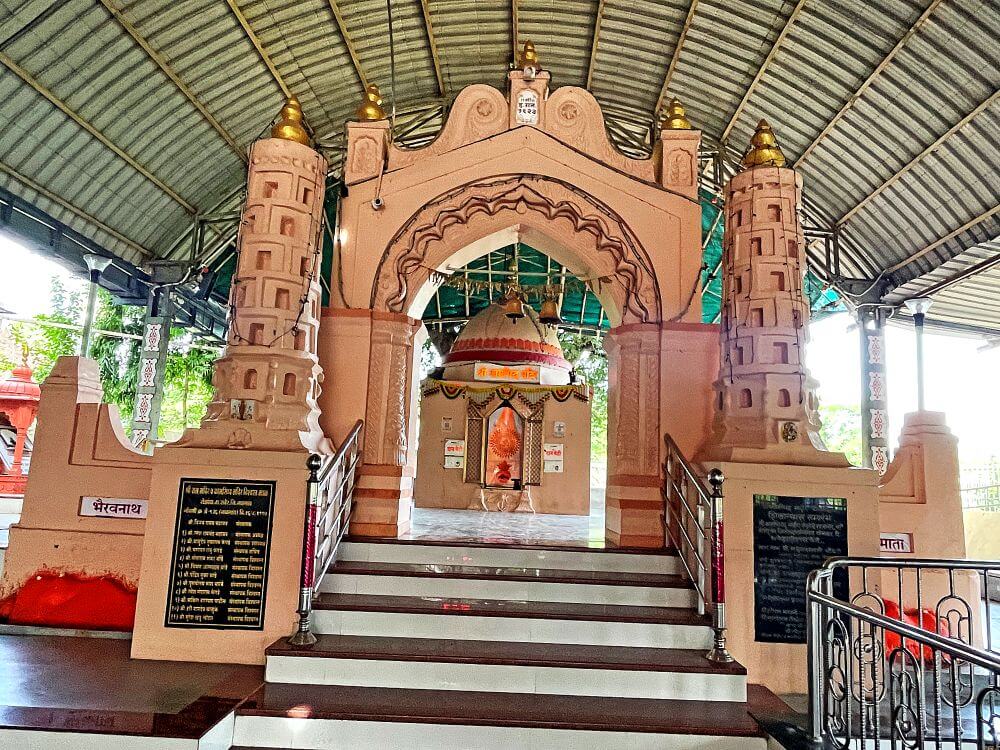
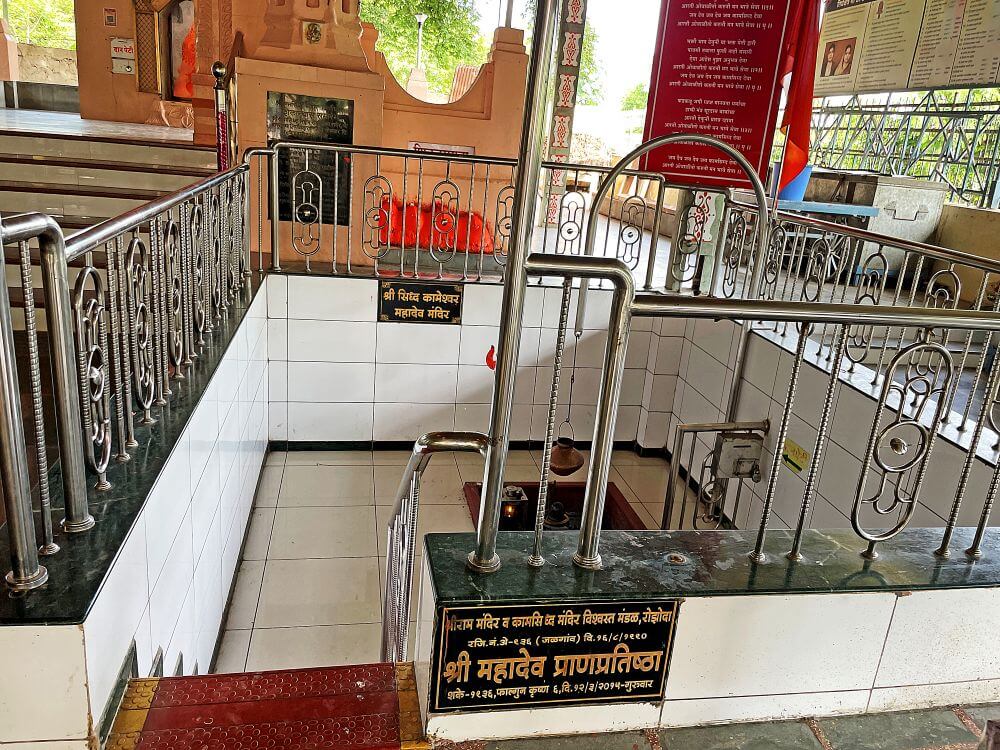
Further ahead, at the very end of the Sabha Mandapa, the temple of Kamsiddha is situated on a high platform. In the front area of this temple lies the Homa Kunda. Ascending six steps from there, one enters this platform. To the right of these steps is the shrine of Siddhakameshwar Mahadeva and Shitala Mata, while to the left is the shrine of Bhairavnath. Near the steps, on both sides, stand two Deepastambhas (lamp pillars). The platform features an arched entrance. A few steps from here is the small temple of Kamsiddha. This temple has a dome-shaped shikhara. Inside, there is a triangular-shaped stone idol of Kamsiddha, anointed with vermilion (sindoor). Four eyes have been fixed on the upper part of this idol. In earlier times, this deity was referred to as Kamadeva. Over time, as devotees began to experience the divine power of this awakened (jagrut) shrine and their desires (kama) began to be fulfilled (siddhi), the deity came to be known as Kamsiddha.
In this temple, the deity’s festival is celebrated on Magh Purnima. On this occasion, the flag of the Devkathi is changed and kept in the Bhagat’s house throughout the night. The next day at 2:00 PM, the Devkathi is taken out in a procession through the village amidst music and celebrations. This is known as the Dhwaj-Miravnuk (flag procession). The Devkathi is balanced and maneuvered on the palm of the hand or held in the teeth. Villagers and devotees attend this yatra in large numbers.
On the day of the yatra, a Mahaprasad program is organized. The devotee who becomes possessed by the deity (swari) predicts the rainfall and crop yield for the coming year. A special ritual is held in this temple for those who are childless. During this ceremony, the woman who is unable to conceive is made to sit with her back turned, with her lap (oti) held open. The Bhagat throws neem leaves; it is the firm belief of the devotees that if the leaves fall into her lap, she will be blessed with a child. Religious programs such as Maharudrabhishek are also organized in this temple during the month of Shravan. This shrine has been granted ‘C’ class pilgrimage site status by the state government. There is a Bhakta Niwas (pilgrims’ lodging) on the temple premises. Wedding ceremonies are also held in the temple’s grand assembly hall (sabhamandap).
This sacred temple stands as a testament to deep spiritual devotion, ancient architectural grandeur, and rich local cultural traditions.
The sanctum sanctorum houses the divine idol consecrated according to ancient Vedic traditions, surrounded by serene courtyards and traditional temple architecture.
Navratri, Maha Shivratri, Annual Temple Jatra & Deepotsav
Compare and book flights, secure top-rated local hotels near the temple, hire reliable guides, and rent cars instantly.
Extend your pilgrimage by visiting other highly sacred temples located nearby.


Add ₹999 more to unlock FREE SHIPPING!
Your sacred cart is currently empty.
Shop Photo FramesFill in your delivery details below to place your order.
Add comment