
Add ₹999 more to unlock FREE SHIPPING!
Your sacred cart is currently empty.
Shop Photo Frames
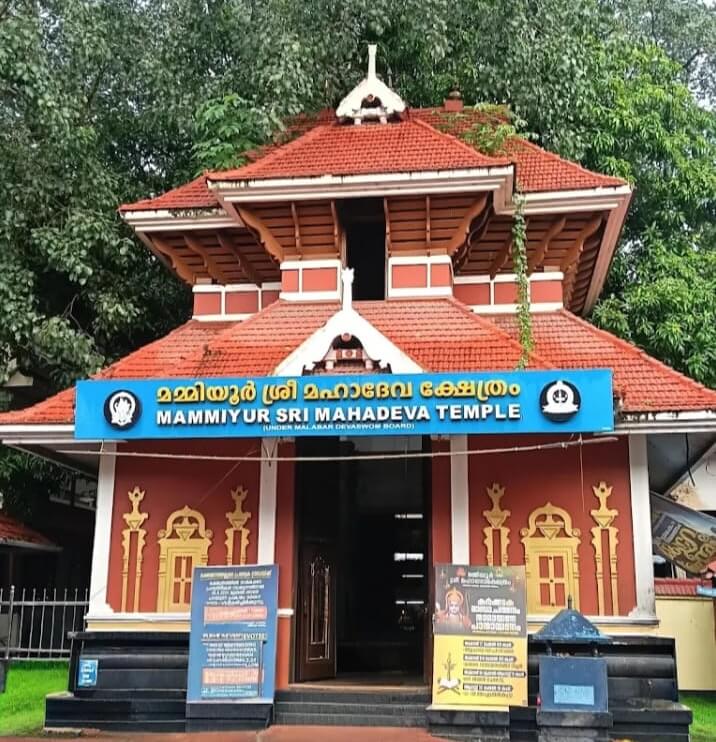
Mammiyur Sri Mahadeva Temple, situated in Guruvayur in Thrissur District, is one of the most renowned and ancient Shiva temples in Kerala. It is one of the 108 prominent Shiva temples in the state and is of great historical and spiritual importance. It is believed that a pilgrimage to Guruvayur is complete only after offering prayers at both Guruvayur Sree Krishna Temple and Mammiyur Temple. The principal deity of the temple is Lord Shiva, depicted in a blissful form with Goddess Parvathi seated on his left thigh. The deity is popularly known as “Mammiyurappan”. Known for its traditional Kerala-style architecture and rich temple traditions, the shrine is presently administered by the Malabar Devaswom Board.
Mammiyur Sri Mahadeva Temple is believed to be as ancient as Guruvayur Sree Krishna Temple, although there is no definite historical evidence to confirm this. During the rule of the Zamorin kings of Kozhikode, the temple remained under their control. The Eralppad Raja, who held the second highest position in the Zamorin royal family, was responsible for its direct administration and trusteeship. In 1792 CE, the temple came fully under the authority of the Zamorin kingdom. During the Malabar campaigns of Hyder Ali and Tipu Sultan in the late eighteenth century, the temple was attacked and suffered extensive damage, resulting in the loss of many valuable possessions. Following the defeat of Tipu Sultan in 1792, the Zamorin regained control of the region and restored the temple’s administration to the Eralppad Raja.
Later, under the Madras Hindu Religious Endowments Act of 1927, the temple came under the supervision of the Madras HRE Board. With the formation of the state of Kerala in 1956, its administration was transferred to the Malabar Devaswom Board. Due to the effects of the invasions, lack of proper maintenance and financial difficulties, the temple remained in a dilapidated condition for many years. In 1960–61, local residents and devotees formed a development committee to restore the temple. Their sustained efforts eventually led to the reconstruction of the temple and following the Maha Navikarana Kalasam ceremony in 1996, the temple assumed its present form.
According to legend, towards the end of the Dvapara Yuga, just before Lord Krishna’s ascension to Vaikuntha, the city of Dwaraka was about to be submerged by the sea. At that time, Lord Krishna instructed his devotee Uddhava to ensure that the sacred idol he had worshipped was safely installed in another holy place on earth. Following Uddhava’s guidance, Brihaspati, the guru of the gods and Vayu, the wind god, set out with the idol in search of a suitable location. Their journey eventually brought them to the area now known as Guruvayur.
At that time, the place was a large lake known as Rudratheertham, where Lord Shiva and Goddess Parvathi were engaged in penance. Realising the significance of the idol, Lord Shiva willingly gave up his abode for Lord Krishna and moved to a nearby location. It is believed that the place where Shiva later resided came to be known as “Mahimayur”, meaning the place of Shiva’s greatness and over time the name evolved into “Mammiyur”. The place where Brihaspati and Vayu installed the idol became known as “Guruvayur”. This legend also forms the basis of the belief that a pilgrimage to Guruvayur is considered complete only after offering prayers at both Guruvayur Temple and Mammiyur Temple.
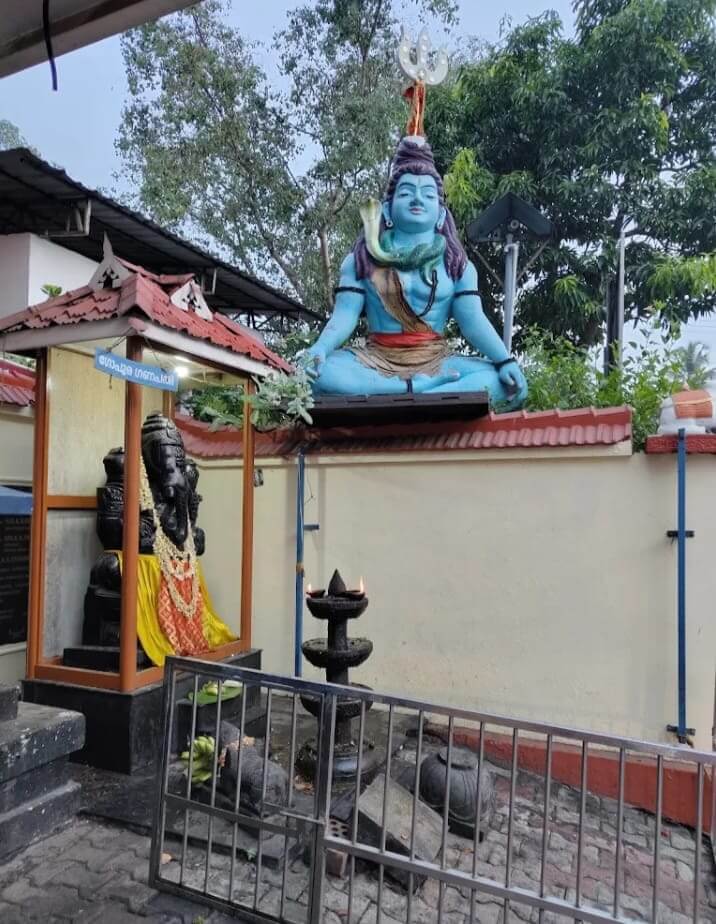
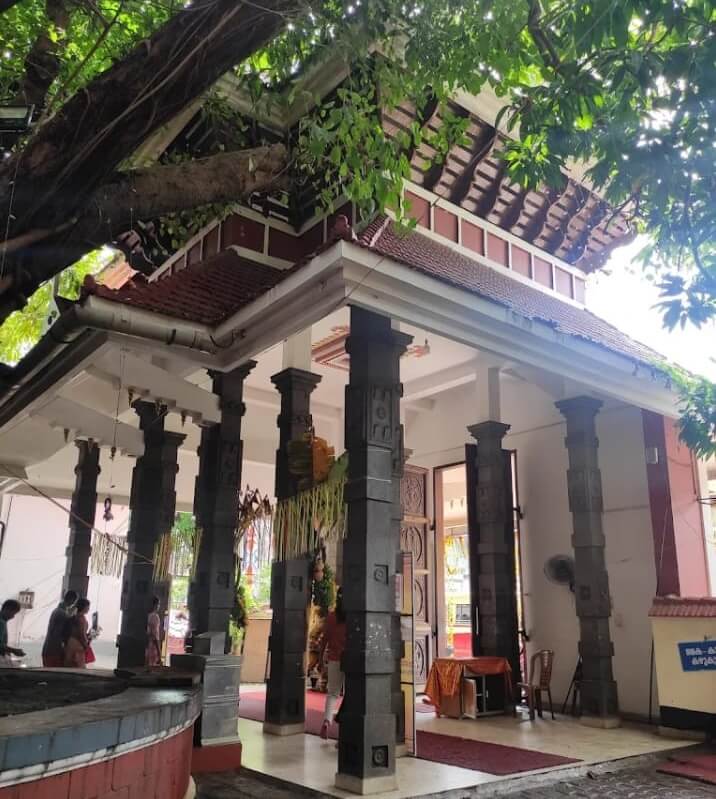
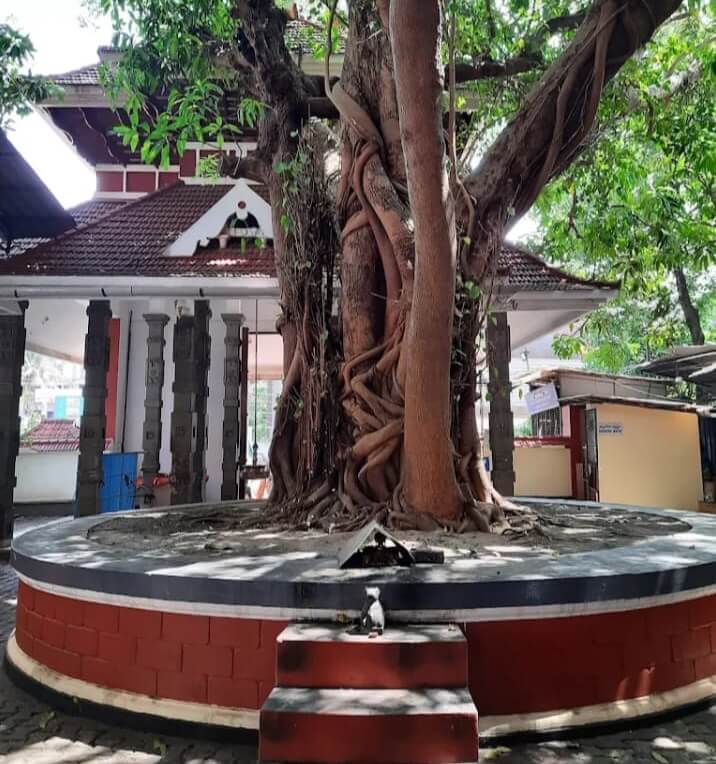
Mammiyur Sri Mahadeva Temple is situated at the centre of Mammiyur village. As one enters the east-facing temple, the beautiful two-storeyed gopuram near the main road immediately draws attention. Beyond the gopuram lies a spacious temple courtyard and a wide circumambulatory path. One of the unique features of the temple is the presence of the shrines of Lord Shiva and Lord Vishnu, located in the same row within a single temple enclosure. A large bali stone and the sacred Nandi are positioned in front of the Shiva shrine. The walls of the nalambalam and the area surrounding the sanctum are adorned with traditional Kerala mural paintings depicting scenes from Hindu mythology.
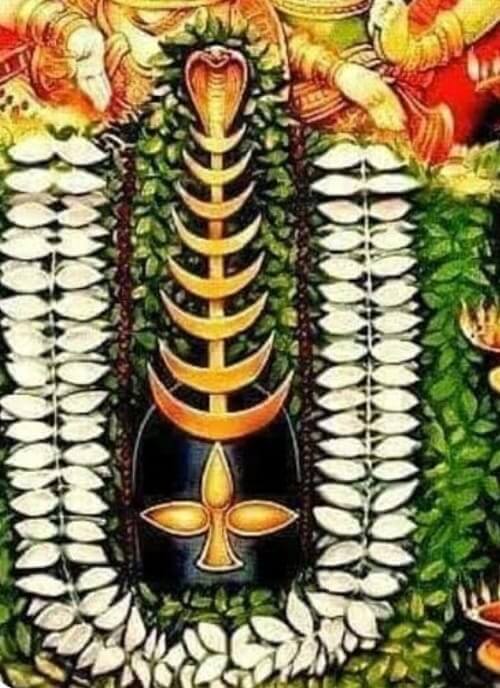
Within the nalambalam, two main sanctums dedicated to Lord Shiva and Lord Mahavishnu are situated in the same row. The Shiva sanctum, located on the northern side, is a circular structure with a copper-covered roof. Its distinctive two-tiered roof is one of its notable architectural features. The presiding deity is a self-manifested Shiva Lingam in the form of Umamaheswara, facing east. The presence of Goddess Parvathi is also associated with the left side of Lord Shiva. To the south of the Shiva sanctum stands the sanctum of Lord Mahavishnu. This square-shaped sanctum houses a four-armed idol of Lord Mahavishnu in a standing posture, facing east. The presence of both Shiva and Vishnu within the same nalambalam is one of the unique features of Mammiyur Temple.
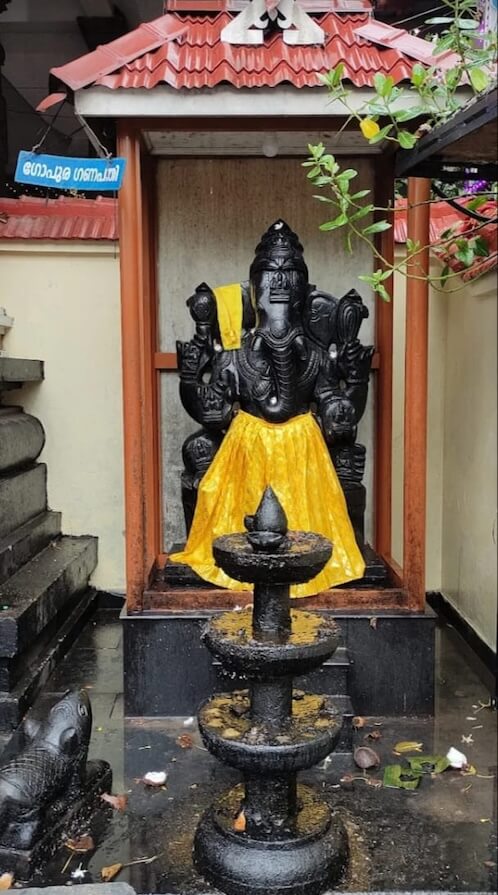
Shrines dedicated to various other deities are located along the circumambulatory path surrounding the main sanctums and in different parts of the temple complex. Lord Ganapathi is enshrined in the south-western corner (Kannimoola) within the nalambalam. A separate shrine dedicated to Lord Ayyappa is situated in the south-eastern section outside the nalambalam. Near the Shiva sanctum, there is also a shrine for Lord Subrahmanya. In the north-western part of the temple complex stands the shrine of Mammiyur Bhagavathi, also known as Bhadrakali, facing west. It is customary for devotees to offer sarees at this shrine. Sacred Naga deities are installed in the grove near the Bhagavathi shrine, while a shrine dedicated to Brahmarakshas is located within another section of the temple complex.
Various festivals and religious observances are celebrated with great devotion at the temple throughout the year. Maha Shivaratri is the most important festival of the temple and is marked by special poojas and elaborate rituals. Sacred tantric ceremonies such as the Maharudra Yajna and Athirudra Yajna are also conducted under the guidance of the temple Thantri for the prosperity and well-being of the temple. Other important observances include the consecration day of Lord Mahavishnu, Dhanu Thiruvathira, Ashtami Rohini and Navaratri, during which special poojas and ceremonies are held. During Navaratri, Vidyarambham and Saraswathi Pooja are conducted in honour of Mammiyur Bhagavathi. Special rituals and observances are also associated with occasions such as Vinayaka Chaturthi, Skanda Shashti and Ayilyam.
A wide variety of offerings are made by devotees to the different deities worshipped at the temple. Important offerings to Lord Shiva include Umamaheswara Pooja, Tender Coconut Dhara, Jaladhara, Maha Mrityunjaya Homam and the offering of Koovalam garlands. Devotees also offer Lakshmi Narayana Pooja, Santhana Gopala Pushpanjali, butter offering and Palpayasam to Lord Mahavishnu. Special importance is given to offerings such as Poomoodal, Muttarukkal and the offering of silk cloth and thali at the shrine of Mammiyur Bhagavathi. In addition, Ganapathi Homam, milk abhishekam for Lord Subrahmanya, Elluthiri for Lord Ayyappa and Noorum Palum for the Naga deities are among the major offerings of the temple.
The daily rituals at the temple begin at 4:45 a.m. with the opening of the sanctum.
This is followed by Nirmalya Darshan, Vakacharthu, oil abhishekam and Malar Nivedyam, while the Mahaganapathi Homam is performed at 5:00 a.m. From 6:45 a.m. to 7:45 a.m., Rig Veda Dhara is offered to Lord Shiva and Lord Vishnu, followed by Usha Pooja and Nivedyam at 8:00 a.m. Special rituals such as Maha Mrityunjaya Homam, Karuka Homam, Thila Homam, Ayushya Homam, Rahu Pooja, Naga Pooja and Rakshassu Pooja are conducted between 10:00 a.m. and 11:00 a.m. After the Ucha Pooja at 12:00 noon, the temple closes at 12:30 p.m.
The temple reopens at 4:45 p.m. for the evening rituals. Deeparadhana is performed at 6:00 p.m., followed by Umamaheswara Pooja, Bhagavathi Seva, and Dampathi Pooja between 6:30 p.m. and 7:00 p.m.
Athazha Pooja is conducted from 7:30 p.m. to 8:30 p.m., after which the temple closes following Thrippuka. The timings may vary on festival days and special occasions.
This sacred temple stands as a testament to deep spiritual devotion, ancient architectural grandeur, and rich local cultural traditions.
The sanctum sanctorum houses the divine idol consecrated according to ancient Vedic traditions, surrounded by serene courtyards and traditional temple architecture.
Navratri, Maha Shivratri, Annual Temple Jatra & Deepotsav
Compare and book flights, secure top-rated local hotels near the temple, hire reliable guides, and rent cars instantly.
Extend your pilgrimage by visiting other highly sacred temples located nearby.


Add ₹999 more to unlock FREE SHIPPING!
Your sacred cart is currently empty.
Shop Photo FramesFill in your delivery details below to place your order.
Add comment