
Add ₹999 more to unlock FREE SHIPPING!
Your sacred cart is currently empty.
Shop Photo FramesThe ancient temple of Lord Hanuman, residing with Mother Anjani, is located in the Mohta Mill Chawl area of Akola. This is the only temple in the Vidarbha region where Lord Hanuman is enshrined alongside his mother. It is said that the idols of Mother Anjani and Hanuman in this temple, which dates back more than 475 years, are Swayambhu (self-manifested). Because the ascetic Hanuman resides here with his mother, this temple is known as the Matrubhakta Tape Hanuman Mandir. Since Mother Anjani is also present in this ancient shrine, female devotees can perform the ritual of Oti Bharne here.
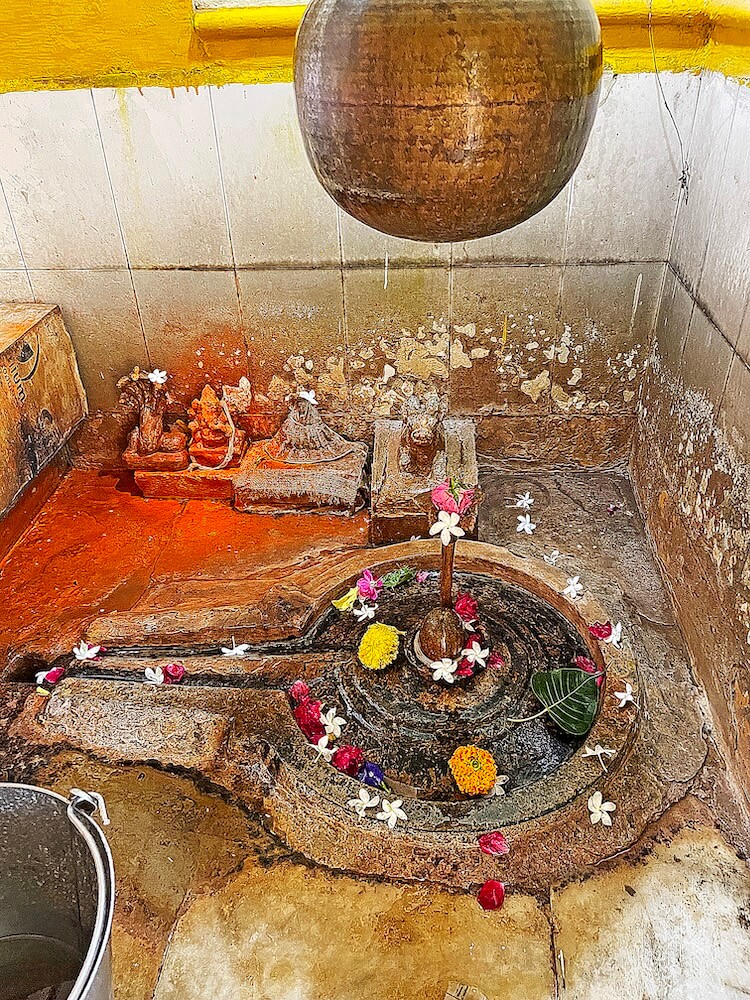
According to legend, this village was founded by a Rajput chieftain named Akolsingh. In ancient times, he lived in Katheri, located six miles from Akola. The area where Akola is currently situated was once a dense forest. There was a temple of Lord Mahadeva in this forest. Akolsingh’s wife used to visit this temple regularly to worship Mahadeva. Seeing her visit alone, Akolsingh grew suspicious. One day, he followed her with a sword in his hand. Upon seeing him at the temple entrance, his wife understood his intentions. She then prayed to Mahadeva, “Grant me eternal refuge at your feet now.” Immediately, the Shivalinga split open, and she disappeared into it.
Following this, a grief-stricken Akolsingh established a settlement here in memory of his wife. He also built a fortress here. The village gained importance in the 18th century. Today, this historic city is divided into two parts: the Old City and the New City. The Morna River separates the Old City on one side and the New City on the other. Akola city is home to several famous temples, including Rajrajeshwar, the city’s presiding deity, Salasar Balaji Mandir, Bara Jyotirlinga Mandir, Tulja Bhavani Mandir, and Birla Ram Mandir. One of these temples is the Matrubhakta Tape Hanuman Mandir. It is said that the Swayambhu idols of Hanuman and Mother Anjani were discovered in this area around the middle of the 16th century. A temple was subsequently built here. Initially, the temple was small in size. After a renovation carried out a few years ago, the temple attained its present form.
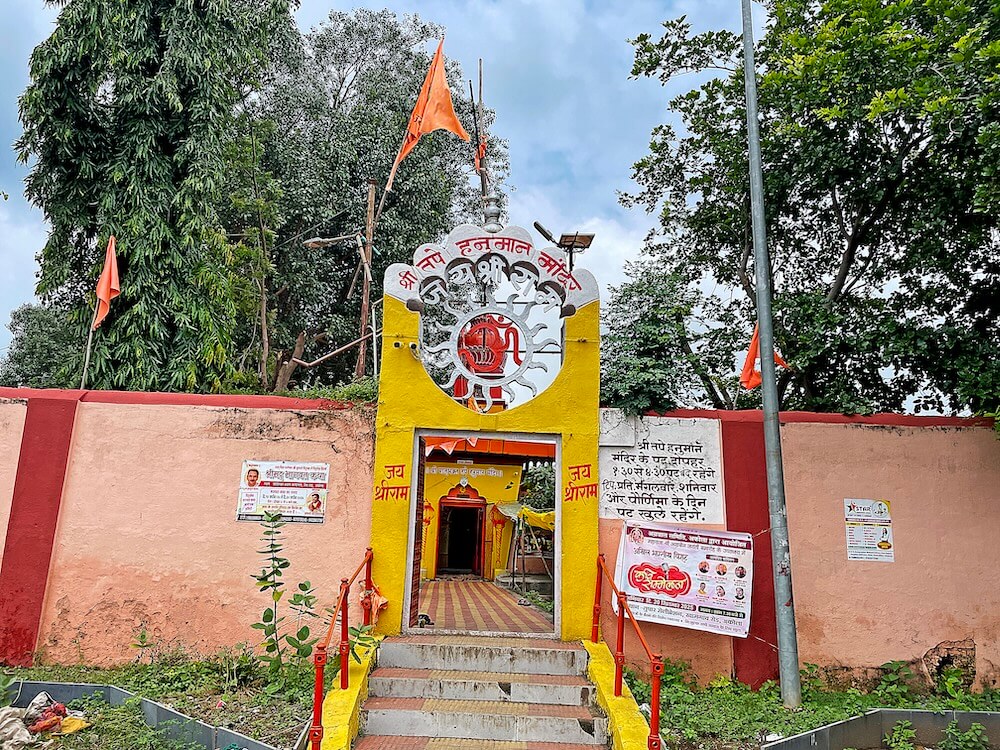
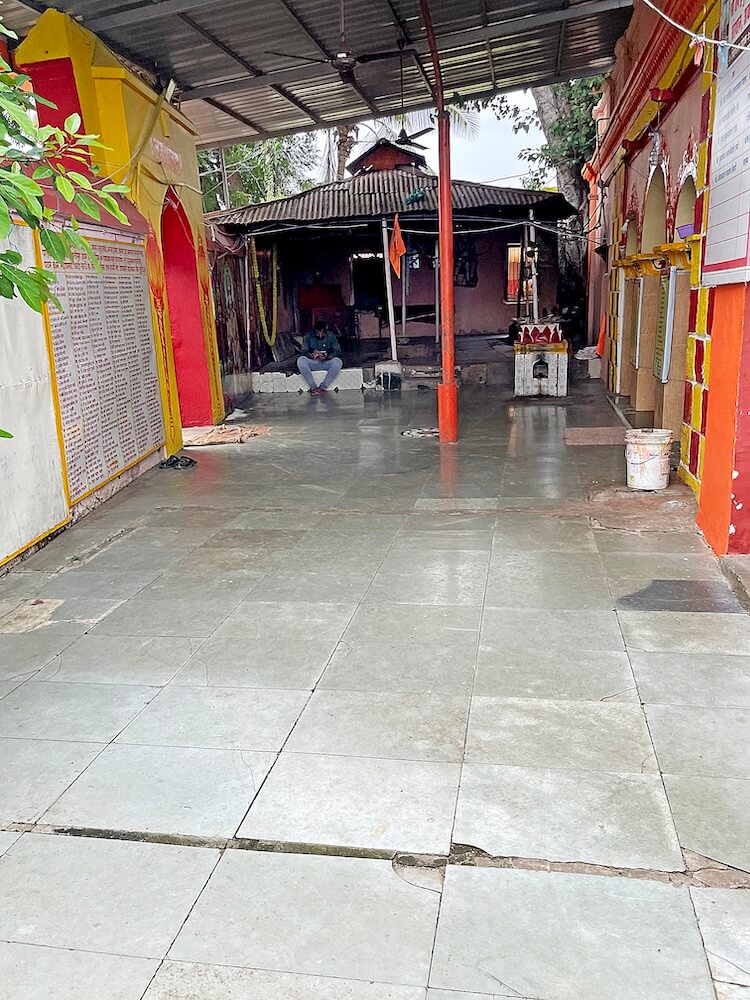
Located near the Akola Junction railway station, the temple premises are peaceful and serene. One enters the temple courtyard through a gateway in the surrounding perimeter wall. Above this entrance, a large circular image of the Sun is carved, featuring the auspicious ‘Om’ symbol. There are three kalashas (spires) on the upper section. A paver-block path leads from the entrance to the temple. There is another perimeter wall, and through its entrance, one enters the mandapa (hall) in front of the temple. Gadas (maces) are painted on both sides of this entrance, and an idol of Lord Ganpati is placed at the lintel. The walls of the courtyard depict various episodes from the Ramayana, such as the meeting of Sita and Hanuman and the construction of the Ram Setu.
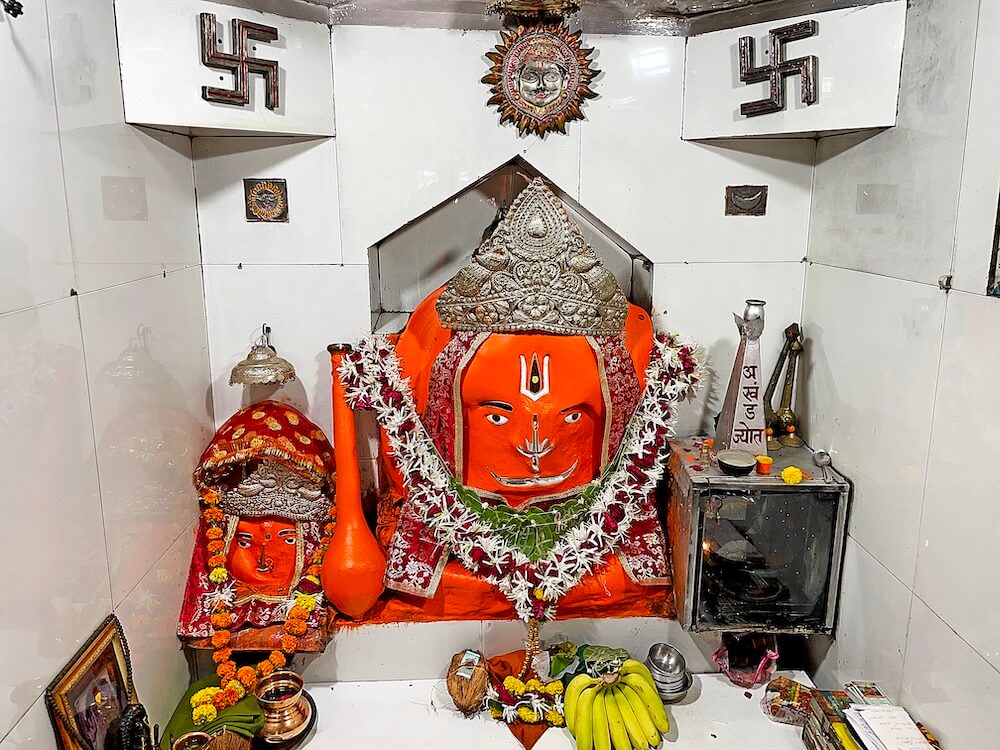
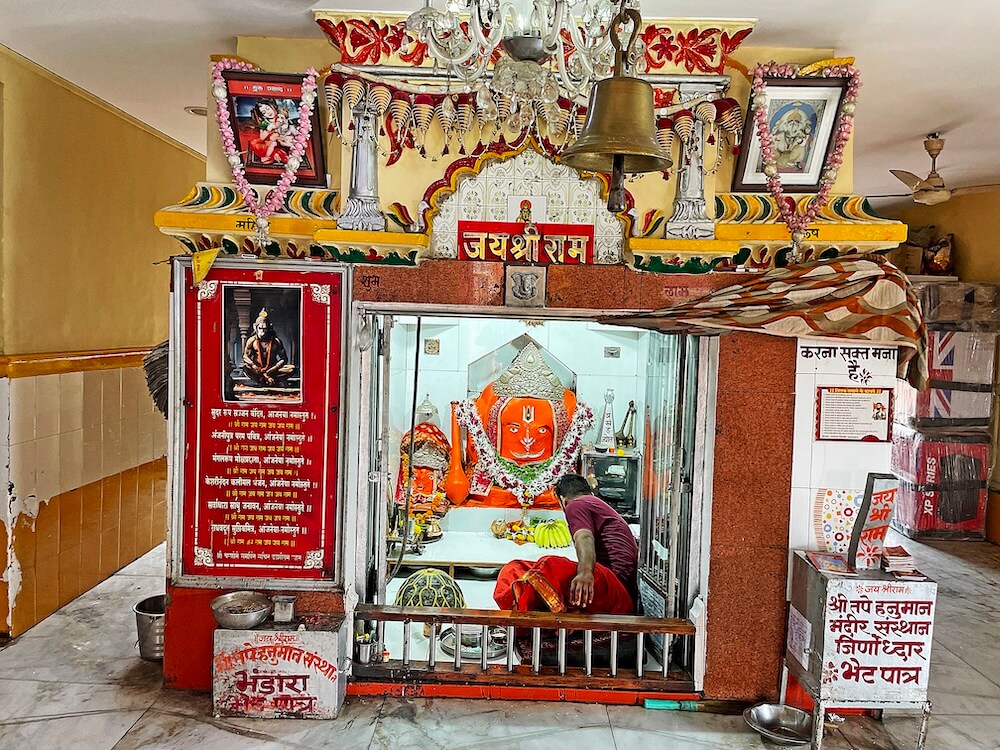
The temple structure consists of a Sabha Mandapa (assembly hall) and a Garbhagriha (sanctum sanctorum). The facade of the Sabha Mandapa has three entrances between four pillars; one is the main entrance, and two are side entrances. A replica of a serpent is placed at the lintel of the main entrance. The Sabha Mandapa features a hall, leaving space for the circumambulation path. On the Vajrapitha (throne) inside the sanctum, the vermilion-smeared Swayambhu idols of Hanuman and Mother Anjani are enshrined. Both idols are adorned with silver crowns. To the left of the Hanuman idol is a silver mace smeared with vermilion. An Akhand Jyot (eternal flame) burns to the right of the idol. It is said that this flame has been burning since the temple was built. An image of the Sun is placed above the Hanuman idol. The temple roof features a parapet, and the sanctum is topped by a dome-shaped shikhara with a two-tiered amalaka and kalasha. Near the temple are the shrines of Kalbhairav and Asara Mata. A small idol of Hanuman is located near a tree in the courtyard.
On the day of Purnima (full moon), an Akhand Hanuman Chalisa recitation and Mahaprasad are organized at the temple. Hanuman Jayanti is the main festival celebrated here. On this day, the Hanuman Janmotsav (birth anniversary) is celebrated at 6:00 AM. The Maha Aarti takes place at 12:00 PM, followed by the distribution of Mahaprasad to the devotees. During this time, devotees are also offered Prasad in the form of laddus made from dry fruits. Devotees believe that observing a vow for five Tuesdays and five Saturdays at this temple grants relief from all ailments. The temple is open for darshan from 6:00 AM. The temple remains closed between 1:30 PM and 4:30 PM. There is a large crowd of devotees on Tuesdays, Saturdays, and Purnima. On these three days, the temple remains open even during the afternoon.
This sacred temple stands as a testament to deep spiritual devotion, ancient architectural grandeur, and rich local cultural traditions.
The sanctum sanctorum houses the divine idol consecrated according to ancient Vedic traditions, surrounded by serene courtyards and traditional temple architecture.
Navratri, Maha Shivratri, Annual Temple Jatra & Deepotsav
Compare and book flights, secure top-rated local hotels near the temple, hire reliable guides, and rent cars instantly.
Add ₹999 more to unlock FREE SHIPPING!
Your sacred cart is currently empty.
Shop Photo FramesFill in your delivery details below to place your order.
Add comment