
Add ₹999 more to unlock FREE SHIPPING!
Your sacred cart is currently empty.
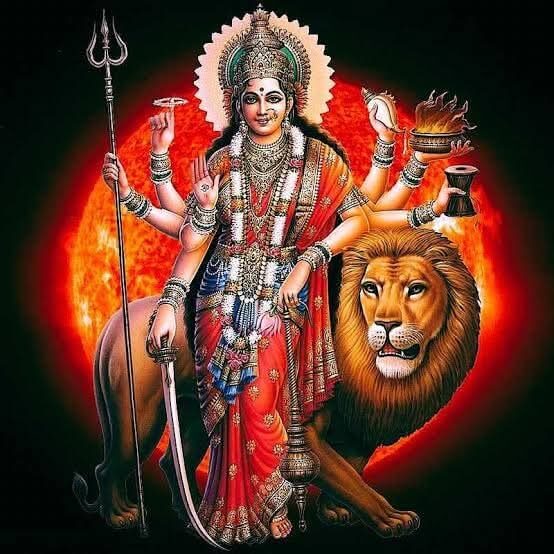
Shop Photo FramesThe Pazhayannur Bhagavathy Temple, located in Thrissur district, is one of the promi-nent temples that reflects Kerala’s spiritual heritage and cultural traditions. The temple is unique as both Lord Mahavishnu and Goddess Annapoorneshwari are worshipped in the same sacred complex. Known as the family deity temple of the Cochin Royal Family, it holds great historical and religious importance. The temple is also popularly known as ”Kozhi Ambalam” because of the unique offering in which devotees release live roosters as a votive offering. As the Goddess is worshipped in the form of Annapoorneshwari, annadanam (offering of food) is given special importance here. Managed by the Cochin Devaswom Board, this renowned temple attracts very large number every year.
According to historical records, Pazhayannur Temple was originally an ancient Vaish-navite temple dedicated to Lord Mahavishnu. Known in earlier times as the ”Pallip-puram Vishnu Temple”, the shrine is believed to be more than 500 years old. In the 17th century, under the patronage of the Cochin King, Goddess Bhagavathy was conse-crated here and the temple came to be known as Pazhayannur Bhagavathy Temple. As the Goddess became the family deity of the Perumpadappu Swaroopam, the royal house of Cochin, the temple gained greater prominence. From the 12th to the 17th century, Pazhayannur served as one of the important centres of administration and residence of the Perumpadappu Swaroopam. The region also has historical significance due to its association with the coronation ceremonies of the Cochin rulers. Even after the royal capital was shifted to Kochi, the devotion and reverence towards Pazhayannur Bhaga-vathy continued. As a mark of this devotion, another temple dedicated to Pazhayannur Bhagavathy was established near the Mattancherry Palace, which was built by the Por-tuguese in 1555. Thus, Pazhayannur Bhagavathy Temple stands as a unique shrine where history, royal heritage and devotion come together.
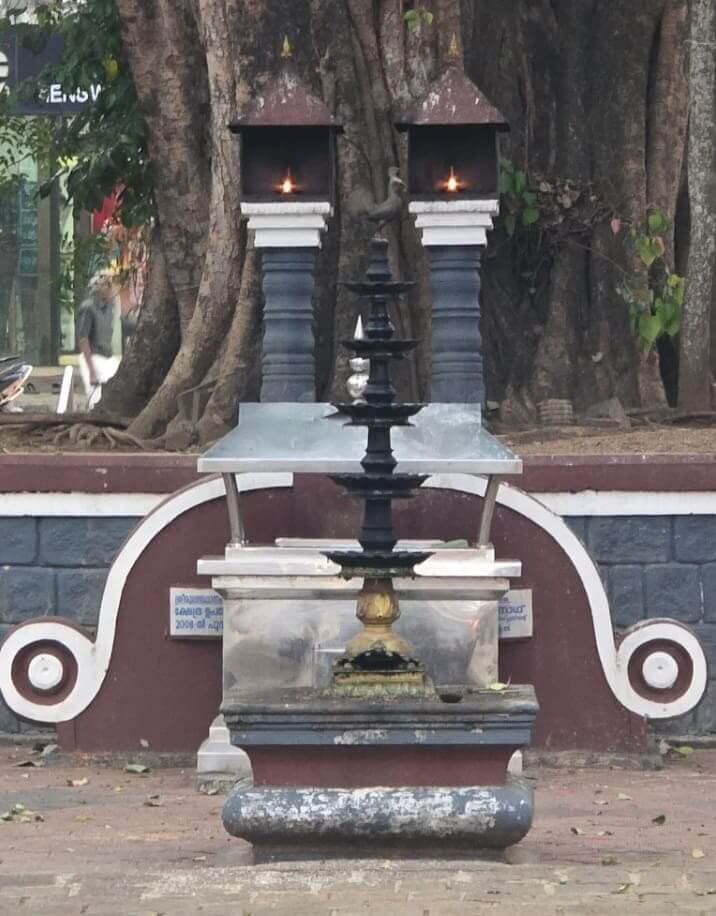
The main legend associated with the temple is connected to a king of the Perumpadappu Swaroopam of the Cochin royal family. It is believed that the king, who was troubled by mental distress, undertook a pilgrimage to Kashi and spent a long period in prayer at the Puranapuri Bhagavathy Temple. Pleased by his devotion, the Goddess agreed to accompany him to Kerala. According to the legend, the Goddess travelled with the king in the form of a rooster and reached Pazhayannur, where she first rested beneath a sacred peepal tree near the temple entrance, a place now known as Sreemoolasthanam. Devotees believe that the custom of offering and releasing roosters at the temple began in memory of this event, which also led to the temple being popularly known as ”Kozhi Ambalam” (the Temple of the Rooster).
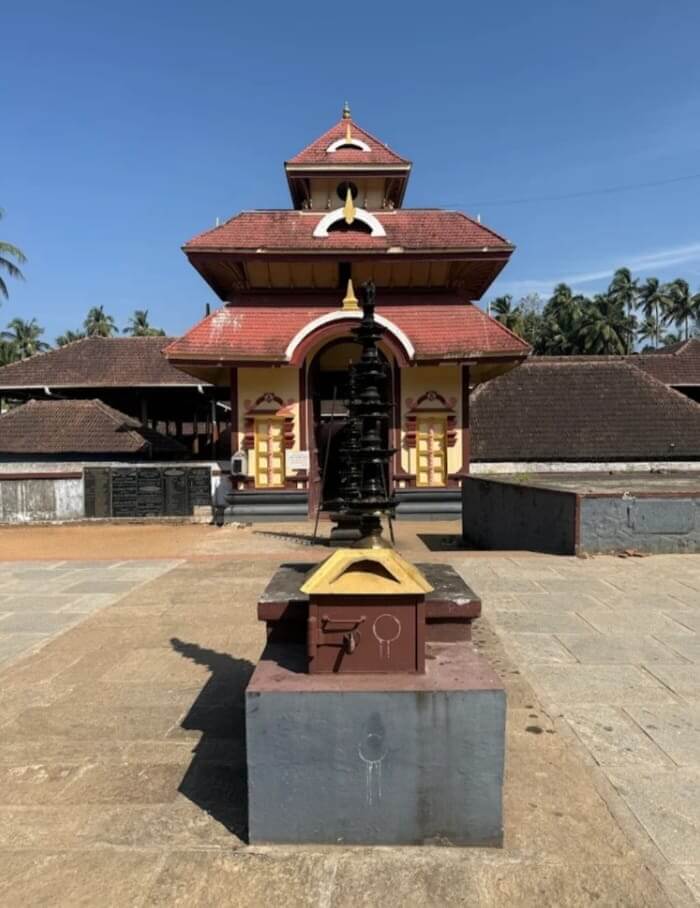
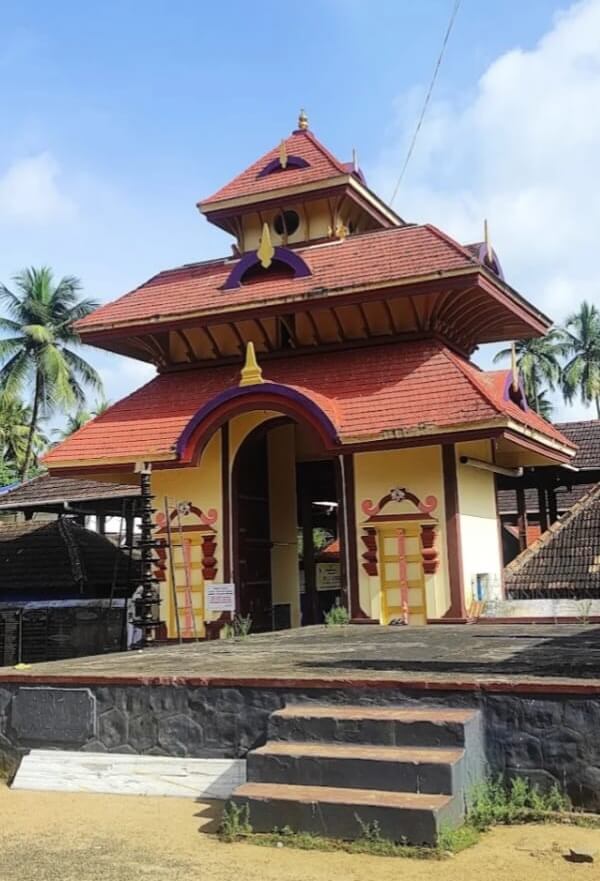
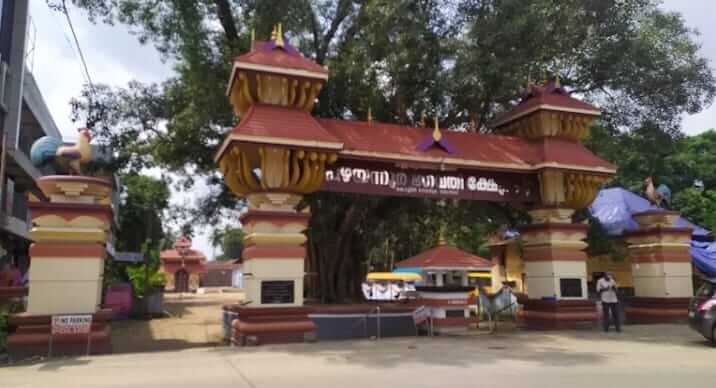
At the time of the Goddess’s arrival, only the Pallippuram Mahavishnu Temple existed at the site. One day, the Goddess appeared in the temple kitchen in the form of a young girl and asked for food. After receiving the food, she disappeared. Realising the divine presence, the king and the temple priest built a separate sanctum near the kitchen and consecrated the Goddess in the form of Annapoorneshwari. There is also a local belief that Pazhayannur Amma and Kodungallur Bhagavathy are sisters. Devotees further believe that, unlike the old practice of rooster sacrifice once associated with Kodungallur, the tradition at Pazhayannur developed into one of protecting and caring for roosters, which are allowed to live freely within the temple premises.The main entrance of the temple is on the southern side. Figures of roosters can be seen on both sides of the entrance gateway bearing the temple’s name. After passing through the entrance, visitors can see a sacred peepal tree followed by a two-storeyed gopuram with a large elephant gate. On the north-western side of the temple courtyard is the sacred grove with Nagadevatha deity shrines, while the oottupura (dining hall) and temple pond can be seen on the northern side. To the east stand two golden flagpoles topped with Garuda and the lion, the respective vehicles of Lord Mahavishnu and Goddess Bhagavathy. A Koothambalam can also be seen near the sanctum of the Goddess.
Although Lord Mahavishnu and Goddess Bhagavathy are given equal importance in the temple, Mahavishnu was the original presiding deity, and this is reflected in the temple’s layout. The larger sanctum, nalambalam and balikkalpura are associated with the Vishnu shrine. Lord Mahavishnu is enshrined in a circular sanctum built of black stone. This single-storeyed sanctum, measuring about 60 feet in circumference, has a copper-covered roof crowned with a golden finial. Inside are two chambers, with the sanctum sanctorum located on the western side. A four-foot-high, four-armed idol carved from Krishna stone is installed here facing east. Holding the conch, discus, mace and lotus, the deity represents Lord Mahavishnu, but is worshipped here as Lord Krishna. Adorned daily with sandal paste and ornaments, the deity presents a beautiful sight to devotees. On the northern side of the sanctum, an outlet for the abhisheka water can also be seen.
The shrine of Goddess Bhagavathy is located in a separate sanctum at the south-eastern corner of the Mahavishnu shrine. The four-foot-high stone idol faces east and the pot and ladle held in the hands of the Goddess symbolise her form as Annapoorneshwari. While the Goddess has a separate flagstaff, there is no bali stone in front of the shrine. Surrounding the Mahavishnu sanctum is a traditional tiled nalambalam. At its south-western corner, Lord Ganesha, Lord Shasta and Lord Shiva are enshrined together in a single shrine, which is a notable feature of the temple. Around the sanctum, devotees can also see the inner bali vattam with bali stones representing various deities. In front of the shrine stands a small namaskara mandapam with a copper-covered roof and a golden finial. Outside the nalambalam, at the north-western corner, is the sacred grove with Nagadevatha deity shrines facing east. Along with Ananthan, the Naga King, the shrines of Nagayakshi, Nagakanyaka and Nagachamundi can also be seen here. The temple’s sub-deity, Vettekkaran, is Lord Shiva in his Kiratha form and is worshipped as a one-and-a-half-foot-high Shiva Lingam facing west.
The annual festival, celebrated during the Malayalam month of Meenam (March–April), is the temple’s most important festival. It begins with the flag hoisting on the Uthram star and concludes on the eighth day with the Arattu ceremony on the Thiruvonam star. During the festival, kanji and puzhukku are served to devotees as the temple’s well-known prasadam meal. Another major observance is Niramala and Vilakku, held on the last Friday of the Malayalam month of Thulam (October–November). On this day, thousands of oil lamps are lit and devotees believe that having darshan brings prosperity and bless-ings. Navaratri, celebrated during the month of Kanni (September–October), is marked by special poojas for the Goddess, while Vidyarambham on Vijayadashami is observed with great devotion. As the Goddess is worshipped in the form of Annapoorneshwari, many children begin their formal education at the temple on this day. During the Man-dala season, from the 1st of Vrischikam to the 11th of Dhanu (November–December), special poojas and lamp offerings are also conducted. Other important observances include Thrikarthika, when traditional lamps are lit throughout the temple and Ashtami Rohini, when special poojas and palpayasam are offered to Lord Mahavishnu. In addition, every Friday is observed as a special day dedicated to the Goddess.
The most important offering at the temple is the ritual of releasing roosters. In this unique offering, devotees present live roosters to the Goddess and release them into the temple courtyard. This offering is made by those seeking relief from illness, protection from negative influences and the removal of various difficulties in life. Feeding the temple roosters with paddy and rice, known as Kozhi Oottu, is another important offering. Kanji and Puzhukku, which are among the favourite offerings to Goddess Annapoorneshwari, are offered by devotees for relief from poverty and for abundance of food in the family. Palpayasam is the main offering made to Lord Mahavishnu and is believed to bring the blessing of children and family prosperity. Another important offering is Niramala and Chuttuvilakku, in which lamps are lit around the temple and the Goddess is decorated with flowers. Devotees perform this offering for the fulfilment of their wishes and for peace of mind.
The temple is open for darshan every day from 5:30 AM to 1:00 PM and from 5:00 PM to 7:45 PM. The day’s rituals begin at 5:30 AM with the opening of the sanctum and Nirmalya Darshan. This is followed by the Usha Pooja at 6:00 AM and the Ucha Pooja at 11:30 AM, after which the temple closes at 1:00 PM. The temple reopens at 5:00 PM, followed by Deeparadhana at 6:30 PM and Athazha Pooja at 7:30 PM. The temple closes for the day at 7:45 PM, marking the end of the daily worship.
This sacred temple stands as a testament to deep spiritual devotion, ancient architectural grandeur, and rich local cultural traditions.
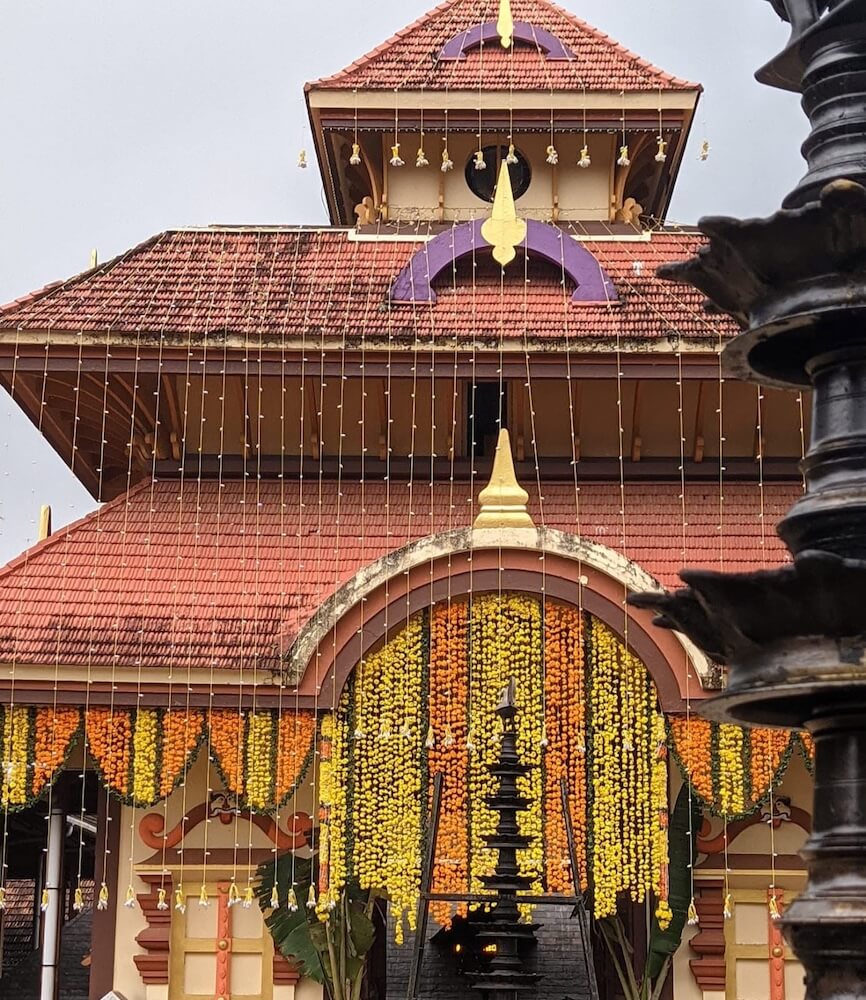
The sanctum sanctorum houses the divine idol consecrated according to ancient Vedic traditions, surrounded by serene courtyards and traditional temple architecture.
Navratri, Maha Shivratri, Annual Temple Jatra & Deepotsav
Compare and book flights, secure top-rated local hotels near the temple, hire reliable guides, and rent cars instantly.
Extend your pilgrimage by visiting other highly sacred temples located nearby.

Add ₹999 more to unlock FREE SHIPPING!
Your sacred cart is currently empty.
Shop Photo FramesFill in your delivery details below to place your order.
Add comment