
Add ₹999 more to unlock FREE SHIPPING!
Your sacred cart is currently empty.
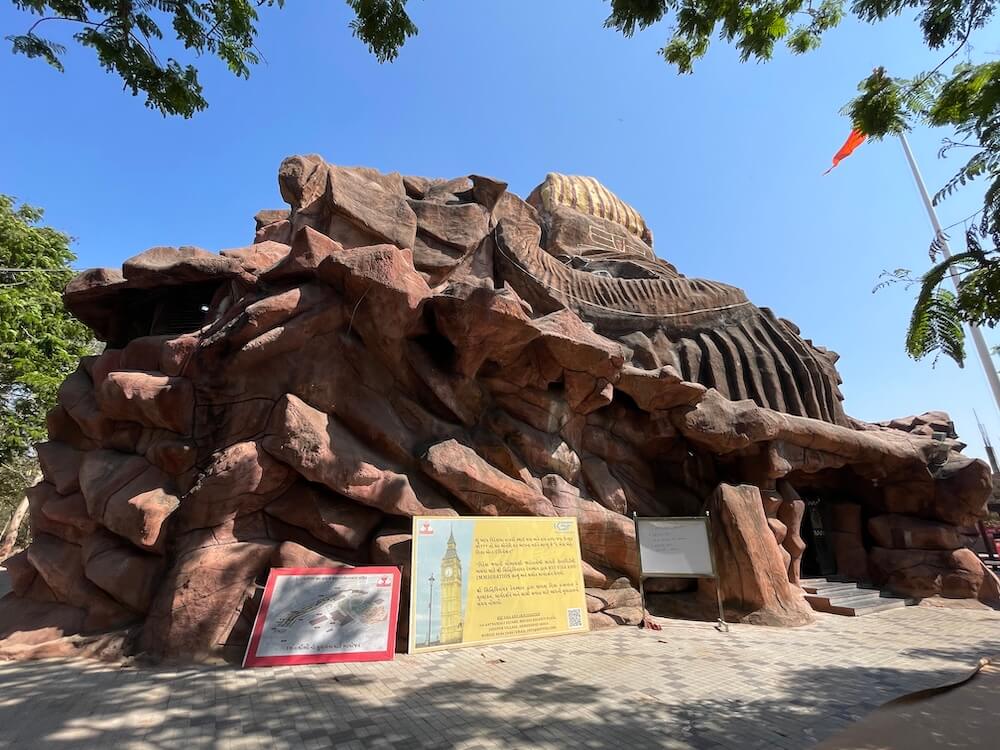
Shop Photo FramesThe Siddhivinayak Devasthan, situated on the banks of the river Vatrak in Mahemdavad, is a shrine of eminent renown within the state. On 4 June 2023, it was formally recognised by the ‘Asia Book of Records’ and the ‘India Book of Records’ as ‘the largest temple in Asia constructed in the distinct shape of Lord Ganesha’. This architectural marvel was envisioned and erected by Narendrabhai Purohit across a sprawling expanse of six hundred thousand square feet to fulfil the cherished wish of his mother, Dahiba. An ‘Akhand Jyot’ (eternal flame) was brought from the famed Siddhivinayak Temple of Prabhadevi, Mumbai and consecrated here with traditional Vedic rites. Attracting an average of ten thousand pilgrims daily, this sanctuary, revered as a monument to maternal devotion, has emerged as a profound epicentre of faith.
The city of Mahemdavad possesses a grand historical legacy dating back to the fifteenth century. It was founded in 1465 AD by Sultan Mahmud Begada of Gujarat, the grandson of Ahmad Shah and was originally christened ‘Mahmudabad’. Throughout his reign, the Sultan developed this vicinity as a royal retreat, commissioning the construction of numerous palaces and ‘Vavs’ (stepwells). This region of Kheda, nestled within the fertile ‘Charotar’ tract and referred to as ‘Khetaka’ in Sanskrit literature, has maintained administrative significance since antiquity. According to records in the Gazetteer, the area was initially under the sovereignty of the Maitraka kings before passing to the Rashtrakutas. Historical chronicles further note that in 1583 AD, three English merchants visited India and attempted to establish trade here. Amongst the city’s historical landmarks, the tomb of Mubarak Sayyid, known as ‘Roza Rozi’, is particularly famous. A local legend persists that one arrives at a different count every time one attempts to number its pillars.
In the eighteenth century, specifically in 1758 AD, the Marathas wrested power from the Mughal Viceroy Momin Khan. Subsequently, in 1803 AD, the British established complete control over the Kheda district, annexing it to the administration of the Bombay Presidency. The local populace rendered a significant contribution to India’s struggle for independence, most notably through their active participation in the Kheda Satyagraha of 1918 under the leadership of Mahatma Gandhi and Vallabhbhai Patel. The ‘Kashibag’, an ancestral garden gifted to the government by the Shah family, remains a vital part of the city’s cultural heritage. It is against the backdrop of these historical evolutions that the modern Shri Siddhivinayak Devasthan was brought into existence.
The right-trunked Siddhivinayak idol at Mahemdavad is considered exceptionally potent. This form of Ganesha, the dispeller of his devotees’ anxieties, is also known as ‘Shri Chintamani’. The temple upholds a singular tradition involving the ‘Ulto Sathiyo’ (inverted swastika). Devotees, seeking the fulfilment of a ‘Manata’ (vow), draw an inverted swastika using wheat grains upon a flat surface. Once their prayer is answered, they return to draw a regular swastika in the same manner.
The first floor of the temple houses replicas of Ganesha idols enshrined across various nations, providing pictorial information on the forms of Ganesha found in Sri Lanka, Myanmar, Thailand, China, Nepal, Afghanistan (Kabul), Bangladesh, Indonesia, Cambodia and Bhutan. On the ground floor, within the Sarveshwar Mahadev Temple, sits a colossal ‘Shivling’ (aniconic representation of Shiva) fashioned entirely from ‘Rudraksha’ beads. Furthermore, pilgrims may seek ‘Darshan’ (holy viewing) of replicas of the twelve ‘Jyotirlingas’ of India. The temple also features replicas of Lord Krishna, Baldev and Subhadra from Jagannath Puri in Odisha. A grand ‘Yagnashala’ (hall for fire rituals) containing several ‘Yagnakundas’ (sacrificial pits) facilitates the performance of various Vedic offerings.
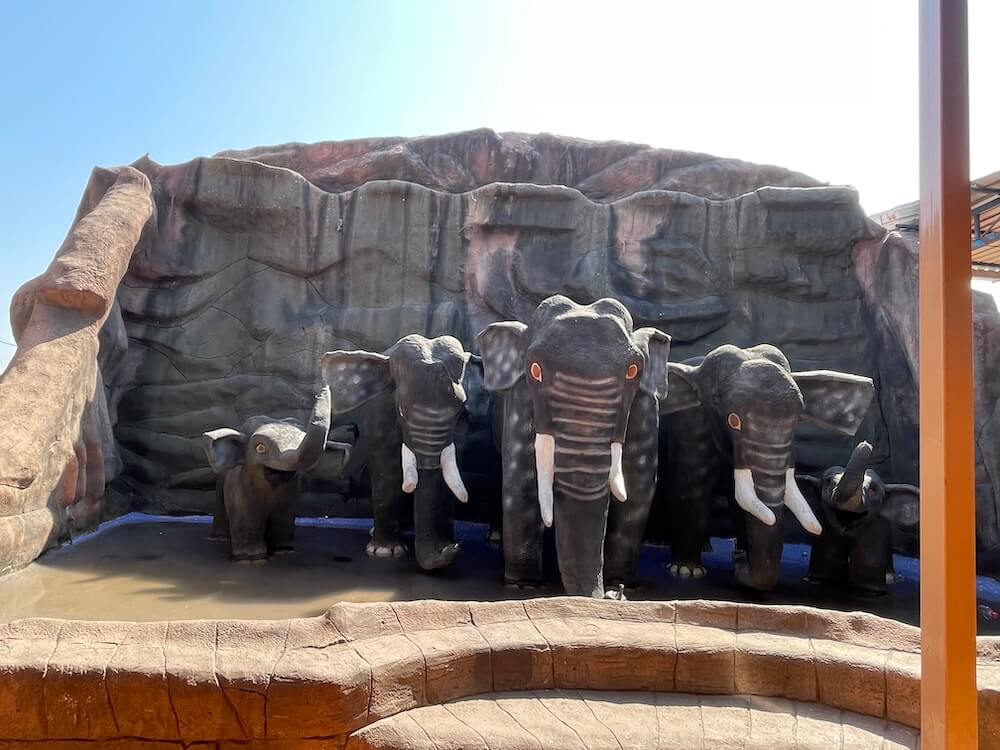
The temple complex features a vast parking area capable of accommodating hundreds of motorcars simultaneously. Situated on the riverbank, the precinct is thoughtfully designed with ramps, lifts, wheelchairs and electric rickshaws to assist the elderly and the physically challenged. The main portal is named the ‘Dahiba Entrance’ in memory of Narendrabhai’s mother. For the convenience of pilgrims, the ‘Bhaktnivas’ (devotees’ rest house) offers well-appointed air-conditioned and standard rooms. Additionally, an amusement park with various facilities has been established for children. The fronting gardens are adorned with lifelike sculptures of a ‘Gajraj’ (royal elephant), a stone ‘Shivling’ and ‘Mushakraj’ (the mouse, Ganesha’s mount), all maintained with meticulous planning.
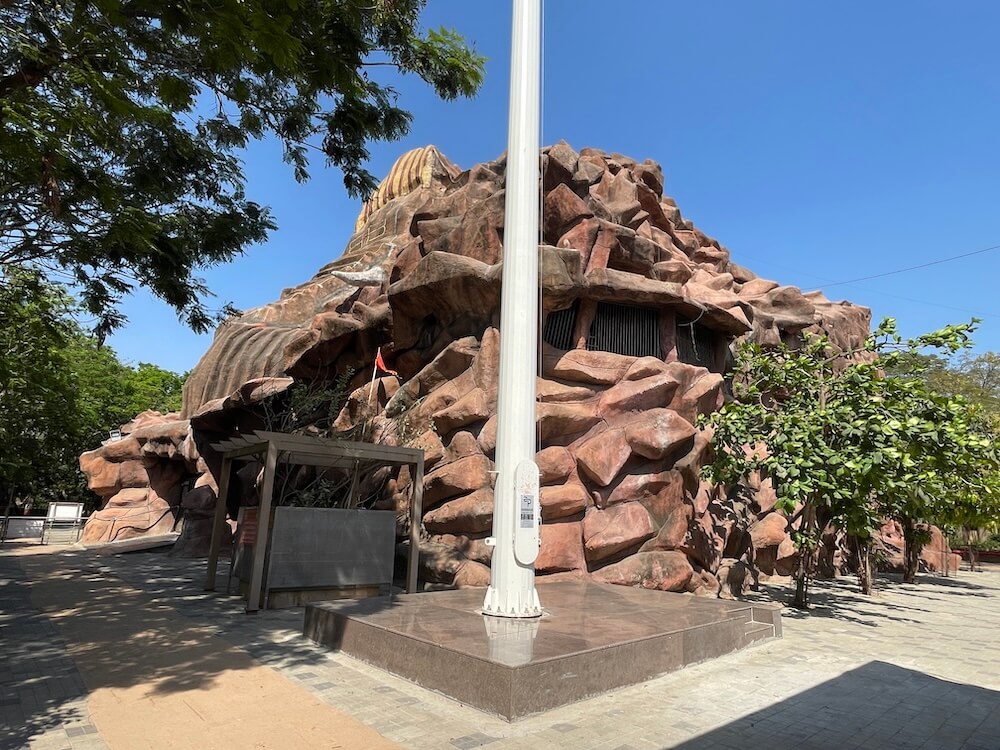
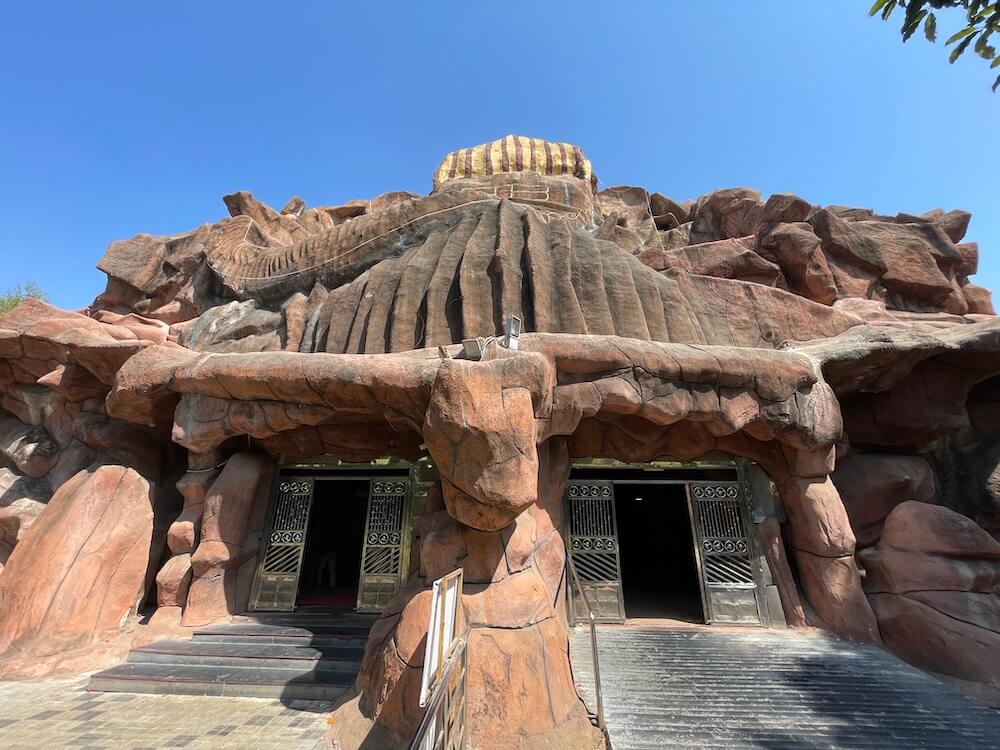
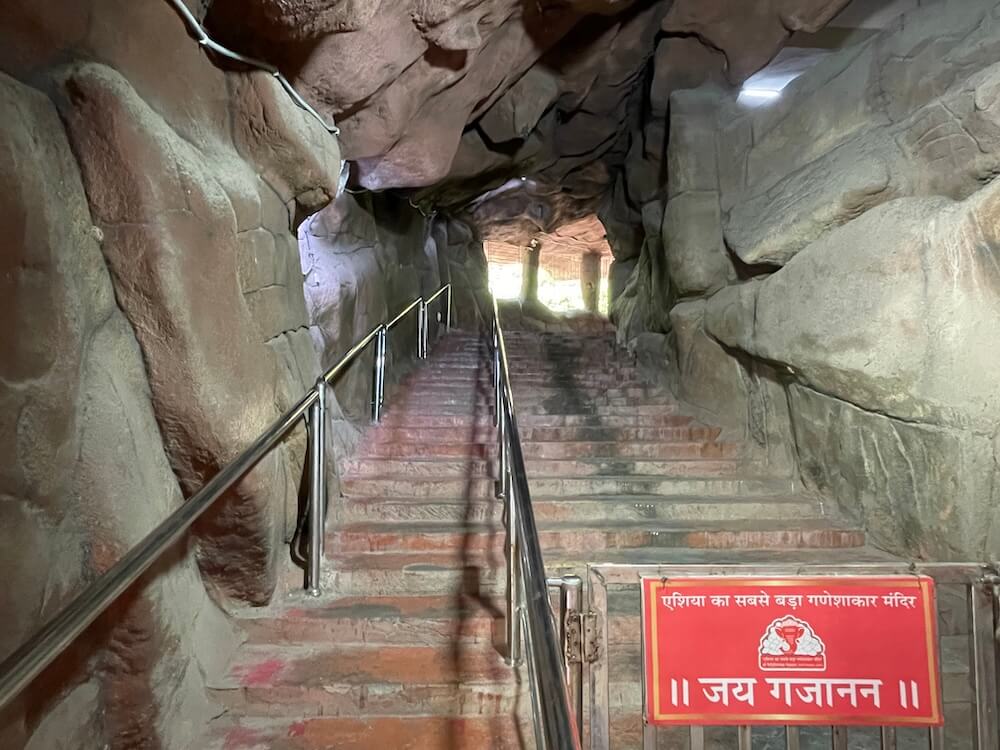
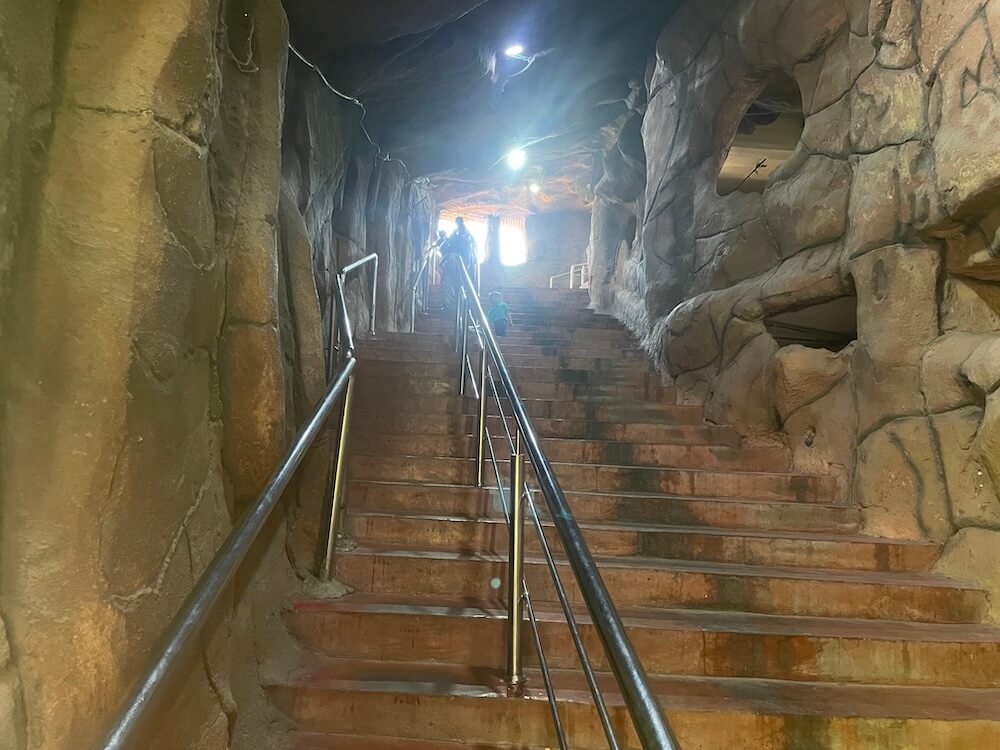
Constructed using Australian ferro-cement technology, the temple is sculpted to resemble a seated figure of Lord Ganesha. Resting upon a foundation descending twenty feet into the earth, the structure measures 120.98 feet in length, 84.25 feet in width and stands 71 feet high. The architectural design incorporates twenty-four arches representing the twenty-four hours of the day, while the ‘Pradakshina’ (circumambulation) path measures 108 feet. The entrance, reached by twenty-one steps, symbolises the twenty-one principles of Ganesha. The main ‘Garbhagriha’ (sanctum sanctorum), rising to twenty-seven feet, contains representations of the twenty-seven ‘Nakshatras’ (lunar mansions). A large bell hangs near the entrance of this three-storeyed edifice. Upon entering, the pathway evokes the sensation of traversing a stone cavern. The third floor houses a spacious ‘Sabhamandap’ (assembly hall), where the pillars and ceiling are crafted entirely of stone. At the centre sits a golden-hued, intricately carved ‘Adhisthana’ (pedestal), with the surrounding pillars featuring carved elephant heads at their bases. The vermillion-coated idol of Ganesha, appearing as if carved from black stone, is a faithful replica of the Siddhivinayak of Mumbai. The four-armed deity holds weapons in two hands, while the others bear a ‘Laddu’ (sweet) and a ‘Rudraksha’ rosary. The Lord is flanked by His consorts, Riddhi and Siddhi.
The first floor features a recreation of the Katyayani Arbudadevi ‘Shaktipeeth’ of Mount Abu, where the Goddess is seen seated upon a lion on a golden-carved pedestal. She is accompanied by idols of Batuk Bhairavnath to her left and Kaal Bhairavnath to her right. This level also houses a stone known as the ‘Chintamani Shila’, alongside an idol of Goddess Lakshmi with a ‘Shri Yantra’ and exquisite replicas of the ‘Ashtavinayak’ (eight Ganeshas) of Maharashtra, accompanied by detailed information. On the ground floor, a small metallic idol of Ganesha is established, where interested devotees are permitted to perform ‘Jalabhishek’ (ritual bathing with water). From the exterior, the architectural features clearly delineate the form of Ganesha, from the eyes to the trunk and the entire structure is beautifully illuminated at night.
The Devasthan celebrates various festivals with great fervour. During the ten-day ‘Ganesh Chaturthi’ festival, the entire complex is lavishly decorated. A special festival of lights is observed on ‘Vinayak Chaturthi’, while ‘Ganesh Jayanti’, in the month of Magh, is celebrated on a grand scale. Special religious rites are performed during Diwali and Holi. The premises are open to devotees daily from six in the morning until ten at night, with hours extended until eleven on Tuesdays. ‘Aarti’ (ritual of lights) is performed at seven in the morning and evening, followed by ‘Deep Aarti’ at half-past seven. The tradition of offering ‘Chhappan Bhog’ (fifty-six delicacies) and 1008 ‘Laddus’ as ‘Bhog’ (consecrated food) is diligently followed, often as an offering for fulfilled vows. On ‘Sankashti Chaturthi’ and ‘Angarki Chaturthi’, the atmosphere is akin to a vibrant fair. Every year, the 5th of February is marked as the ‘Pran Pratishtha’ (consecration) anniversary with various cultural programmes.
This sacred temple stands as a testament to deep spiritual devotion, ancient architectural grandeur, and rich local cultural traditions.
The sanctum sanctorum houses the divine idol consecrated according to ancient Vedic traditions, surrounded by serene courtyards and traditional temple architecture.
Navratri, Maha Shivratri, Annual Temple Jatra & Deepotsav
Compare and book flights, secure top-rated local hotels near the temple, hire reliable guides, and rent cars instantly.
Extend your pilgrimage by visiting other highly sacred temples located nearby.


Add ₹999 more to unlock FREE SHIPPING!
Your sacred cart is currently empty.
Shop Photo FramesFill in your delivery details below to place your order.
Add comment