
Add ₹999 more to unlock FREE SHIPPING!
Your sacred cart is currently empty.
Shop Photo FramesIt is a popular belief that Vanadev is the deity who protects the trees and animals of the forest. This ancient Vanadev Mahadev Temple is situated in the village of Kandari Khurd in the Badnapur taluka of Jalna district, nestled amidst mountain ranges and dense forest. This temple is considered a fine example of historical heritage and architecture. The most significant feature of this temple is the rare Trilingi Shivpindi. Devotees believe that because there are three independent linga stones in a single shalunka, one receives the combined blessings of the three powers: Brahma, Vishnu, and Mahesh.
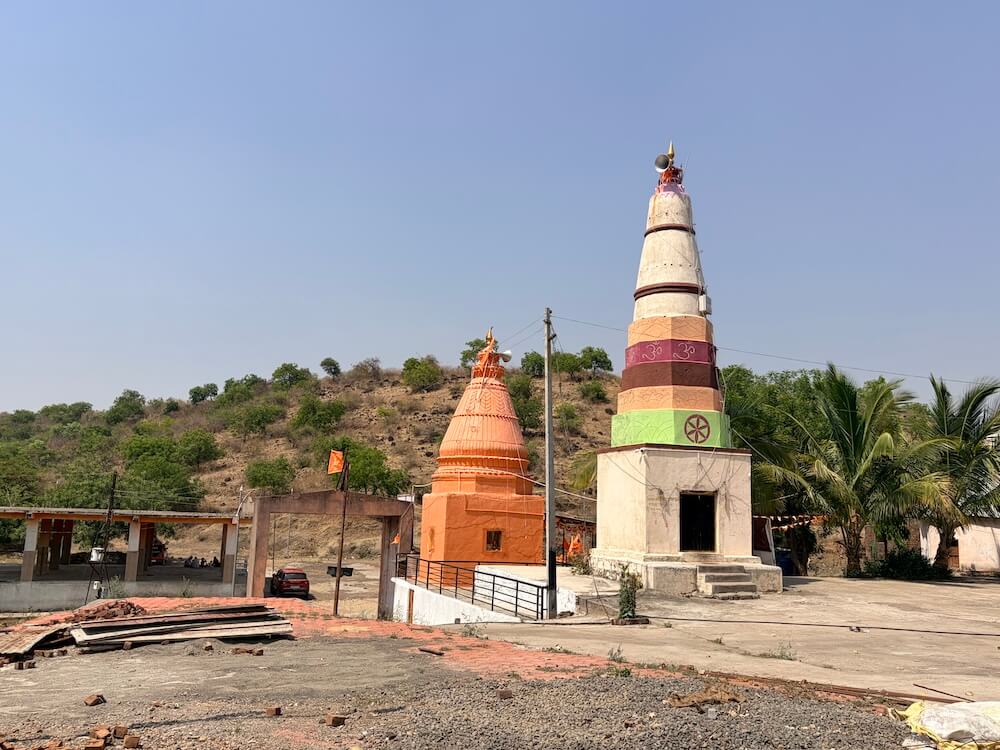
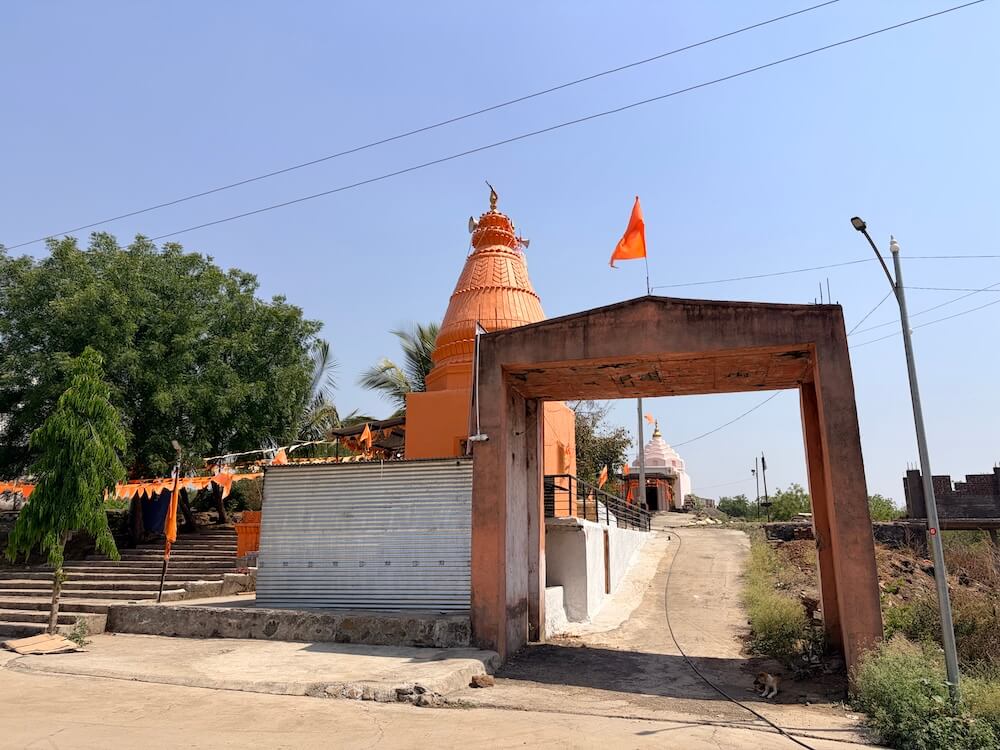
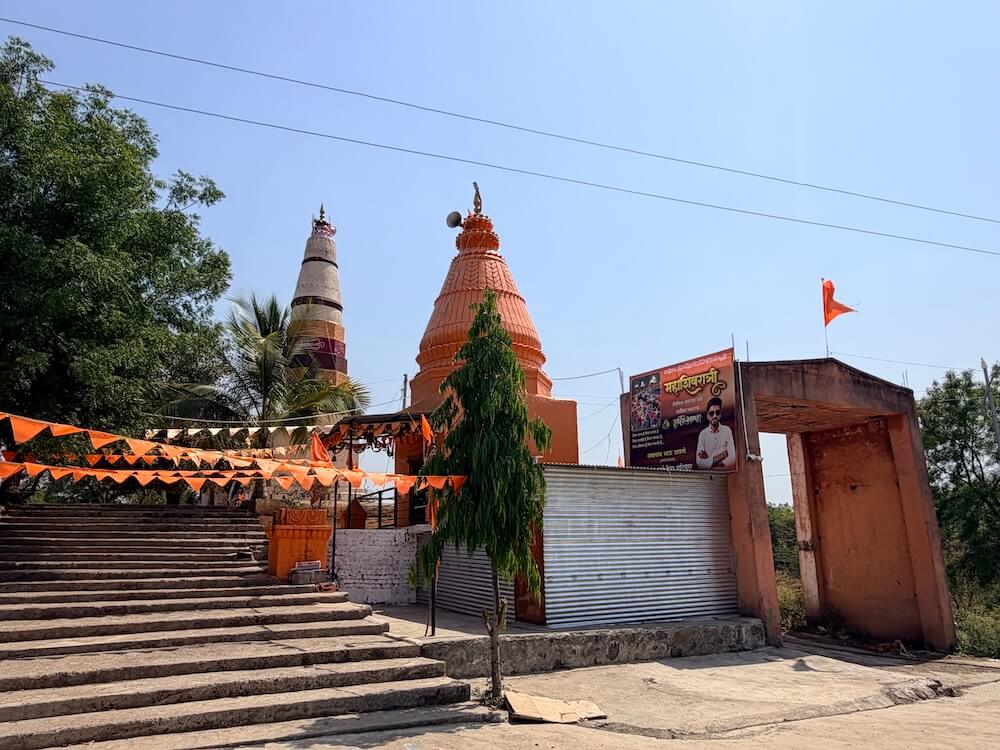
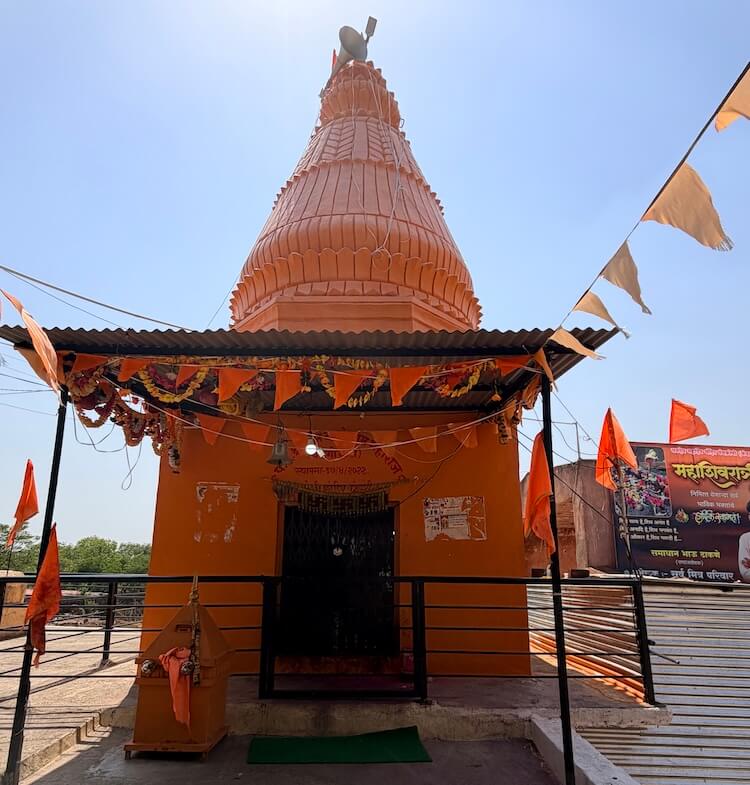
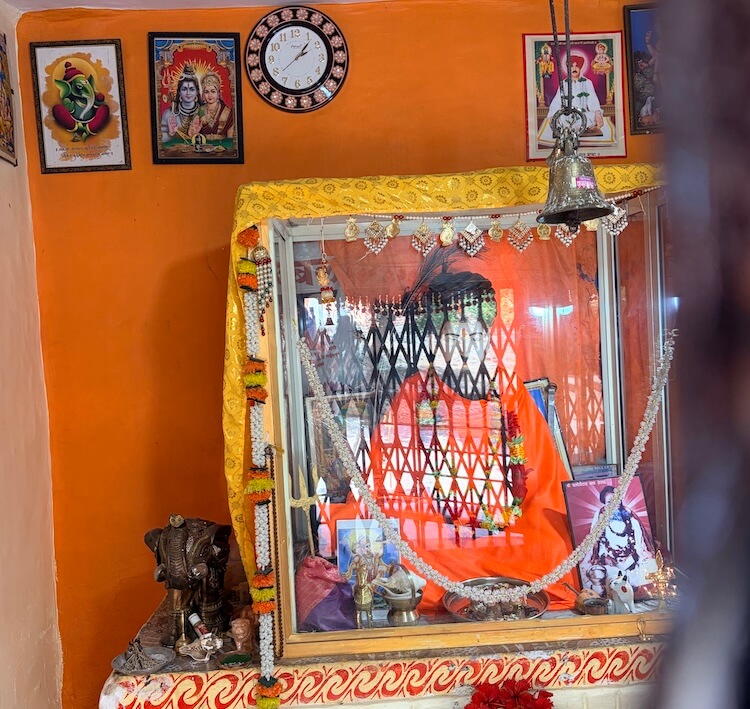
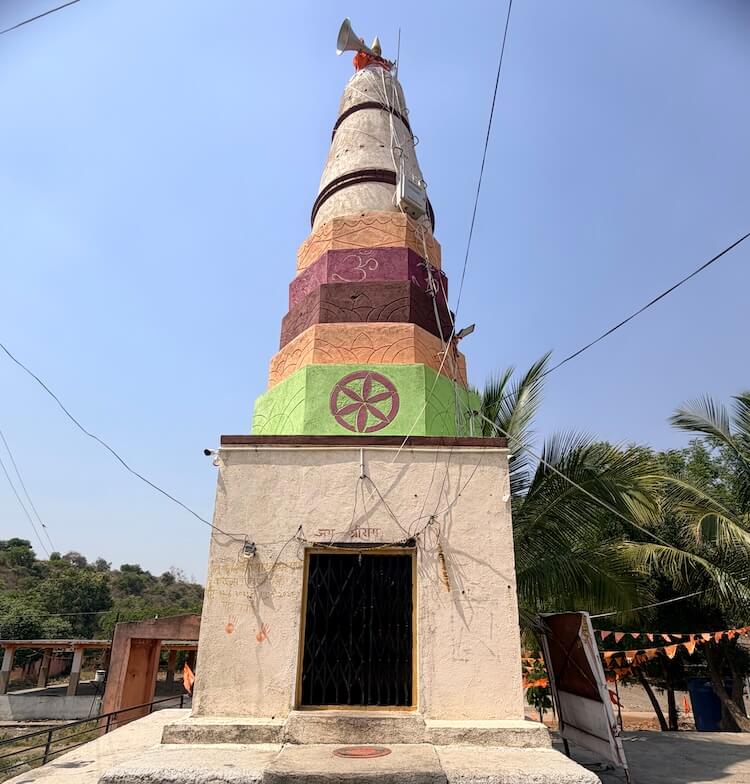
Villagers state that this temple is approximately 600 to 700 years old. The history of Jalna district begins from the Satavahana era, and evidence of this is found in the excavations at Bhokardan. During the medieval period, under the rule of the Yadava kings, the construction of temples in Marathwada saw a golden age. In the seventeenth century, Chhatrapati Shivaji Maharaj’s commander, Prataprao Gujar, used the hills and valleys of this region to thwart the invasions of the Nizams. This area of Badnapur and Kandari was under the rule of the Nizam. Local elders still recount the history that when the Nizam’s army attempted to demolish this temple, a tigress let out a massive roar from the main sanctum. Terrified, the soldiers fled the scene. Because of this incident, the name ‘Vanadev’, meaning the protector deity of the forest, became even more significant. Many legends are told about this temple. According to one, in ancient times, this was the site of a sage’s penance, and he regularly chanted the name of Mahadev. That era was one of harmony between the Shaiva and Vaishnava sects. The sage prayed for Mahadev to grant him a vision in His trigunatmaka (three-fold) form. Pleased with his devotion, Mahadev asked him to seek a boon. The sage requested that Mahadev reside here permanently. Fulfilling the devotee’s wish, Mahadev appeared here in the form of the trigunatmaka Trilingi Shivpindi. Another story suggests that in ancient times, a cruel demon roamed this forest, tormenting the local people and sages. People prayed to Lord Shiva and requested liberation from this crisis. Mahadev then appeared here and slew the demon. Following this victory, Mahadev remained here in the form of a linga. The Shiva linga here is also considered to be in the ‘Ardhanarishvara’ form. When viewed from certain angles, the pindi gives the impression of both Shiva and Shakti. Another folk tale says that when Lord Ramachandra was in exile, He and Mother Sita stayed in this area for some time. Mother Sita created a Shiva linga out of sand with her own hands and worshipped it, which was later transformed into this stone Shiva linga. There is a paved road leading to this temple, which is located a short distance from Kandari village. A large area is available for vehicles at the foot of the hill, and a separate hall has been built there for cultural programs. There is a stone-carved staircase to reach the temple from the base. At the beginning of this path, on the right side, is the temple of Bairagi Baba. In front of it are a Tulsi Vrindavan and a Yajna Kund. On the altar in this temple is a meditative statue of Bairagi Baba. The roof of the temple features a circular, tapering shikhara topped with a kalash. Beside this temple is a Maruti temple. Devotees enter the Mahadev temple only after having darshan of this Maruti temple. In this temple, which has four steps at the entrance, there are two stone statues of Maruti on an altar. One of these statues has eroded over time. The shikhara of this temple has eight layers; the lower five layers are octagonal, while the top three are circular.
After climbing about 25 steps from the parking area, one enters the rangamandapa in front of the temple. Here, there is a tin roof supported by iron pillars. In front of the main temple entrance, three Nandi statues are visible, one behind the other. Most Shiva temples have only one Nandi, making this arrangement architecturally significant. Two of these statues are ancient and eroded, while the well-preserved Nandi statue is on an altar. Many remains of the ancient temple are scattered around the temple premises, including parts of mandapas, beams, and pillars. Looking at these remains, one can imagine that the original temple must have been extremely grand.
The temple structure consists of a sabhamandapa and a garbhagriha (sanctum). Although the pillars in the sabhamandapa are ancient, the walls were constructed in more recent times. There is a chandrashila near the entrance. The walls of the sabhamandapa feature pillars and niches. The entrance to the sanctum has a carved door frame, and there is a sculpture of Ganapati on the lintel. A kirtimukha is carved on the frame. Inside the sanctum, there are four carved pillars in the corners. The ceiling is circular and supported by beams.
The main Shivpindi here is unique because it contains three linga stones in its shalunka. On the back wall, there is a statue of the Goddess in a niche. Above the sanctum is an octagonal shikhara with eight niches facing the eight directions. At the top of the shikhara is a kalash and a flag. Scholars estimate that the temple originally consisted of an antarala and a garbhagriha. There is a large pond behind the temple.
Mahashivratri is the biggest festival celebrated here. On this day, queues of devotees begin forming from three in the morning. Thousands of devotees from Jalna, Chhatrapati Sambhajinagar, and the bordering districts come here for darshan. On Mahashivratri, continuous chanting of the Lord’s name and Rudra recitation are performed in the temple. The night Maharati and the subsequent bhandara (community feast) are the main attractions of this festival. There is a special crowd here every Monday during the month of Shravan.
The Shiva linga in the temple is bathed in milk (dugdhabhisheka) and decorated beautifully with flowers. Additionally, festivals like Vaikuntha Chaturdashi, Dev Diwali, Makar Sankranti, and Hanuman Jayanti are celebrated with great enthusiasm.
A small festival is also celebrated here on Dattatreya Jayanti. During this time, thousands of devotees from the surrounding areas come for darshan.
Bhajans and kirtans are organized in the temple. A mahaprasad is arranged for the devotees. A large influx of devotees is seen here on Mondays, Pradosh, Purnima, and Amavasya.
Devotees can have darshan here daily from six in the morning to one in the afternoon and from three-thirty in the afternoon to nine-thirty at night.
This sacred temple stands as a testament to deep spiritual devotion, ancient architectural grandeur, and rich local cultural traditions.
The sanctum sanctorum houses the divine idol consecrated according to ancient Vedic traditions, surrounded by serene courtyards and traditional temple architecture.
Navratri, Maha Shivratri, Annual Temple Jatra & Deepotsav
Compare and book flights, secure top-rated local hotels near the temple, hire reliable guides, and rent cars instantly.
Extend your pilgrimage by visiting other highly sacred temples located nearby.


Add ₹999 more to unlock FREE SHIPPING!
Your sacred cart is currently empty.
Shop Photo FramesFill in your delivery details below to place your order.
Add comment