
Add ₹999 more to unlock FREE SHIPPING!
Your sacred cart is currently empty.
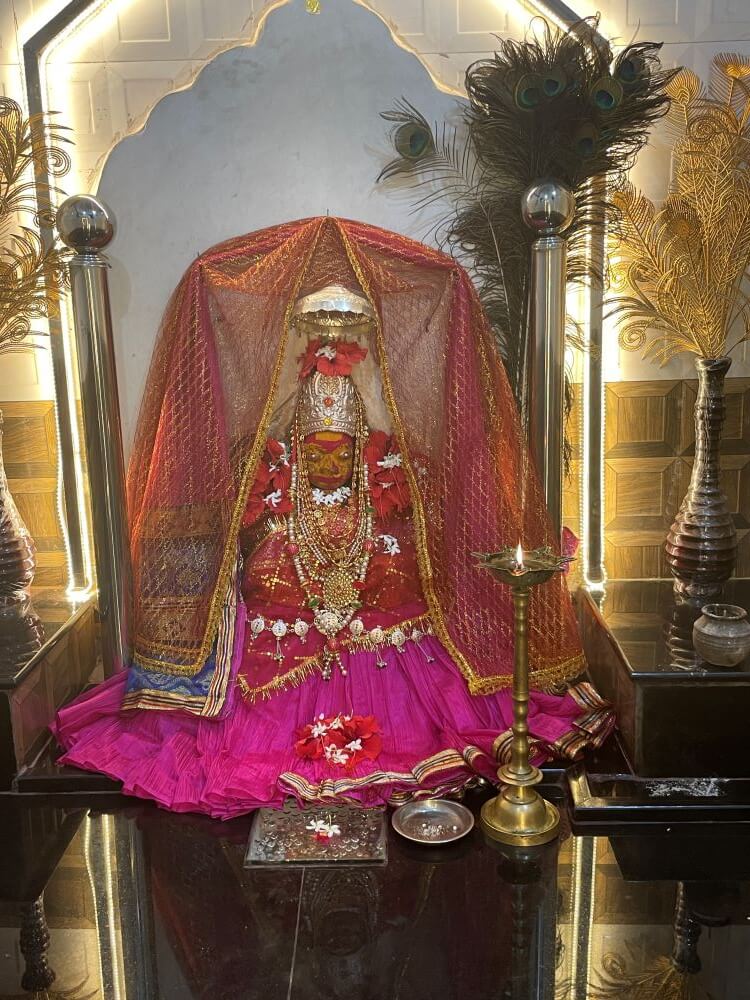
Shop Photo FramesThe Ambika Mata Temple in Gunjevahi, situated on the border of Sindewahi and Savali talukas, is renowned. This vibrant and sacred shrine is located on a hillock here. Revered by millions of devotees, this temple is more than 200 years old. During the Navratri festival celebrated here, lakhs of devotees come for the divine darshan of the Goddess. Additionally, on Tuesdays and Fridays, thousands of devotees throng for the Goddess’s darshan. Due to the large number of devotees and the profound faith in this temple, the Government of Maharashtra has honored it by granting it ‘B’ grade pilgrimage site status.
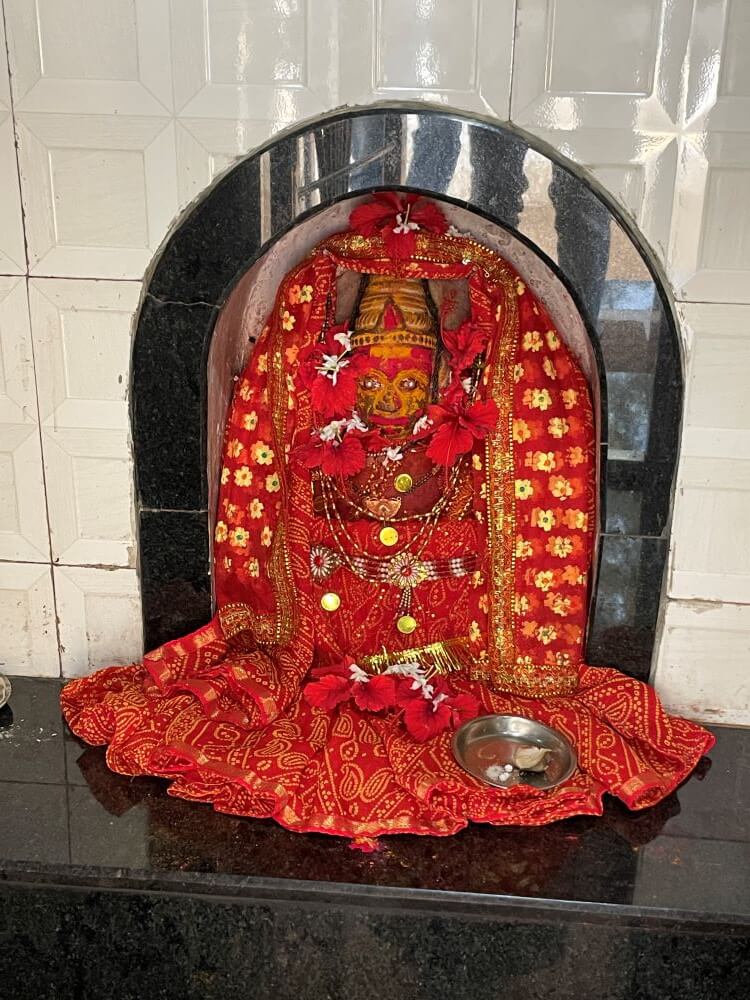
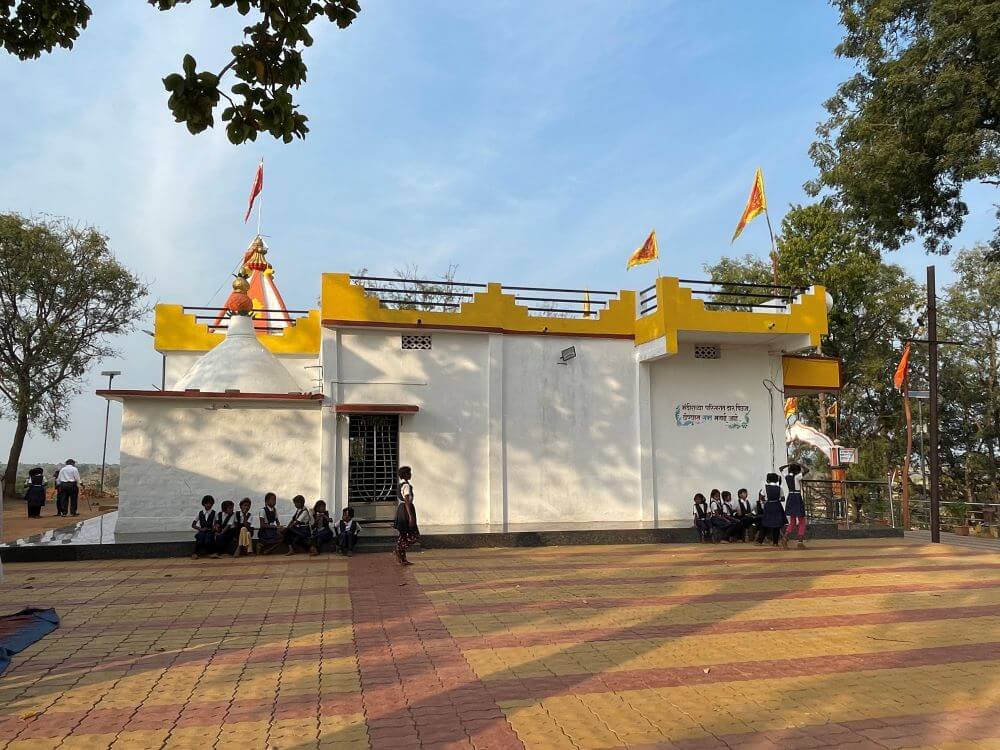
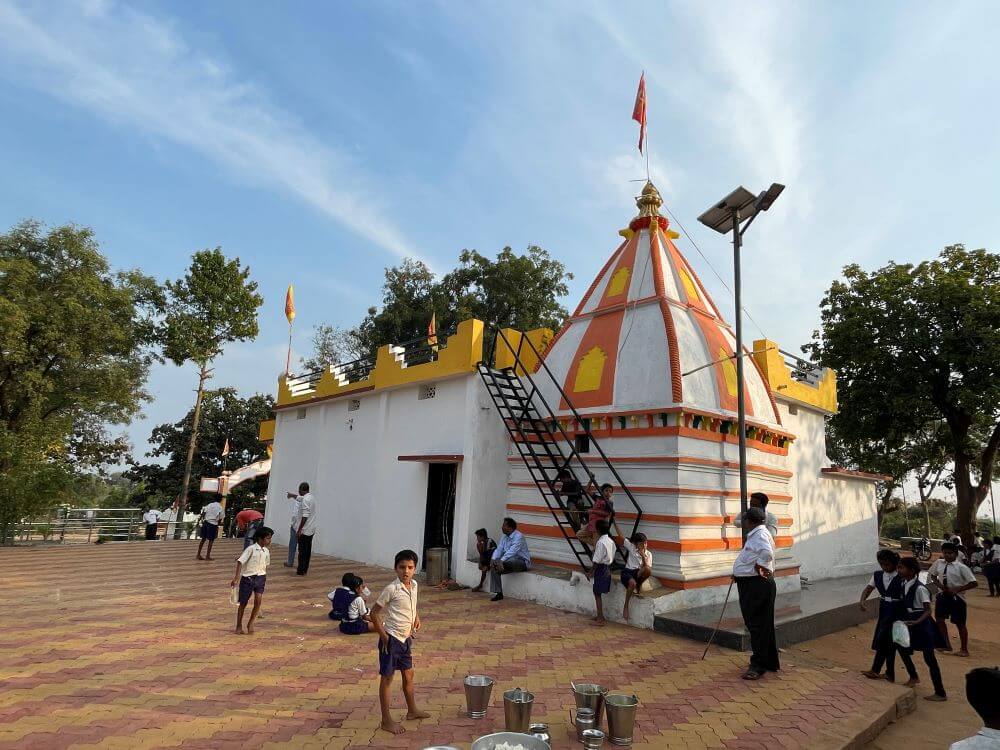
This temple is located at the farthest end of Sindewahi Taluka. Here, there are two temples side-by-side; the principal deity in the larger temple is Ambika Devi, while the Goddess in the smaller temple is known as Yellamma Devi. It is believed that these two are sisters. Hence, this temple is also referred to as the Ambika-Yellamma Temple. After renovation and modernization in 1993, the temple acquired its present form. It is said that in 1964, Rashtrasant Tukadoji Maharaj resided in this temple for a few days. Furthermore, local legends recount that Ambika Mata and Yellamma Mata were consecrated during the era of Parashurama.
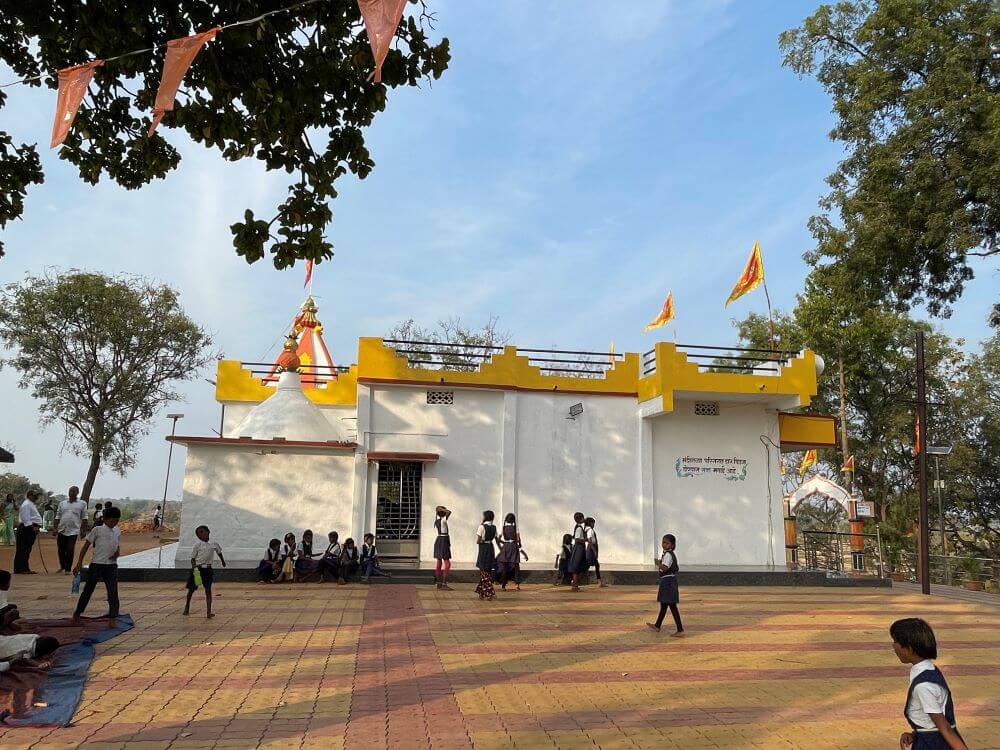
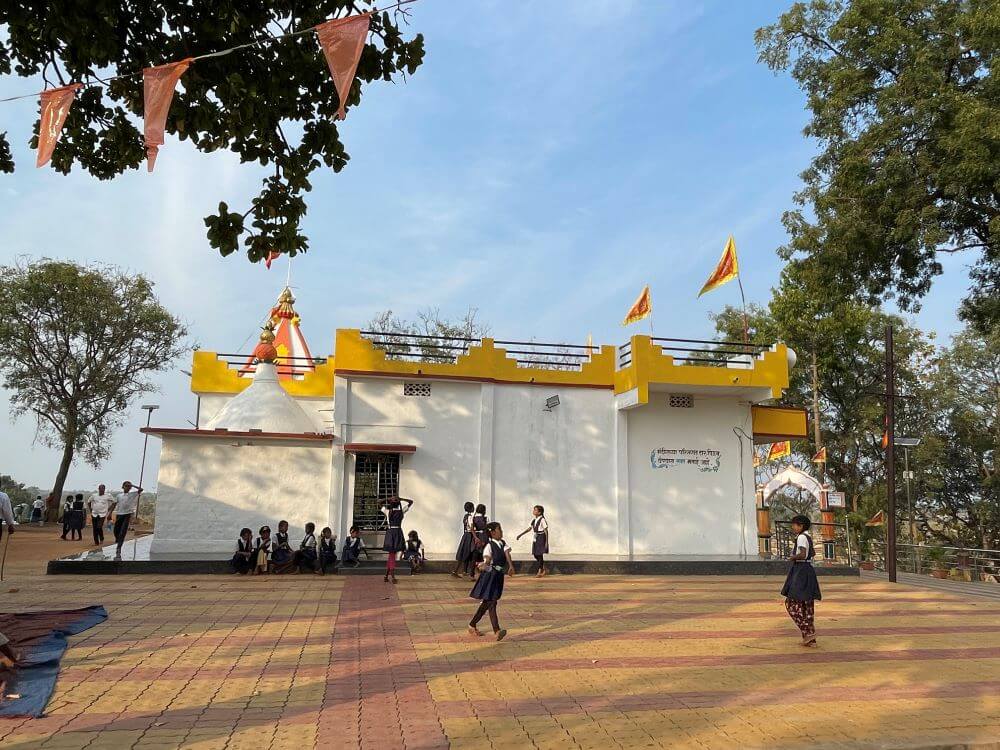
This temple is situated on the road leading from Sindewahi town towards Savali. All the festivals of the Goddess are celebrated in the large courtyard adjacent to this road. There are many shops selling puja items here. To reach the temple, one must ascend 40 to 45 steps. After climbing these steps, devotees enter the temple courtyard through an archway. The courtyard is spacious and paved throughout. Additionally, due to its elevated position, railings have been installed along its sides. The main temple is of medium size. Its structure comprises a Sabhamandap (assembly hall) and three small Garbhagrihas (sanctum sanctorums). The Garbhagriha here is considered the original temple, while the Sabhamandap in front of it appears to be a recent construction.
The doorframe of the Goddess’s Garbhagriha features some intricate carvings, and inside, there is a distinctive two-foot-tall idol of the Goddess. This idol is made of Gandaki stone and is seated on a throne. (There is a difference between the black stone found in Maharashtra and Gandaki stone. Generally, Gandaki stone is found in the Gandaki River, which flows through India and Nepal. Gandaki stone is extremely hard and smooth. It is comparatively easier for sculptors to shape this stone as desired. Moreover, this stone or idol is not affected by external environmental factors for hundreds of years. The idol of Vitthal at Pandharpur in Maharashtra is made of black stone, while the idol of Tuljabhavani in the Tuljapur temple is made of Gandaki stone.) Near the idol’s right shoulder, a moon is carved, and near the left shoulder, a sun is carved. This Goddess has eight arms, holding various weapons. On the back of the idol, there is a quiver, and a Shivling is present in the center of the crown. With a silver crown on her head, an umbrella above it, various ornaments around her neck and body, and a uniquely draped saree, the divine form of the Goddess appears resplendent. It is believed that this is a manifestation of Karveer Vasini Mahalakshmi. In the other two Garbhagrihas here, there are idols of Shivling and Vitthal-Rukmini.
The construction of the second temple, adjacent to this one, is also ancient, and it houses the idol of Yellamma Devi. During the Navratri festival, various programs are organized here by the Temple Committee. These include Ghatasthapana on the first day, and on other days, rituals such as Yogini Milan, Shringar (adorning the Goddess), fasting on Lalit Panchami, Gondhal, and Ghagar Funkane are performed. It is recorded that approximately two to two and a half lakh devotees visit for darshan during the nine days of Navratri. This includes devotees who come for divine sight, to make vows, and to fulfill their vows.
As this area is densely forested, locals often report that devotees sometimes witness tigers in the temple vicinity during Navratri. However, by the divine blessings of the Goddess, no harm has ever come to her devotees from them. Devotees firmly believe that this Goddess grants vows and fulfills desires. She is the Kuldevata (family deity) for many families in this region. Daily, the Aarti of the Goddess is performed at 8:10 AM and 6:30 PM. Devotees can enter the Garbhagriha for the darshan of Ambika Mata from 6 AM to 12 PM and from 4 PM to 7 PM. Since the Government of Maharashtra has granted this temple ‘B’ grade pilgrimage site status, various facilities are being made available for devotees through funds received periodically from the government.
Gunjevahi village has historically been renowned in Vidarbha as a village of handlooms. Previously, over 1000 handlooms operated in this village. There are also many temples in and around this village. In Gunjevahi village, near the Ambika Devi Temple, there is a Sheshnarayan Temple, approximately 200 years old. The ancient idol of Lord Vishnu reclining on Shesha (Sheshashayi Shri Vishnu Murti) here is adorned with vermillion, and interestingly, the position of Goddess Lakshmi is not at Lord Vishnu’s feet but near His hands. Additionally, the joint temple of Lord Vishnu and Mahadev in this village is also famous.
This sacred temple stands as a testament to deep spiritual devotion, ancient architectural grandeur, and rich local cultural traditions.
The sanctum sanctorum houses the divine idol consecrated according to ancient Vedic traditions, surrounded by serene courtyards and traditional temple architecture.
Navratri, Maha Shivratri, Annual Temple Jatra & Deepotsav
Compare and book flights, secure top-rated local hotels near the temple, hire reliable guides, and rent cars instantly.
Extend your pilgrimage by visiting other highly sacred temples located nearby.


Add ₹999 more to unlock FREE SHIPPING!
Your sacred cart is currently empty.
Shop Photo FramesFill in your delivery details below to place your order.
Add comment