
Add ₹999 more to unlock FREE SHIPPING!
Your sacred cart is currently empty.
Shop Photo Frames
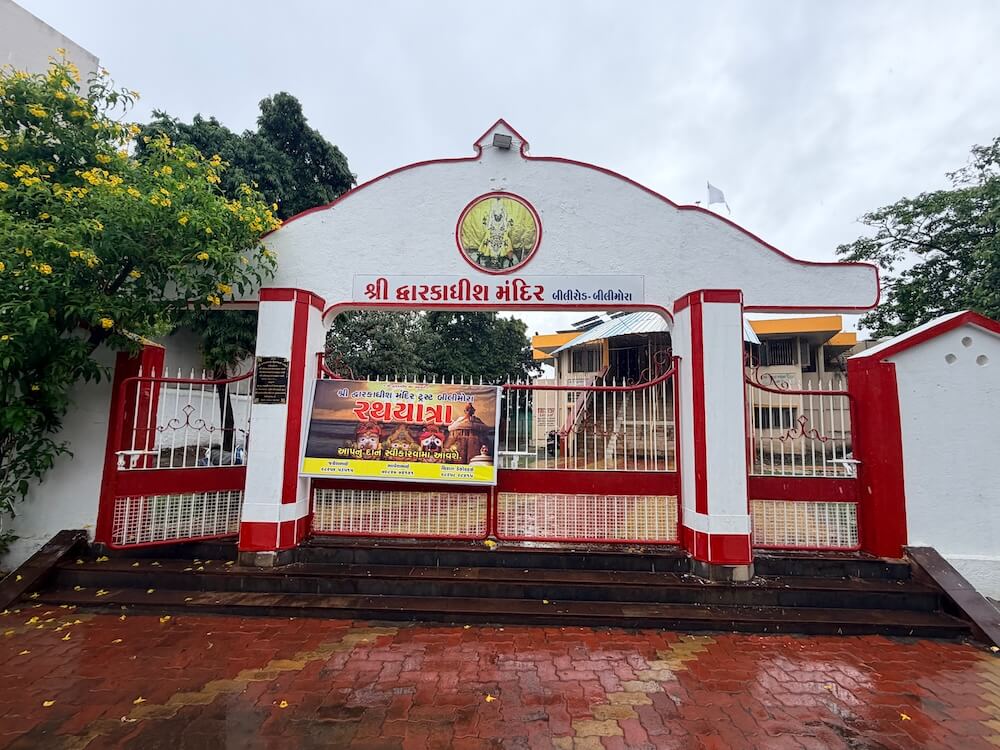
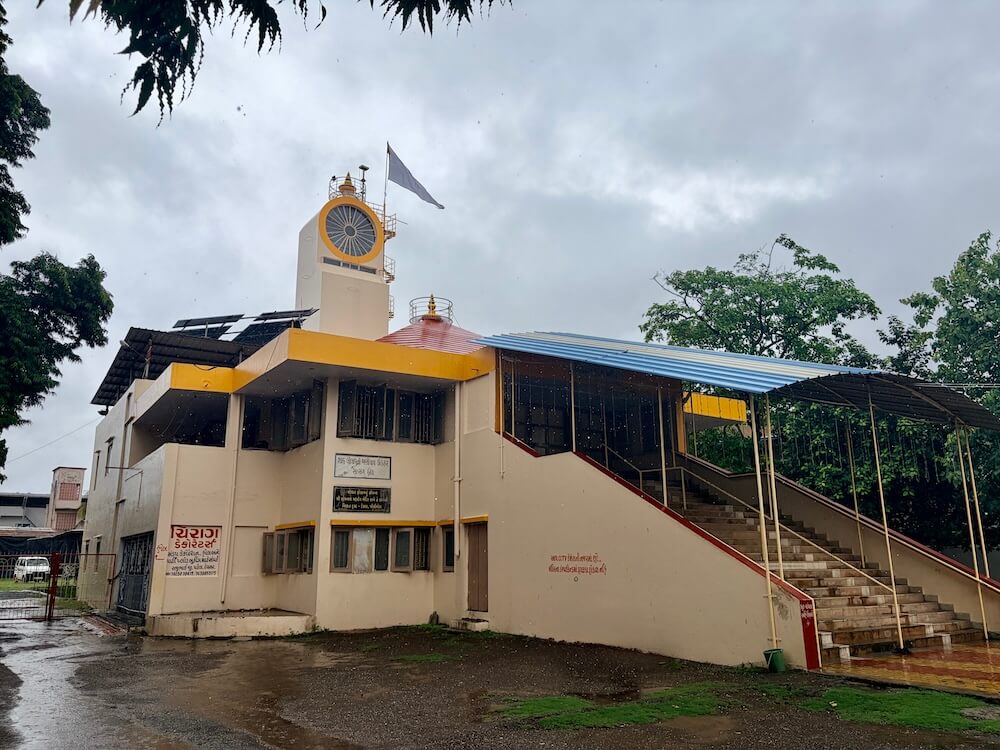
The Dwarkadhish Temple, dedicated to the Dwarkadhish form of Lord Krishna, is located on Bili Road in Bilimora city, Navsari district. Situated between Navpura and Goharbag, this temple has given such spiritual importance to the area that the whole area is commonly called Dwarka. According to sacred stories, Lord Krishna left the city of Mathura to create the golden kingdom of Dwarkanagari by the Gomti River, earning the title ‘Dwarkadhish’, meaning Lord of Dwarka. In Gujarat, other important pilgrimage places linked to Lord Krishna include Bet Dwarka, Madhavpur, Junagadh, and Dakor. Influenced by the Vallabh Sampradaya, also known as the Pushtimarg tradition, local Vaishnava followers built this temple on Bili Road to worship Lord Krishna.
The spread of the Vallabh Sampradaya in the Surat, Navsari, and Valsad areas of South Gujarat from the sixteenth century was an important event in the region’s religious, social, and economic history. This Shuddhadvaita Vaishnava tradition, started by Jagadguru Shri Vallabhacharya (1479–1531), was firmly established in South Gujarat during his travels across India. During these journeys, Shri Vallabhacharya stopped at many places in Gujarat to give talks on the Shrimad Bhagavat Mahapuran. These places are considered very sacred in the Pushtimarg tradition.
After Shri Vallabhacharya, his well-known son, Goswami Shri Vitthalnathji (also called Gusainji), spread the teachings widely and in an organized way during the late sixteenth century. Vitthalnathji traveled across Gujarat six times in his life. During these trips, he officially welcomed merchants, skilled workers, and farmers living along South Gujarat’s coast into the Pushtimarg tradition. The Pushtimarg philosophy teaches loving service to God like a parent’s love while living a normal family life, instead of giving up the world completely. Because of this, wealthy merchant groups and trading communities in Surat, Navsari, and Valsad—such as the Mahajan, Vaniya, Bhatia, Luhana and Patidar—joined this path in large numbers.
Important historical stories about this spiritual growth are kept in the medieval texts ‘Chaurasi Vaishnavan Ki Varta’ and ‘Do Sau Bavan Vaishnavan Ki Varta’. Written in the Braj Bhasha language, these works tell the life stories and examples of the main followers of Shri Vallabhacharya and Shri Vitthalnathji. According to these records, many respected citizens and wealthy merchants from Surat, Bharuch and rural South Gujarat became devoted followers. These early believers then spread the Pushtimarg teachings and the sacred practice of worshipping the deity at home (gharo ghar seva) in their towns and villages.
Although Lord Shrinathji is seen as the highest original form in the Pushtimarg tradition, great religious importance is also given to the ‘seven nidhi svarupas’, which are the main deities of seven special seats (peethas). Among these seven main forms, ‘Shri Dwarkadhishji’ (or ‘Shri Dwarkanathji’) is the main deity of the Third Seat. The main temple of Shri Dwarkadhishji is in Kankroli, Rajasthan, which is an important center of the Pushtimarg tradition. Other forms like Shri Mathuradhishji, Shri Vitthalnathji, Shri Gokulnathji, Shri Gokulachandramaji, Shri Balakrishnanathji and Shri Madanmohanji are also highly respected in this devotional group.
Proof of this tradition’s wide influence is also found in official records from the British period and the archives of the Baroda princely state. According to historical books like the ‘Gazetteer of the Bombay Presidency’ (Volume II – Surat and Broach) and the ‘Gazetteer of the Baroda State’, most Hindu merchants and the growing middle class in Surat, Navsari, and Valsad districts had officially become followers of the Vallabh Sampradaya by the nineteenth century. Local rulers and rich banking families in Navsari and Valsad generously donated farmland and large sums of money to support these temples. From this rich cultural background, the local Vaishnava followers in Bilimora came together to build the Shri Dwarkadhish Temple for the ongoing worship of Lord Krishna.
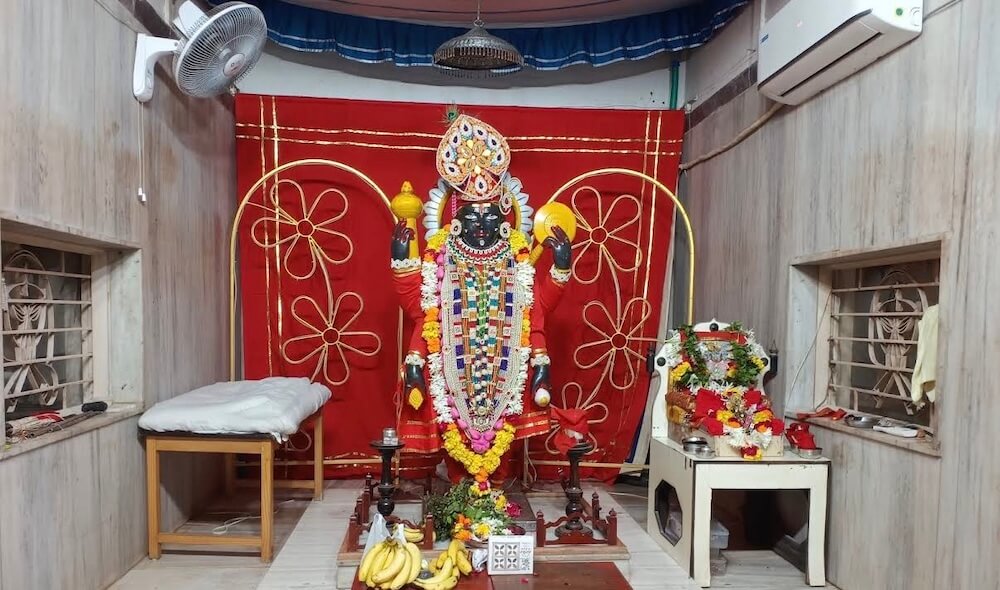
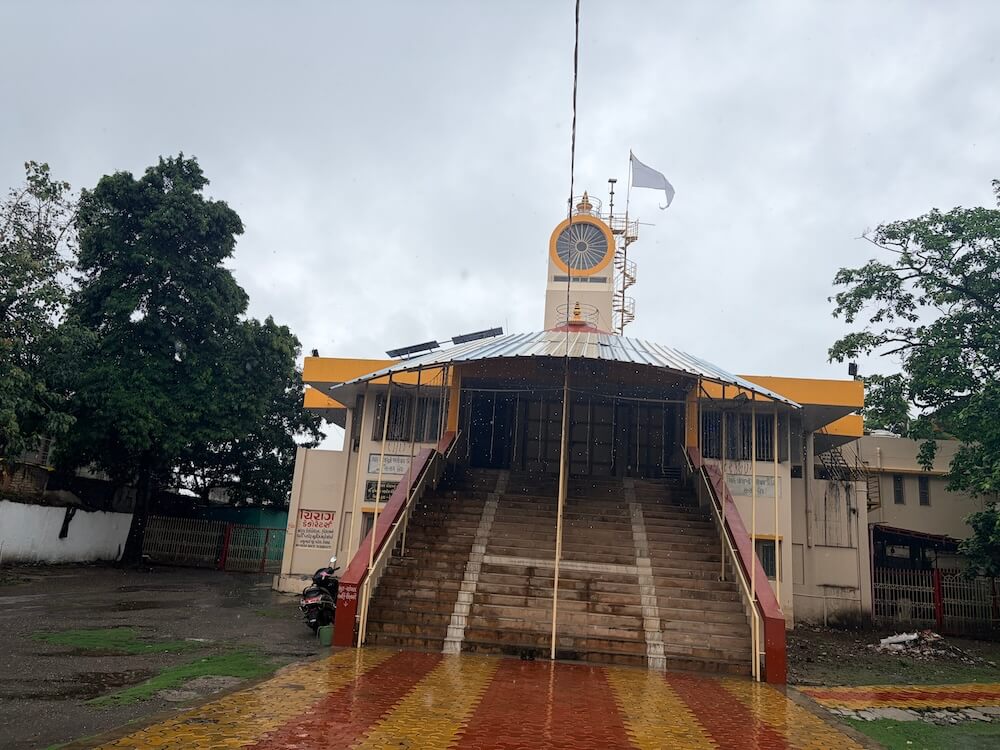
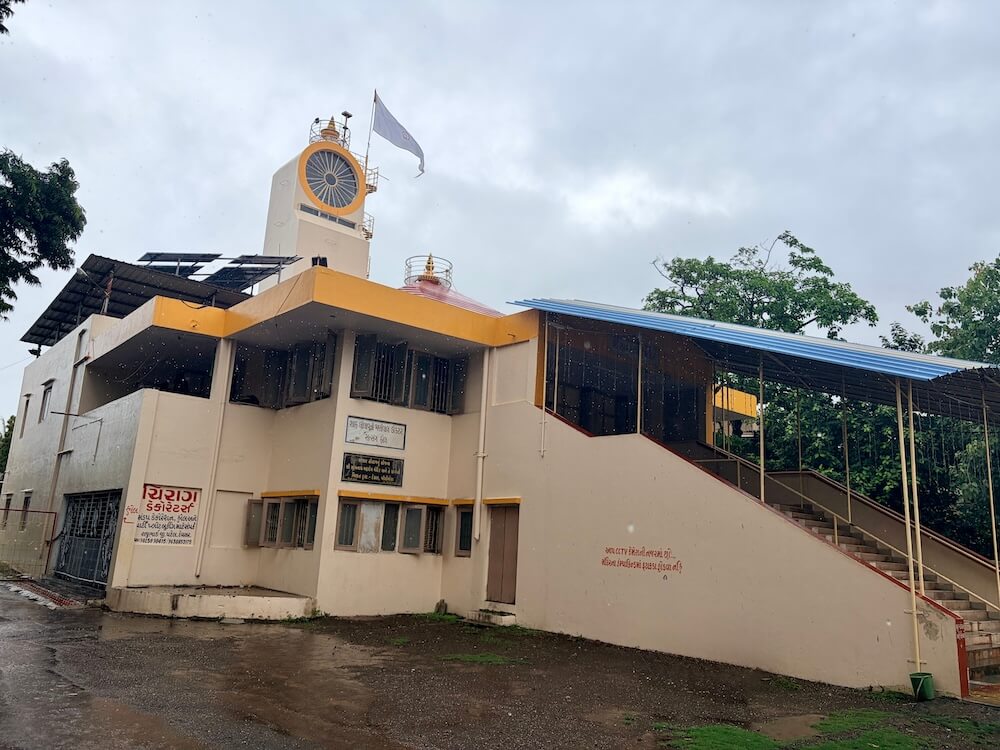
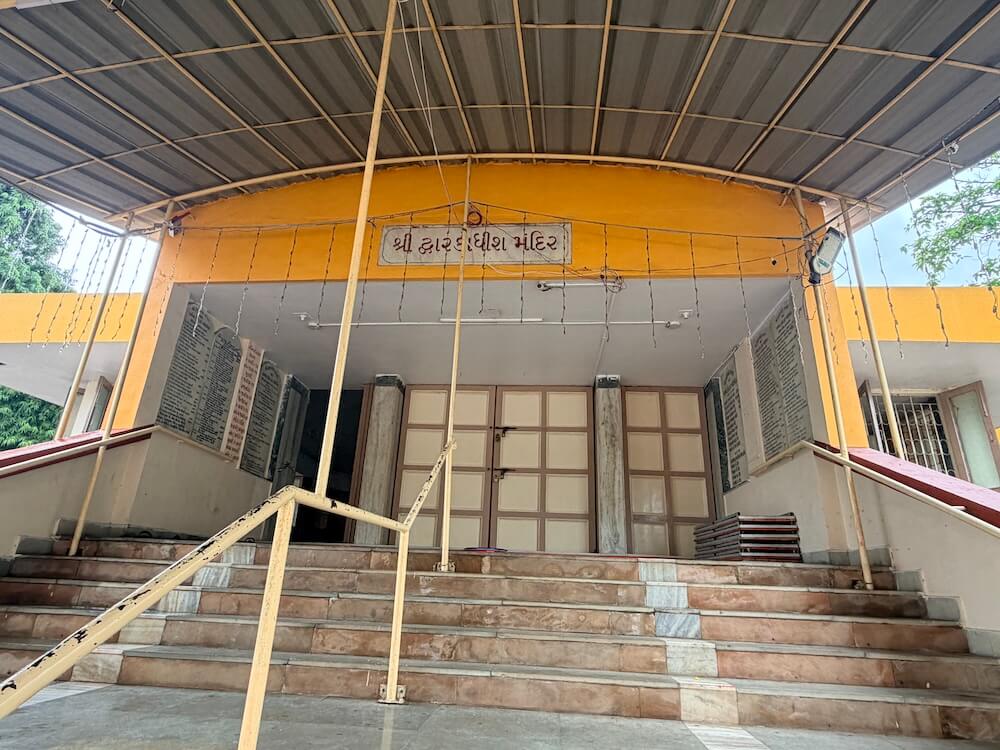
The temple complex is surrounded by a strong protective wall next to the main road. Entry to the inner courtyard is through a large main gate in this wall. Many tall, old trees fill the spacious courtyard. From the courtyard, climbing about twenty-one ceremonial steps leads to the main porch (mukhamandap) of the Dwarkanath Temple on the building’s second floor. The temple’s design includes a front porch, a meeting hall and the innermost sacred room. The meeting hall (sabhamandap) is fully enclosed, and beyond it is the shrine’s sanctum sanctorum. Inside this sanctum, on a sacred stone base (vajrapitha), is a beautiful statue of Lord Dwarkadhish carefully carved from black stone (krishnashila). The deity is shown with four arms (chaturbhuja), holding a mace and discus in the upper hands, and a conch shell and lotus flower in the lower hands. A finely carved crown sits on the deity’s head, topped with a neatly arranged peacock feather. The style of this statue follows the traditional look of the Vaishnava Pushtimarg school. The sacred clothes, valuable jewelry, and daily decorations (shringar) are carefully arranged following traditional Gujarati customs. Instead of a usual temple spire (shikhara), the roof is topped with a large replica of the sacred Sudarshana Chakra.
The main festival celebrated at the temple is Shri Krishna Janmashtami. This falls in the holy month of Shravan and is celebrated here with great public excitement. On this special night, the temple holds a grand ritual bathing ceremony (maha abhisheka) at midnight, followed by the birth-announcing aarti (janma aarti) and the ceremonial rocking of the divine cradle. The whole temple is beautifully lit with decorative lights and decorated with flowers. Every year in the month of Ashadha, a large Jagannath Rath Yatra procession starts from the temple, drawing many townspeople. The Annakut festival, held the day after
Diwali, is another important celebration here. On Kartik Pratipada, a large variety of cooked foods, seasonal fruits, and sweets are offered as an annakut to Lord Dwarkadhish. During Phalguna, which includes the festivals of Holi and Rang Panchami, the lively ‘Phag Utsav’ is joyfully celebrated with the idol worshipped while scented powder (gulal) and fresh flower petals are thrown. Throughout the holy month of Shravan, the traditional cradle (hindola) festival is held daily. Besides these regular festivals, the temple also holds special daily decorations and worship services on Sharad Purnima, Ram Navami and Tulsi Vivah.
In the Vaishnava tradition, especially in temples dedicated to Lord Krishna, the daily routine is divided into specific times for worship. The day starts with ‘Mangala Darshan’, when the deity is gently awakened for the first aarti and morning prayers. At this temple, Mangala Darshan is open to visitors from 7:30 am to 8:15 am. Then the temple closes from 8:15 am to 9:15 am, reopening for public viewing from 9:15 am to 10:45 am. Next is the ‘Rajbhog Darshan’, the time when the main midday meal is offered to the deity, from 11:15 am to 12:05 pm. After the afternoon rest, the ritual to wake the deity is called ‘Utthapan’, with Utthapan Darshan from 4:30 pm to 5:15 pm. The temple closes briefly from 5:15 pm to 5:30 pm. Then the deity receives a light evening food offering during ‘Bhog Darshan’, open from 5:30 pm to 6:30 pm. The temple closes again from 6:30 pm to 7:00 pm. Finally, the day ends with the ‘Shayan Aarti’, the ritual to prepare the deity for sleep. The temple opens for this at 7:30 pm and closes for the night at 8:00 pm.
Navratri, Maha Shivratri, Annual Temple Jatra & Deepotsav
Compare and book flights, secure top-rated local hotels near the temple, hire reliable guides, and rent cars instantly.
Extend your pilgrimage by visiting other highly sacred temples located nearby.


Add ₹999 more to unlock FREE SHIPPING!
Your sacred cart is currently empty.
Shop Photo FramesFill in your delivery details below to place your order.
Add comment