
Add ₹999 more to unlock FREE SHIPPING!
Your sacred cart is currently empty.
Shop Photo FramesRenowned as a shrine of the Goddess who fulfills the vows of Her devotees, the ancient and sacred temple of Eklahra Devi is famous across Chhatrapati Sambhajinagar district. It is believed that the south-facing idol of the Goddess in this ancient temple, located at the foothills of the Eklahra hill in Pimpri Raja near Karmad, was consecrated by the supreme saint, Sant Dnyaneshwar himself. Grand annual fairs (Yatras) are held here on Chaitra Shuddha Purnima and Ashwin Shuddha Pratipada, attracting thousands of devotees who arrive to seek the divine blessings of the Goddess. Near the temple stands an ancient stepwell that bears witness to glorious traditional architecture.
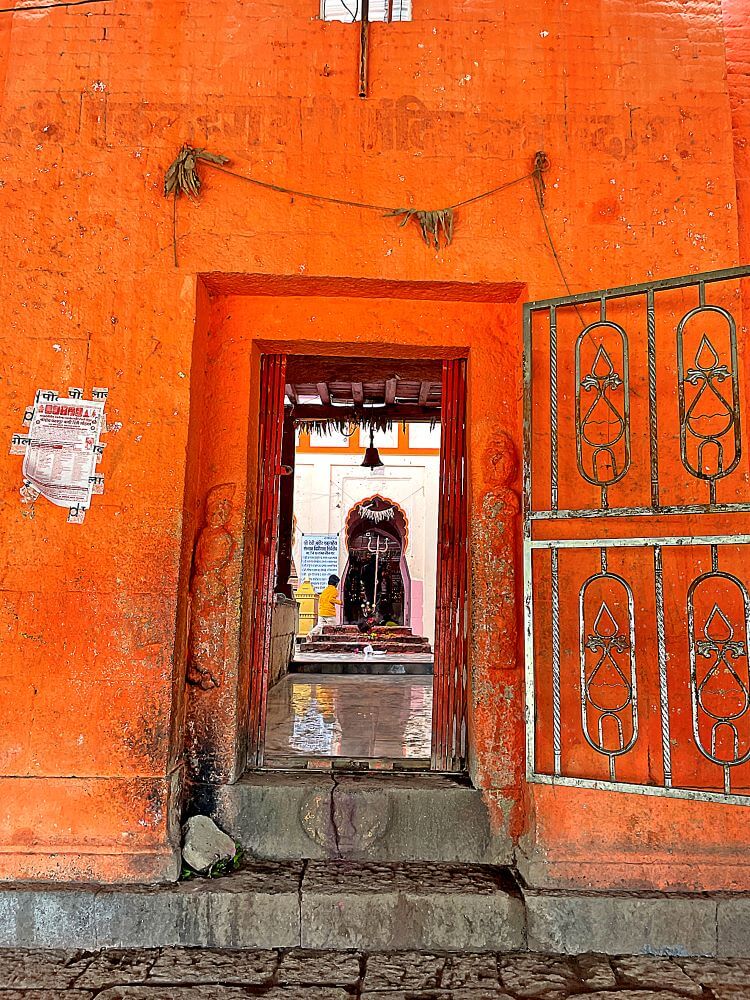
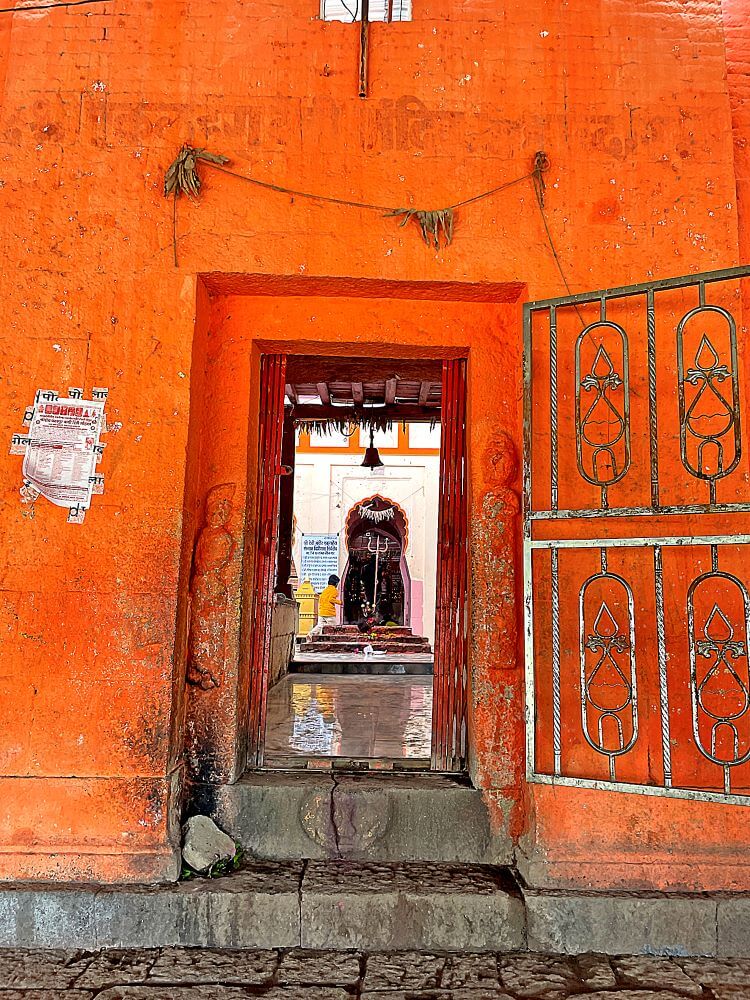
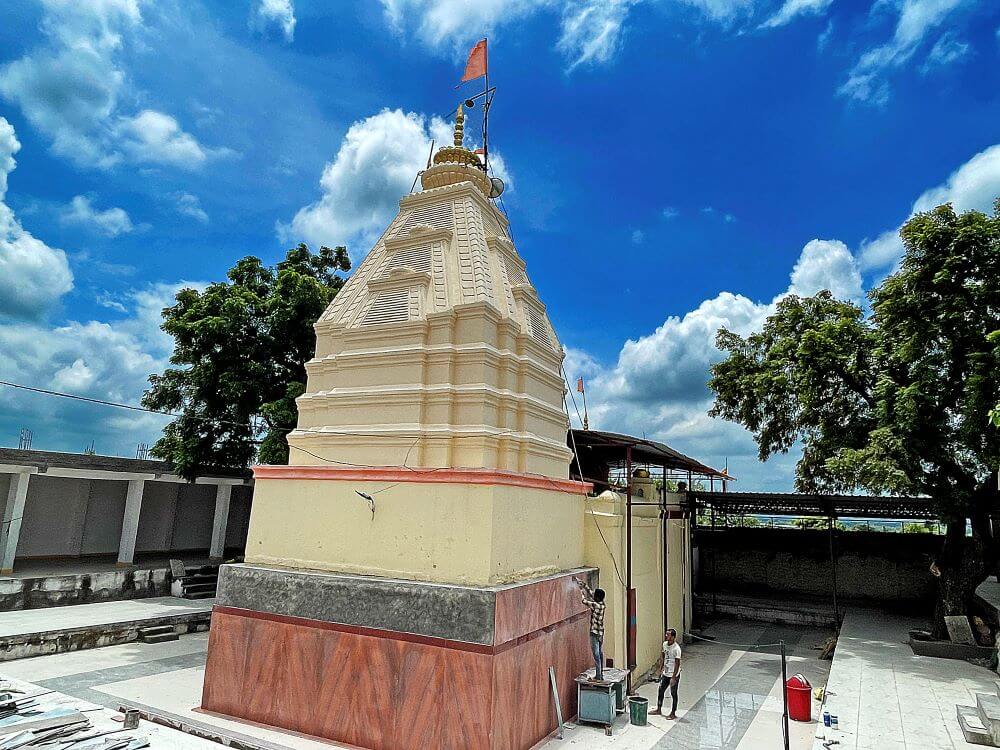
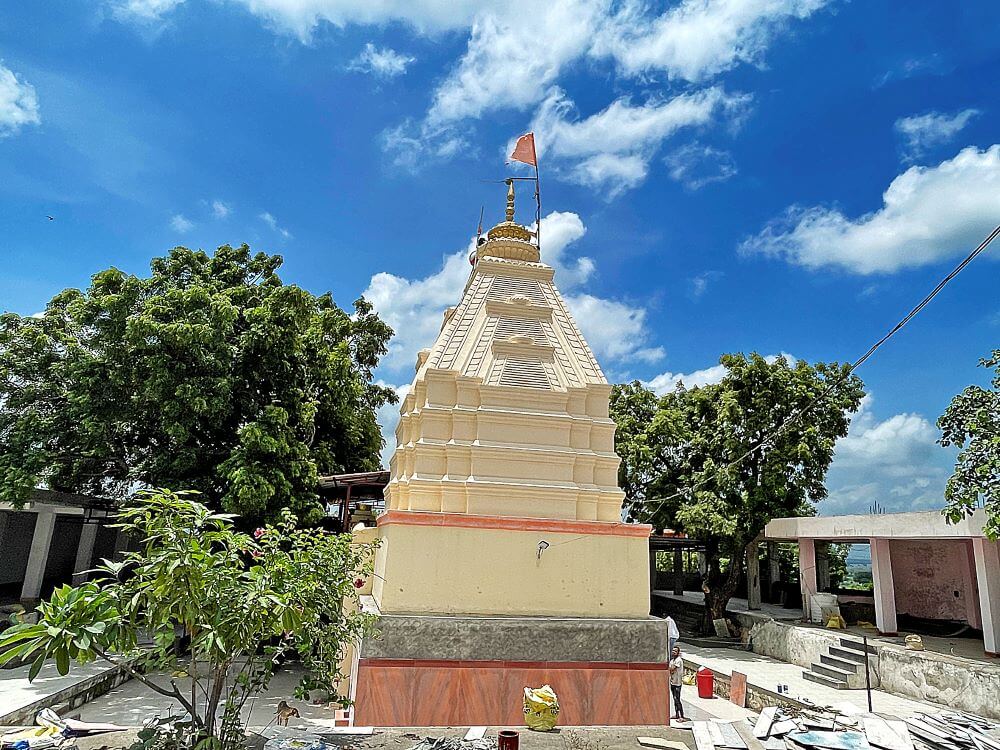
According to legend, Renuka Mata from the hills of Gadhe Jalgaon near Karmad, Renuka Mata of Golatgaon who manifested in the form of Ardhanari Nateshwar from the sacrificial fire (Yajna) performed in front of her temple, and Eklahra Devi are three divine sisters. As this shrine is situated at the foothills of the Eklahra hill, the Goddess came to be known as Eklahra Devi. While traveling from Chhatrapati Sambhajinagar to Pimpri via Karmad, the magnificent temple spire (Shikhara) catches one’s eye from afar. A tin-roofed shed has been erected over part of the path leading up to the main entrance (Mahadwara). In front of the temple stand four Deepstambhas (lamp towers)—two small and two large. The temple complex is enclosed by a sturdy stone fortification wall, and beneath the entrance of the drum house (Nagarkhana), intricate sculptures of Kirtimukha and divine guardians (Dwarapalas) adorn both sides.
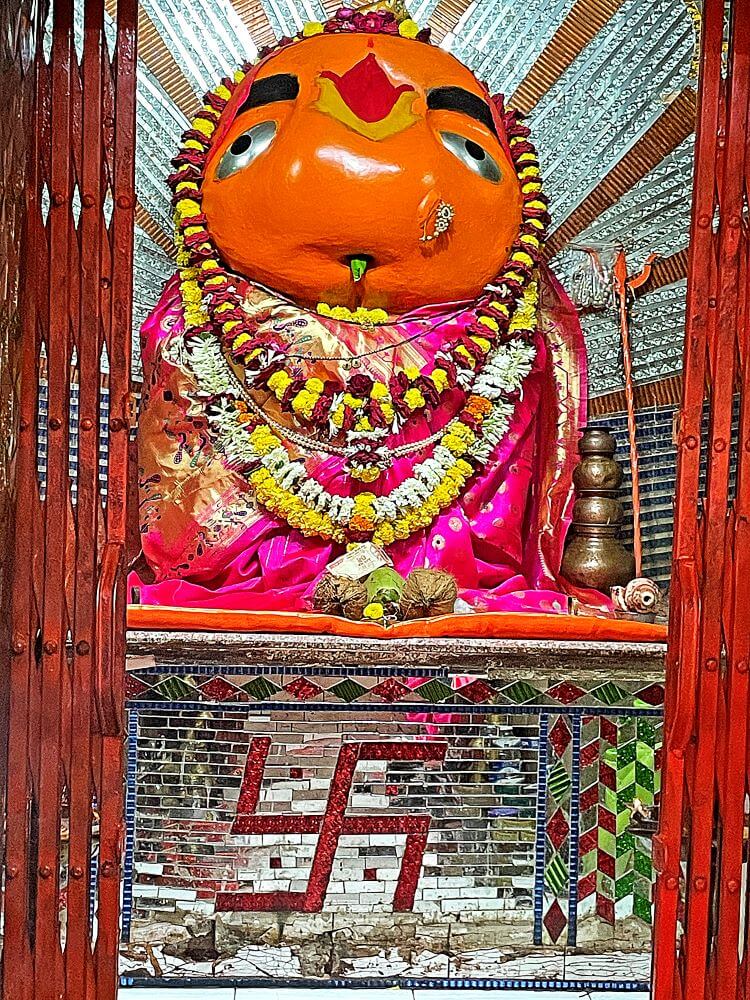
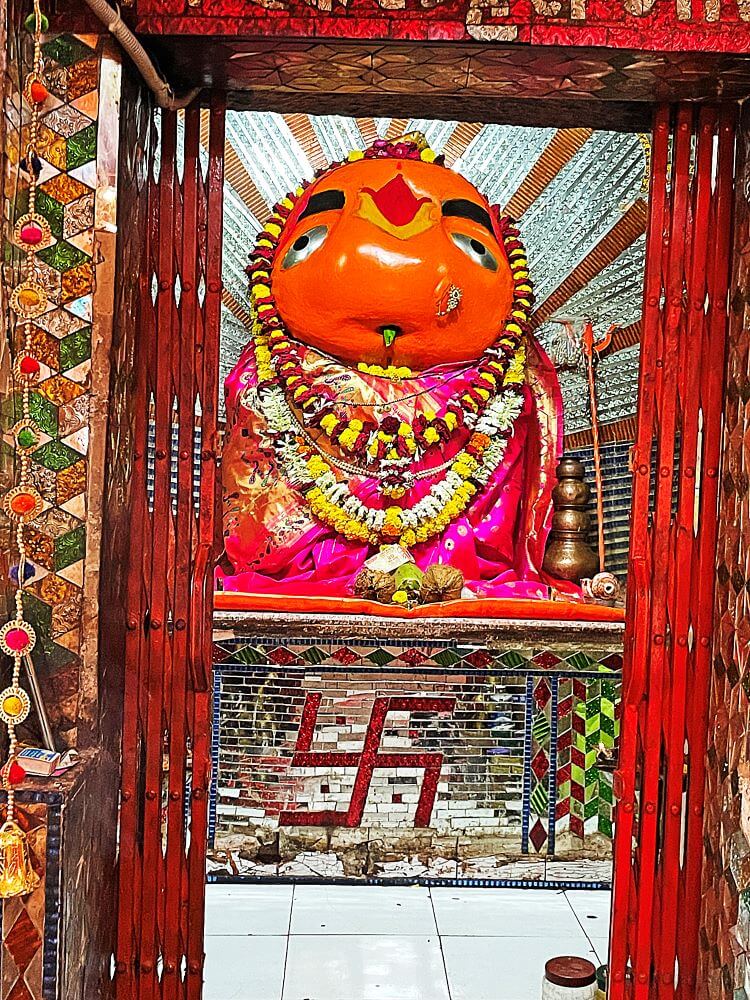
Upon entering through the Nagarkhana, one comes across the impressive stone architecture of the temple structure. Entry to the temple is gained through three magnificent arched doorways. In front of these doorways lie a large sacrificial altar (Homakunda) and the Goddess’s sacred weapon, the Trident (Trishula). The temple architecture comprises an assembly hall (Sabhamandapa), a vestibule (Antarala), and a sanctum sanctorum (Garbhagriha). In the Antarala, on a raised pedestal facing the sanctum, rest the sacred foot impressions (Padukas) of the Goddess. Since devotees do not enter the Garbhagriha, darshan of the Goddess is taken standing from outside. The lintel (Lalatabimba) above the entrance of the sanctum features an image of Lord Ganesha. Inside the sanctum, upon a raised platform within an exquisitely carved shrine (makhar), resides the vermilion-coated idol of Eklahra Devi. The deity is adorned with defined eyebrows, a prominent Kumkum on Her forehead, a traditional nose ring (Nath), and expressive silver eyes. During festival celebrations, a silver crown is adorned upon the Goddess.
Being widely revered as a deity who fulfills vows, hundreds of devotees arrive daily to seek Her divine blessings. It is a traditional custom among devotees to tie a coconut in the temple premises upon the fulfillment of their vows. During the auspicious festival of Navratri, numerous religious ceremonies and cultural programs are organized here. Behind the main Eklahra Devi Temple, atop a small hill, stands a smaller shrine dedicated to the Goddess; pilgrims visiting the main temple also trek up to offer their prayers there. This hill offers a breathtaking panoramic view of the surrounding landscape.
A short distance in front of the temple lies the ancient stone stepwell (Barav) of the Goddess. Built by Ahilyabai Holkar, this historic stepwell is approximately 40 feet deep, with flights of stairs descending into it from three sides. The stones of the stepwell display charming craftsmanship. Despite its great depth, the stepwell retains water throughout the year and overflows completely during the monsoon season. A Shivlinga and several ancient sculptures are situated near the stepwell. The presence of such a stepwell within the temple precinct suggests that this route was likely a historic trade route, as stepwells were built along ancient travel routes for wayfarers to quench their thirst.
The village of Pimpri, where this holy shrine is located, holds a significant place in history. Between 1750 and 1765, a power struggle raged between the Marathas and the Nizam in South India. During this period, influential ministers and administrators held significant sway over regional affairs. Managing these two powers with strategic diplomacy were the famous “Sade-Teen Shahane” (Three and a Half Wise Men): Devajipant Chorghade (administrator for Janoji Raje Bhosale of Nagpur), Sakharam Bokil (commander of the Peshwas), Vithal Sundar Parasrami (Diwan of the Nizam), and Nana Phadnavis (chief administrator of the Peshwas). Among them, the first three, who commanded both diplomatic strategy and battlefield prowess, were regarded as full wise men, while Nana Phadnavis, who governed through pure political intellect without wielding a sword on the battlefield, was termed the ‘half wise man’.
Vithal Sundar, who had risen to the post of the Nizam’s Diwan through his sharp intellect, poisoned the Nizam’s mind and severely strained Maratha-Nizam relations. His maneuvers led directly to the historic Battle of Rakshasbhuvan in August 1763 between the Nizam and the Marathas. The Nizam suffered a decisive defeat in this war. It was after this victory that Shrimant Thorale Madhavrao Peshwa firmly consolidated his authority over the Peshwaship and exerted control over Raghunathrao. Vithal Sundar was slain in this battle. However, because he had previously rendered distinguished service in Pune, the Nizam granted a territory near Aurangabad as an estate (Jagir) to his heir. That region came to be known as ‘Chimanrajachi Pimpri’, which later evolved into the present name, Pimpri Raja.
This sacred temple stands as a testament to deep spiritual devotion, ancient architectural grandeur, and rich local cultural traditions.
The sanctum sanctorum houses the divine idol consecrated according to ancient Vedic traditions, surrounded by serene courtyards and traditional temple architecture.
Navratri, Maha Shivratri, Annual Temple Jatra & Deepotsav
Compare and book flights, secure top-rated local hotels near the temple, hire reliable guides, and rent cars instantly.
Extend your pilgrimage by visiting other highly sacred temples located nearby.

Add ₹999 more to unlock FREE SHIPPING!
Your sacred cart is currently empty.
Shop Photo FramesFill in your delivery details below to place your order.
Add comment