
Add ₹999 more to unlock FREE SHIPPING!
Your sacred cart is currently empty.
Shop Photo FramesMarathwada, a region situated at the geographical heart of the state of Maharashtra, has been a land sanctified since ancient times by diverse religious traditions, cultures, and the presence of great saints. Jalna city, located in this region and known today as a commercial hub, is home to Guru Ganesh Tapodham, a unique manifestation of spiritual tranquility. This place has emerged as a sacred center that provides peace of mind not only to followers of Jainism but to people of all faiths. Situated in the New Mondha area of Jalna city, near the Shivaji statue, this Tapodham is dedicated to the sacred memory of the great Jain saint Guru Ganeshlalji Maharaj, who was renowned as the ‘Karnataka Kesari’.
Looking at the history of Jalna district, this region has been a center of political and religious activity since the Satavahana era. Places like Bhokardan were on ancient trade routes, while traces of Buddhism and Jainism can still be seen in Rohilagad and other parts. Just as Marathwada provided shelter to the Mahanubhava Panth, the Varkari tradition, and the Nath tradition, various sects of Jainism have also flourished in this soil for hundreds of years. The Jain caves in the Ellora caves bear witness to the ancient influence of Jainism in this region. Jalna city was formerly known as ‘Janakpur’ and is also associated with the Ramayana. Whether it is the Kali Masjid built by Jamshed Khan during the Mughal period or the Hemadpanti temples and stepwells (baravs) from the Yadava era, the architecture of Jalna has always been diverse. The ‘Sthanakvasi’ tradition in Jainism emphasizes formless principles and self-reflection rather than idol worship. The roots of the Sthanakvasi sect were strengthened by the reformist movement started by Lonkashah in the 15th century. Guru Ganeshlalji Maharaj was a legendary saint of this very tradition. Although his birth and work were primarily in North and South India, he developed a close bond with Jalna. The title ‘Karnataka Kesari’ bestowed upon him honored his missionary work in South India.
Guru Ganeshlalji Maharaj was born into a Lalwani family in the village of Andarsul, near Manmad in the Nashik district. Before renouncing the world, he worked for some time. During his employment, he felt a sense of dependency and, in order to serve God independently, he left his job and took initiation (Diksha). In the mid-twentieth century, when the Jain community was expanding in Jalna, the influence of Guru Ganeshlalji Maharaj’s thoughts had a profound impact on the city. After his Nirvana, the concept of ‘Guru Ganesh Tapodham’ was proposed in 1962 to preserve his memory and carry forward the legacy of his service. To manage this Tapodham, the Jain community of Jalna came together to form a trust named ‘Shri Vardhaman Sthanakvasi Jain Shravak Sangh’. Officially, the ‘Shri Guru Ganesh Sthanakvasi Jain Shikshan Samiti’ was registered in 1966. The main objective of this committee was not just religious work, but to achieve educational and social progress. In the early days, social workers like Shri Pukhrajji Ghamandiram Runwal, Gulabchand Vachanmal Surana, and Uderamji Harkchandji Redsani took a major lead in this work.
The development of this Tapodham is the result of over six decades of relentless effort. Since the foundation stone was laid in 1962, many changes have taken place here. Initially, it was a simple place of prayer. However, due to the increasing number of devotees and the growing fame of Guru Ganeshji, a grand complex was built here. The trust has not only maintained the temple but has also established schools for the needy, a special school for blind children, a library, and a Goshala (cow shelter). The Goshala run by the ‘Shri Vardhaman Sthanakvasi Jain Shravak Sangh’ is known as the largest Goshala in the entire Marathwada region. Here, hundreds of cows are nurtured with love and scientific methods. Various indigenous Indian breeds such as Lal Kandhari, Tharparkar, Deoni, and Gir are preserved in this Goshala. This Goshala has given a major boost to animal husbandry in this area.
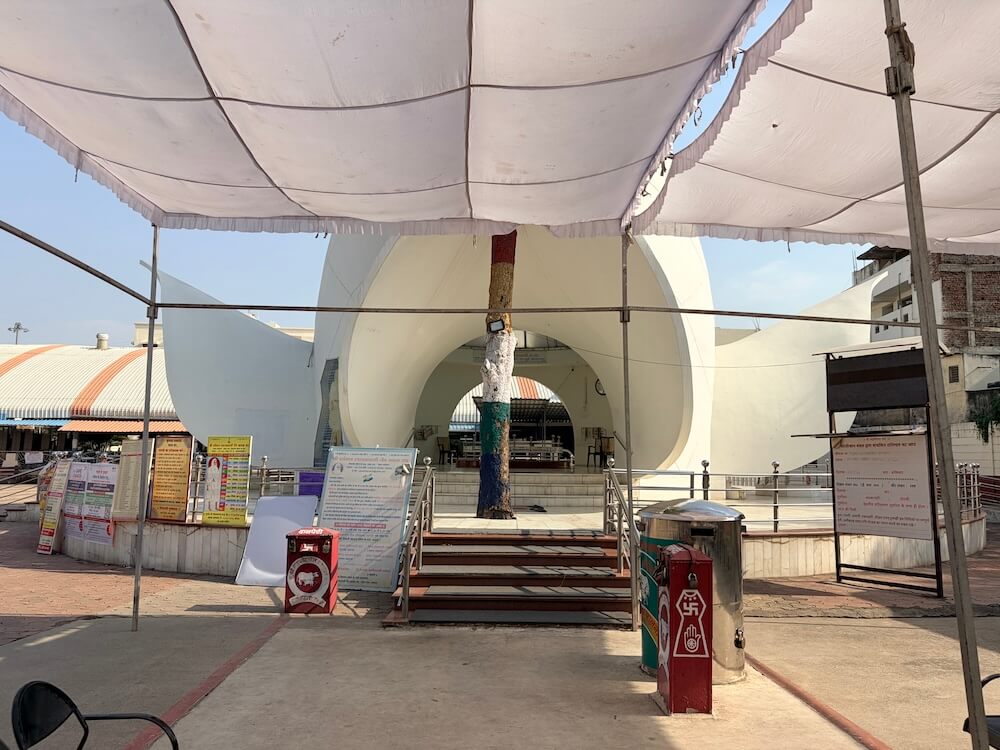
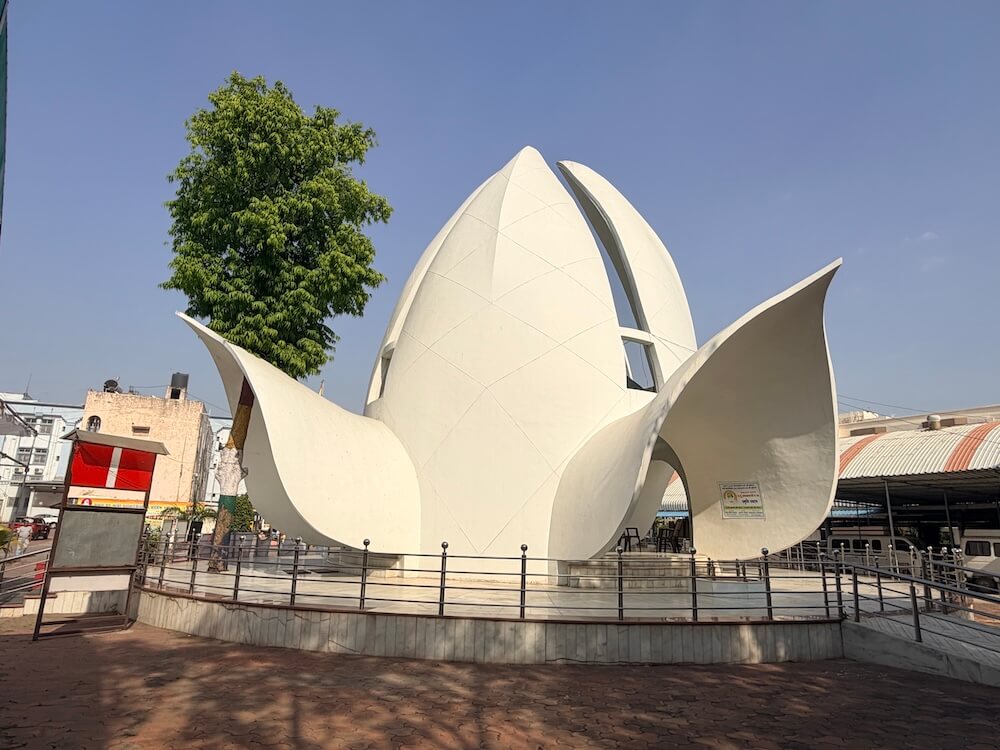
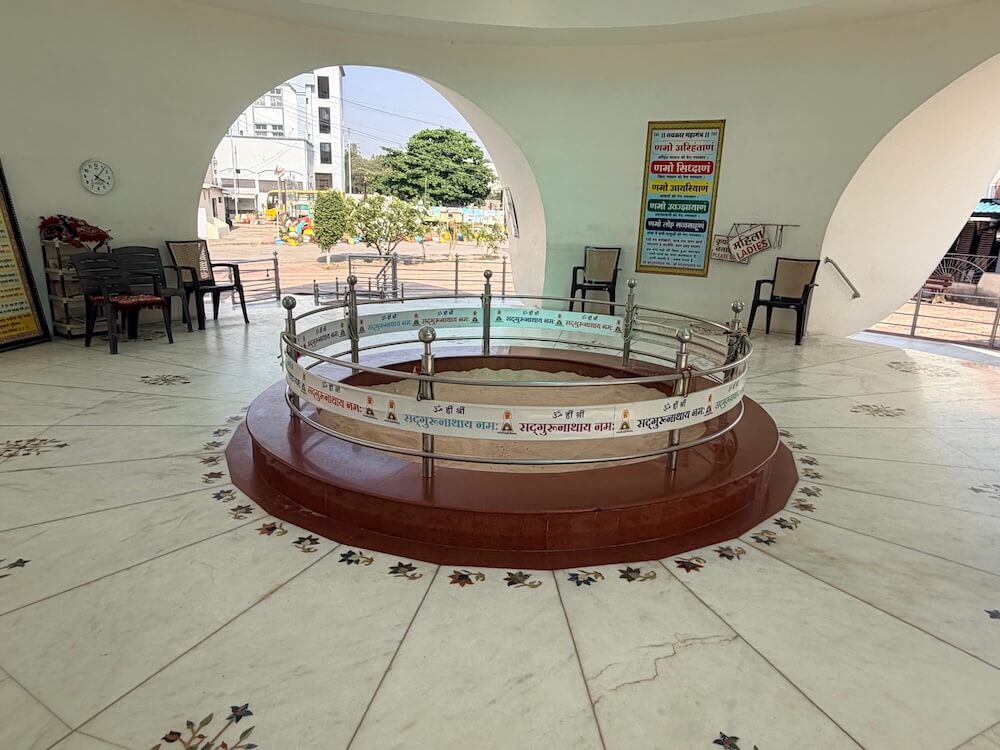
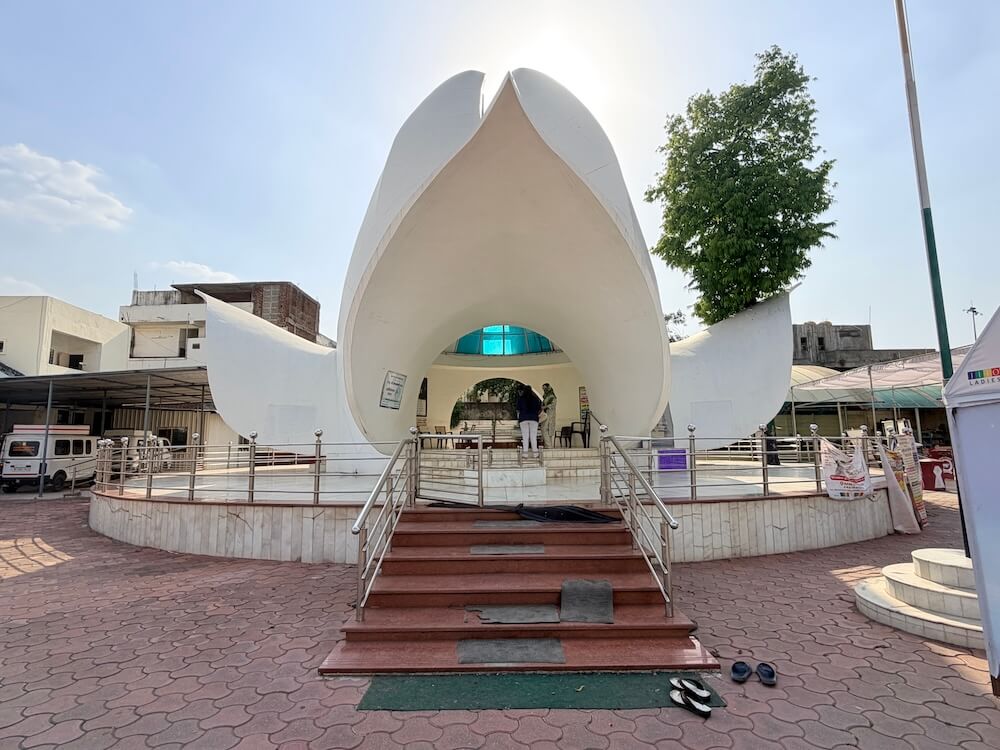
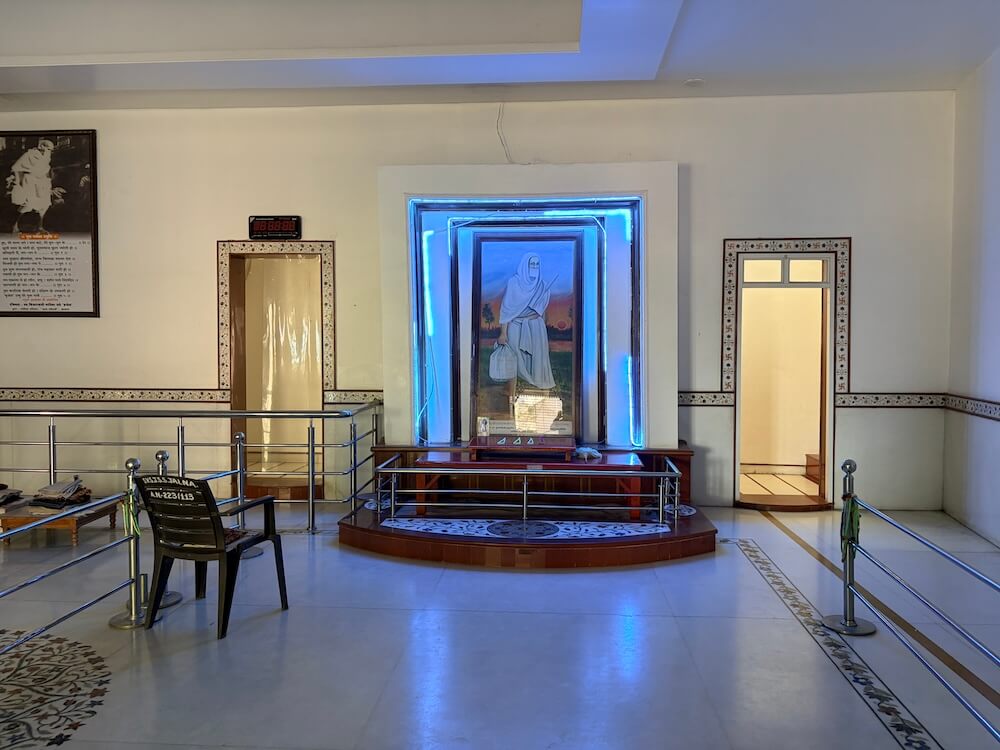
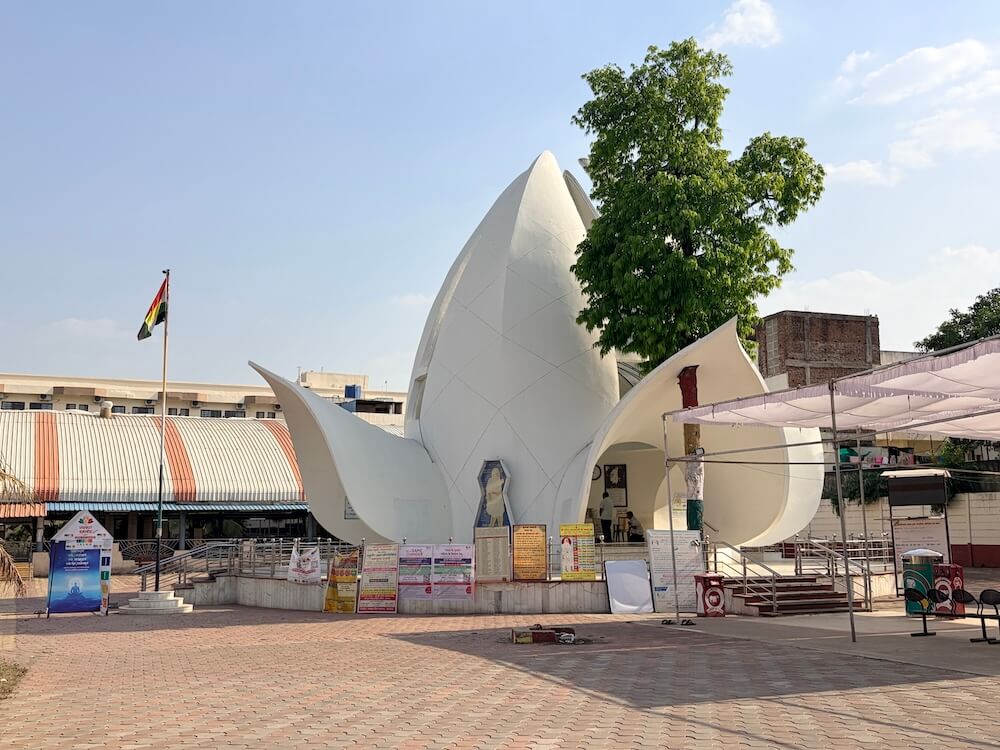
The architecture of Guru Ganesh Tapodham is a beautiful confluence of spiritual sanctity and modern grandeur. Located in the central part of Jalna district, this Tapodham is surrounded by a fortification wall. One enters the premises through a grand gateway in this wall. In the courtyard stands a magnificent, snow-white building of a unique style called ‘Agnisharan Dham’. This structure is a highly imaginative and distinct example of modern temple architecture. A unique blend of traditional Jain architectural style and modern ‘shell structure’ is seen here. While Indian temple architecture generally follows the Nagara or Dravidian style of shikhara and mandapa, a very effective use of ‘Symbolic Architecture’ has been made here. The entire structure is shaped like a blooming lotus, and in architecture, the lotus is considered a symbol of purity, detachment, and spiritual progress. The main dome of this building is formed by large lotus petals. In architectural terms, this is called an ‘Organic Form’. These petals are arranged in such a way that they curve upwards from the ground and meet in the center. The design of the entrance to the building is very distinctive. Instead of doorways, there is a large arch created between two petals. There are six steps paved with red granite stone to enter. A blue transparent glass is installed in the center of the ceiling of the main building. It is a technical arrangement made for the proper use of natural light. Due to this glass, natural light reaches the center inside the building. The interior of this building is completely pillar-less. The floor is covered with white marble stone, upon which intricate carvings of colored stones have been done. In the center of the building is a circular platform with a stainless steel railing. The sacred ashes and soil from the place where the last rites of the Jain saint Guru Ganeshlalji Maharaj were performed are safely preserved within this platform.
At Guru Ganesh Tapodham, numerous religious festivals are celebrated throughout the year. Mauni Amavasya (Magh Amavasya) is considered the grandest festival here. On this day, thousands of devotees from across the country arrive for darshan. On Mauni Amavasya, devotees engage in large-scale acts of charity and observe silence (maun) to perform spiritual practices (sadhana). Special darshan is organized here on the day of Amavasya. The ‘Paryushan Parv’, considered highly sacred in Jainism, is celebrated here with great enthusiasm. During these eight days, there is a large attendance at the Tapodham for fasting, discourses, and spiritual practices. On the day of Samvatsari, thousands of people seek forgiveness from one another and spread the message of non-violence (ahimsa). Additionally, various programs are organized on the occasions of Mahavir Jayanti and the Punyatithi of Guru Ganeshji. This Tapodham is open for darshan 24 hours a day.
This sacred temple stands as a testament to deep spiritual devotion, ancient architectural grandeur, and rich local cultural traditions.
The sanctum sanctorum houses the divine idol consecrated according to ancient Vedic traditions, surrounded by serene courtyards and traditional temple architecture.
Navratri, Maha Shivratri, Annual Temple Jatra & Deepotsav
Compare and book flights, secure top-rated local hotels near the temple, hire reliable guides, and rent cars instantly.
Extend your pilgrimage by visiting other highly sacred temples located nearby.


Add ₹999 more to unlock FREE SHIPPING!
Your sacred cart is currently empty.
Shop Photo FramesFill in your delivery details below to place your order.
Add comment