
Add ₹999 more to unlock FREE SHIPPING!
Your sacred cart is currently empty.
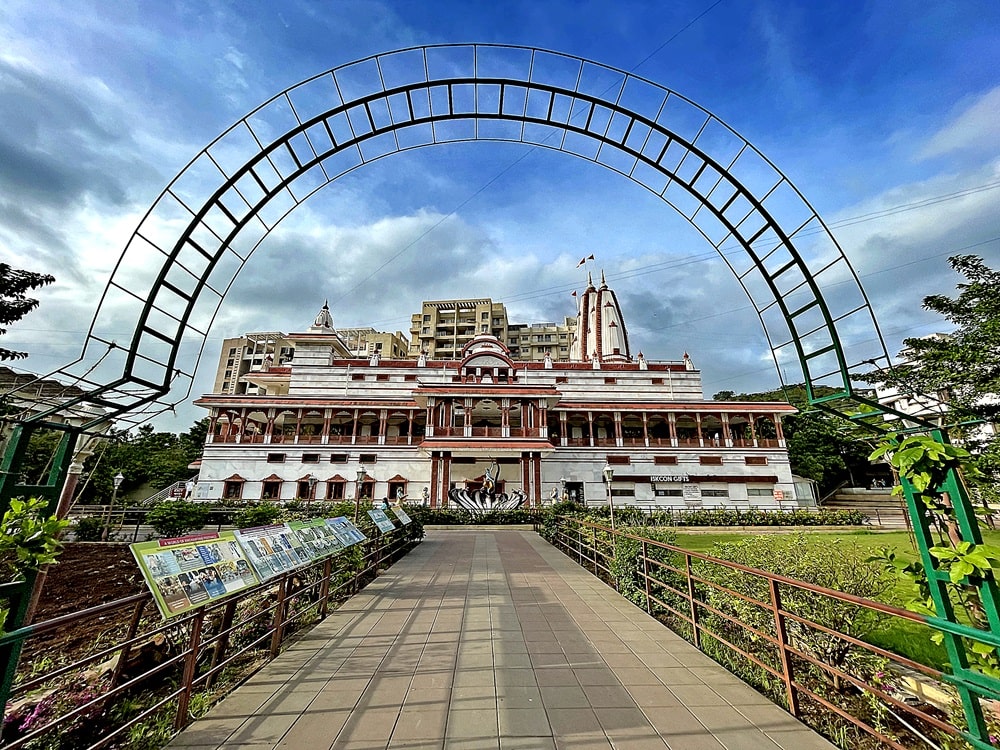
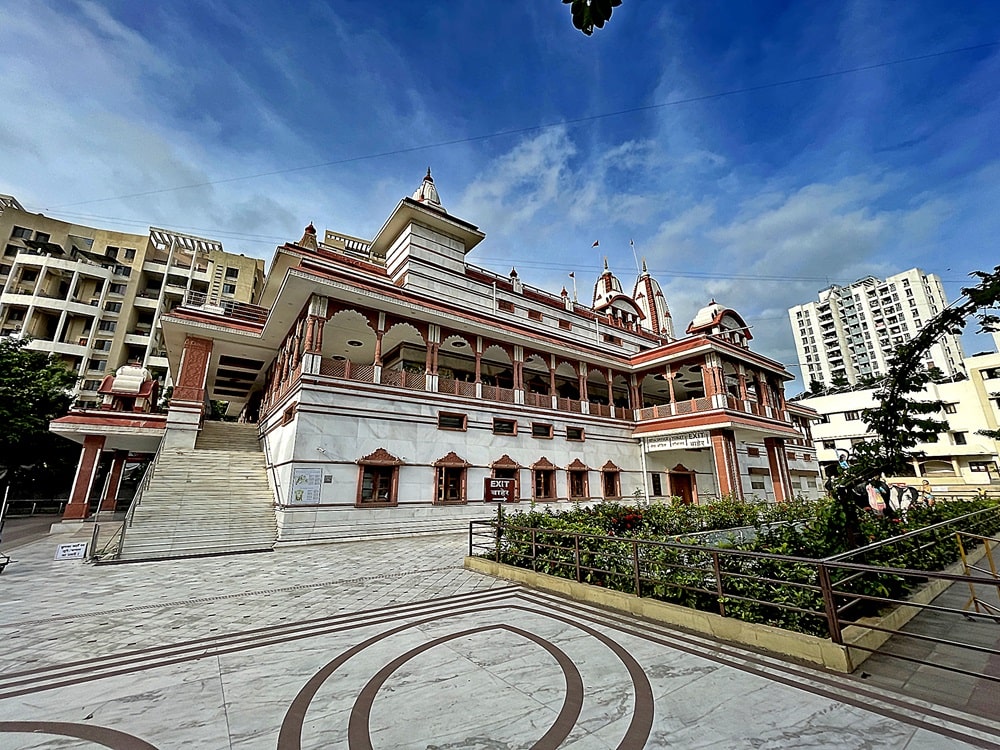
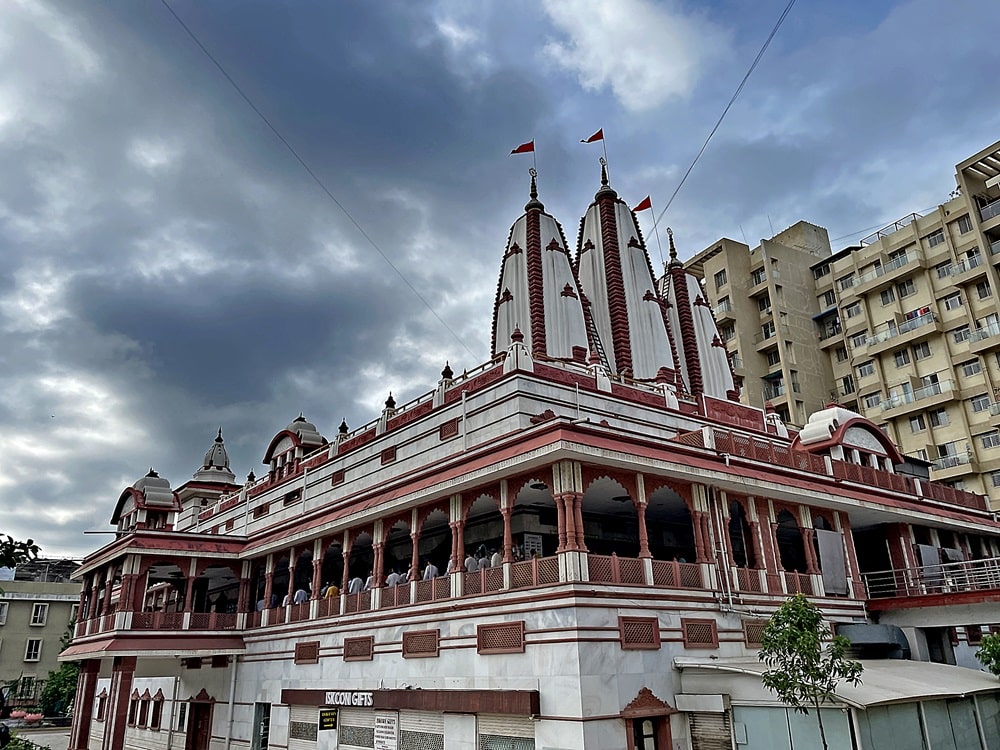
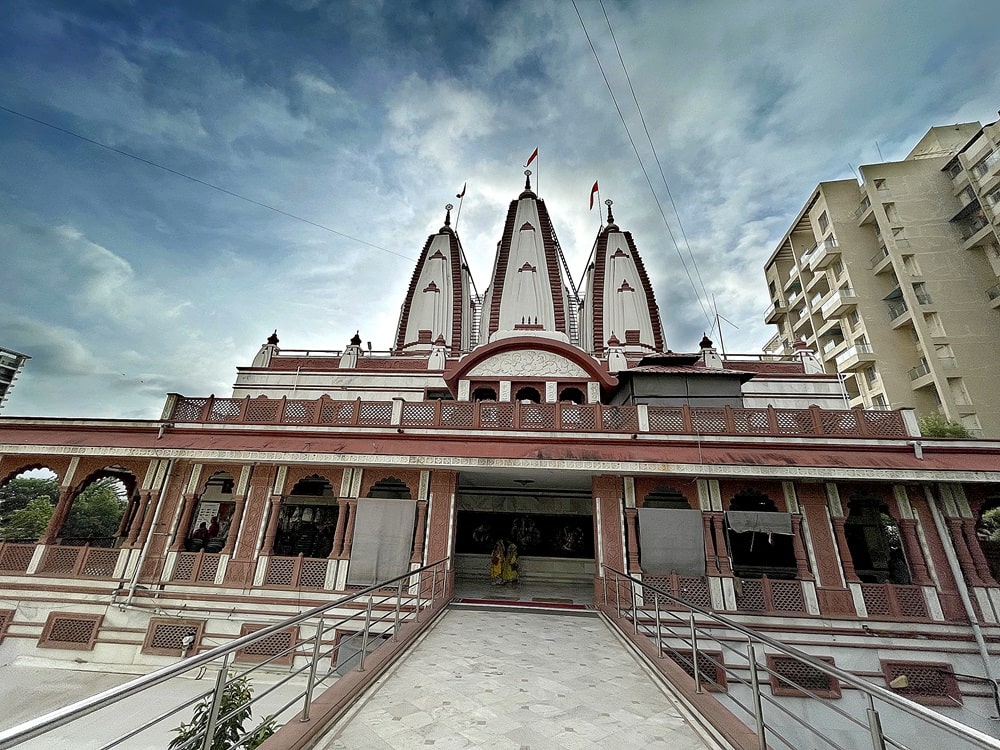
Shop Photo FramesThe ISKCON Temple located on the Katraj-Kondhwa Bypass in Pune is famous as the New Vedic Cultural Centre (NVCC). Inspired by the founder of ISKCON, A. C. Bhaktivedanta Swami Prabhupada, this structure was inaugurated in the year 2013 by the then President, Pranab Mukherjee. Spread over an area of approximately six acres, this temple, featuring distinctive carvings in white marble, houses two separate main shrines: Radha-Krishna and Venkateswara Balaji. Due to the serene atmosphere here, hundreds of devotees visit the temple premises daily for darshan and peace of mind.
The background of this temple in Pune city is linked to the global organization, the International Society for Krishna Consciousness, or ISKCON. Founded by A. C. Bhaktivedanta Swami Prabhupada to propagate the Gaudiya Vaishnava tradition, the main objective of this organization is to promote devotion to Lord Krishna and the philosophy of the Bhagavad Gita. Recognizing the need for such a large center in Pune, a plan was devised to develop the New Vedic Cultural Centre alongside the temple. The actual work on this structure began with the core idea of introducing people to Vedic values and spirituality.
The construction of this edifice began in the year 2003 and took about ten years to complete. The inauguration ceremony of this temple, built at an approximate cost of 40 crore rupees over a vast area of six acres, took place in 2013. Being one of the largest temples in Pune, this structure achieves a perfect blend of modern technology and traditional Indian temple architecture. Today, this temple has become an important place of faith for devotees in Pune.
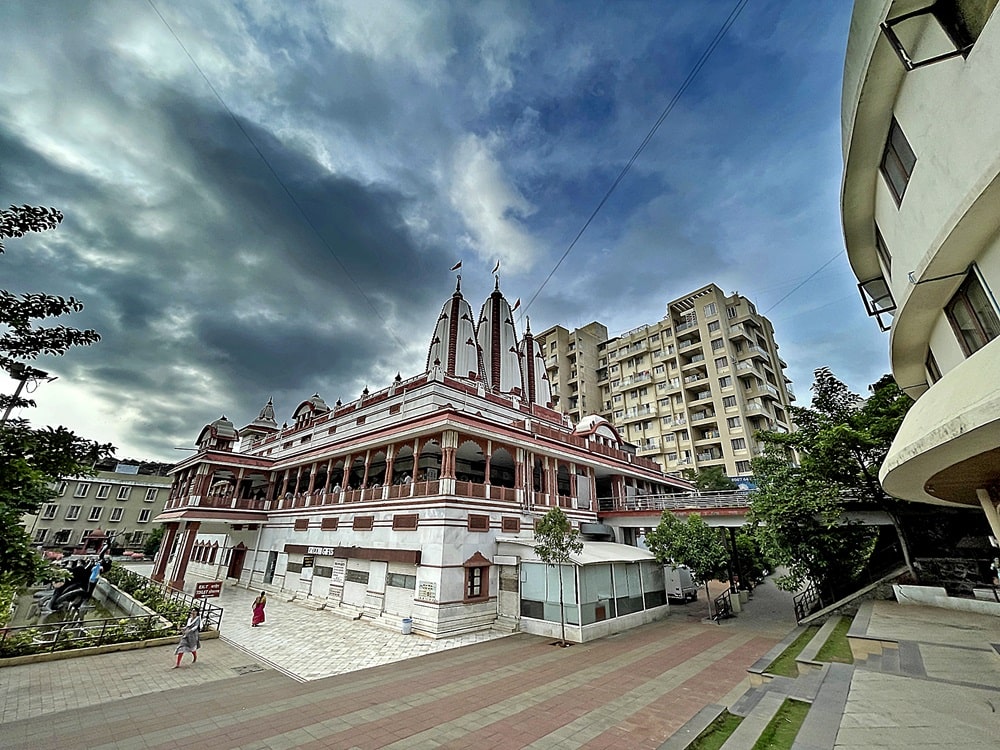
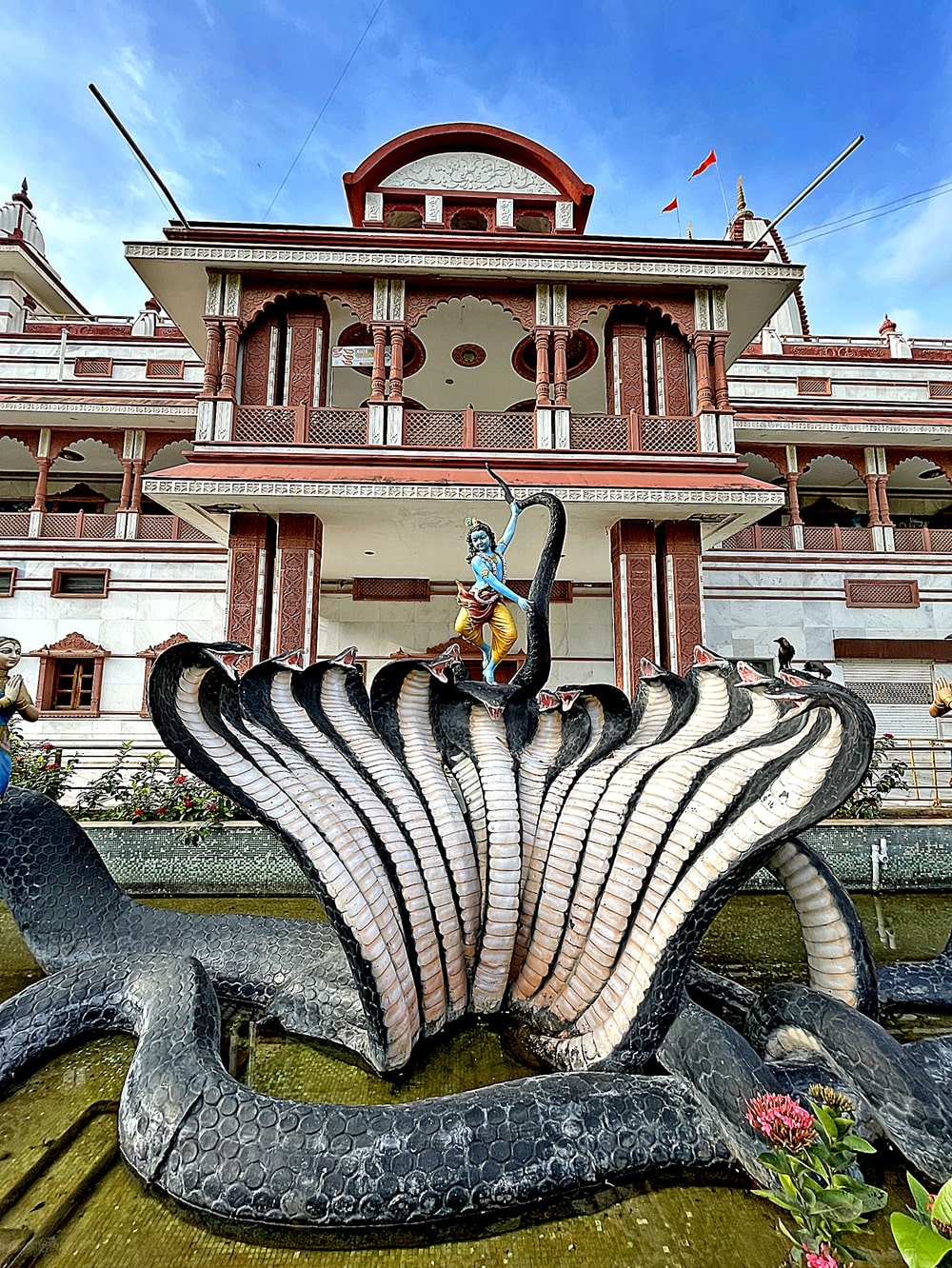
Upon entering the premises of this temple, which has a beautiful and spacious campus, one sees a five-story parking building. Along with facilities for parking hundreds of vehicles, there is a ‘Govinda’ restaurant run by ISKCON, a Bhakta Niwas (pilgrim guest house), and a store for spiritual books. There are three distinctive domes (meghadambaris) on the roof of the main entrance, which is decorated with ornate pillars and arched gateways. Upon entering through the gate, a goshala (cow shelter) is visible on the right side. The well-planned garden in the temple courtyard contains various types of ornamental plants and flowers, and flowers and Tulsi plants required for worship are cultivated separately here. In the courtyard in front of the temple, one can see a sculpture depicting the Kaliya Mardana episode.
This three-story structure, a fine example of architecture, is built using white marble stone and red sandstone. Images of Radha-Krishna are carved on the lotus-shaped shikhara (spire) of the temple. The influence of the North Indian style is clearly visible in the murals depicting various episodes from the life of Lord Krishna on the outer walls of the temple. Elephant figures are carved at the base of every pillar and wall, which feature intricate carvings. The electrical illumination of the marble structure at night adds to the external beauty of the temple.
Mythological sculptures are carved on the ceiling of the vast assembly hall (sabhamandapa) on the first floor of the temple. A large chandelier is installed in the center of the ceiling, and circular patterns are visible on the canopy. Upon entering the assembly hall, the idol of ISKCON founder Swami Prabhupada is installed on a throne directly in front. Due to the balcony structure above the ornate pillars, hundreds of devotees can sit and benefit from discourses or kirtans at the same time. In this quiet and serene assembly hall, space is available for devotees to meditate. This space is also used for social and religious gatherings.
In the front part of the assembly hall are the antarala (vestibule) and three sanctum sanctorum (garbhagrihas). Beautiful idols are seated in each sanctum, which has door frames with wooden carvings and niches. In the central main sanctum are the idols of Radha-Krishna, on the left are Shri Nityananda Prabhu and Shri Chaitanya Prabhu, and on the right are the idols of Shri Krishna, Subhadra, and Balarama. All these idols are decorated daily with various types of clothes and ornaments. The walls of the circumambulation path (pradakshina marg), which is outside the sanctum, depict the Krishna Leelas.
Behind the main Shri Krishna temple, at a slight elevation, is the temple of Shri Venkateswara, or Balaji. One has to climb fifty to sixty steps to reach this temple, which is built in the South Indian Dravidian style. The gopuram of this tall and ornate temple is arranged with finials (kalashas). Kota stone has been used in this construction, which is modeled after the temple in Tirupati. In the sanctum, which has a flagstaff (dhwajastambha) and Garuda Mandapa in front of the temple, is the four-armed idol of Lord Balaji. Abhishekam and worship rituals are performed here daily according to the Southern tradition. Experiencing two different regional temple styles in the same complex is a special attraction of this place.
Daily at 4:30 AM, Darshan Aarti is performed, and at 12:30 PM, Rajbhog Aarti is performed. The Namasankirtan held every evening to the accompaniment of mridangam and cymbals is a major attraction for devotees. Prasadam is distributed every afternoon to every devotee visiting the temple. Apart from religious activities, study classes on the Bhagavad Gita and Srimad Bhagavatam are held regularly here. The center organizes spiritual counseling for students, personality development for youth, and stress management camps for people in the corporate sector. This has made the temple a center of enlightenment as well as a place of devotion.
All major Hindu festivals throughout the year are celebrated with great enthusiasm in this temple. The largest and most beautiful decorations are made during the Janmashtami festival. Thousands of devotees come for darshan during festivals like Ram Navami, Govardhan Puja, Holi, and Dussehra. During festivals, cultural programs, bhajans, and discourses are organized here. The darshan timings for devotees are 4:30 AM to 11:55 AM and 4:30 PM to 8:45 PM.
This sacred temple stands as a testament to deep spiritual devotion, ancient architectural grandeur, and rich local cultural traditions.
The sanctum sanctorum houses the divine idol consecrated according to ancient Vedic traditions, surrounded by serene courtyards and traditional temple architecture.
Navratri, Maha Shivratri, Annual Temple Jatra & Deepotsav
Compare and book flights, secure top-rated local hotels near the temple, hire reliable guides, and rent cars instantly.
Extend your pilgrimage by visiting other highly sacred temples located nearby.


Add ₹999 more to unlock FREE SHIPPING!
Your sacred cart is currently empty.
Shop Photo FramesFill in your delivery details below to place your order.
Add comment