
Add ₹999 more to unlock FREE SHIPPING!
Your sacred cart is currently empty.
Shop Photo FramesLocated four kilometers from the village of Ghatnandra on the border of Khandesh and Marathwada, the Jogeshwari Devi Temple, nestled in the lap of the Ajanta hills, is particularly famous in the Chhatrapati Sambhajinagar district. This awakened (jagrut) pilgrimage site is considered a sub-shaktipeeth of Tulja Bhavani of Tuljapur. The Goddess is renowned for fulfilling the vows and desires of her devotees. It is said that this cave temple, carved out of a single monolithic rock, is contemporary to the Ajanta and Ellora caves. Devotees from across Maharashtra and other states visit here to seek the blessings of the Goddess. Jogeshwari Devi is considered the presiding deity (Kuldevata) of the Sillod taluka.
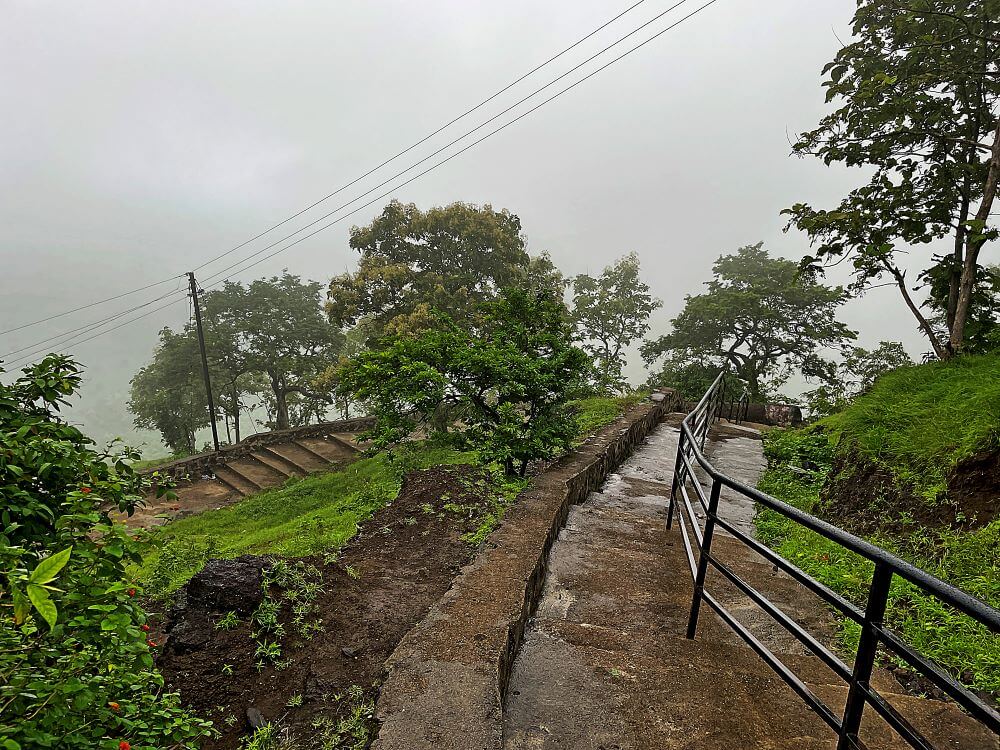
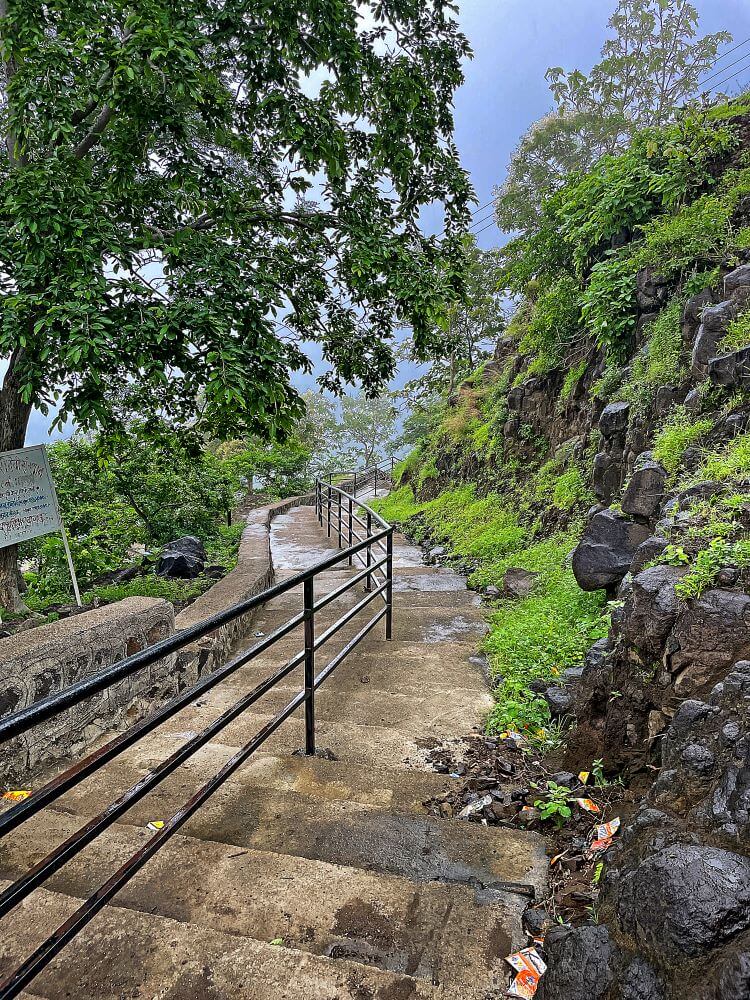
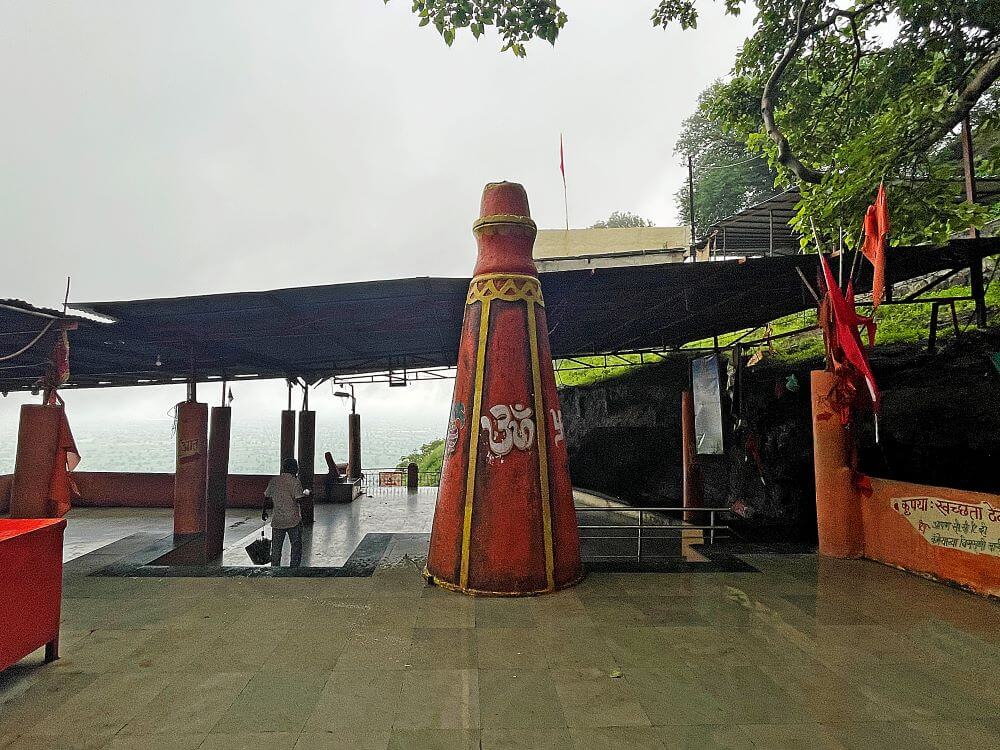
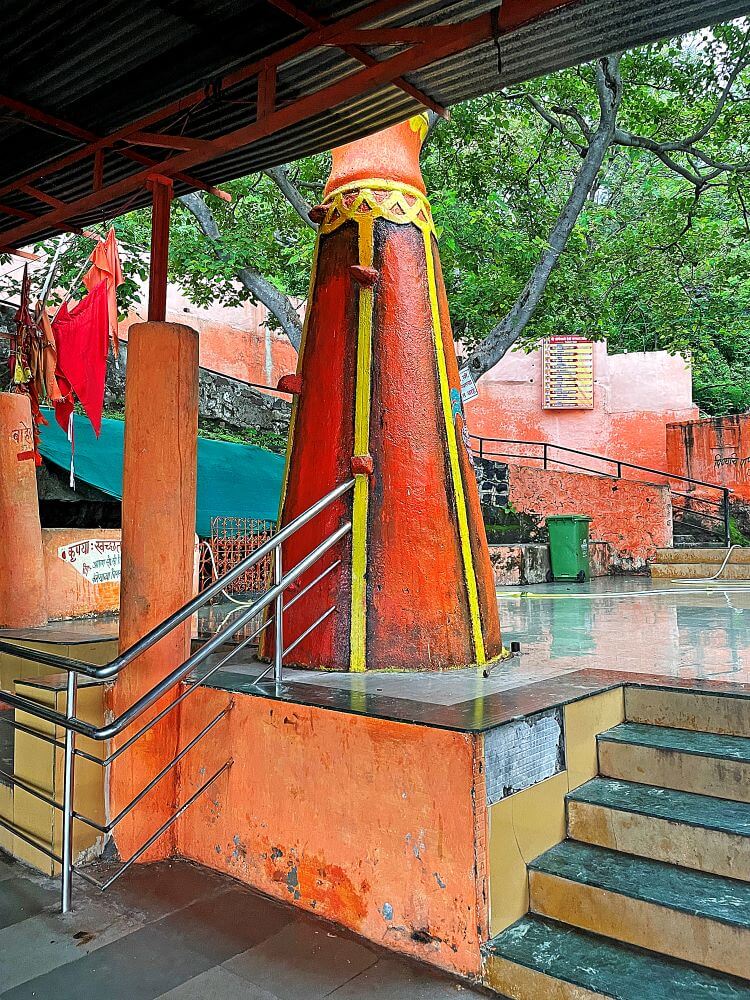
Situated to the north of Chhatrapati Sambhajinagar city and in the heart of the Ajanta hills, this temple is currently under the jurisdiction of the Archaeological Department. While coming from Ghatnandra, one has to descend half the mountain to reach the temple, whereas devotees coming from Khandesh have to climb half the mountain; stairs are provided for this purpose. The nature-rich surroundings look even more vibrant during the monsoon. A panoramic view of some villages in Khandesh can be seen from the temple premises. Being a scenic spot, this temple is also very popular among tourists. In the small courtyard of the temple stands an ancient 30-foot-tall lamp pillar (Deepmal). Descending four to five steps from this pillar, one enters the assembly hall (Sabhamandap) located outside the caves. A tin shed has been installed over this hall for the convenience of devotees.
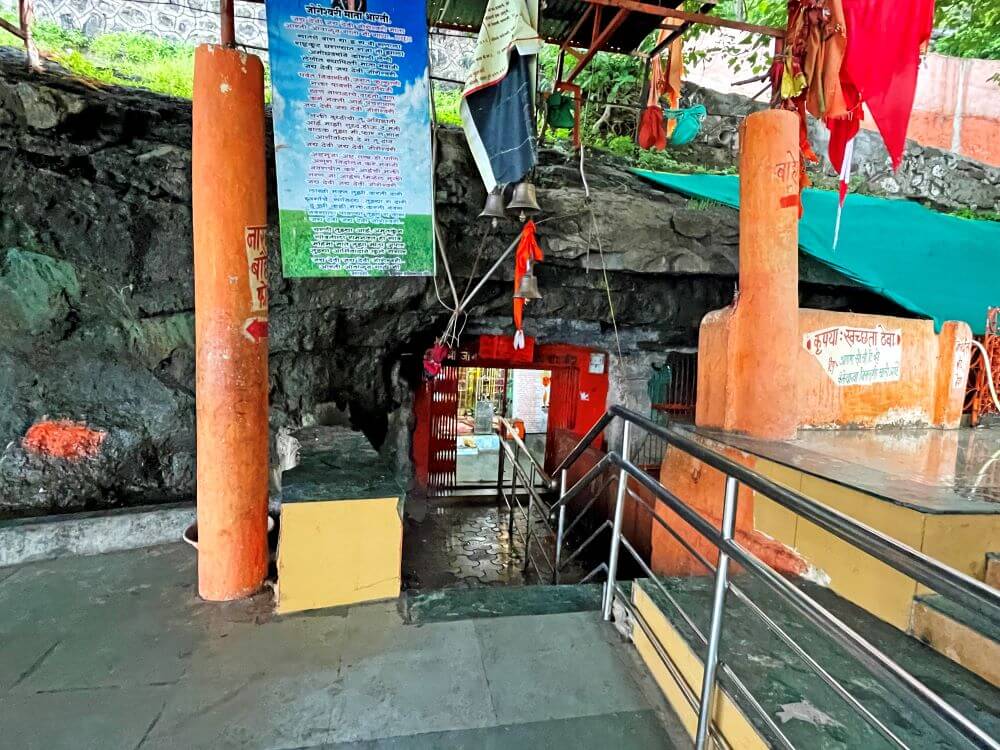
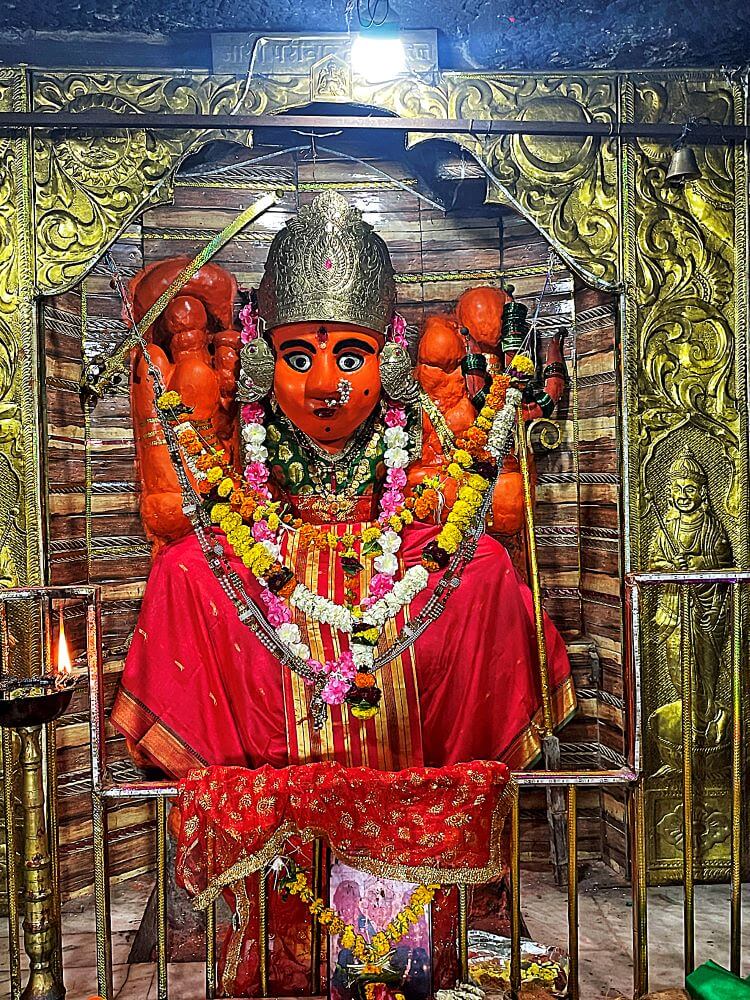
There are five steps to go down from the assembly hall into the temple located within the caves. The carved caves housing the Jogeshwari Devi temple are two-storied; the lower level contains a water body, while the upper level features the sanctum sanctorum (Garbhagriha) with the idol of the Goddess in front of the entrance, and an assembly hall adjacent to it. The water beneath the temple is used for drinking. The carved assembly hall of the temple measures 40 feet by 20 feet and features stone pillars with intricate carvings. On the outer side of the assembly hall, above the water tanks, there is an inscription in Pali language, resembling the Modi script, dating back to the Rashtrakuta period, carved into a stone approximately five feet high and two feet wide. In the sanctum sanctorum, there is a six-and-a-half-foot-tall idol of Jogeshwari Devi mounted on a tiger. The idol has eight arms, with each hand holding a weapon. This unique idol is carved directly into the solid wall of the mountain.
In the room to the left of the Goddess’s idol, there is a six-foot-tall carved idol of Shri Lakshmi. These caves also house carved idols of deities such as Shri Ram, Lakshman, Sita, Dattatreya, and Varaha. It is said that the army of Alauddin Khilji attempted to vandalize the idols here; however, the ancient idol of Jogeshwari Devi remains as it was.
At the Jogeshwari Devi temple, the daily rituals include Kakad Aarti at 6:00 AM, Panchamrit Abhishek and Mahapuja from 8:00 AM to 10:00 AM, Aarti, Mahanivedya and Aarti at 12:00 PM, and evening Aarti at 7:00 PM. Festivals such as Mahashivratri, Shri Ram Navami, Hanuman Jayanti, Gokulashtami, and Kojagiri Purnima are celebrated here. Fairs are held during Chaitri Navratri, Ashwin Navratri, and Kartiki Navratri. Thousands of devotees from Marathwada, Khandesh, various parts of the state, and even Gujarat visit during these festivals. In the cave to the right of the temple is the ancient temple of Dhareshwar Mahadev. There are seven rooms carved in front of these caves. Above the Jogeshwari temple, the temple trust has built a two-story Bhakta Niwas (pilgrim lodging) and a guest house for the convenience of devotees.
During the Nizam’s rule, Ghatnandra was a taluka headquarters and a major trading center. The road connecting Marathwada and Khandesh passed through these very hills. There used to be a customs checkpoint (Karodgiri Jakat Naka) here, and some of its ruins can still be seen in the upper part of the temple area. An attempt was made to carve caves in the area to the left of the temple, but the work was left incomplete because the stone was of poor quality. Horses were tied here in the past. These caves, known as ‘Ghod Tabela’ (Horse Stable), are used by devotees for accommodation and as a kitchen during the monsoon.
This sacred temple stands as a testament to deep spiritual devotion, ancient architectural grandeur, and rich local cultural traditions.
The sanctum sanctorum houses the divine idol consecrated according to ancient Vedic traditions, surrounded by serene courtyards and traditional temple architecture.
Navratri, Maha Shivratri, Annual Temple Jatra & Deepotsav
Compare and book flights, secure top-rated local hotels near the temple, hire reliable guides, and rent cars instantly.
Extend your pilgrimage by visiting other highly sacred temples located nearby.


Add ₹999 more to unlock FREE SHIPPING!
Your sacred cart is currently empty.
Shop Photo FramesFill in your delivery details below to place your order.
Add comment