
Add ₹999 more to unlock FREE SHIPPING!
Your sacred cart is currently empty.
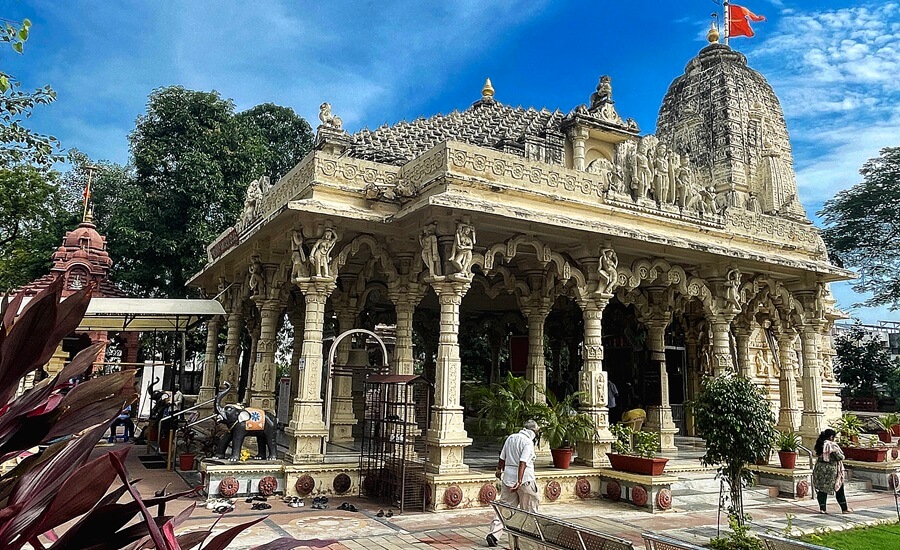
Shop Photo FramesThe Kashi Vishwanath Mahadev Temple is considered one of the prominent spiritual landmarks in Vadodara, a city that flourished as a cultural capital during the reign of Maharaja Sayajirao Gaekwad III. Inspired by Swami Chidanand Saraswati, the temple has a history of over 130 years and is constructed in the Nagar architectural style. Devotees believe that the Shivalingas of Kashi Vishwanath and Somnath Mahadev, discovered in the Narmada riverbed, are divinely awakened (Jagrut), attracting numerous devotees daily.
Sayajirao Gaekwad III ascended the throne of Baroda in 1875 and is still remembered for his progressive governance. Under his rule, the city attracted scholars, artists and scientists from across the country. Among them was Swami Chidanand Saraswati, a religious scholar born on Chaitra Shuddha Navami in 1839 in Kinhpur, Faizabad district, Uttar Pradesh. His father was Pandit Gaganprasad Purohit. Spiritually inclined from childhood, Chidanand received mantra initiation at age 20 from Pandit Umadattji and during his pilgrimages, he arrived in Vadodara in 1882.
Initially, he stayed at the Kabir Panthi Sadhu Balkadas’s temple in Sayajibaug and later moved to Hariba Dada’s garden in Kuwad, where he practiced yoga and meditation. His spiritual fame spread and even Radhabai, wife of Maharaja Ganpatrao Gaekwad, regularly visited him. Eventually, Swami Chidanand settled at the current site of Kashi Vishwanath Temple, where he first built a small hut (today, the site of a Ganesh temple). Jamanabai Saheb, the adoptive mother of Sayajirao Gaekwad, was also his devotee. A daily meal was sent from the royal palace for him.
It is said that one day while bathing in the Narmada River, Swami Chidanand found a Shivalinga, which he consecrated in an open area – now known as Somnath Mahadev Temple, within the Kashi Vishwanath Temple premises. About five years later, he discovered another bright and radiant Shivalinga in the Narmada, similar to the one in Kashi Vishwanath Temple in Varanasi and named it Kashi Vishwanath.
He expressed the desire to build a grand temple for it. Accordingly, on Phalguna Shuddha Dwadashi (Monday), in 1892 AD, during Sayajirao’s reign, the Kashi Vishwanath Temple was established. The temple complex came to be known as Anand Dham. Swami Chidanand Saraswati also founded a trust on April 15, 1930, which manages the temple today. The temple was renovated in 1989.
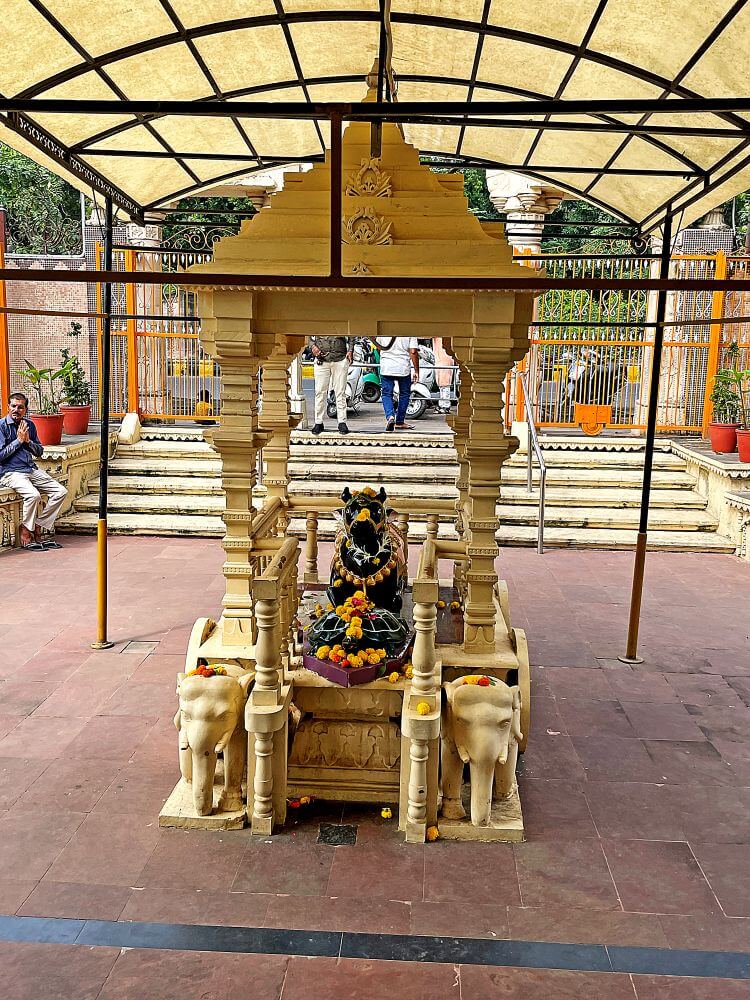
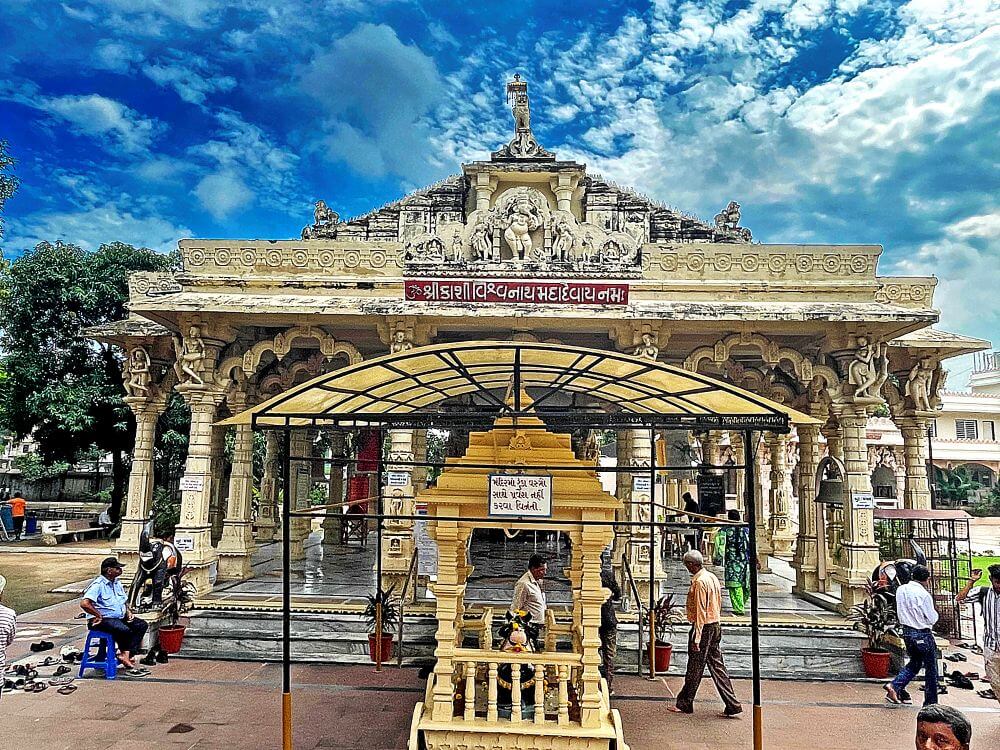
The temple premises have two entrances. At the base of the ornately carved main entrance pillars, there are sculptures of gatekeepers (dwarapalas). A small pavilion on the roof houses a statue of Nataraja (dancing Shiv). Descending five steps leads you to the temple courtyard, where a white marble Nandi Mandap, shaped like an elephant chariot, holds black stone idols of Nandi and a tortoise.
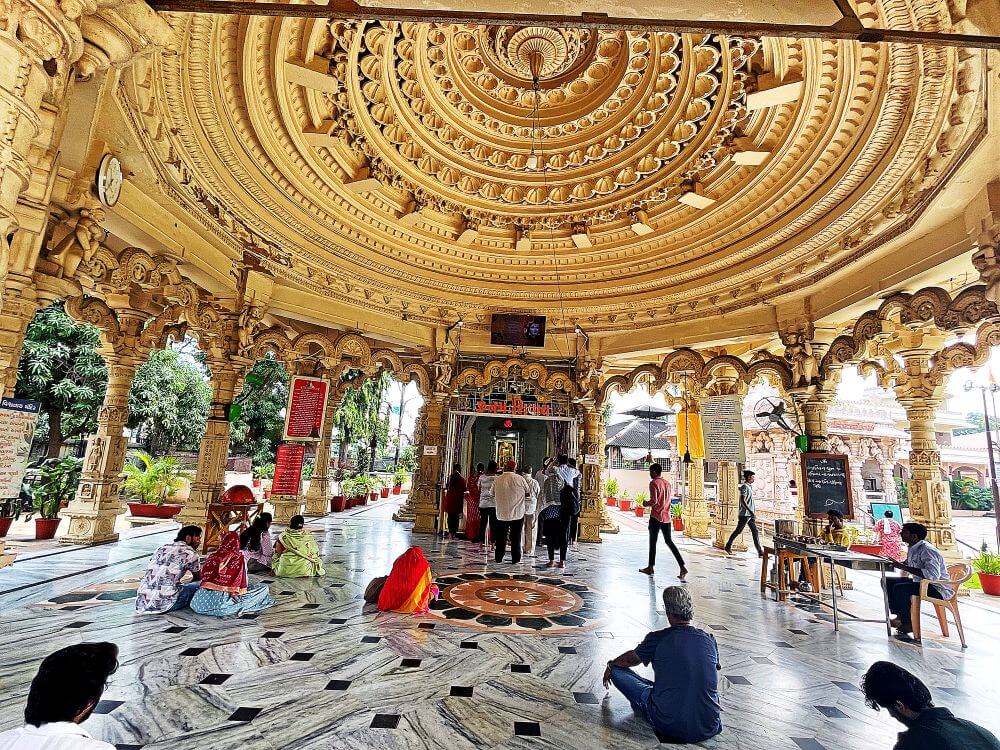
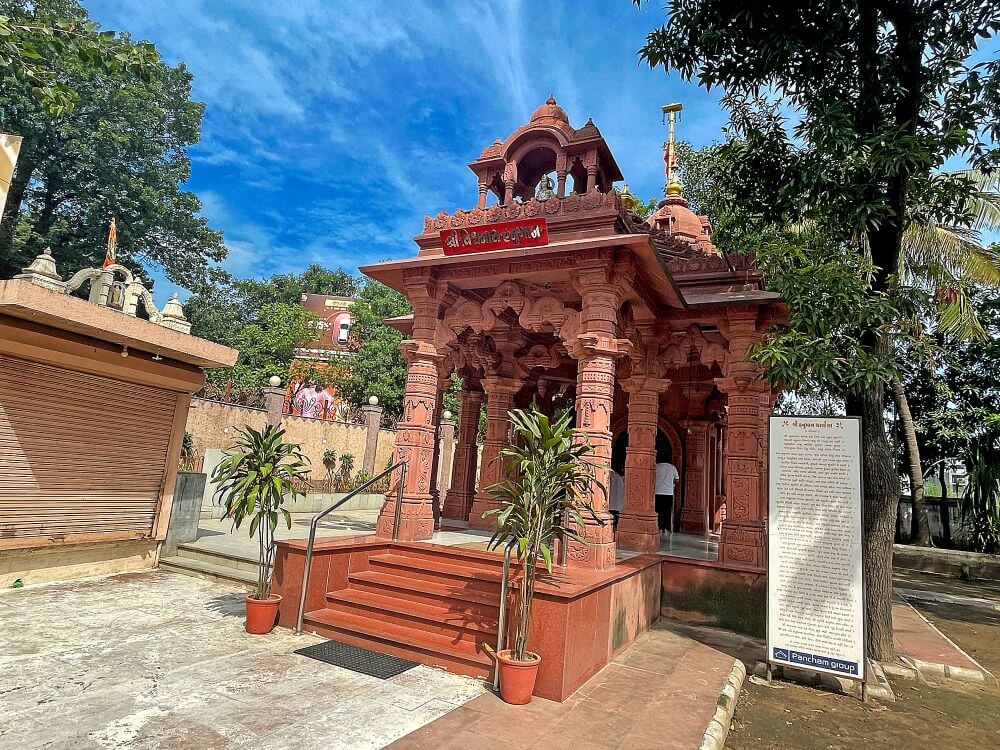
The main temple is built from Rajasthani red stone on a high platform and includes a darshan mandap (viewing hall), sabhamandap (assembly hall), antaral (antechamber) and garbhagriha (sanctum sanctorum). The open sabhamandap has a dome-shaped spire formed of many smaller spires, topped with an amalaka and a golden kalash. The sanctum’s spire is in Dravidian style, featuring smaller replicas on its four sides and a large golden kalash at the top. On the parapet of the roof, a sculpture of Ganesh and a lion can be seen. To the left, statues of Shri Ram, Lakshman, Seeta and Hanuman are installed. The pillars of the darshan and sabhamandap are intricately carved, featuring Makara Toranas and celestial maiden (surasundari) motifs.
At the base of the steps, on both sides of the railings, are sculptures of elephants (Gajarajas), symbols of wealth and power. The dome ceiling of the sabhamandap is also adorned with exquisite carvings.
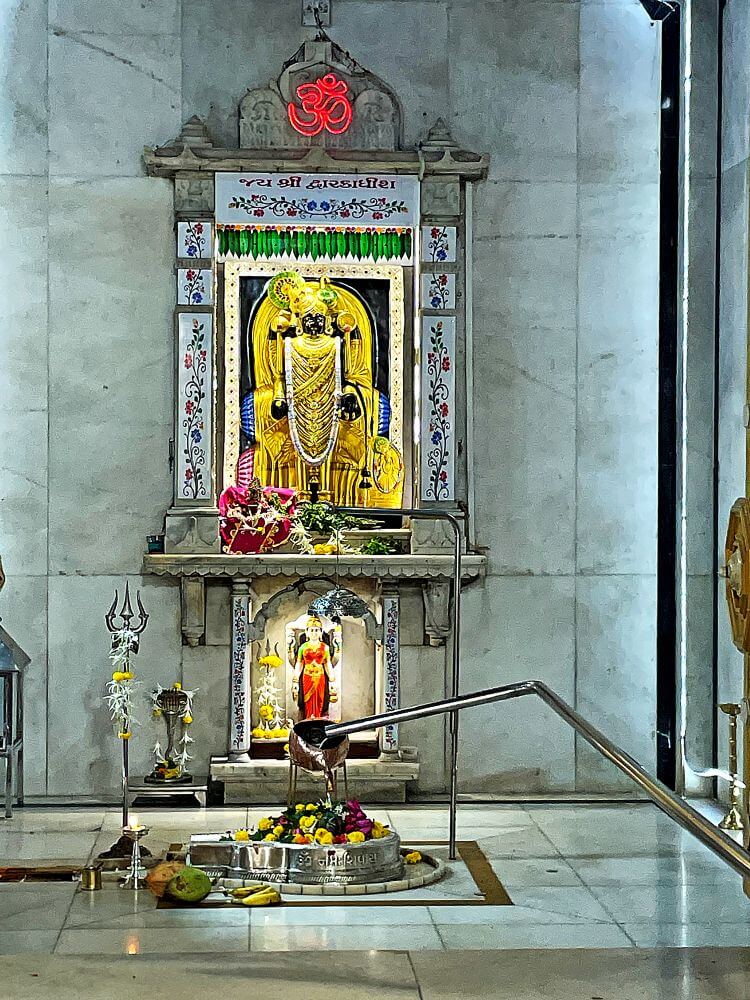
Inside the anteroom, there are marble idols of Ganesh and Hanuman. At the sanctum entrance, there is a Kirtimukha motif on the threshold and a vermilion-coated Ganesh idol above the doorway. The sanctum features white marble flooring with a silver-plated base (Shalunka) housing the Kashi Vishwanath Shivalinga. A special abhishek pot with a steel pipe allows offerings from outside the sanctum to pour onto the linga. A silver umbrella sits above the linga. Behind it, in a niche on the rear wall, stands a four-armed marble idol of Parvati and above it, a black stone idol of Dwarkadhish Krishna, adorned in golden garments.
The outer walls of the sanctum are embellished with carvings of various deities and notably, some erotic sculptures are included, following ancient temple tradition.
Within the temple premises, there are also shrines dedicated to Vishwanath Hanuman, Vishwanath Ganesh and Somnath Mahadev, all constructed in red stone. These temples are beautifully adorned with intricate carvings, featuring a variety of sculptures and idols.
The shikhara (spire) of the Somnath Mahadev Temple is conch-shaped and the temple roof is decorated with multiple conch motifs. The assembly hall (sabhamandap) of this temple is open in design, with elegantly carved pillars. Inside, there is an idol of Nandi and at the centre, a Shivalinga is installed on a traditional base (shalunka). Behind the Shivalinga, on the wall, is an idol of Goddess Parvati and on the wall to the right of the shrine are replicas of the twelve Jyotirlingas.
Additionally, the temple complex houses the samadhi shrines (memorials) of Swami Chidanand Saraswati and Brahmachari Vallabhram Sharma. It also includes a Goshala (cow shelter), a Yagyashala (ritual hall) and a Vishram Bhavan (rest house). Various religious rituals like Laghu Rudra and Grah Shanti are regularly conducted in the Yagyashala.
Many devotees visit the temple daily for darshan of Kashi Vishwanath Mahadev. During Maha Shivaratri, the temple is crowded with thousands of devotees. In the month of Shravan, large numbers of worshippers come especially on Saturdays and Mondays. The temple trust makes arrangements for accommodation and meals for visiting pilgrims and monks.
This sacred temple stands as a testament to deep spiritual devotion, ancient architectural grandeur, and rich local cultural traditions.
The sanctum sanctorum houses the divine idol consecrated according to ancient Vedic traditions, surrounded by serene courtyards and traditional temple architecture.
Navratri, Maha Shivratri, Annual Temple Jatra & Deepotsav
Compare and book flights, secure top-rated local hotels near the temple, hire reliable guides, and rent cars instantly.
Extend your pilgrimage by visiting other highly sacred temples located nearby.


Add ₹999 more to unlock FREE SHIPPING!
Your sacred cart is currently empty.
Shop Photo FramesFill in your delivery details below to place your order.
Add comment