
Add ₹999 more to unlock FREE SHIPPING!
Your sacred cart is currently empty.
Shop Photo FramesIn the Ahilyanagar district, there is a village where the son-in-law who marries a girl from the village is worshipped and hosted by all the villagers. There is a significant reason for this. Nevasa Budruk in Nevasa Taluka is the maternal home of Mhalsai, the wife of Lord Khandoba. Mhalsai was born in this very village, making Lord Khandoba the son-in-law of this village. Since then, the tradition of worshipping the son-in-law has been practiced in this village to this day. The ancient temple of Shri Khandoba-Mhalsai, situated on the banks of the Amrutvahini Pravara River in Nevasa Budruk, is the presiding deity of the village and a place of faith for thousands of devotees.
According to the eighth canto of the Shrimad Bhagavata Mahapurana, Khandoba is an avatar of Lord Shiva, and in this avatar, he had two wives, Mhalsai and Banai. Mhalsai was his first wife. Mhalsai is also known as Jogeshwari and Bhairavi. She is also famous as the Mohini avatar. During the churning of the ocean (Samudra Manthan), to obtain the nectar from the demons, Lord Vishnu assumed the form of Mohini (a beautiful woman) and attracted the demons towards himself. Captivated by Mohini’s beauty, the demons handed over the pot of nectar to the Vishnu-roopi Mohini, which allowed all the gods to consume the nectar. However, at that time, the gods were also enchanted by the divine form of Mohini.
One day, Lord Mahadeva insisted that Lord Vishnu show him the Mohini form, but Lord Vishnu refused. However, Mahadeva would not listen. Eventually, Lord Vishnu assumed the Mohini form again for Mahadeva. Seeing that form of Mohini, Mahadeva was also captivated by her. At that moment, Mohini entered the body of Goddess Parvati. Seeing Parvati in the form of Mohini, Mahadeva named her Mhalsa. When Mahadeva was attracted to the Mohini form, she promised him that in the future, when he would incarnate on Earth as Martand Bhairav, she would incarnate as Mhalsa and become his wife.
A wealthy Lingayat Vani named Timsheth lived in Nevasa Budruk. He had no children. Timsheth was a devout follower of Lord Mahadeva. Mahadeva suggested to Mhalsai that she should be born in the house of this couple. One day, while Timsheth was engrossed in worship, Goddess Parvati appeared before him. Goddess Parvati asked Timsheth to close his eyes. When Timsheth closed his eyes, the Primordial Mother Parvati took the form of a baby and began to cry. Timsheth named this girl Mhalsa. When she came of age, one night, Lord Mahadeva appeared in Timsheth’s dream and told him to arrange Mhalsa’s marriage with Khandoba. As per Lord Mahadeva’s instructions, the marriage of Khandoba and Mhalsa took place on Paush Purnima at Pali in the present-day Satara district. Even today, every year on the day of Paush Purnima, the wedding of Shri Khandoba and Mhalsa is celebrated with royal grandeur in the presence of lakhs of devotees at Pali in Satara district. It is recorded that five to seven lakh devotees attend this ceremony.
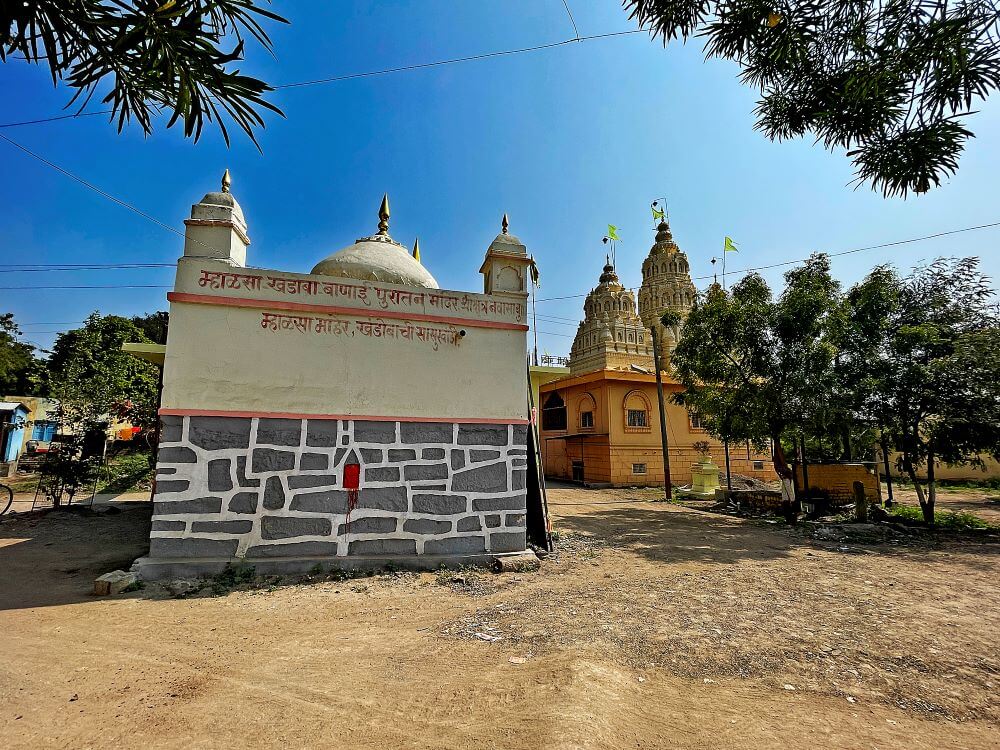
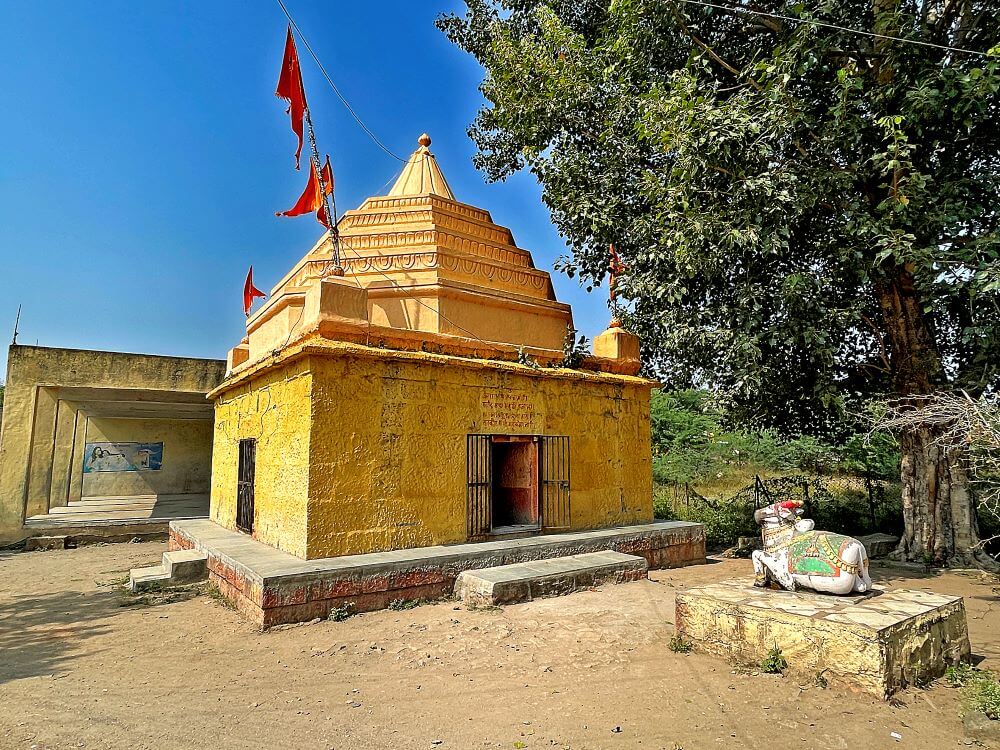
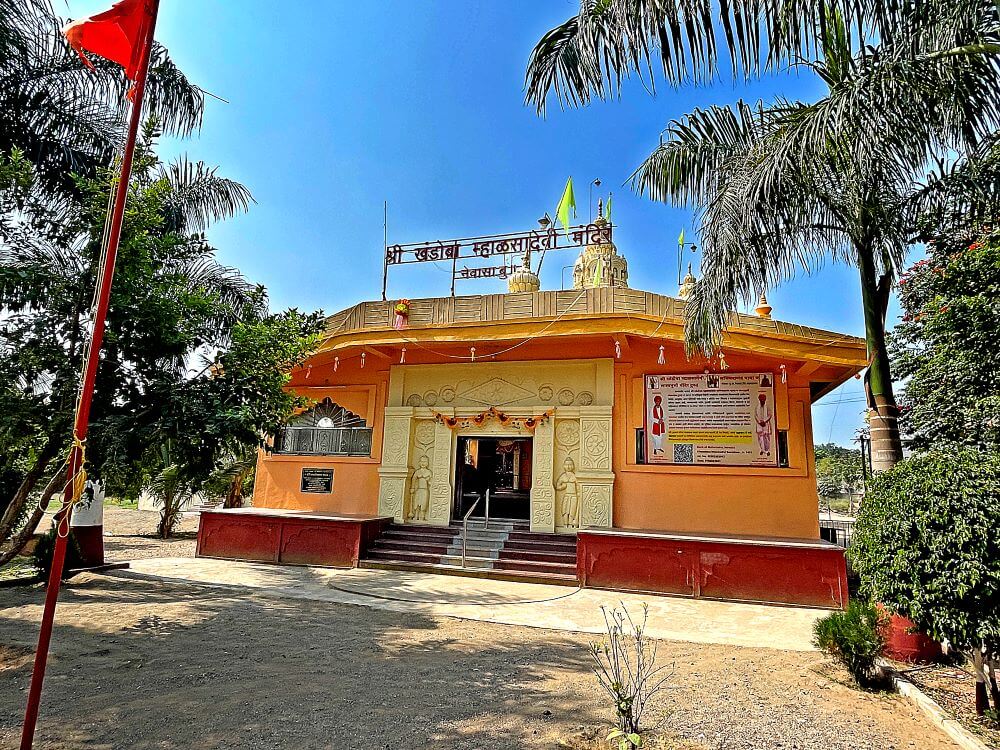
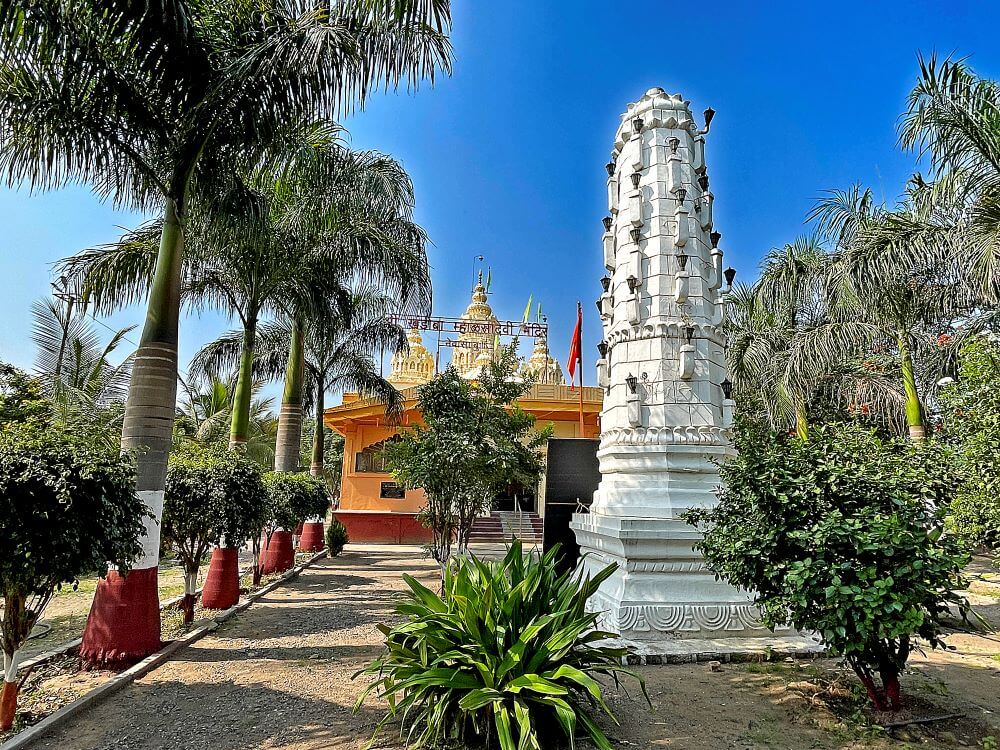
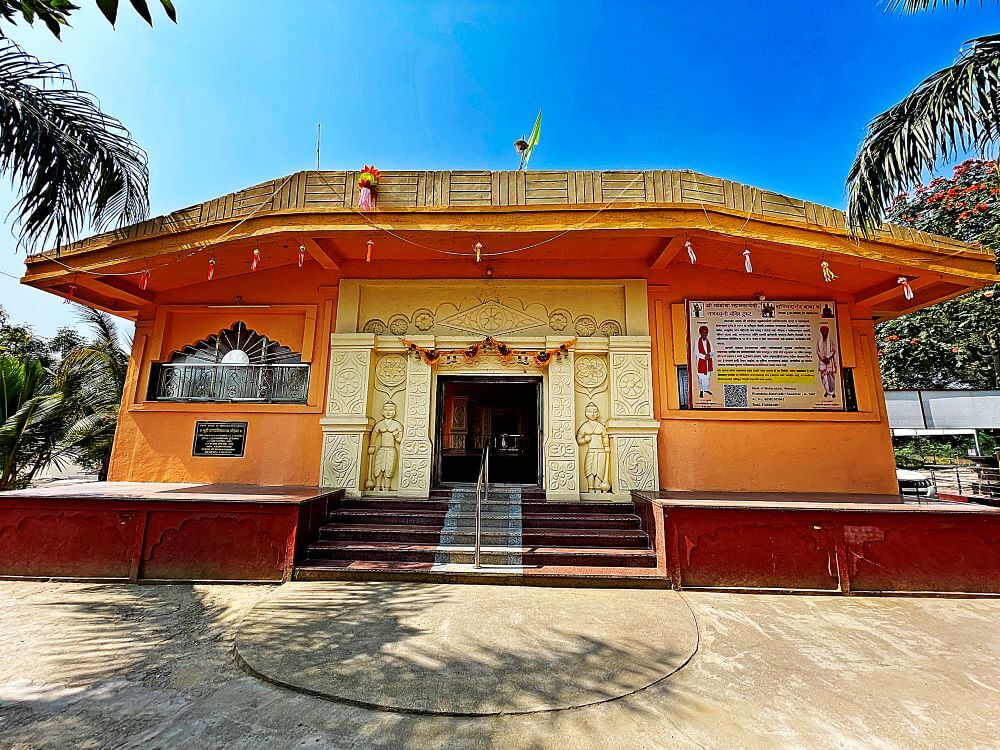
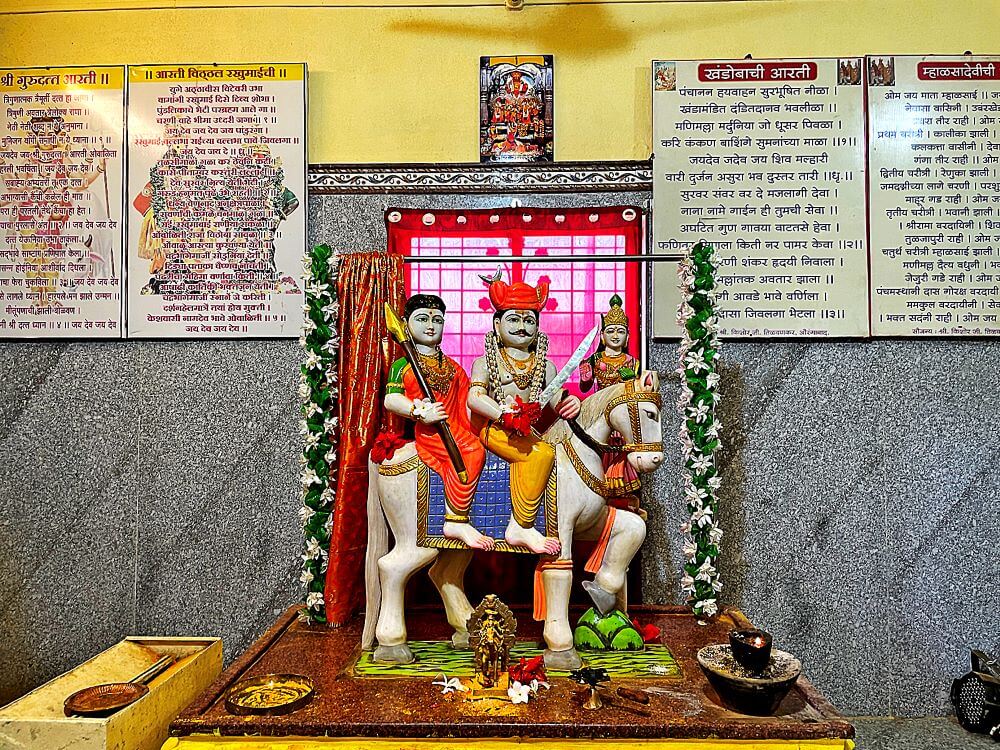
The village of Nevasa Budruk, the birthplace of Mhalsai, is known as Mhalsapuri. There is an ancient, small temple here dedicated to Shri Khandoba, Mhalsai, and Banai. In the sanctum sanctorum of this stone-built temple, there are idols of Shri Khandoba in the center, Mhalsai on the right, and Banai on the left. Outside the temple, there are sculptures of Shankar-Parvati and other ancient idols. A few years ago, the villagers built a new temple adjacent to the original one. This new temple has been constructed in front of a beautiful garden created along the banks of the Pravara River. There is a tall lamp post (Deepmal) in front of the temple entrance. The temple entrance, which is four to five feet above the ground, has sculptures of gatekeepers (Dwarpal) on both sides. The assembly hall (Sabhamandap) of the temple is spacious, and the temple has three sanctums, each topped with a spire (Kalash). In the central sanctum, there are idols of Khandoba riding a horse, with Mhalsai and Banai beside him. The sanctum on the right houses three idols: Narad Muni in the center, Shri Dattatreya on the right, and Shri Ganesha on the left. The sanctum on the left houses the idol of Sachidanand Maharaj. It was Sachidanand Maharaj who wrote down the Dnyaneshwari as it was recited by Saint Dnyaneshwar while leaning against the Pais pillar in Nevasa.
It is said that on the day of Champashasthi (Margashirsha Shukla Shashthi), Khanderaya arrives at this place in Nevasa for a stay. Since then, the son-in-law of the village is given special honor on the day of Champashasthi. A fair is held here on this day. The lamps here are lit using the eternal flame brought from Jejuri. The offering (Naivedya) of Khandeshi eggplant bharta and bajra bhakri is offered to Khandoba, and Mahaprasad is distributed to the visiting devotees. The six-day festival of Khandoba, or Malhari Deva, begins on the first day of the month of Margashirsha. Khandoba defeated the two demons Mani and Malla and liberated the people from distress. This festival is celebrated to commemorate this event. The festival lasts from Margashirsha Shukla Pratipada to Margashirsha Shukla Shashthi. Along with Jejuri, this festival is celebrated with great grandeur and devotion at many of Khandoba’s pilgrimage sites.
This sacred temple stands as a testament to deep spiritual devotion, ancient architectural grandeur, and rich local cultural traditions.
The sanctum sanctorum houses the divine idol consecrated according to ancient Vedic traditions, surrounded by serene courtyards and traditional temple architecture.
Navratri, Maha Shivratri, Annual Temple Jatra & Deepotsav
Compare and book flights, secure top-rated local hotels near the temple, hire reliable guides, and rent cars instantly.
Extend your pilgrimage by visiting other highly sacred temples located nearby.


Add ₹999 more to unlock FREE SHIPPING!
Your sacred cart is currently empty.
Shop Photo FramesFill in your delivery details below to place your order.
Add comment