
Add ₹999 more to unlock FREE SHIPPING!
Your sacred cart is currently empty.
Shop Photo FramesPajpandhari, a village located near the Harnai port in Dapoli taluka, is situated along the seashore. The livelihood of many families in this village depends on the sea. The Shri Ram Temple, located in the Prabhu Ali of Pajpandhari, is the village deity and a place of faith for thousands of devotees. Ram Navami is the biggest festival here. For this festival, not only is the Shri Ram Temple and the entire village decorated, but the sea, upon which their livelihood depends, is also adorned with flags and banners placed at various spots.
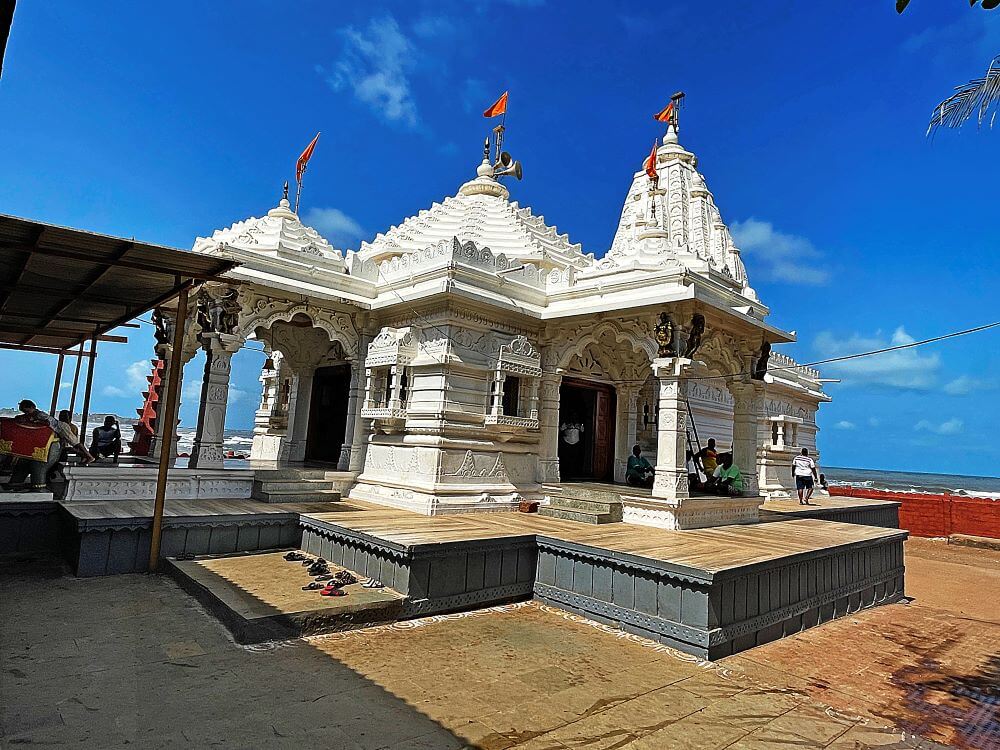
With the backdrop of the sea, the Shri Ram Mandir, located in Prabhu Ali of Pajpandhari village, catches the eye from afar as soon as one enters the village. This temple has a history spanning approximately ๒๐๐ years. It is said that the temple has undergone renovation three times so far. Previously, the temple was roofed with tiles, and all the idols were made of black stone. After those became worn, pristine white marble idols were installed here. During the renovation, this temple was constructed using rare red stone brought from Rajasthan. Although it is built using red stone, the entire temple, up to the pinnacle, has been painted white. The idea behind this color is that the local Koli brethren, who venture deep into the sea for fishing, should be able to see their temple from afar and feel comforted that Lord Shriram is with them. The villagers believe that this Lord Shriram protects them from all calamities.
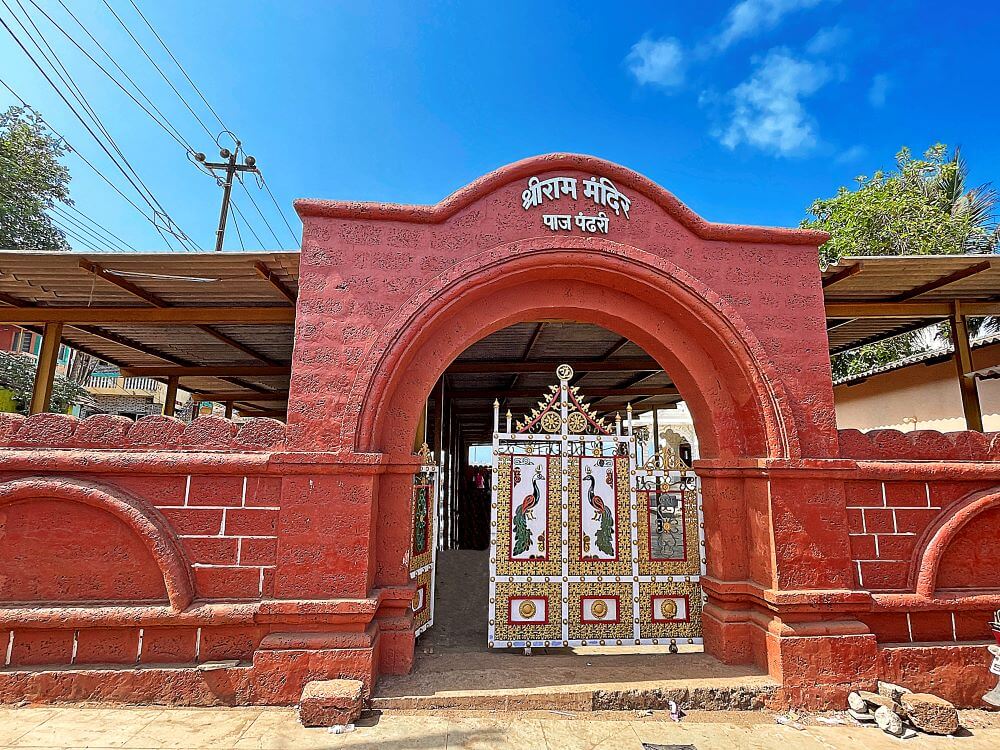
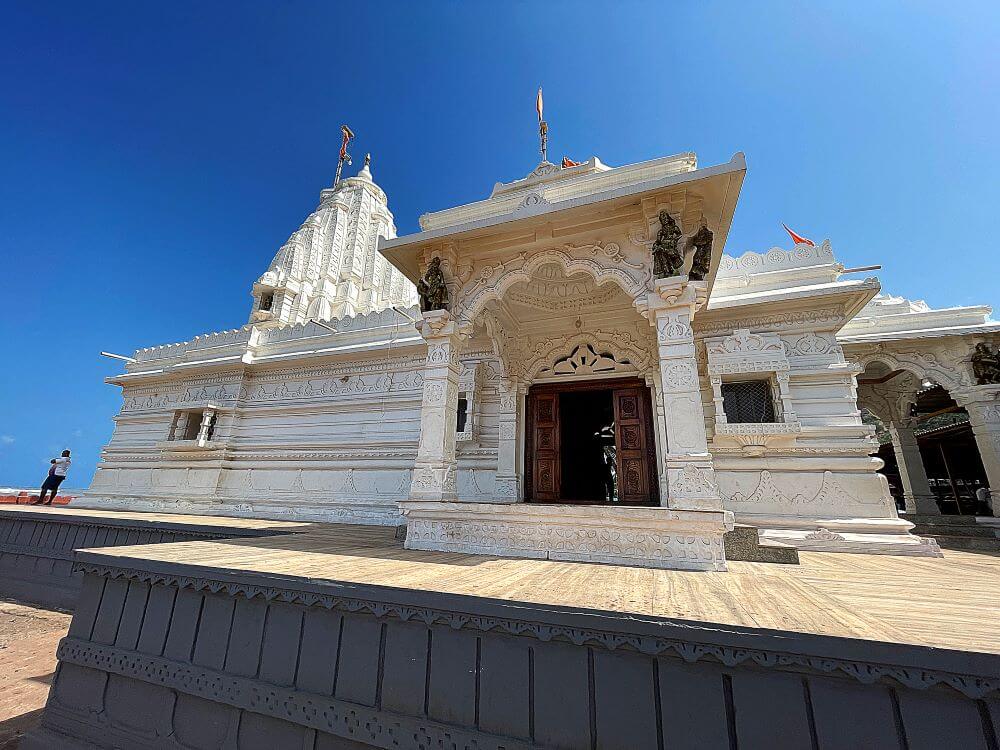
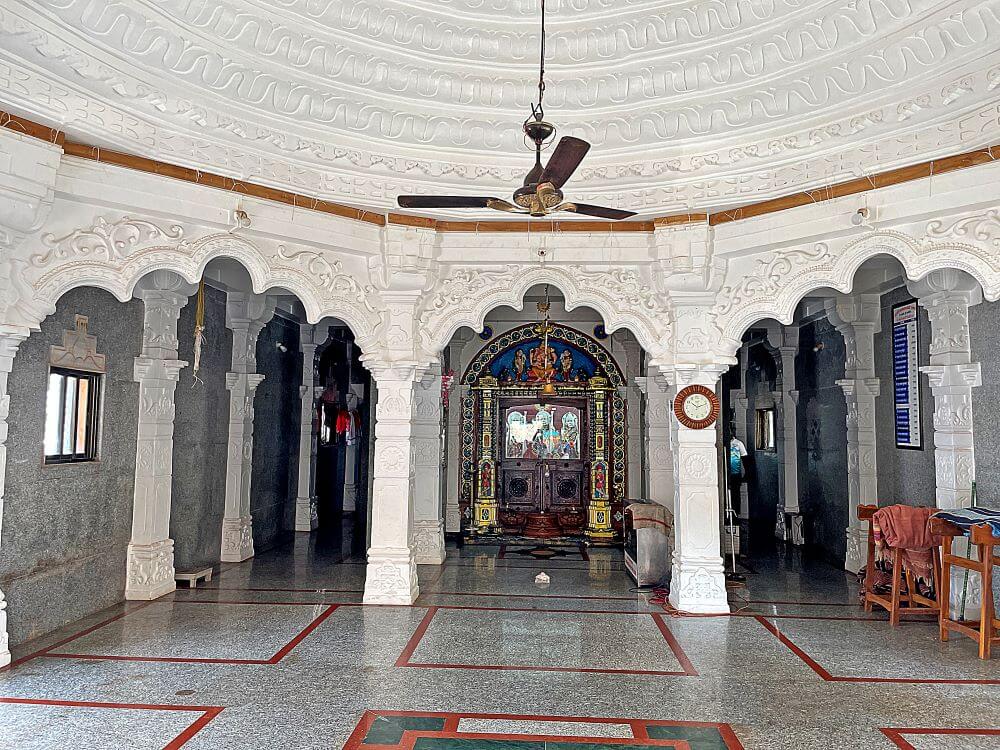
This temple is situated adjacent to the main road in Prabhu Ali. The entire temple is enclosed by a fortification made of laterite stone. There are entrance gates in the east, south, and north directions of this fortification. The main entrance features a laterite stone arch, through which one enters the temple courtyard. The temple courtyard is paved. In the area between the entrance gate and the main door of the temple, for the convenience of devotees A corrugated metal shed has been erected. There is a large lamp tower in front of the temple, and the temple stands on a plinth approximately three feet high. There is a circumambulation path on the outer side of this plinth. The temple structure consists of three viewing pavilions facing east, north, and south, followed by a main assembly hall, an antechamber, and the sanctum sanctorum. On the outer side of the main eastern viewing pavilion, there are sculptures of two majestic elephants with their trunks raised in welcome. In each of the viewing pavilions here, two pillars extend outwards, and these pillars are connected to each other with arch-like intricate carvings.
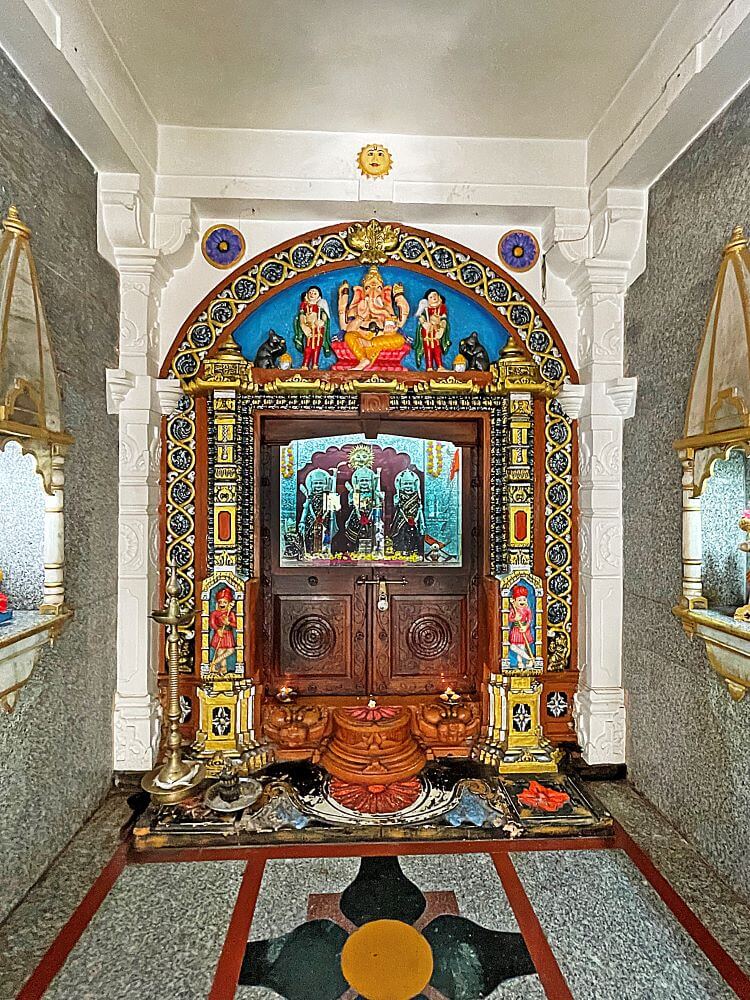
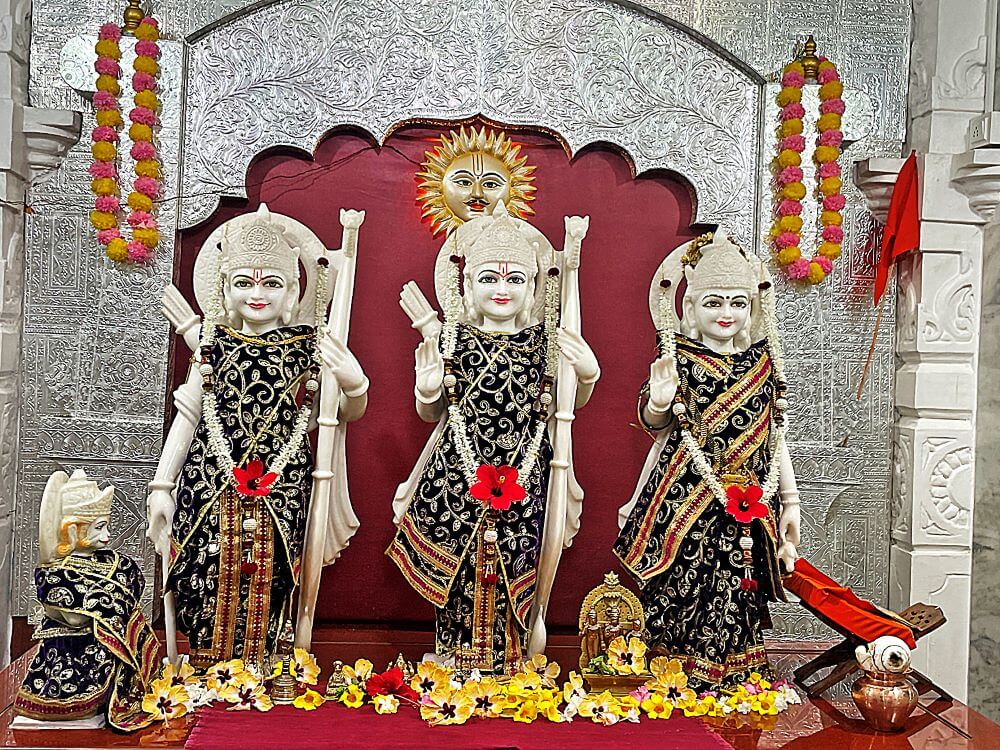
The temple features shikhars atop the darshan mandap, sabha mandap, and garbhagriha. The sabha mandap here is spacious, with the ceiling section appearing circular and tapering as it rises towards the shikhara. All these sections are adorned with exquisite craftsmanship. The door frame of the garbhagriha is distinctive, featuring two dwarapalas at the base and an image of Lord Ganesha on the lalata-bimba. Inside the garbhagriha, on a high pedestal, stand the pristine white marble idols of Shri Rama, Lakshmana, and Sita. Here, the idol of Shri Rama In one hand, He holds a bow, and the other hand is raised in a gesture of blessing. Lakshmana holds a bow in one hand and an arrow in the other. Both of them have quivers filled with arrows on their backs. In one hand, Sita holds a flower, and the other hand is raised in a gesture of blessing. Behind these three idols, there is a decoration of silver sheets, in which there is an image of the Sun behind the crown of Shri Rama. Apart from this, there are idols of Shri Ganesha and Hanuman in the sanctum sanctorum. Beautiful craftsmanship can also be seen in many places on the outer walls of the temple.
The greatest festival celebrated here is Ram Navami. This festival is observed from Panchami to Ekadashi. The villagers of Pajpandhari and the surrounding five-village radius, as well as those working away from home, eagerly await this festival. There are ten associations in Pajpandhari village. Every year, the responsibility of hosting this festival is entrusted to one of these associations. The association that receives the hosting rights takes the entire responsibility of the festival upon its shoulders and begins planning how it can be conducted beautifully. Preparations for this festival usually begin here two months in advance. From Gudi Padwa, along with religious and spiritual programs, social and cultural events are also organized here. There is a tradition of hoisting a grand Gudi in front of this temple on Gudi Padwa.
Devotees from the surrounding five-village radius attend the Ram Navami festival in the thousands. Dressed in traditional attire, they chant the name of Rama, accompanied by music, the showering of gulal, and the waving of banners and flags. Programs such as Kirtan, Bhajan, Pravachan, devotional songs, and Haripath are held in the temple. On the day of Ram Navami, after the cradle ceremony, a grand procession of the palanquin of Shri Rama typically begins at three o’clock in the afternoon; it travels through the village and is brought back to the temple by six o’clock in the evening. A large fair is held here on the occasion of this festival.
The village of Pajpandhari has a large population of the Koli community. The Koli community is known for its love of festivals. As the festival of Ram Navami approaches, the joy of the villagers here begins to overflow. The work of painting and decorating the houses in the village begins. Ram Navami is considered a bigger festival here than even Diwali. For this festival, the entire village, including the temple, is decorated. Not only that, but deep into the sea near the temple, saffron flags and banners are placed to decorate the Sea King (Darya Raja), upon whom their livelihood depends. During this festival, not a single boat or vessel from the village or the surrounding five-village radius goes out into the sea for fishing.
This sacred temple stands as a testament to deep spiritual devotion, ancient architectural grandeur, and rich local cultural traditions.
The sanctum sanctorum houses the divine idol consecrated according to ancient Vedic traditions, surrounded by serene courtyards and traditional temple architecture.
Navratri, Maha Shivratri, Annual Temple Jatra & Deepotsav
Compare and book flights, secure top-rated local hotels near the temple, hire reliable guides, and rent cars instantly.
Extend your pilgrimage by visiting other highly sacred temples located nearby.


Add ₹999 more to unlock FREE SHIPPING!
Your sacred cart is currently empty.
Shop Photo FramesFill in your delivery details below to place your order.
Add comment