
Add ₹999 more to unlock FREE SHIPPING!
Your sacred cart is currently empty.
Shop Photo FramesPune city is geographically surrounded by hills. Temples situated on these hills contribute significantly to the cultural fabric of the city. The Tarkeshwar Mahadev Temple is nestled on a high hill in Salve Nagar, in the Yerwada area. The history of this temple is ancient. According to local belief, this temple is approximately three to four thousand years old. It is said that the Pandavas resided here during their period of exile and constructed this temple in a single night. Due to this historical heritage, the temple has been included in the list of heritage sites by the Pune Municipal Corporation.
A mythological legend is famous behind the name ‘Tarkeshwar’. It is said that a powerful demon named Tarakasura pleased Lord Brahma and sought the boon of immortality. He laid a condition that he could only be killed by the son of Lord Shiva. Intoxicated by this boon, Tarakasura began tormenting gods and sages. Eventually, Kartikeya, the son of Lord Shiva and Mother Parvati, was born. In his childhood, Kartikeya defeated Tarakasura. While on his deathbed, Tarakasura repented for his sins. He sought forgiveness from Lord Shiva and requested that his name be associated with the Lord’s name. Lord Shiva granted him a vision. Since then, the place where the demon performed penance is known as ‘Tarkeshwar’ in honor of Lord Shiva.
According to historical references, the original form of the temple resembles a cave. The temple underwent major renovations in the decade of १९९०. The exterior of the temple was repaired without disturbing the original stone sanctum sanctorum. Solid construction was carried out to preserve the slope of the hill and the stone walls. This temple has been granted ‘C’ class pilgrimage status by the Government of Maharashtra.
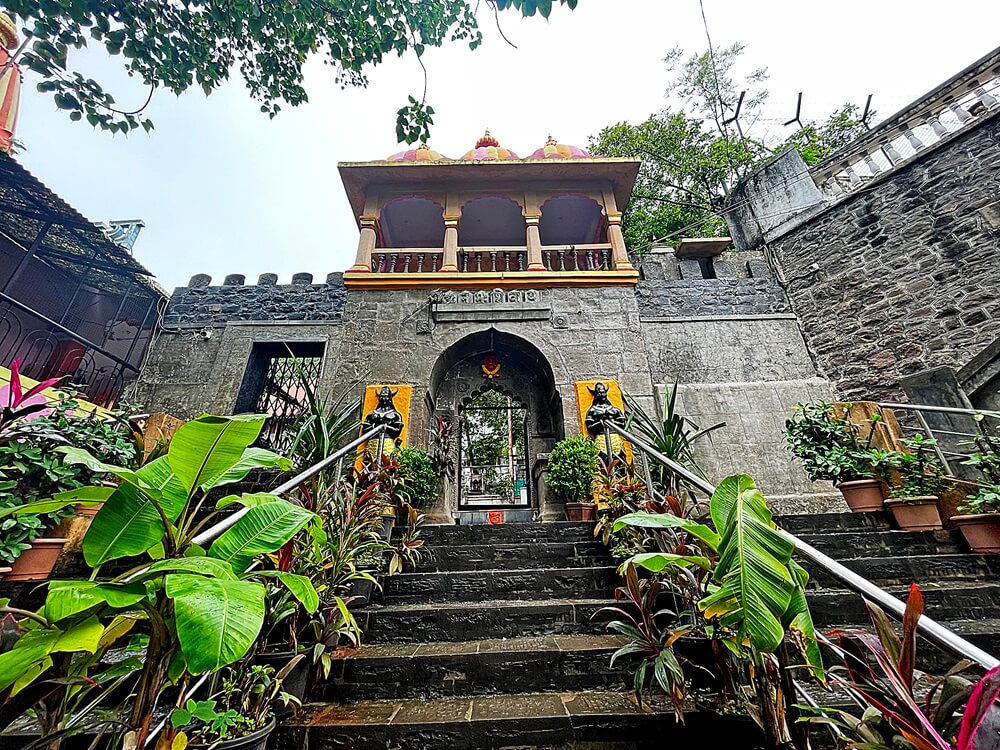
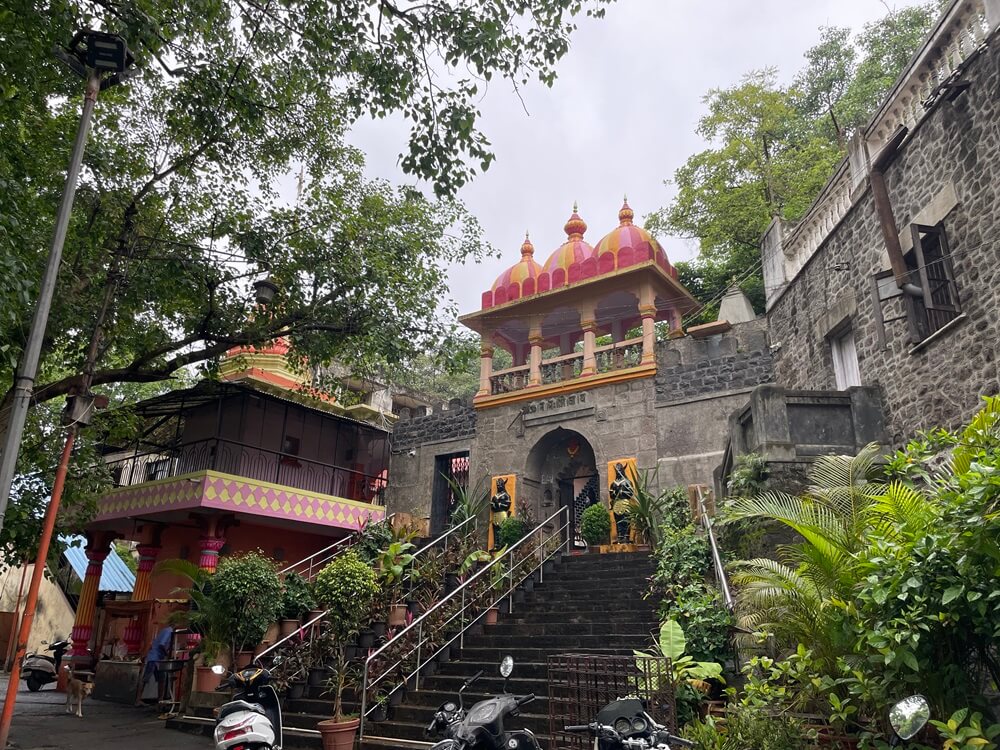
There are two routes to reach the temple from the Bund Garden Bridge on the Pune-Nagar Road. The first route consists of stairs. One has to climb approximately २५० steps. There is a large arch at the beginning of these stairs. At the base, there is a tall statue of Lord Shiva in his Neelkanth form. This path is surrounded by dense greenery.
The second route is a winding motorable road. This road leads directly to the top of the hill. This route is convenient for private vehicles and senior citizens. A panoramic view of Pune city can be seen from the hill.
One enters a large courtyard through the two-storied main gate of the temple. There are gatekeepers on both sides of this gate and a drum house (Nagarkhana) on the upper floor. There are cement seats in the courtyard for the rest of the devotees. In front of the main temple, there is a stone lamp pillar (Deepmal). During festivals, oil lamps are lit on this pillar. There are old trees in the courtyard. To the left of the main temple is a separate temple of Vitthal-Rukmini. To the right is a small temple of Shani Dev. Apart from these, there are also temples of Shri Dattatreya and Sai Baba in the premises. All these temples were built in later periods.
The Renuka Mata structure in the temple premises is considered a part of the original old temple. This goddess is the main deity of the local people. The idol of this deity faces south. There is an ancient well near the temple. Despite being at a height, this well contains water throughout the twelve months. This water is used for worship and Abhishekam. Statues of Nag and Nandi have been installed near the well. There is a crowd of devotees here on the day of Nag Panchami.
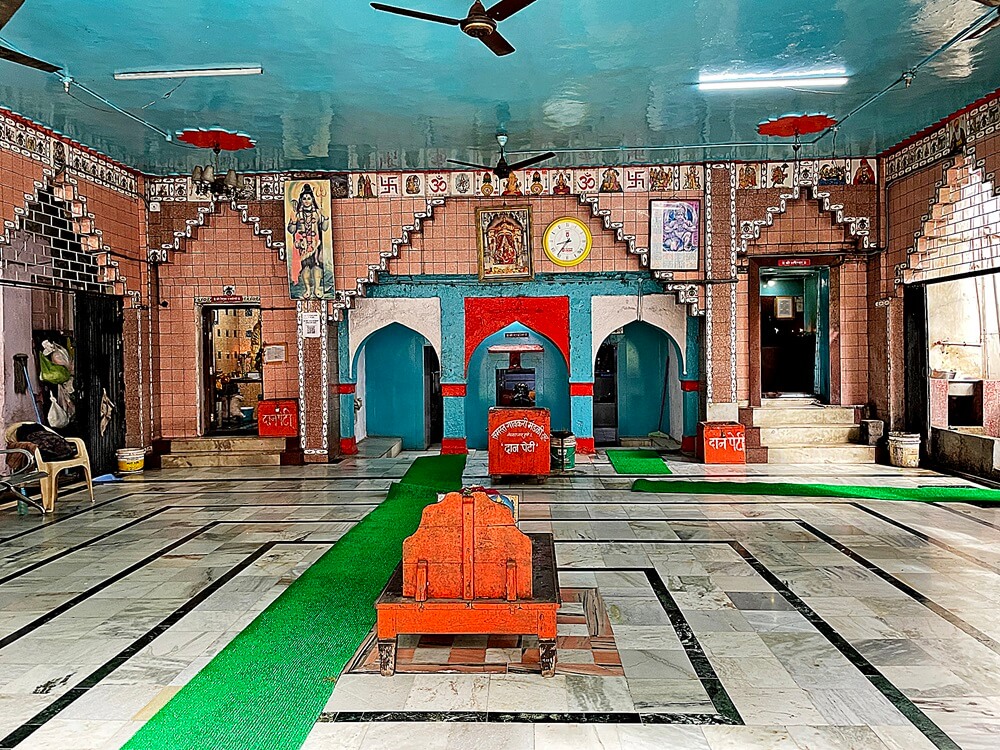
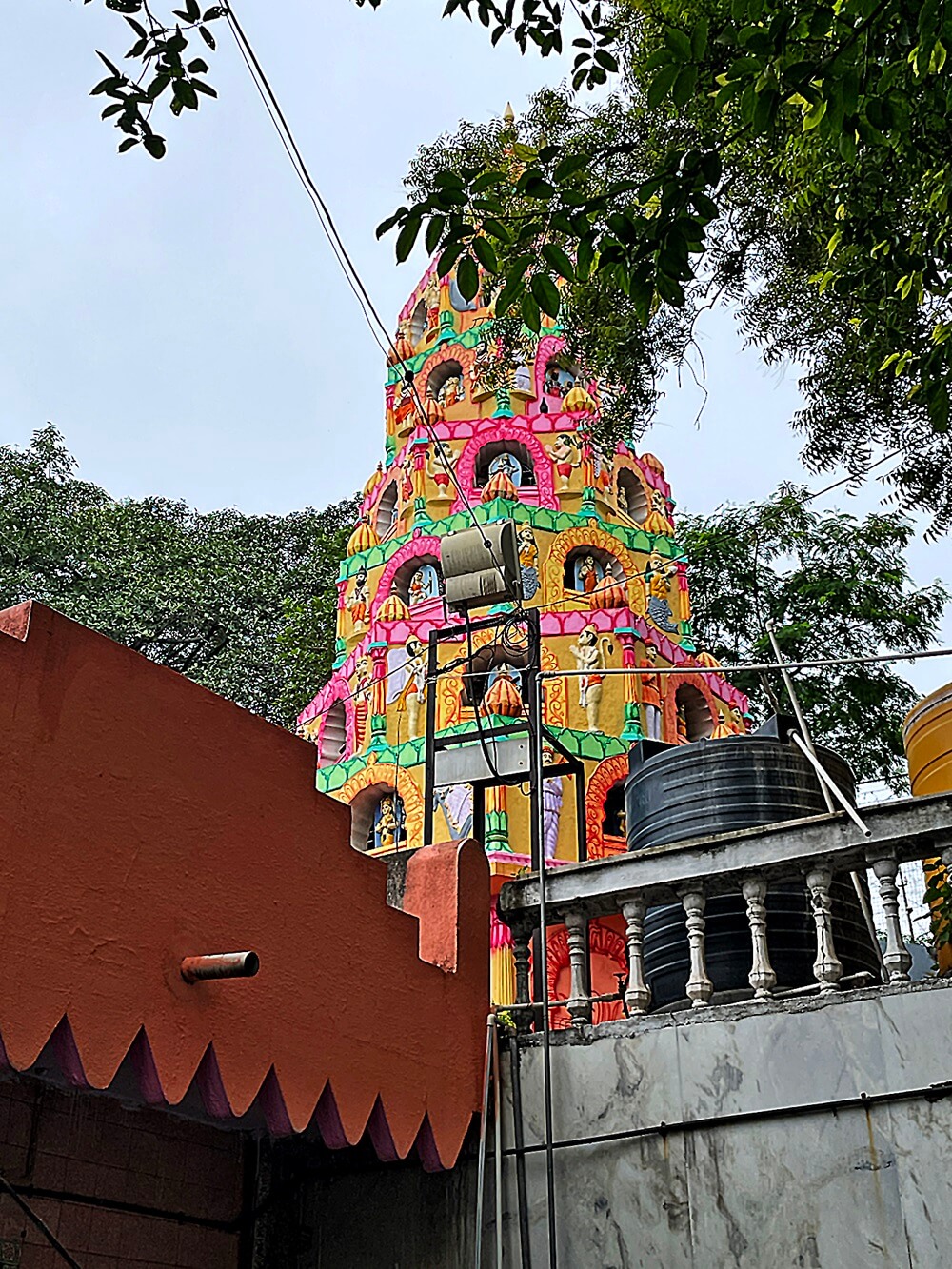
The main assembly hall (Sabhamandap) of the temple was previously made of wood. Over time, as the wood deteriorated, it was replaced by a solid cement construction. The assembly hall has doors in three different directions. In front of the inner sanctum (Antaral) in the assembly hall, there is a statue of Nandi, the vehicle of Lord Shiva. The inner sanctum and the main sanctum sanctorum are carved into the rock of the hill. A Swayambhu (self-manifested) Shiva Linga is established at the floor level of the sanctum sanctorum. This ancient Shiva Linga has been coated with Vajralep twice so far. The Vajralep helps in preventing the natural erosion of the Shiva Linga. In a niche in front of the Shiva Linga, there is a Panchadhatu (five-metal) idol of Parvati. Here, there are also idols of Shri Kaalbhairavnath and Yogeshwari Mata. In addition, there are small idols of Ganpati and Sharada Mata. All these idols are carved in stone. Since the sanctum sanctorum is carved into the rock, the walls here are rough. As this place is the family deity (Kuldaivat) for many, there is a crowd of devotees here for Darshan. On the outside of the temple, there is a tall spire (Shikhar) which is a blend of Dravidian and Nagara styles. Various idols of gods and goddesses are carved on this spire. At the top of the spire, there are two Amalakas and a Kalash above them. This spire is clearly visible from the foot of the hill. The lighting on the spire at night makes it look even more beautiful.
Many festivals are celebrated throughout the year at the Tarkeshwar Temple. Mahashivratri is the biggest festival of this temple. On this day, devotees from Pune and surrounding areas come for Darshan. A large fair is held here during this festival. During this time, the temple premises light up with electrical illumination. A Mahaprasad distribution program has been organized here for many years. In २०२४, १८ tons of snacks were distributed here on Mahashivratri. This initiative has been recorded in the ‘London Book of World Records’. On Shravani Mondays, queues of devotees form from dawn. Many devotees perform Dugdhabhishek and Rudrabhishek on the Shiva Linga. Special worship rituals, as well as Bhajan and Kirtan programs, are held in the temple every Monday of the month of Shravan. During Navratri, special worship is performed at the Renuka Mata temple. The number of female devotees is higher during this time. This temple is open for Darshan from ६ AM to ७ PM.
The sanctum sanctorum houses the divine idol consecrated according to ancient Vedic traditions, surrounded by serene courtyards and traditional temple architecture.
Navratri, Maha Shivratri, Annual Temple Jatra & Deepotsav
Compare and book flights, secure top-rated local hotels near the temple, hire reliable guides, and rent cars instantly.
Add ₹999 more to unlock FREE SHIPPING!
Your sacred cart is currently empty.
Shop Photo FramesFill in your delivery details below to place your order.
Add comment