
Add ₹999 more to unlock FREE SHIPPING!
Your sacred cart is currently empty.
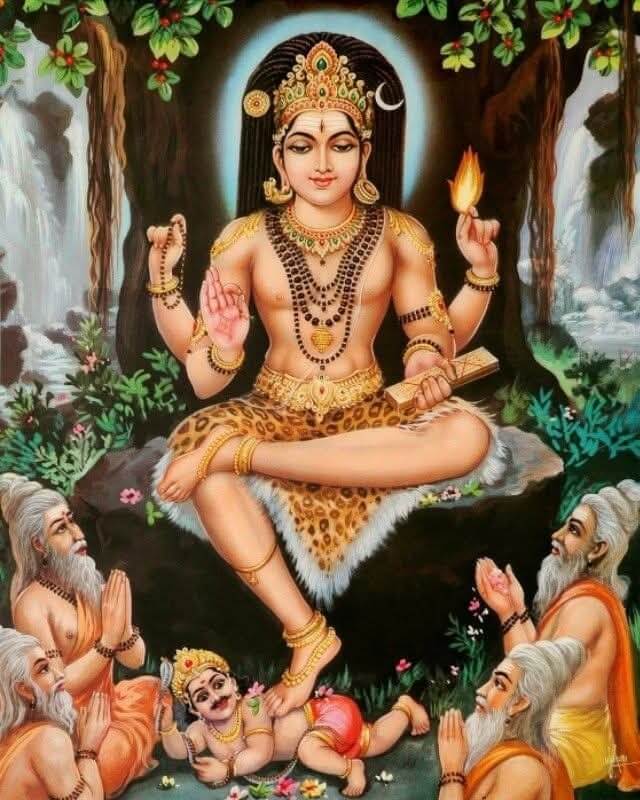
Shop Photo FramesSukapuram Sree Dakshinamoorthy Temple is an ancient and historically important Shiva temple located at Sukapuram, near Edappal, in Kerala’s Malappuram district. It is the village temple of Sukapuram, the largest among the 64 Brahmin villages traditionally believed to have been established by Parashurama. The temple is regarded as one of the rare and important temples dedicated to Lord Dakshinamoorthy in India. Lord Dakshinamoorthy, the Universal Guru and the deity of wisdom, is the main deity of the temple. It is believed that worshipping the Lord with devotion, just like Goddess Saraswati, blesses students with academic success and prosperity. The temple’s Tantric rituals are traditionally performed by the Padinjaredath Mana of Kalady.
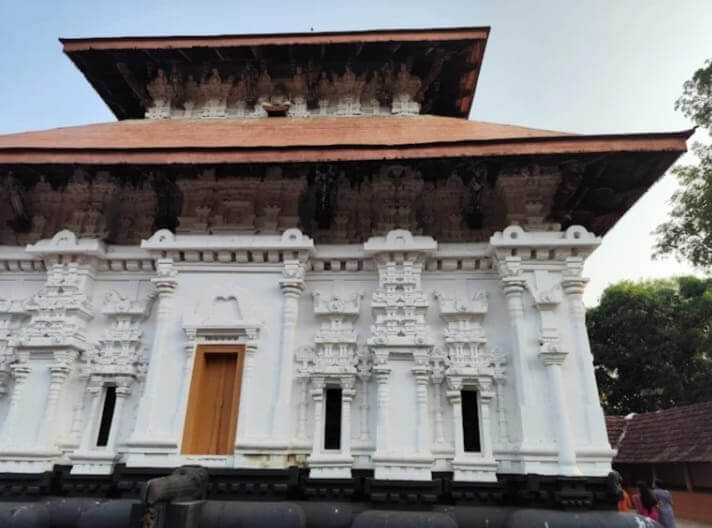
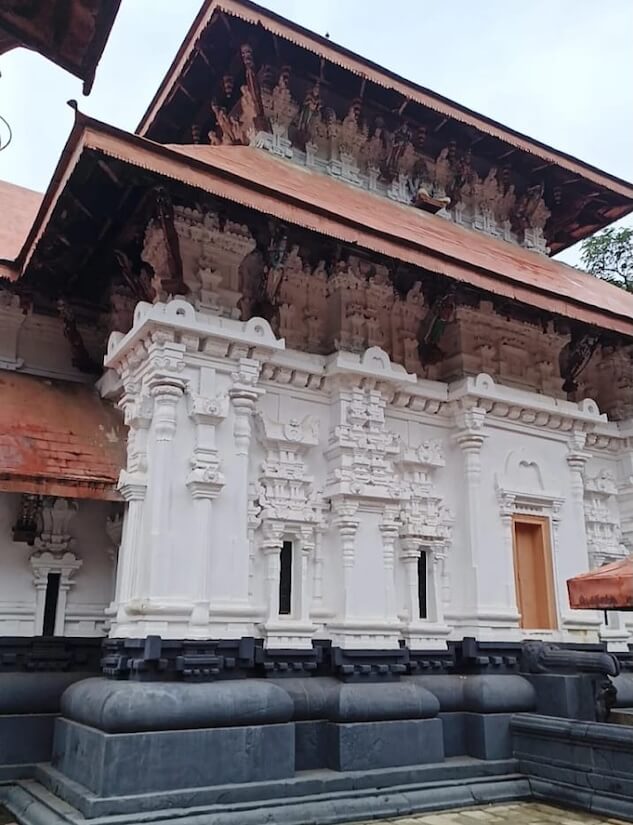
Historically, Sukapuram Sree Dakshinamoorthy Temple is over 1,100 years old. The temple was built in its present form during the 9th century CE, under the Second Chera Dynasty (Kulasekhara period), when Kerala was ruled from Mahodayapuram (Kodungallur). It developed as the central temple of Sukapuram village as part of the Brahmin settlement (Agrahara) system in Kerala. According to the studies of historian Prof. M. G. S. Narayanan, Sukapuram had already become an important temple and social centre before the 10th century CE. The temple’s antiquity is confirmed by four Vatteluttu inscriptions found here. These inscriptions contain valuable historical records about land grants, the tax system and temple administration during the Chera period. The temple was also the main centre of the famous Sukapuram–Panniyoor rivalry, an important chapter in medieval Kerala’s history. The Vedic scholars of Sukapuram led the Sukapuram faction and historical records show that the Zamorin of Kozhikode and the King of Kochi were directly involved in these political and social conflicts. Besides being a place of worship, the temple was one of Kerala’s leading centres for Vedic and philosophical studies from the 9th century onwards. Its large granite base and two-tiered square sanctum are fine examples of Chera-period architecture. Although the temple was badly damaged in a major fire many centuries ago, it was later rebuilt in its present form with the support of local rulers and the Zamorin of Kozhikode.
Several legends have been passed down through generations about Sukapuram Sree Dakshinamoorthy Temple. The most important of these tells that Sage Suka (Sukamuni), the son of Sage Vyasa, performed severe penance at this place to attain a vision of Lord Shiva. Pleased with his devotion, Lord Shiva appeared before him in the form of Lord Dakshinamoorthy, the embodiment of wisdom and the Divine Guru. According to the legend, Sage Suka then consecrated the idol of Lord Dakshinamoorthy at this sacred site. It is also believed that the place came to be known as “Sukapuram” because it was the land where Sage Suka performed his penance.
According to legend, after the creation of Kerala, Lord Parashurama established 64 Brahmin villages, and Sukapuram became one of the most important among them. The temple is regarded as the village temple of Sukapuram and is believed to have been established on the instructions of Lord Parashurama for the prosperity and protection of the village. Local tradition also says that the sanctum and the main structure of the temple were built by Perunthachan, the legendary master craftsman of the Parayi Petta Panthirukulam, who is believed to be an incarnation of Vishwakarma. The large granite sanctum is considered a fine example of his exceptional craftsmanship. Another well-known legend is associated with the temple’s most important offering, Chathussatham (payasam prepared with 101 nazhis of rice). It is believed that, during a time when the temple struggled to meet even its daily expenses, the Lord appeared before the temple priest in the form of an old man, gave him rice, and instructed him to prepare and offer payasam. This event is believed to have marked the beginning of the Chathussatham offering.
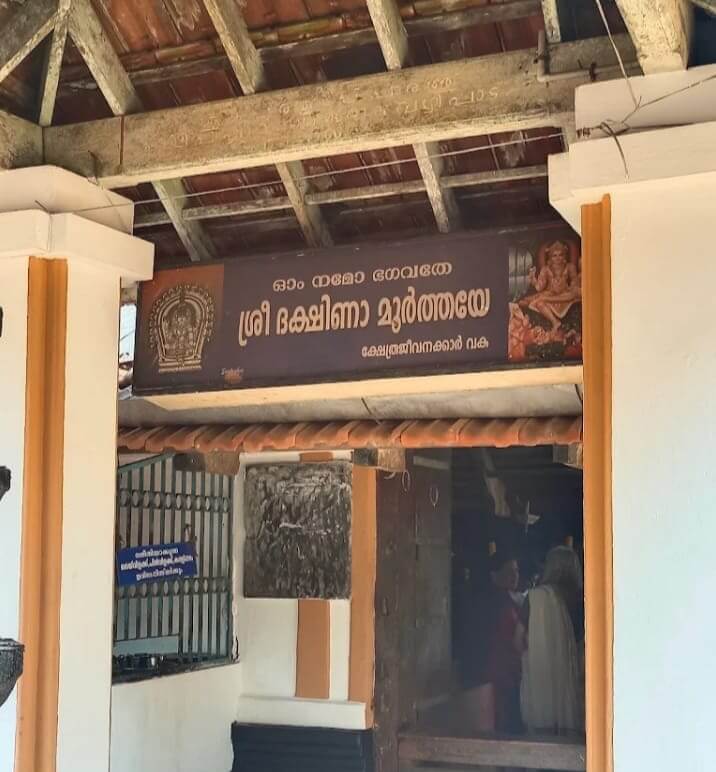
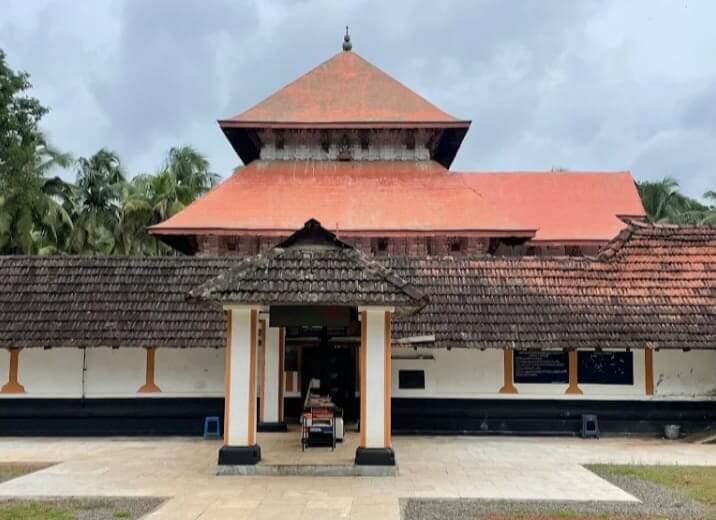
As you enter through the temple’s main entrance, you are welcomed by a spacious courtyard and the majestic granite outer walls surrounding the temple. Walking along the granite-paved circumambulatory path, you will come across the Nalambalam, the Chuttambalam and the traditional lamp tower, all reflecting the elegance of ancient Kerala temple architecture. Inside the Nalambalam, directly in front of the sanctum, stands the spacious Namaskara Mandapam. Its beautifully carved wooden ceiling features the Ashta Dikpalakas with Lord Brahma at the centre, showcasing the exceptional craftsmanship of traditional Kerala woodcarving. Moving further ahead, you will reach the temple’s main architectural attraction—the two-tiered square sanctum. Its raised granite base, finely carved walls, timber roof covered with copper sheets and the Mukhamandapam at the front enhance its architectural beauty.
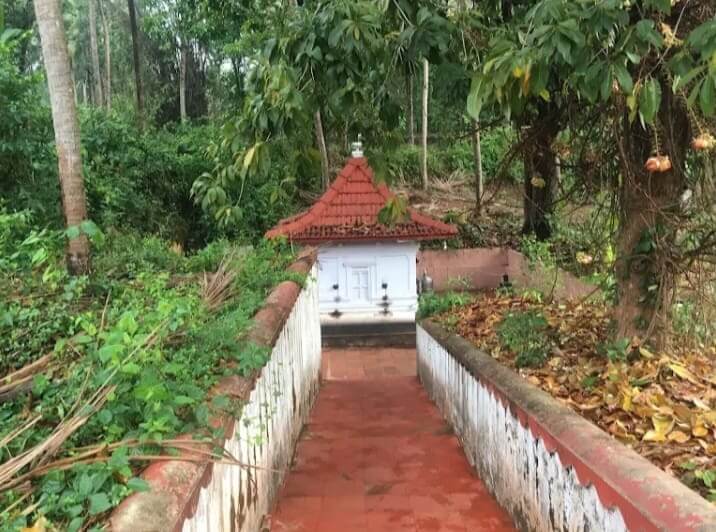
The main deity of the temple is Lord Dakshinamoorthy, the Universal Guru and the deity of wisdom. The south-facing deity, a distinctive feature of the Dakshinamoorthy form, symbolises the removal of ignorance and the bestowal of wisdom. The sanctum also houses an east-facing Shiva Linga, approximately six feet tall, along with Goddess Parvathy on the northern side. On the right side, at the south-west corner (Kannimoola), is the shrine of Lord Ganapathy. Outside the Nalambalam are the shrines of Lord Sastha, Nagaraja and Nagayakshi.
Various festivals and special rituals are observed at the temple throughout the year. The main annual festival is a six-day celebration held during the Malayalam month of Dhanu. Traditional processions featuring caparisoned elephants, Panchari Melam and Thayambaka are among the major attractions of the festival. Narada Pooja, offered to Lord Dakshinamoorthy, the deity of wisdom, is one of the temple’s most important rituals. Parents perform this pooja for their children, praying for academic progress, better concentration and success in their studies. As Lord Dakshinamoorthy is a form of Lord Shiva, Maha Shivaratri is celebrated here with special poojas and a traditional lamp festival. Thursdays are also considered highly auspicious, as Lord Dakshinamoorthy is associated with the planet Jupiter (Guru). On this day, many devotees visit the temple for Vidyarambham and pray for academic success. Navaratri and the Vidyarambham ceremony on Vijayadashami are also observed with great importance. During the Mandala season, the temple provides facilities for Sabarimala pilgrims and conducts special poojas and prayers.
The temple’s most important offering is Chathussatham, in which 101 nazhis of rice are offered to the Lord. Narada Pooja is performed for the intellectual development and academic success of children. Saraswatha Suktha Pushpanjali is offered to improve memory and wisdom, while Vidyagopala Mantra Pushpanjali is performed to remove obstacles in education. Devotees also offer Jaladhara, Sree Rudram Dhara, Mrityunjaya Homam, Mrityunjaya Pushpanjali, Umamaheswara Pooja, ghee lamps and oil lamps to Lord Dakshinamoorthy and Lord Shiva. Other important offerings include Kadali banana offering, Koovalam garland and various Payasam offerings. Ganapathy Homam is offered to Lord Ganapathy, while milk and bananas are offered to the Naga deities. Shani Preethi Pooja is also performed by devotees.
The temple is open to devotees every day from 5:15 AM to 10:30 AM and from 5:00 PM to 7:30 PM. The day begins at 5:15 AM with the opening of the sanctum for Nirmalya Darshan. This is followed by Abhishekam and Malar Nivedyam from 5:30 AM to 6:00 AM and Usha Pooja at 6:30 AM. From 7:30 AM to 9:30 AM, Dhara, Saraswatha Suktha Pushpanjali and other special offerings are performed. Ucha Pooja takes place at 10:00 AM, after which the temple closes at around 10:30 AM. The temple reopens at 5:00 PM for the evening darshan. Deeparadhana is performed at dusk, followed by Athazha Pooja at 7:15 PM. The temple closes at 7:30 PM, marking the end of the day’s rituals. Pooja timings may change on festival days and other special occasions.
This sacred temple stands as a testament to deep spiritual devotion, ancient architectural grandeur, and rich local cultural traditions.
The sanctum sanctorum houses the divine idol consecrated according to ancient Vedic traditions, surrounded by serene courtyards and traditional temple architecture.
Navratri, Maha Shivratri, Annual Temple Jatra & Deepotsav
Compare and book flights, secure top-rated local hotels near the temple, hire reliable guides, and rent cars instantly.
Extend your pilgrimage by visiting other highly sacred temples located nearby.


Add ₹999 more to unlock FREE SHIPPING!
Your sacred cart is currently empty.
Shop Photo FramesFill in your delivery details below to place your order.
Add comment