
Add ₹999 more to unlock FREE SHIPPING!
Your sacred cart is currently empty.
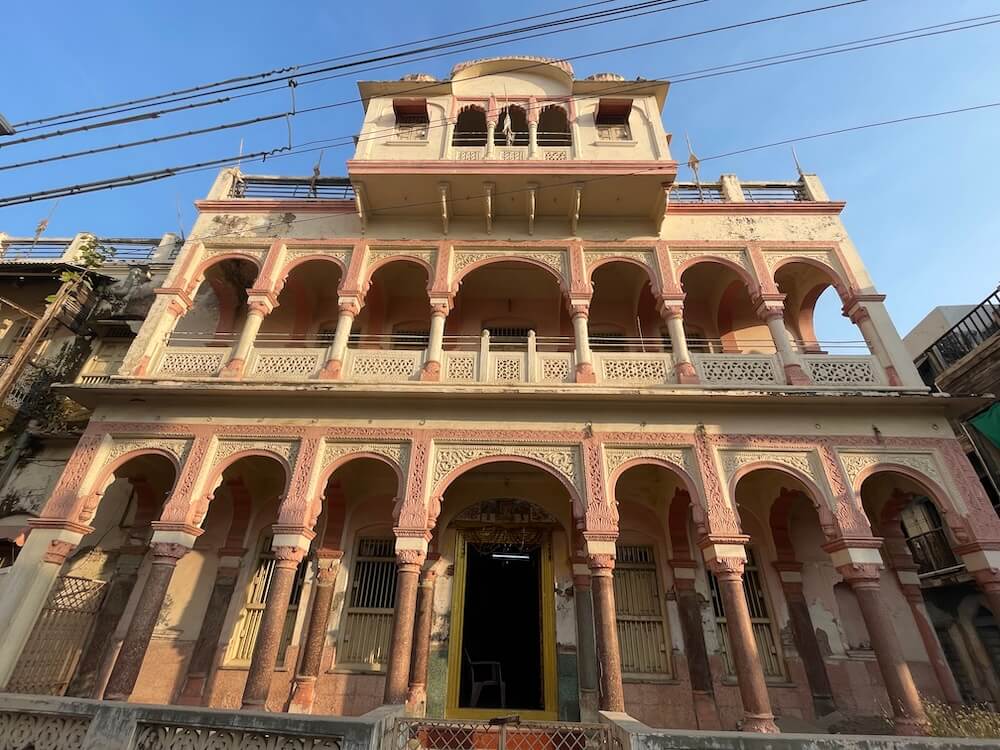
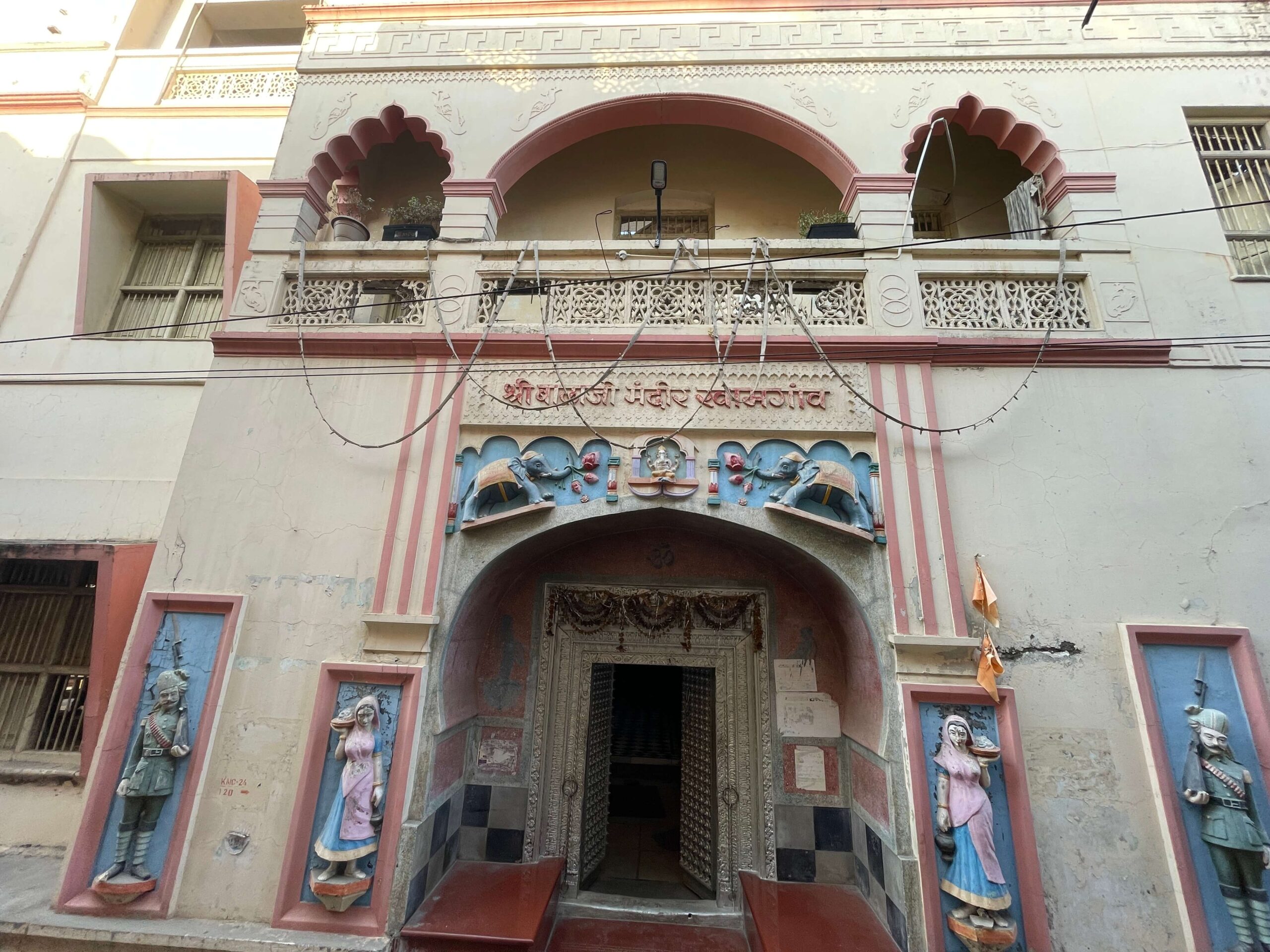
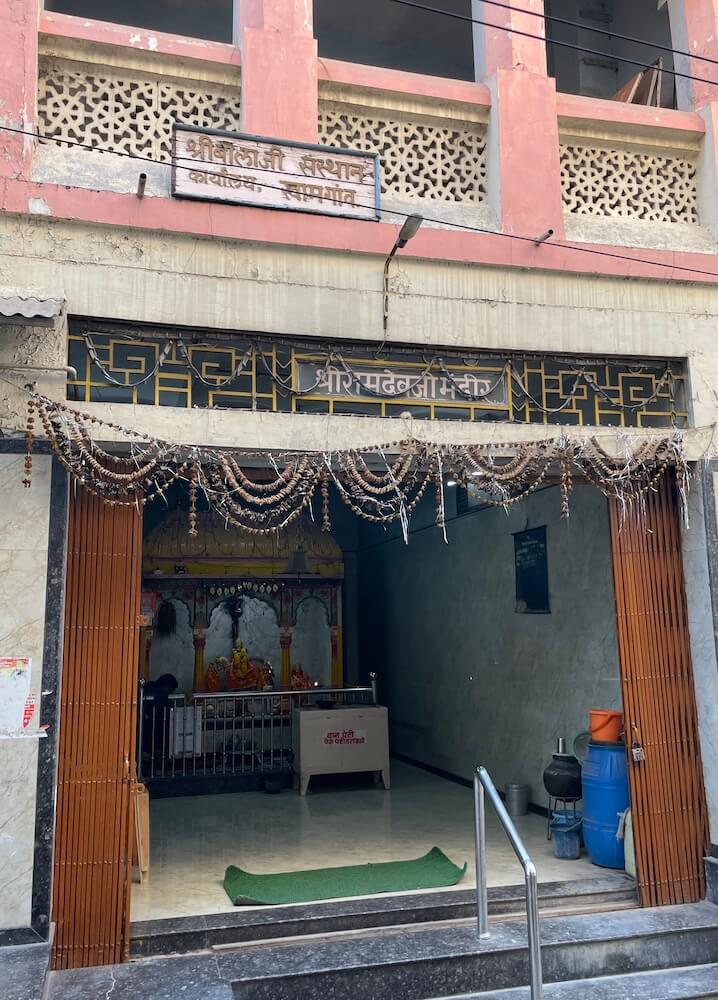
Shop Photo Framesखामगाव, reverently known as ‘Rajatnagari’ (City of Silver), is blessed with the renowned Balaji (Shri Ram Panchayatana) Temple. Nestled in the Junya Sarafa area of the city, this three-storeyed temple offers darshan of the Shri Ram Panchayatana deities, exquisitely carved from a single stone. This ancient temple, over one hundred and पचास years old, celebrates various festivals including Ram Navami and Hanuman Jayanti. The principal attractions here are the Palkhi Yatras that emanate from the temple on Dol Ekadashi (Bhadrapada Shukla Ekadashi) and Dussehra.
From historical times, Khamgaon has been a significant centre for cotton and silver trade. The Marwari and North Indian merchant communities have played a pivotal role in the city’s development. In these communities, various forms of Bhagwan Vishnu and Hanuman are respectfully addressed as ‘Balaji’. The profound influence of these merchant and North Indian traditions is evident in the temple’s name. Another crucial reason is its connection with Hanuman. In North India, particularly in Rajasthan and Haryana, Hanuman is referred to as ‘Balaji’ (for example, Mehandipur Balaji). In this temple of Khamgaon, the entire ‘Ram Panchayatana’ is enshrined. As Hanuman’s position in this Panchayatana is exceedingly important, devotees, out of reverence, began to refer to this temple as ‘Balaji Mandir’.
From a spiritual perspective, Bhagwan Vishnu’s Venkatesha form is called ‘Balaji’ in South India. Since Shri Ram is an avatar of Vishnu, the custom of calling any temple dedicated to a form of Vishnu a ‘Balaji Mandir’ is found in many places. Approximately one hundred and पचास years ago, three Bairagis brought this murti here. Subsequently, over time, due to the influence of the merchant class, the name ‘Balaji Mandir’ gained more popularity than ‘Ram Mandir’. Today, this temple is renowned by this very name.
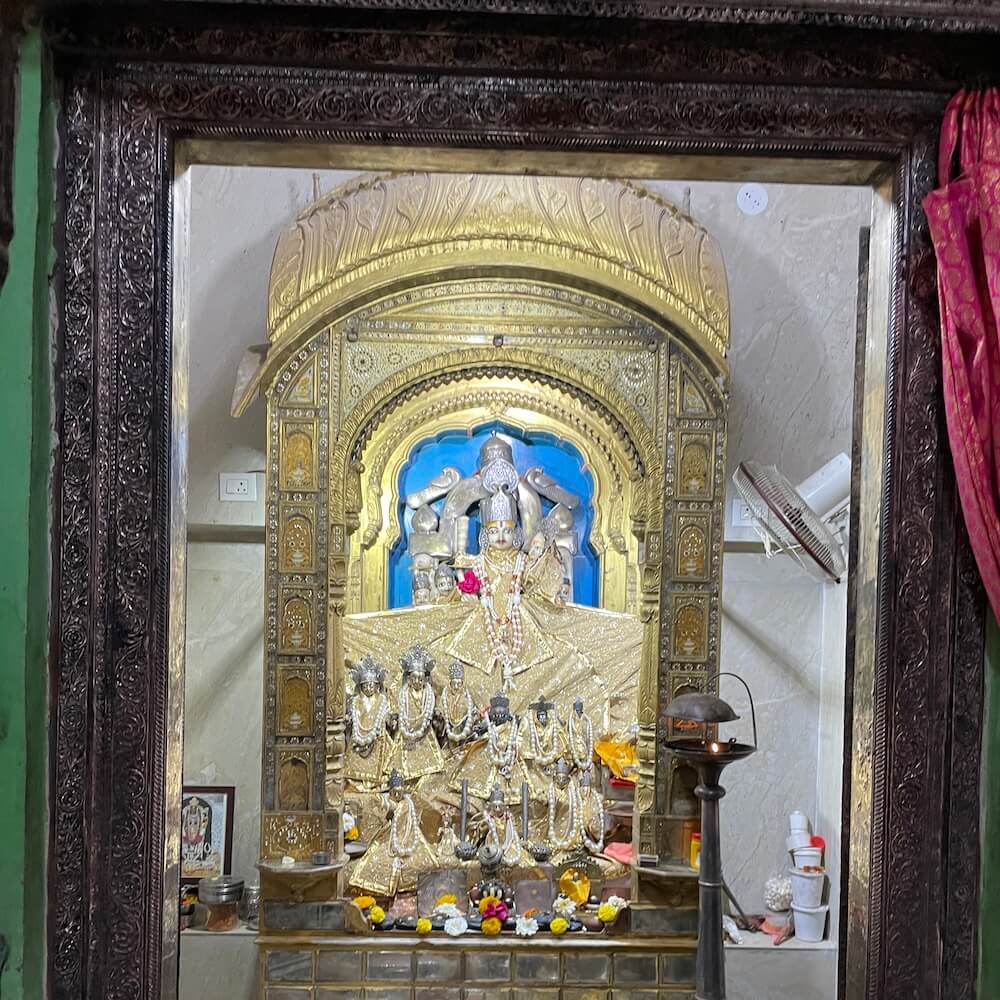
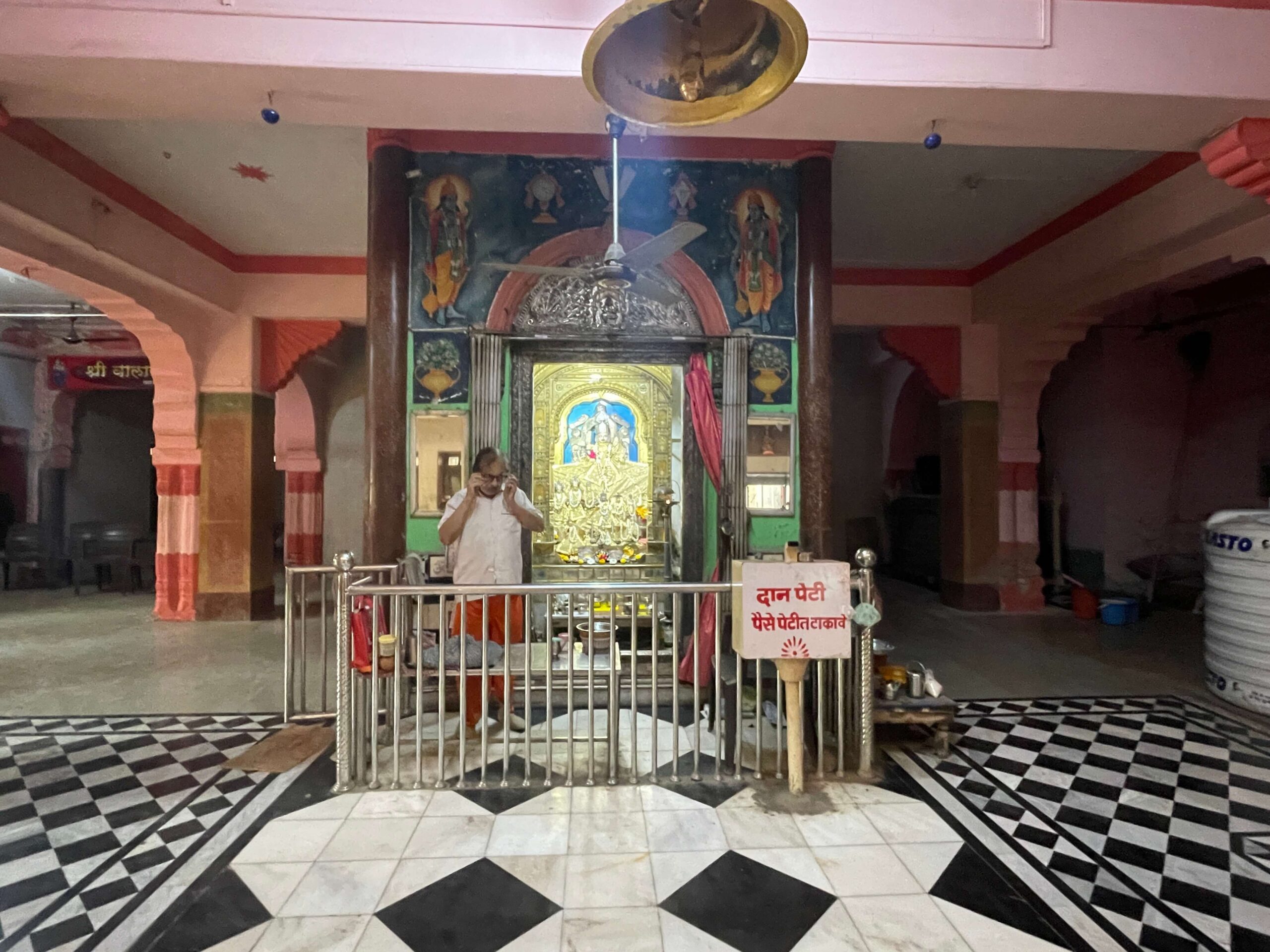
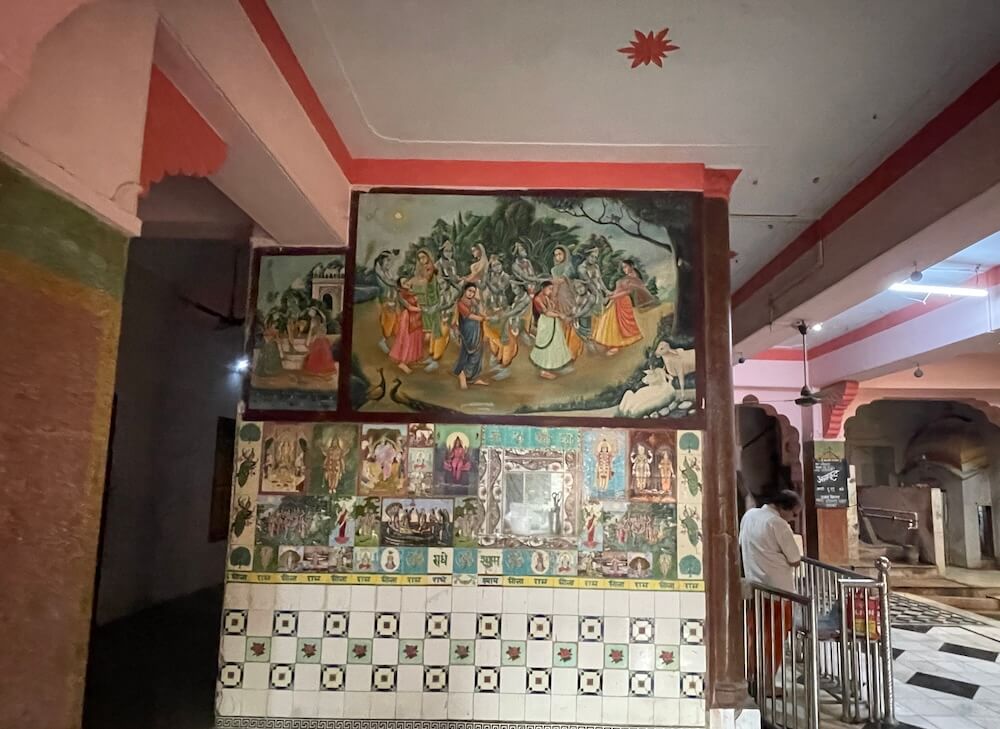
Khamgaon, a significant and large city in Buldana district, is surrounded on all sides by undulating terrain. A large stream flowing east-west divides the city into two parts. This Balaji Temple is located near the Adinath Jain Temple in the city’s old Sarafa Bazaar. This three-storeyed temple structure has two entrances. The temple’s design features a large sabhamandapa on the ground floor with the garbhagriha centrally located. The entrance to the sabhamandapa is adorned with intricately carved arches. Within the sabhamandapa are small shrines dedicated to Hanuman and Shiv Shankar. A murti of Ganesha is enshrined in one of the niches in the sabhamandapa. In the rear part of the garbhagriha, at one spot, is a murti of Devi. Stainless steel railings have been installed in front of the garbhagriha, which is centrally located in the sabhamandapa. The entrance to the garbhagriha is framed by a beautifully carved silver archway. Two images of Krishna are depicted on the entrance. The colourful marble tiles adorning the walls of the garbhagriha feature floral designs, peacocks, and images of deities such as Lakshmi and Vishnu. On the right-hand wall are images of Sheshashayi Vishnu, Narada, Hanuman, and Garuda. On the left-hand wall are images of dancing maidens. The lintel of the garbhagriha entrance is adorned with attractive carvings, and a sculpture of Ganesha is carved in the centre. Within the garbhagriha, the Ram Panchayatana murti is enshrined in a beautiful makhar. The principal murti is of Shri Ram, with Sita Mata by His side. Lakshmana is to the left of the murti, while Bharata and Shatrughna are to the right. In the lower section are murtis of Hanuman, Nala, Neela, Jambavan, and others. A painting of the original murti is depicted on one of the walls in the sabhamandapa.
Daily puja and archanas are performed in this temple. Every Friday, the murtis are bathed with Panchamrita and adorned with elaborate decorations. Thereafter, prasad is distributed to the assembled devotees. This prasad is usually Kheerananda, prepared by boiling milk with rice, five types of dry fruits, saffron, and cardamom.
Festivals such as Ram Navami, Hanuman Jayanti, and Krishnashtami are celebrated in this temple. Dol Ekadashi is observed with great enthusiasm here. The Puranas mention that Yashoda performed the water ritual (Ghat Puja) for Shri Krishna on the eighteenth day after His birth. This day is celebrated as Dol Ekadashi. The water ritual is also known as ‘Kua Puja’. This Ekadashi is also called Parivartini Ekadashi, Jaljhulani Ekadashi, or Vamana Ekadashi. On this day, the Shaligram murti of Shri Krishna is brought from the temple in a palanquin with musical accompaniment to a well near the Sati Mata Temple for a ceremonial bath. The murti is immersed in the well for the bath. After the aarti, prasad is distributed to those present. A grand festival also takes place in this temple on Dussehra. On this day, a procession of the murtis of Shri Ram, Lakshmana, Sita, and Hanuman is taken out in a palanquin. Prior to this, flag hoisting is performed at the temple. In the procession (shobhayatra) on this occasion, many young devotees participate dressed as Shri Ram, Lakshmana, and Hanuman. With musical accompaniment, this shobhayatra proceeds to Ravana Tekadi in the city. After the effigy of Ravana is burnt here, the murtis are given an abhishek. Thereafter, after the aarti, prasad is distributed to those present.
This sacred temple stands as a testament to deep spiritual devotion, ancient architectural grandeur, and rich local cultural traditions.
The sanctum sanctorum houses the divine idol consecrated according to ancient Vedic traditions, surrounded by serene courtyards and traditional temple architecture.
Navratri, Maha Shivratri, Annual Temple Jatra & Deepotsav
Compare and book flights, secure top-rated local hotels near the temple, hire reliable guides, and rent cars instantly.
Extend your pilgrimage by visiting other highly sacred temples located nearby.


Add ₹999 more to unlock FREE SHIPPING!
Your sacred cart is currently empty.
Shop Photo FramesFill in your delivery details below to place your order.
Add comment