
Add ₹999 more to unlock FREE SHIPPING!
Your sacred cart is currently empty.
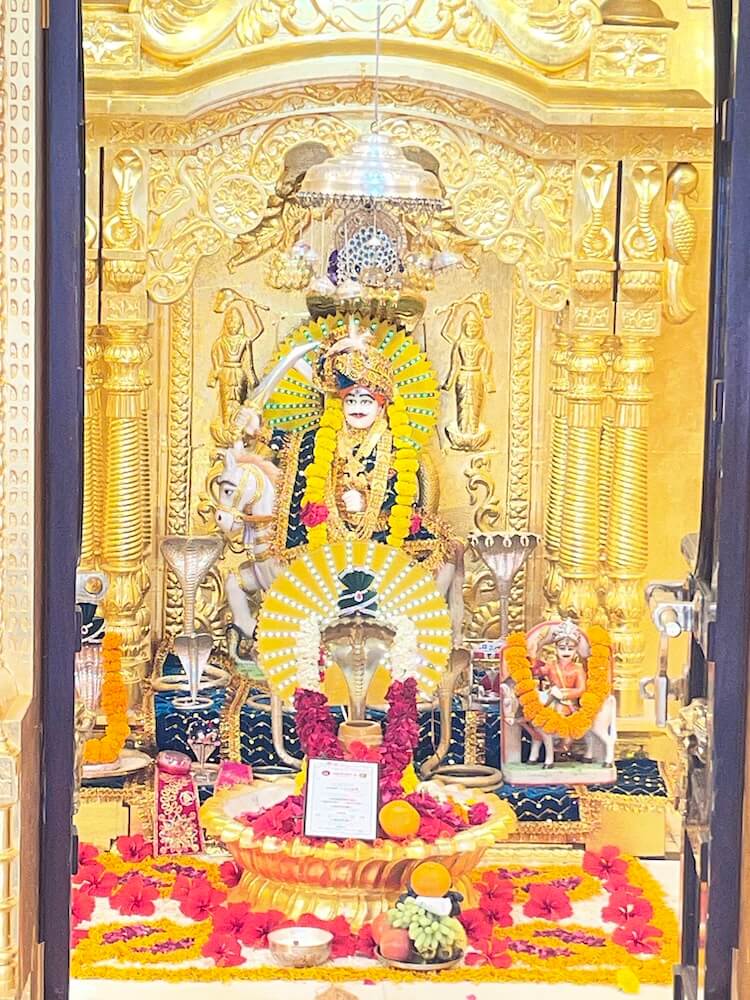
Shop Photo FramesThe venerable temple of Goga Maharaj, the warrior-deity who embraced martyrdom in the monumental conflict against Mahmud of Ghazni to safeguard the sanctity of the Somnath temple, is situated in the village of Dasaj within the Mehsana district. Born through the divine benediction of the Nath yogi, Gorakhnath, Goga Maharaj commands the unwavering faith of not only Hindus but also a vast multitude of devotees from the Muslim and Sikh communities. He is worshipped with profound devotion, manifesting both as a serpent deity and a perfected soul or ‘Siddha’. Within the sanctuary at Dasjiya, the deity resides in the form of a serpent as well as a valiant figure mounted upon a steed.
Known by various appellations such as Gogaji Chauhan, Gugga, Jahaar Peer and Zakhir Peer, Goga Maharaj is celebrated as one of the ‘Five Peers’ of Rajasthan. Historical chronicles and folklore weave a rich tapestry of his origins, noting his birth on the ninth day of the dark fortnight of the month of Bhadrapada (Vikram Samvat 1003) in Dadrewa, Rajasthan. Born to King Jevar Singh Chauhan and Queen Bachhal through the blessings of Guru Gorakhnath, his life is deeply entwined with the Nath tradition. According to eminent historian R. C. Dhere, Gorakhnath flourished between 1050 and 1150 AD and many historians regard Gogaji as a contemporary disciple of the great yogi.
Following the demise of Jevar Singh during an enemy assault on Dadrewa, Rana Gogaji Chauhan ascended the throne as his successor. Legend recounts a territorial dispute with his maternal cousins, Arjan and Sarjan, who eventually surrounded Gogaji’s cattle herd. In the ensuing struggle to protect the kine, Gogaji achieved martyrdom. However, the eminent historian Dr Satyaketu Vidyalankar posits that Gogaji’s primary conflict was against the forces of Mahmud of Ghazni. On 6 January 1026, the Sultan of the Yamini dynasty launched a devastating raid on Prabhas Patan and the port of Veraval, plundering the Somnath temple and desecrating the sacred Jyotirlinga. It is said that upon learning of this impending sacrilege, Gogaji Maharaj despatched his son Sajjan and grandson Samant to defend the shrine before entering the battlefield himself. According to the poem ‘Gogaji Ka Rasavla’ by the Rajasthani poet Meh, Gogaji, alongside forty-seven sons and sixty nephews, fell valiantly in this holy war. Impressed by the extraordinary valour displayed by the chieftain, Mahmud of Ghazni is said to have proclaimed Gogaji a ‘Jahaar Peer’, or a living deity. Consequently, his Muslim devotees revere him by this title. His thirteenth descendant, Karamchand Chauhan, embraced Islam and took the name Kaim Khan; his progeny, the Kaimkhani Muslims of the Chayal community, serve as the traditional priests at his mausoleum in Gogamedi, Hanumangarh. Local religious lore further identifies Gogaji Maharaj as an incarnation of Sheshnag, the celestial serpent.
The village of Dasaj, nestled on the banks of the Pushpavati River, carries its own legend. It is said that an exiled handmaid (dasi) of a king from Malwa settled here after perceiving the immense sanctity of the land. Eventually the settlement was named ‘Dasaj’ in her honour.
The origins of the temple are linked to a sage who dwelt by the Saraswati River in Siddhpur some twelve centuries ago. After the sage departed for solitary penance, a devoted disciple sought him out and implored him to return. Though the sage declined, he bestowed a precious casket upon the disciple, instructing him to enshrine it in a temple on the condition that it never touch the ground during the journey. However, whilst resting at Dasaj, the disciple inadvertently placed the casket on the earth. Immediately, a serpent emerged and sought refuge in a large water pitcher at the site where the temple now stands. Subsequently, a village elder received a divine vision in his sleep, commanding him to offer a chalice of cow’s milk at the pitcher. When the elder complied, the serpent deity emerged to partake of the offering, establishing a sacred ritual. Later, two local holy men, Savalji and Bhagdevji Bhuvaji, erected the temple. Folklore suggests that Bhuvaji possessed the miraculous power to draw venom from those bitten by serpents, a grace attributed to Goga Maharaj, which spread the fame of this sanctuary far and wide. In time, the original structure was restored and transformed into the magnificent edifice seen today.
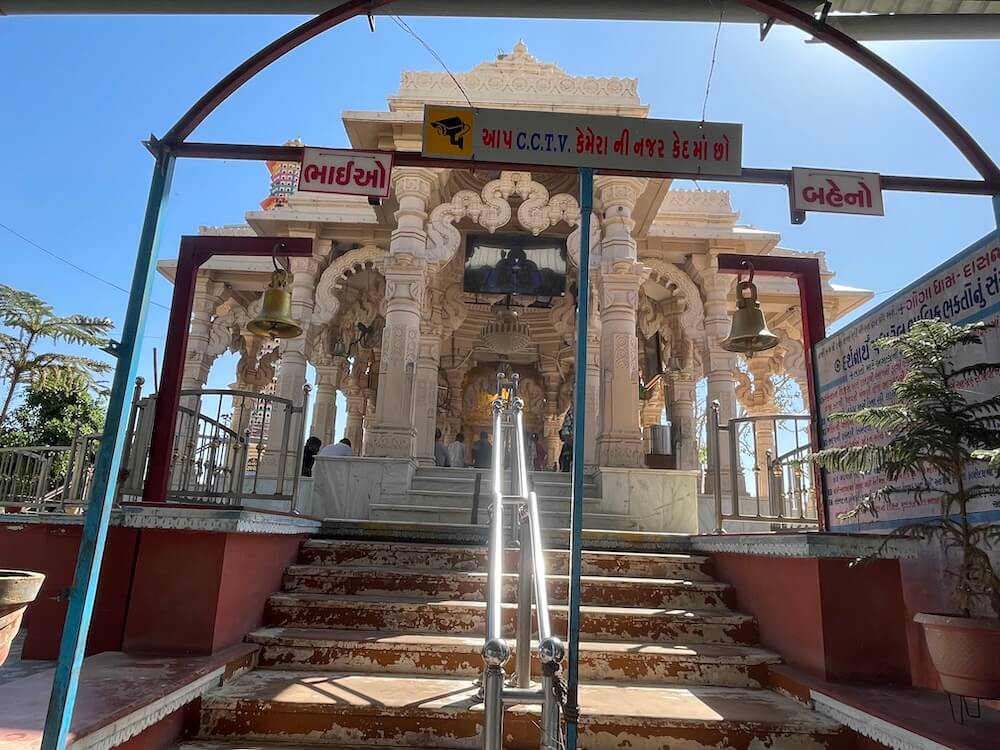
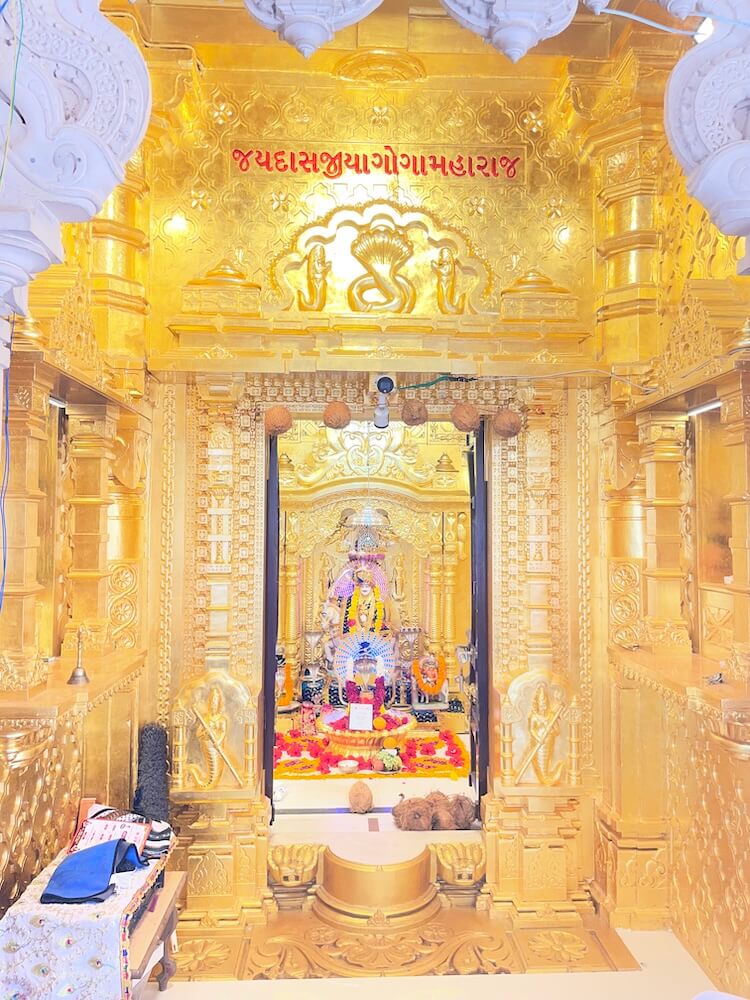
The vast courtyard of the temple is accessed through an arched gateway in the fortified perimeter wall. A large tin canopy has been erected in the courtyard for the comfort of the congregation. Facing the temple stands a tall flagstaff atop a three-tiered pedestal, its base adorned with numerous serpentine sculptures. One ascends 10 steps to reach the temple’s elevated plinth. It features a circumambulatory path surrounding the central structure. A further four steps lead into the interior, which comprises three viewing porches, an assembly hall, a vestibule and the sanctum sanctorum. The semi-open porches and hall are characterised by pillars linked by ornate, scalloped arches, with the ceilings featuring unique decorative patterns. The doorframes of the sanctum are masterpieces of craftsmanship, depicting gatekeepers at the base and a serpent on the lintel.
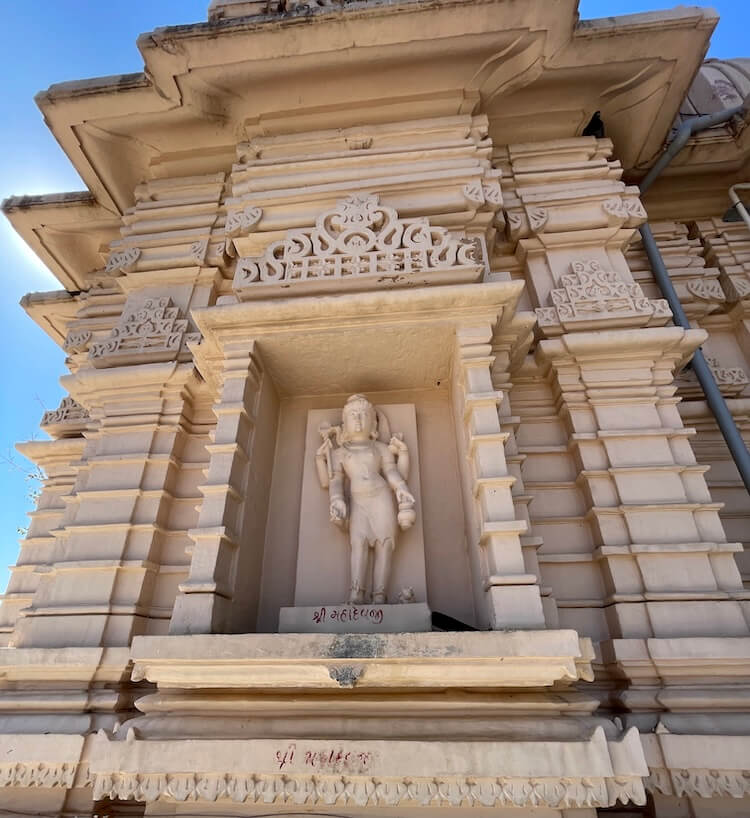
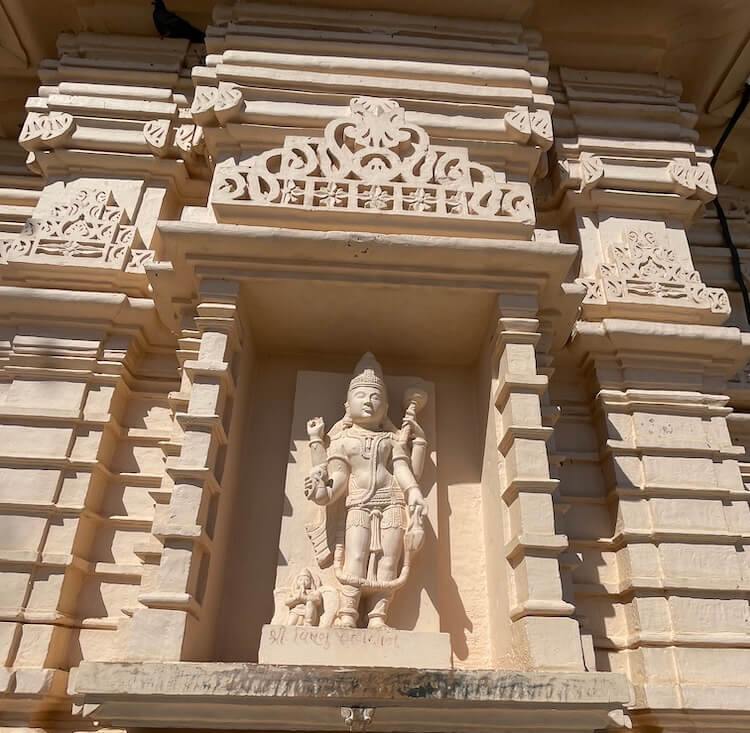
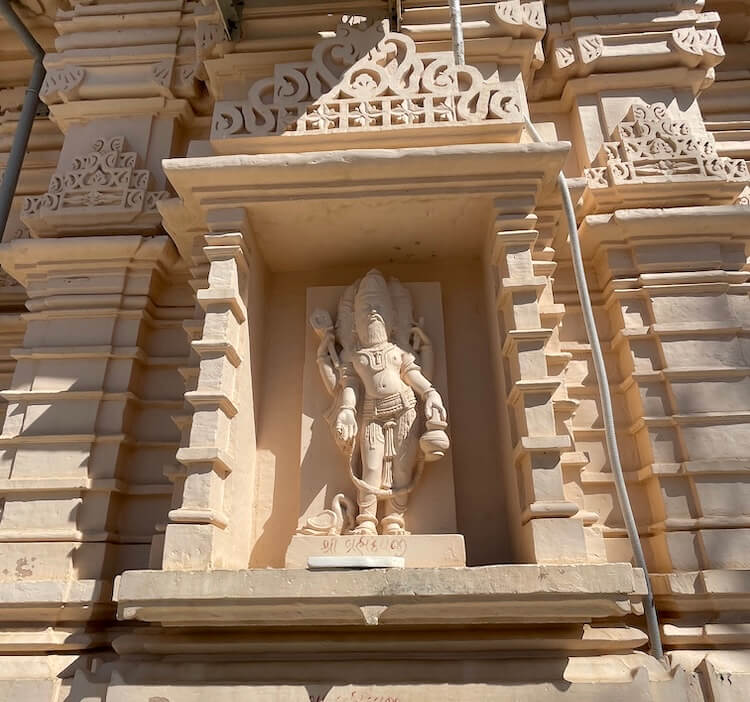
Within the sanctum, a large brass serpent sits upon a lotus-shaped throne, adorned daily with a beautiful turban. Before it, a white marble idol of Goga Maharaj mounted on a horse is ensconced within a golden frame, bedizened with fine raiment, jewellery and a splendid crown. Numerous metallic serpent figurines lie at the base. The exterior walls are embellished with niches containing various deities, while the spire above the sanctum is of the ‘Urushringa’ style, replete with miniature spires and intricate carvings. The complex also houses smaller shrines dedicated to Ganpati, Hanuman and Mata Bhuvaneshwari, alongside a Shivalinga and a grand sacrificial hall (‘Yagnashala’).
The temple witnesses a significant influx of devotees on the fifth day of both the bright and dark fortnights of every month. A grand fair is held on ‘Nag Panchami’ (the fifth day of the dark fortnight of Shravan), attracting thousands who offer milk in devotion. ‘Mahaprasad’ (sacred communal meals) is served daily from 12:00 pm to 1:30 pm and again from 6:30 pm to 8:00 pm.
This sacred temple stands as a testament to deep spiritual devotion, ancient architectural grandeur, and rich local cultural traditions.
The sanctum sanctorum houses the divine idol consecrated according to ancient Vedic traditions, surrounded by serene courtyards and traditional temple architecture.
Navratri, Maha Shivratri, Annual Temple Jatra & Deepotsav
Compare and book flights, secure top-rated local hotels near the temple, hire reliable guides, and rent cars instantly.
Extend your pilgrimage by visiting other highly sacred temples located nearby.


Add ₹999 more to unlock FREE SHIPPING!
Your sacred cart is currently empty.
Shop Photo FramesFill in your delivery details below to place your order.
Add comment