
Add ₹999 more to unlock FREE SHIPPING!
Your sacred cart is currently empty.
Shop Photo FramesIn the Hingoli region of Marathwada, historic battles were fought between the British and the Marathas in the year 1803, while during the Revolt of 1857, the heirs to the throne of Nagpur, their army, and local rebels fought against the British. Following India’s independence, during the reorganization of states in 1956, Hingoli was incorporated into Maharashtra state as part of the Marathwada region. In 1960, Hingoli was included in Parbhani district. On May 1, 1999, Parbhani district was bifurcated, creating Hingoli as an independent district. Perched on a high hillock in Kavtha village of this district lies the ancient and renowned temple of Goddess Jagadamba. This temple is a sacred place of deep devotion for thousands of devotees across Marathwada.
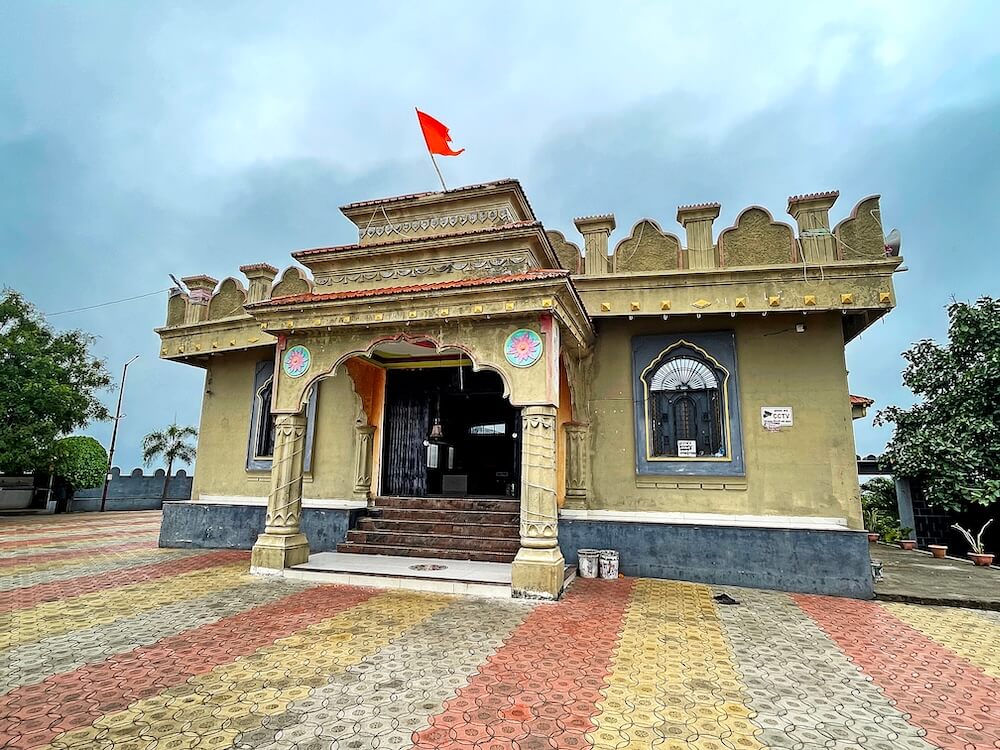
According to local villagers and temple trustees, this holy shrine is approximately 1,350 years old. Located in the catchment area of the Kayadhu River, Sengaon taluka has historically been of immense agricultural and administrative importance. The temple stands atop a hill near Kavtha village in the taluka. Originally, a grand temple constructed in the Hemadpanti architectural style stood here; however, it collapsed in the year 1970. Subsequently, a tin roof was erected over the sacred idol. A few years ago, a new temple was reconstructed at this site. The Government of Maharashtra has honored this temple with ‘B’ grade pilgrimage site status.
The temple is situated on a high hill close to the village. A wide pathway crafted from carved stone steps leads up to the hilltop. Comprising about 150 steps, the stairwell features sturdy security railings on both sides. Thanks to tree conservation efforts across the hill, lush greenery fills the surroundings. The temple is protected by strong, fort-like ramparts with a grand entrance gate. Inside the entrance, guard rooms are situated on both sides. In the spacious, paver-blocked courtyard of the temple, seating arrangements for devotees are placed along the ramparts, alongside a majestic Deepstambha (lamp tower). Sculptures of monkeys adorn the seating areas, and a sacred Yagya Kunda (sacrificial pit) is situated within the courtyard. There is also a small pagoda-style shrine in the courtyard with a three-tiered roof, housing stone idols of local deities.
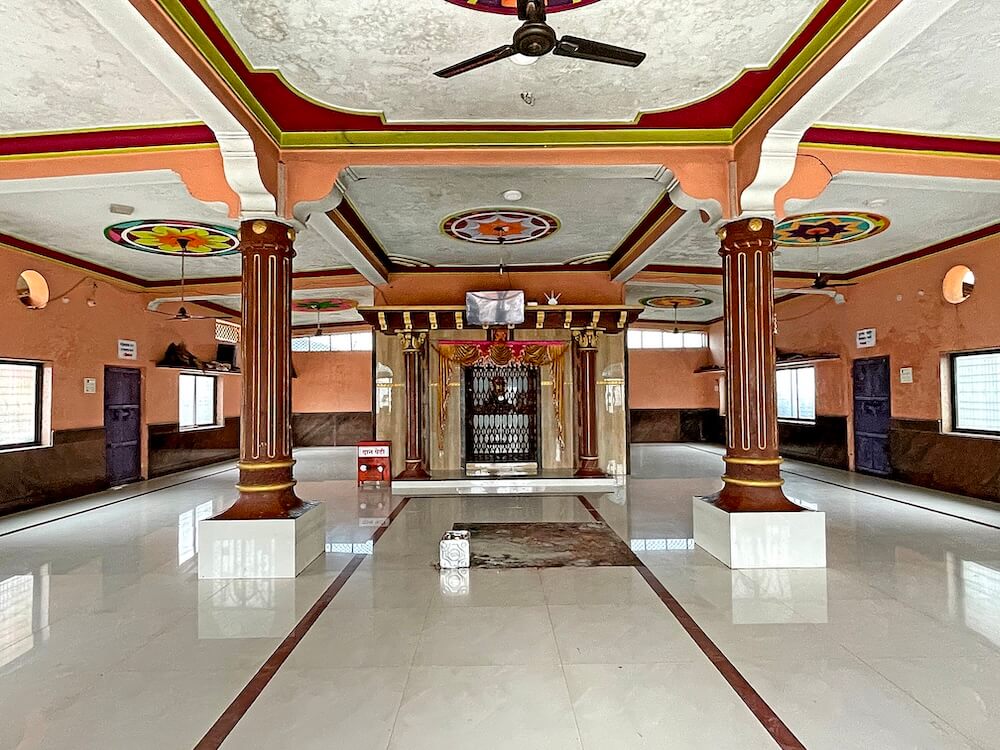
The Jagadamba Devi Temple is designed with a Mukhamandapa (entrance porch), Sabhamandapa (assembly hall), and Garbhagriha (sanctum sanctorum). The temple features three Mukhamandapas and three entrance gates—facing the front, left, and right sides. Within the Mukhamandapa, four carved pillars interconnected by arched toranas support the beam and ceiling. Brass bells hang from the ceiling, and intricate wheel-carvings adorn the vault. Because the temple stands on an elevated plinth, there are six steps leading up to each entrance of the Sabhamandapa. The entrance is simple, and the enclosed Sabhamandapa features windows for natural light and ventilation. The Garbhagriha is situated in the center of the Sabhamandapa, flanked by four intricately carved pillars on its four sides. All pillars rest on square bases with vertically fluted carvings along the shafts. At the top of the pillars are brackets (hasta) supporting the beams. The roof of the Sabhamandapa rests upon these beams and walls, featuring circular wheel patterns on the ceiling.
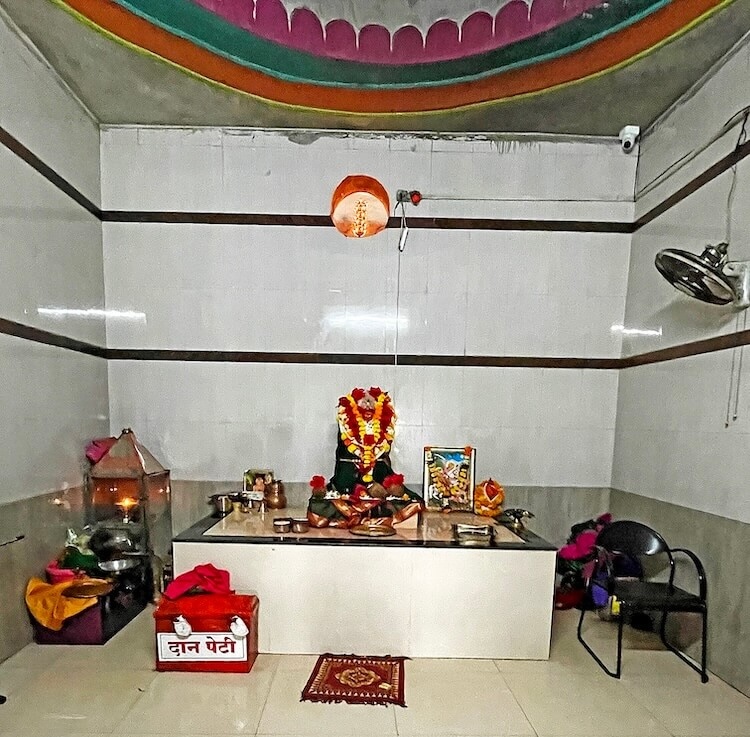
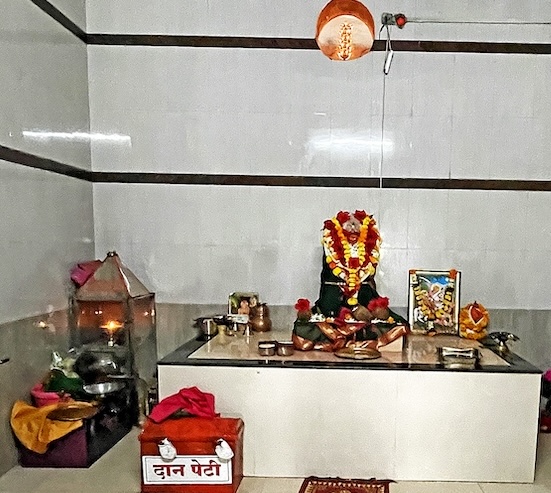
The Garbhagriha is elevated above the Sabhamandapa, with two steps at its entrance. The doorframes of the Garbhagriha feature beautiful carvings. Inside the Garbhagriha, seated upon a Vajrapeetha (sacred pedestal), is the sacred stone idol of Goddess Jagadamba anointed with vermilion (sindoor). Adorned in divine garments and elegant ornaments, the Goddess wears a silver crown upon Her head. On the pedestal, another vermilion-anointed stone idol and a picture of Lord Khandoba are also enshrined. A Pradakshina (circumambulation) path surrounds the outer side of the Garbhagriha. Three-tiered pagoda-style spires (Shikharas) adorn the roofs of the three Mukhamandapas. A protective railing surrounds the roof of the Sabhamandapa on all sides. Above the Garbhagriha stands a domed Shikhara crowned with a sacred Kalash.
The Sharad Navratri festival is the grand annual festival celebrated here with intense devotion and fervor. Additionally, festivals such as Chaitrotsav, Kartik Purnima, Dasara, Diwali, Kojagari Purnima, and the holy month of Shravan are celebrated at the temple. During all festival occasions, spiritual programs such as Bhajan, Kirtan, Jagaran, Gondhal, Pravachan, recitations of Shrimad Bhagavat Katha, and Mahaprasad are organized. Thousands of devotees arrive during festivals for divine darshan of the Goddess and to fulfill their vows. Tuesdays, Fridays, Ashtami, Purnima, and Amavasya see a special gathering of devotees at the temple.
This sacred temple stands as a testament to deep spiritual devotion, ancient architectural grandeur, and rich local cultural traditions.
The sanctum sanctorum houses the divine idol consecrated according to ancient Vedic traditions, surrounded by serene courtyards and traditional temple architecture.
Navratri, Maha Shivratri, Annual Temple Jatra & Deepotsav
Compare and book flights, secure top-rated local hotels near the temple, hire reliable guides, and rent cars instantly.
Extend your pilgrimage by visiting other highly sacred temples located nearby.


Add ₹999 more to unlock FREE SHIPPING!
Your sacred cart is currently empty.
Shop Photo FramesFill in your delivery details below to place your order.
Add comment