
Add ₹999 more to unlock FREE SHIPPING!
Your sacred cart is currently empty.
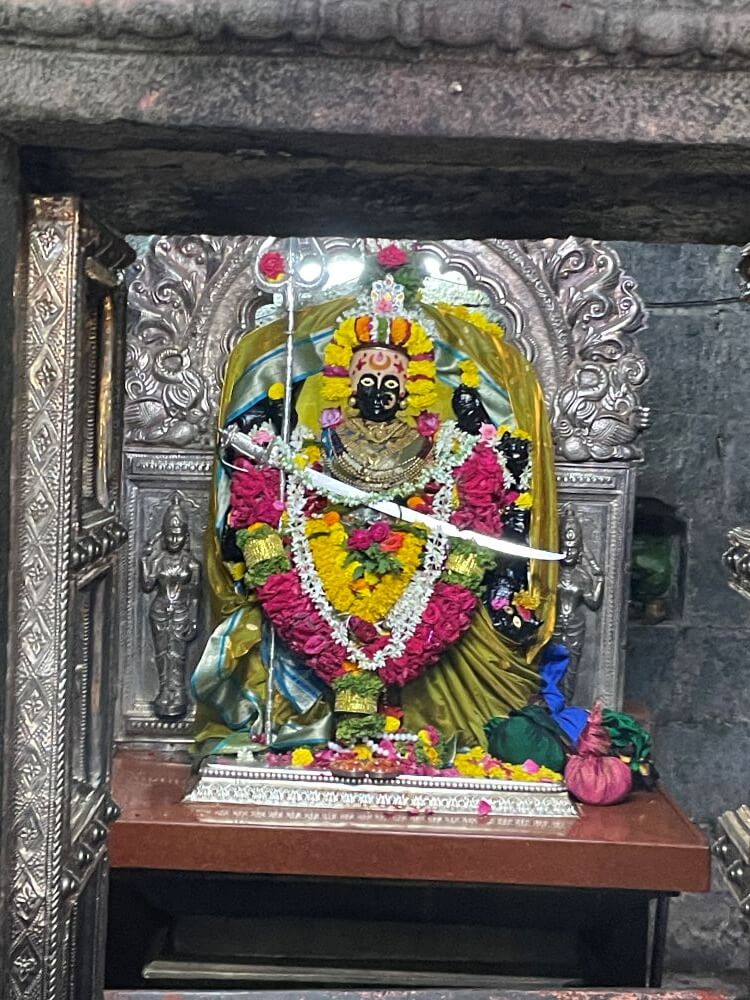
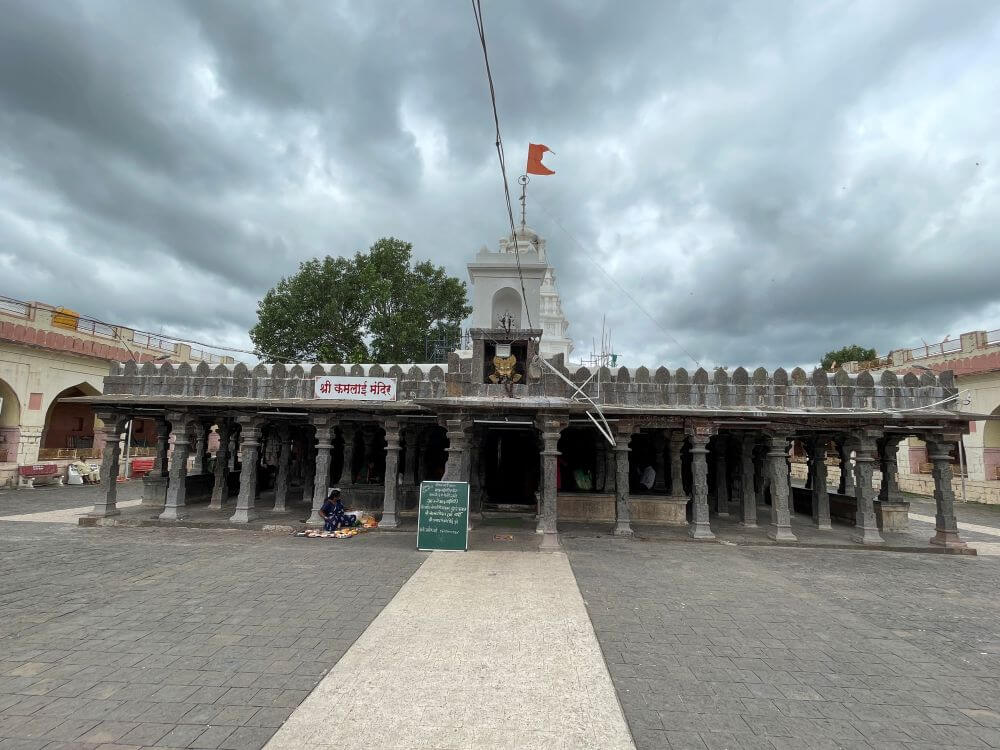
Shop Photo FramesThe Naik Nimbalkars of Phaltan were devout followers of Tulja Bhavani. They renovated the temple at Tuljapur and introduced several improvements. Even while serving under the Yavanas, they never allowed their faith in God and Dharma to waver. Within their jagir of 96 villages, they renovated many temples and built several new ones. As a representation of their revered deity, Tulja Bhavani, they constructed the Kamala Bhavani Devi temple at Devicha Mal in Karmala taluka. Devotees believe that the deity in this approximately three-hundred-year-old temple is ‘Jagrut’ (awakened) and grants their prayers.
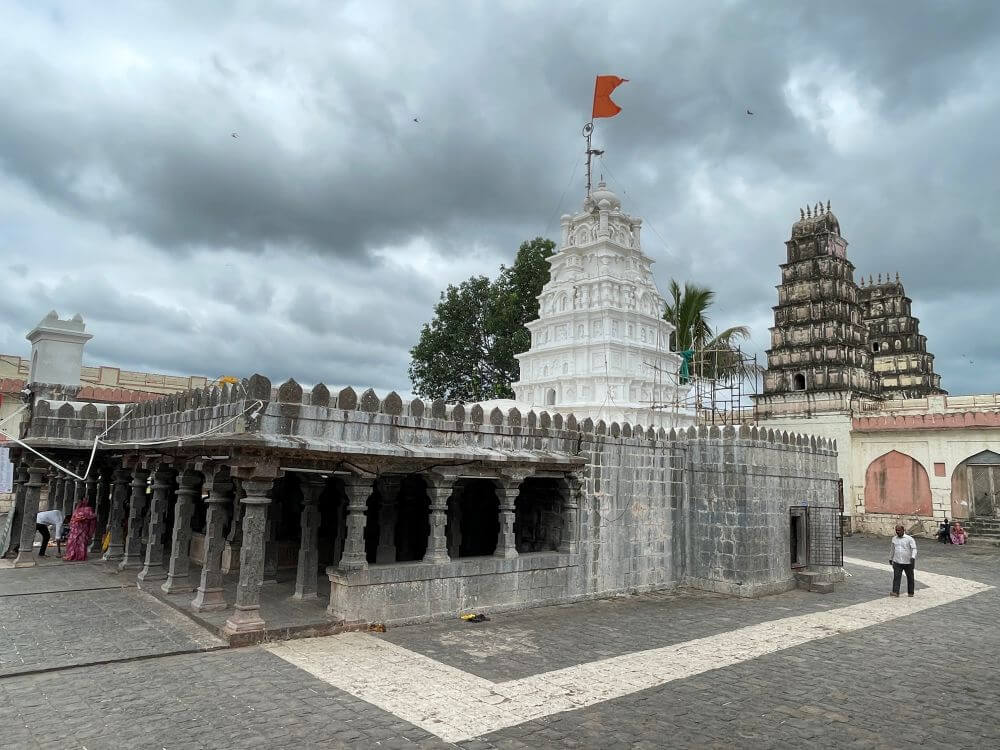
Built in the Hemadpanti architectural style with stone masonry, this temple is considered religiously and historically significant. It is said that Jagirdar Ravarambha Nimbalkar began the construction of this temple in 1727 AD, and it was later completed by his son, Janoji Raje Nimbalkar, in 1745 AD. Ravarambha Nimbalkar, the grandson of Jagirdar Babaji Naik-Nimbalkar, had received the jagirdari of Phaltan from the Nizam. This jagir, which remained under the control of the Nimbalkar family until India’s independence, included Naldurg, Bhum, and Tuljapur in the Osmanabad (Dharashiv) district, as well as Madha, Mohol, Karmala, Shendri, Ropale, and Dahigaon in the Solapur district, along with some villages in the Parbhani and Ahilyanagar districts. They were also granted a mansab of 22,000, as well as the honors of a palanquin and torches. Having lived in Tuljapur for many years, Ravarambha developed a deep devotion to Tulja Bhavani. After renovating the Tuljapur temple, Ravarambha Nimbalkar built the Kamala Bhavani temple in Karmala. Between 1740 and 1743, when Janoji Nimbalkar accompanied Raghoji Bhosale on an expedition to Chitrapalli in the south, he was deeply impressed by the beauty of the temples built in the local style. Consequently, Janoji Raje had gopurams (towers) constructed over the entrances of this temple in a similar fashion.
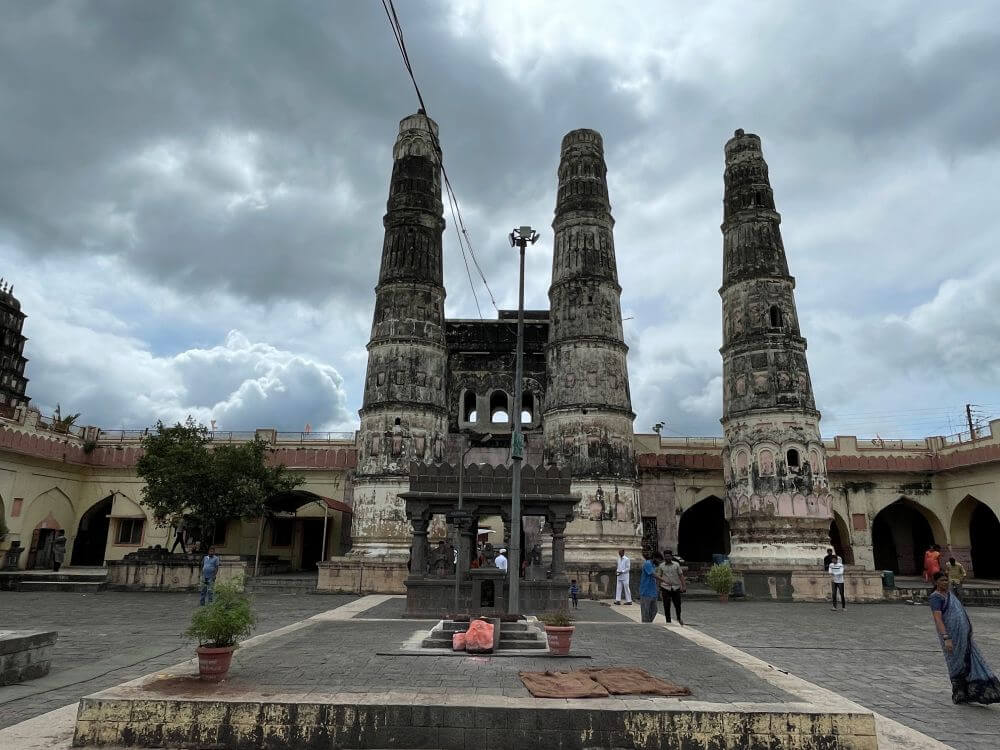
It is said that the 96-kuli Maratha Ravarambha Nimbalkar had 96 villages in his jagir. Therefore, he gave special importance to the number 96 while building this temple. There are a total of 96 pillars in the temple, 96 cloisters (ovaris) around it, 96 sculptures in the temple, and 96 steps in the stepwell (barav). For this reason, the temple is famous as the ’96-Kuli Temple’. The temple complex spans about 80 acres and is enclosed by a sturdy fortification wall. The fortification has grand entrances on the east, south, and north sides. These entrances feature massive wooden doors with guard rooms on both sides. All three entrances are topped with tall gopurams. Below the gopuram are small chambers, and at the very top of the horizontal-style shikhara, there are five kalashas made of panchadhatu arranged in a row. Inside the gopurams, there are stairs leading toward the shikhara.
In the temple courtyard, there are two more two-storied entrances. The upper floors of these entrances house nagarkhanas (drum houses). There are a total of five entrances to reach the temple courtyard. A short distance from the main entrance, there are three deepmalas (lamp towers)—one on the left and two on the right. These octagonal, stone-built lamp towers are about 80 feet high, with six tiers and internal stairs for climbing. The design of the lamp towers is similar to that of a minaret. Along the fortification wall, there are 96 cloisters on all four sides, which serve as a bhaktaniwas (pilgrim lodging) for devotees arriving from outside. In the center of the courtyard, there is a yajna kund, a tulsi vrindavan, and the samadhis of the accomplished deceased men of the Nimbalkar family.
The temple structure consists of a mukhamandapa (front porch), sabhamandapa (assembly hall), antarala (vestibule), and garbhagriha (sanctum sanctorum). The roof of the mukhamandapa features a two-storied canopy (meghadambari) housing idols of Bhavani Devi. Since it is higher than the mukhamandapa, there are three steps leading to the entrance of the sabhamandapa. The semi-open sabhamandapa is designed with stone benches (kakshasanas) for devotees to sit. All the pillars in the sabhamandapa stand on square bases. The shafts of the pillars transition through various geometric shapes, including squares, hexagons, and circles. At the top of the pillars are capitals and brackets supporting the beams. The center of the sabhamandapa ceiling is dome-shaped.
In the antarala, located in front of the sabhamandapa, there is a lion sculpture. In front of the lion sculpture, a carving of a woman in a reclining position is etched into the stone floor. To the left in the antarala is a chamber containing a vajrapitha (throne) with a brass idol of the Goddess and a brass horse sculpture. Further ahead is the entrance to the main garbhagriha. The door frames are adorned with floral carvings, and a Ganesha idol is carved on the lintel. The silver-plated door frames feature various intricate designs. Inside the garbhagriha, on a vajrapitha, stands the five-foot-tall idol of Kamala Bhavani Devi, carved from Gandaki stone, depicting her in the eight-armed Mahishasuramardini form. The Goddess holds various weapons in her hands.
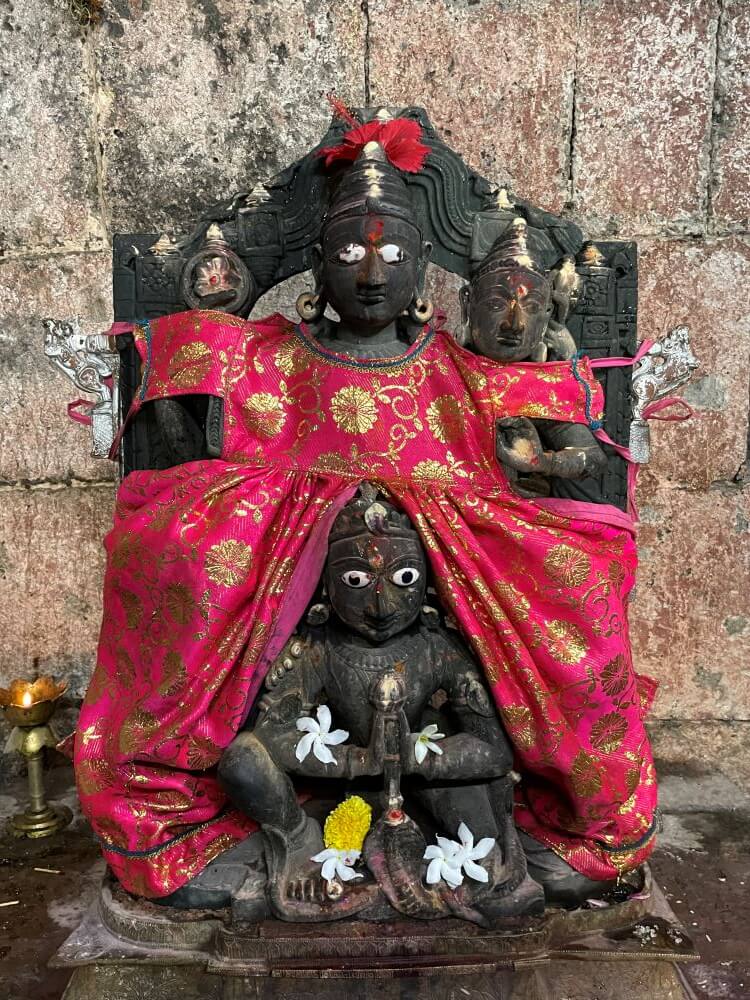
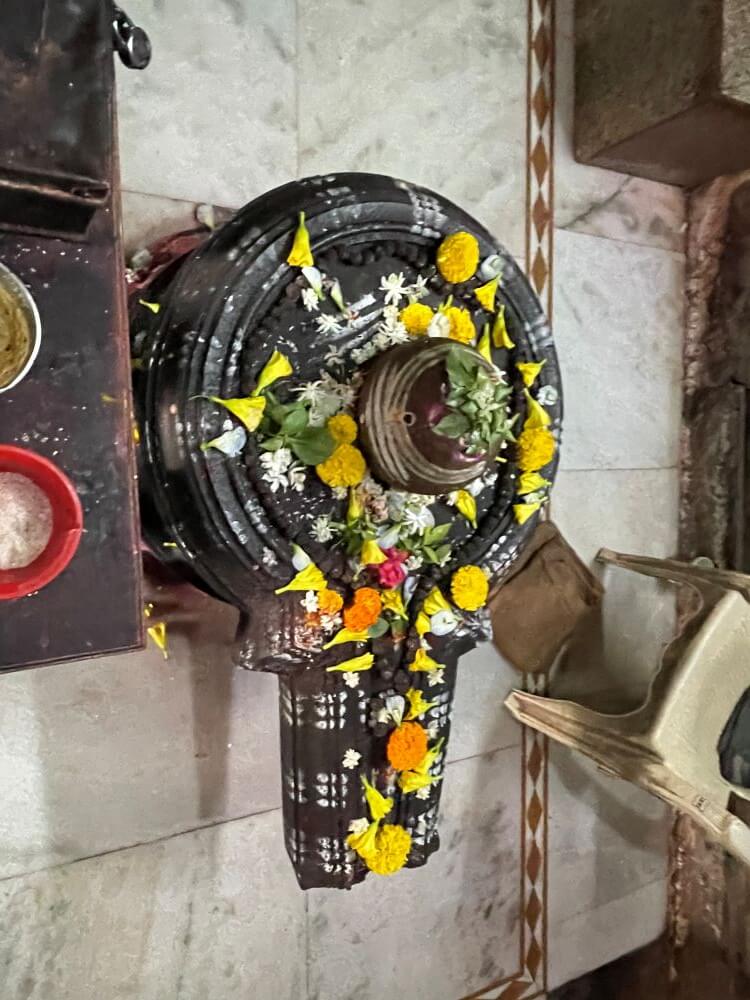
To the left and right of the main garbhagriha are two additional sanctums. The one on the right houses a Shiva Linga, and the one on the left contains idols of Lord Vishnu and Lakshmi riding Garuda on a vajrapitha. This same sanctum also houses an image of the Sun God riding a seven-horse chariot, carved in black stone. The temple roof is protected by a parapet wall on all sides. The main garbhagriha is topped by a six-tiered, square-shaped Dravidian-style shikhara. The shikhara is adorned with sculptures of various deities, yakshas, yoginis, animals, and birds, along with Islamic-style carvings. Near the temple is a historic stepwell (barav). It has 96 steps to descend, which is why it is famous as the ’96-Step Well’. The famous Marathi film ‘Sairat’ was filmed at this well.
A five-day annual fair is celebrated with great enthusiasm from Kartik Purnima to Chaturthi. During this time, the Goddess’s procession (chhabina) is taken out. Amidst the sound of drums and the throwing of gulal, the Goddess is placed in a palanquin and taken around the village. Thousands of devotees from Maharashtra, Karnataka, and Andhra Pradesh arrive for darshan and to fulfill their vows. During the fair, programs such as bhajans, kirtans, mahaprasad, jagran, and gondhal are organized for five consecutive days. The Sharadiya Navratri festival is the second most important annual event here. During these ten days, lakhs of devotees visit for darshan and to fulfill their vows. Devotees offer sarees, blouses, coconuts, and various auspicious ornaments to the Goddess. There is a large influx of devotees on Tuesdays, Fridays, Ashtami, Purnima, and Amavasya. Devotees can visit the temple for darshan daily from 6:30 AM to 11:30 PM.
This sacred temple stands as a testament to deep spiritual devotion, ancient architectural grandeur, and rich local cultural traditions.
The sanctum sanctorum houses the divine idol consecrated according to ancient Vedic traditions, surrounded by serene courtyards and traditional temple architecture.
Navratri, Maha Shivratri, Annual Temple Jatra & Deepotsav
Compare and book flights, secure top-rated local hotels near the temple, hire reliable guides, and rent cars instantly.
Extend your pilgrimage by visiting other highly sacred temples located nearby.

Add ₹999 more to unlock FREE SHIPPING!
Your sacred cart is currently empty.
Shop Photo FramesFill in your delivery details below to place your order.
Add comment