
Add ₹999 more to unlock FREE SHIPPING!
Your sacred cart is currently empty.
Shop Photo FramesGoa was under Portuguese rule for approximately 450 years, from 1510 to 1961. From the third century BCE, Goa was ruled by the Maurya dynasty, followed by the Shilaharas, Kadambas, Chalukyas, the kings of Vijayanagara, and the Adil Shahi dynasty. In the latter half of the fifteenth century, the Portuguese set foot on Goan soil and maintained a firm grip for four and a half centuries. During this period, the indigenous culture and temples faced constant intimidation. Despite these circumstances, some temples survived, and the Kamleshwar Temple in Korgao, Pernem, is one of them. Devotees hold a deep faith that the awakened Mahadeva here grants their prayers.
It is said that the Kamleshwar Maharudra Temple was built by Queen Kamaladevi of Revatidwipa, known as Redi. For this reason, the temple is known as Kamleshwar. According to legend, when the gods were defeated in a war against the demons, Lord Vishnu installed a Shiva Linga at this site. To seek the blessing of victory from Mahadeva, Vishnu offered a thousand lotus flowers upon the Linga. However, to test Vishnu’s devotion, Mahadeva hid one flower. Not wanting to break his vow for the sake of a single flower, Vishnu offered his own lotus-like eye to the Lord. Pleased by Vishnu’s devotion, Mahadeva granted him the blessing of victory. Because of the offering of a thousand lotus flowers (Sahasra Kamala) made here, the temple came to be known as Kamleshwar.
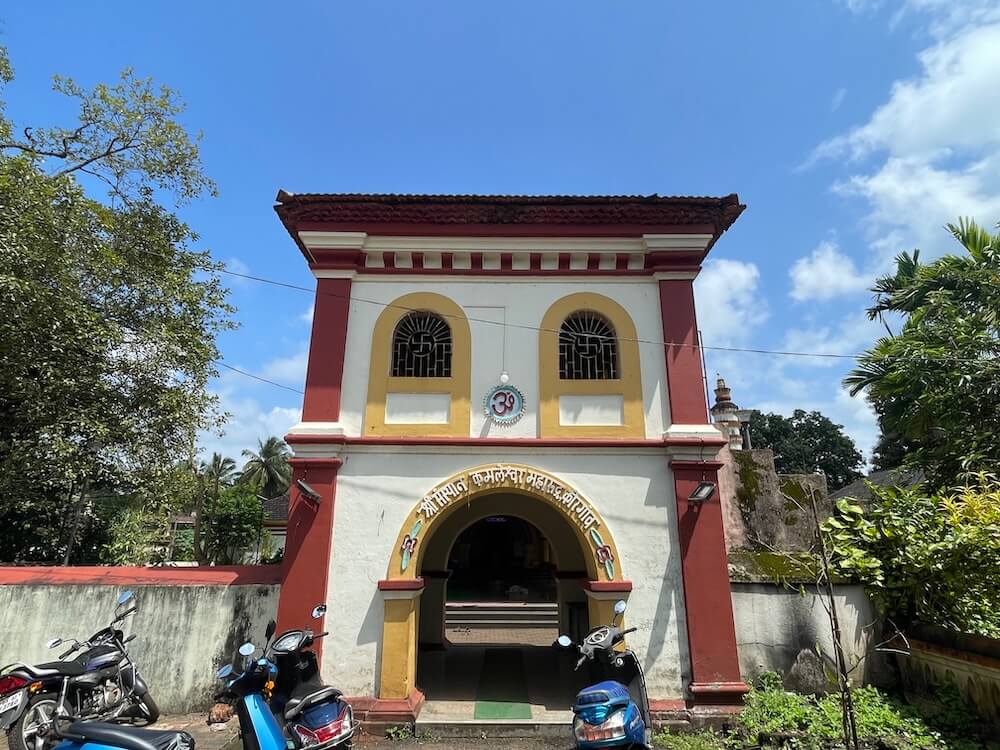
The temple is located in the heart of the village along the road, featuring a fortification wall and a two-story entrance gate within the wall. There is a Nagarkhana (drum house) on the upper floor of the entrance gate, with guard rooms on both sides. The temple courtyard, paved with paver blocks, is spacious. The courtyard houses other shrines and structures dedicated to various deities. All the temple roofs are tiled. In the courtyard stands an octagonal platform with three tiers, topped by an eight-layered octagonal Deepmala (lamp tower), which culminates in a shikhara at the top. The temple structure consists of a Sabha Mandapa (assembly hall), a main Sabha Mandapa, an Antarala (vestibule), and the Garbhagriha (sanctum sanctorum). The Sabha Mandapa is semi-open in nature. In the center of the floor lies a Homa-kunda (sacrificial fire pit), with seating benches for devotees along the outer edges. The Sabha Mandapa has four rows of six pillars each. The outer pillars are integrated into the seating benches, while the inner pillars stand on square bases. The shafts of the pillars are square at the bottom and octagonal at the top. The tiled roof, supported by a wooden framework, is divided into two sections.
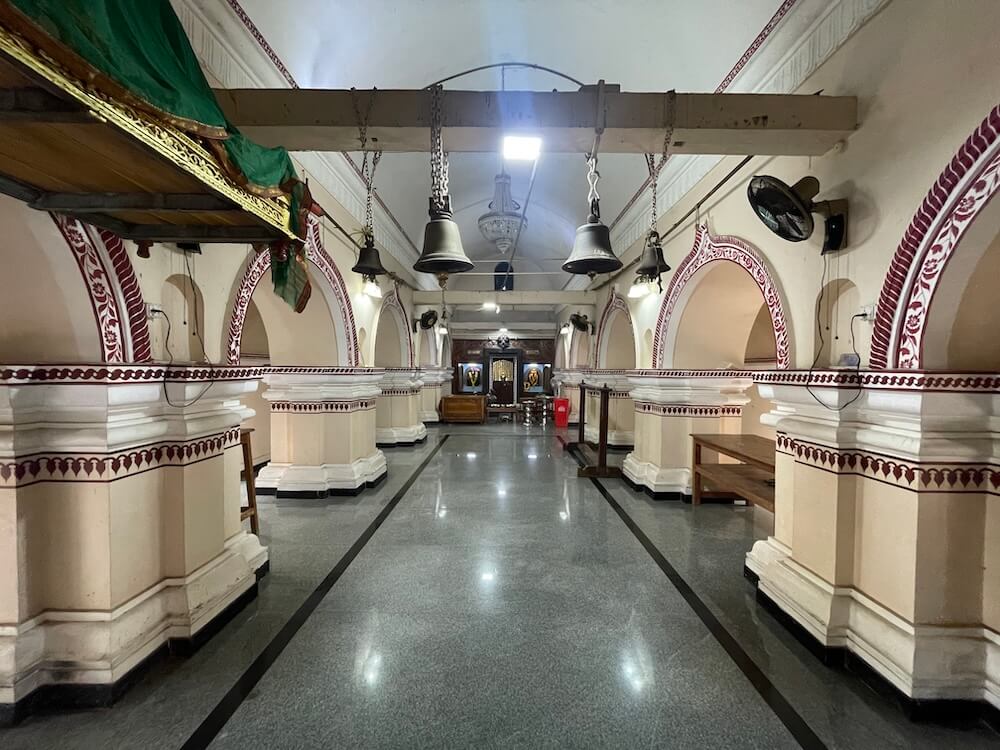
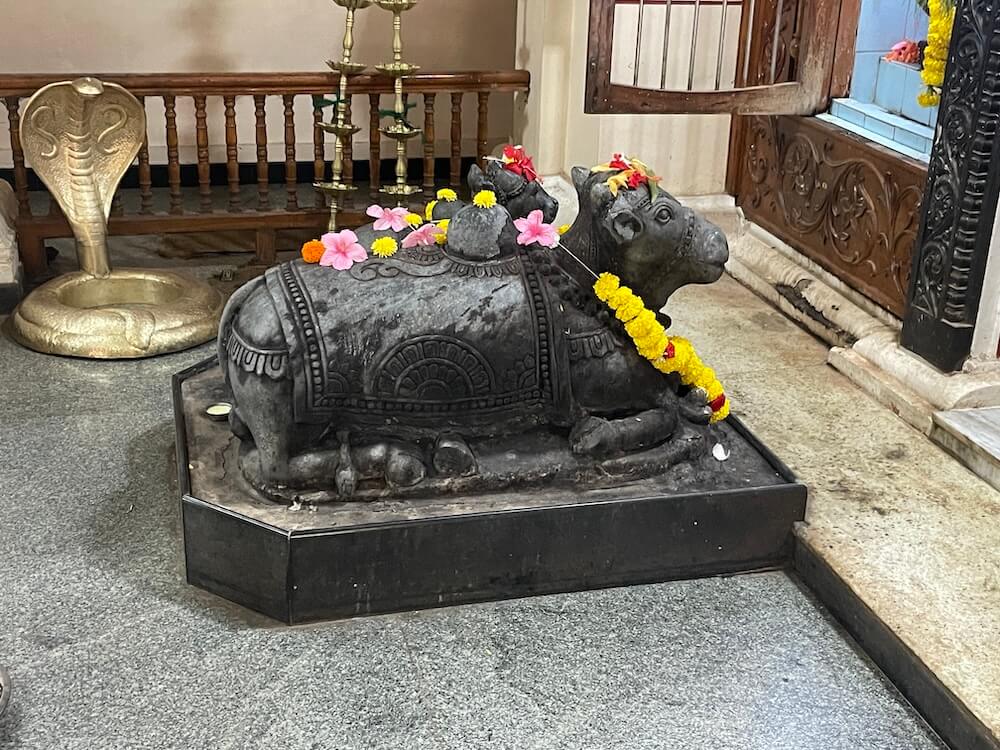
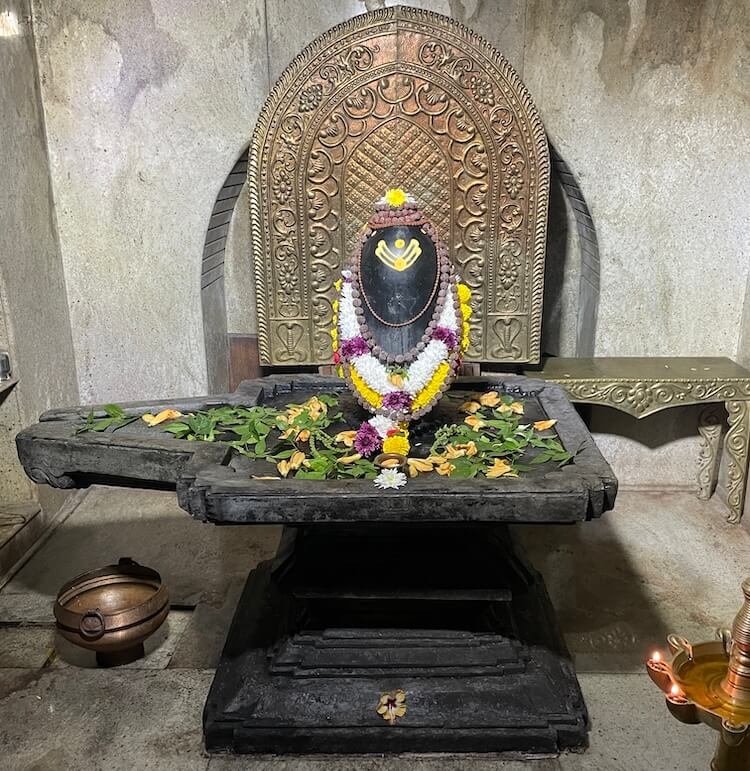
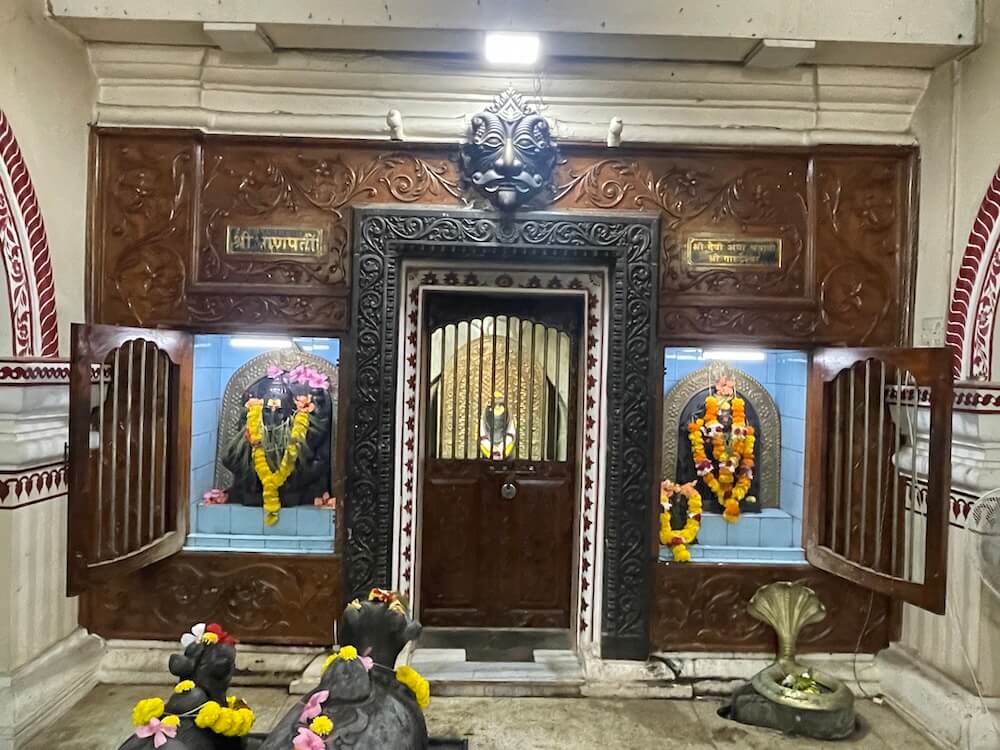
The main Sabha Mandapa is enclosed and divided into two parts. The first part, measuring about twenty feet in length and width, has a four-foot-high parapet on all four sides with seating benches. This is where rituals such as decorating the deity’s palanquin and performing the Kaul (divination) are conducted. Beyond this is the second spacious section of the main Sabha Mandapa. Here, there are two rows of sturdy pillars on the left and right sides. The pillars in each row are connected by semi-circular arches. There are two additional doors on the left and right sides of this hall. Further ahead is a wooden safety railing, leading into the Antarala. Here, on a wooden table, are the Paduka (footprints) of the Lord. Devotees must take the darshan of Mahadeva from this point. In the Antarala, there are two black stone idols of Nandi on a Vajrapitha (pedestal). To the right in the Antarala, on the floor, is the Shiva Linga. Beyond this is the Garbhagriha. On the front wall of the Garbhagriha, on both sides of the entrance, are niches containing black stone idols of Ganapati on the left and Parvati on the right. The front wall and door frames are adorned with floral carvings, and a Kirtimukha is carved on the lintel. The entrance has ornate wooden shutters. Inside the Garbhagriha, there is a large Shiva Linga on the floor. A silver five-hooded serpent (Naga) canopy is held over the Shiva Linga. A copper vessel for Abhisheka (ritual bathing) is suspended from the ceiling. Rows of brass oil lamps are hung on both sides of the Shiva Linga.
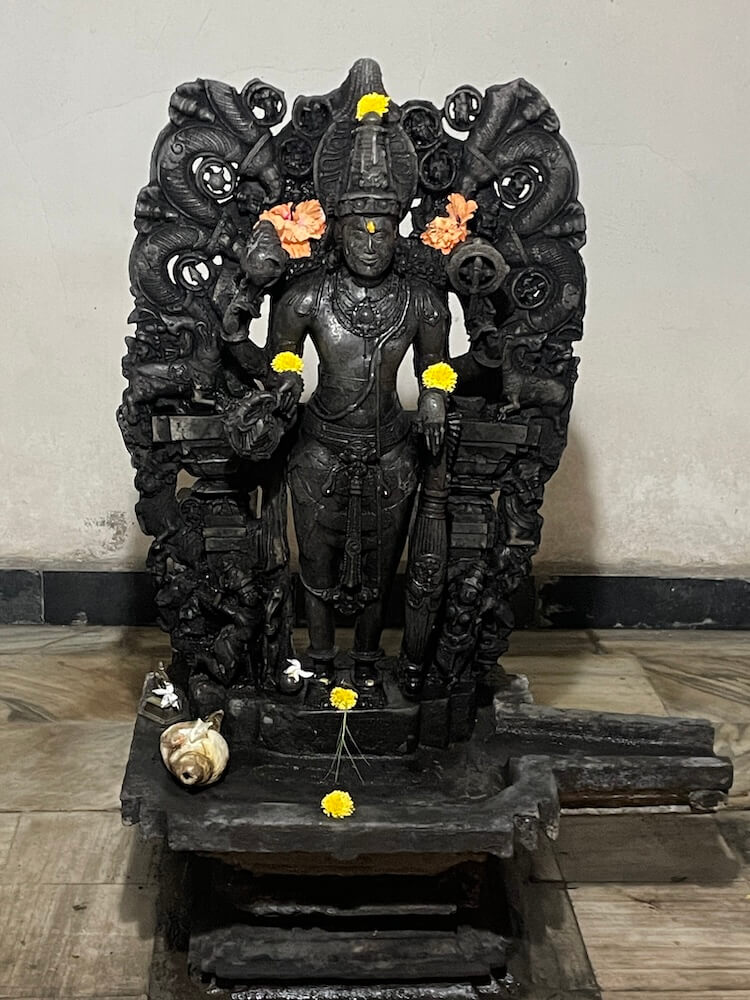
Against the back wall of the Garbhagriha, on a Vajrapitha, stands the brass Utsava Murti (processional idol) of Mahadeva. During the palanquin procession, this idol is placed in the palanquin and taken around the village. There is a circumambulation path around the exterior of the Garbhagriha. The temple roof is tiled, and the roof of the Garbhagriha features a two-tiered shikhara. The first lower tier is octagonal, and the second is a circular dome. At the top of the shikhara is a stupika topped with a Kalasha. In the courtyard, adjacent to the temple, is the Shri Vishnu Narayan Temple, which houses an ancient idol of Vishnu holding a conch, discus, mace, and lotus. Near this temple is the Kuvaleshwari Devi Temple, where the full-sized idol of the Goddess is exceptionally beautiful. A short distance from the temple is the Bhumika Devi Temple. Bhumika Devi is a deity of the earth, and this temple is surrounded by strong fortifications with a grand and beautiful entrance gate. The architecture of this temple is similar to that of the Kamleshwar Maharudra Temple.
Mahashivratri is the main annual festival celebrated here with great enthusiasm. Thousands of devotees from the surrounding areas visit to seek the Lord’s blessings and fulfill their vows. Palanquin processions are held on Mahashivratri, Holi, Dussehra, and the last Monday of the month of Shravan. During these times, the processional idol is placed in a palanquin and taken on a procession through the village. Throughout the year, various festivals such as Sharadiya Navratri, Kojagiri Purnima, Kartik Purnima, Dussehra, and Diwali are celebrated in the temple.
This sacred temple stands as a testament to deep spiritual devotion, ancient architectural grandeur, and rich local cultural traditions.
The sanctum sanctorum houses the divine idol consecrated according to ancient Vedic traditions, surrounded by serene courtyards and traditional temple architecture.
Navratri, Maha Shivratri, Annual Temple Jatra & Deepotsav
Compare and book flights, secure top-rated local hotels near the temple, hire reliable guides, and rent cars instantly.
Extend your pilgrimage by visiting other highly sacred temples located nearby.


Add ₹999 more to unlock FREE SHIPPING!
Your sacred cart is currently empty.
Shop Photo FramesFill in your delivery details below to place your order.
Add comment