
Add ₹999 more to unlock FREE SHIPPING!
Your sacred cart is currently empty.
Shop Photo FramesKunwara Bhivasan is a renowned sacred shrine situated on the banks of the Pench River, built near Navegaon-Khairi in the Parshivni taluka of Nagpur district. This holy site is the revered presiding deity of the Gond and Pardhan (a sub-group of the Gond community) tribes across the country and is more popularly known as Bhimalpen (where ‘Pen’ means God). During the annual pilgrimage that commences from Chaitra Purnima and continues for a quarter of a month (savva mahina), Gond tribal as well as non-tribal devotees throng from the entire Vidarbha region, Marathwada, Chhattisgarh, Madhya Pradesh, and Andhra Pradesh to seek the divine darshan of Bhimalpen.
According to the legend of the Kunwara Bhivasan Temple, Bhima was the blessed son born to the royal couple King Bhura and Queen Kotma. Bhima had ৬ brothers and ৫ sisters. Living in a Ghotul (a traditional residential institution for youth and a university of sorts), Bhima received excellent education and became accomplished in all virtues, mastering both weaponry and warfare. Through his sharp intellect, he had mastered all branches of knowledge. He had ২ twin maternal cousins who were also divine incarnations. Their names were Bamblai (Goddess Bamblehwari) and Tilkai (the Goddess of Koradi). Their parents approached King Bhura with a proposal for the marriage of Bhima and Bamblai; however, Bhima wished to dedicate his life to social service rather than getting entangled in worldly marital bonds. Upon seeing Bhima, Tilkai also developed a deep desire to marry him and persistently urged her parents to arrange her marriage with Bhima as well.
Both maidens were willing to marry Bhima; however, Bhima laid down a condition for them both that while he was on his travels, if they could successfully track him down and find him before the completion of ১ year, he would marry them, failing which they would all remain unmarried, and the maidens would remain celibate. All three accepted this proposal. Accordingly, XˀZthe two maidens journeyed as far as Dongargarh in search of Bhima. Growing exhausted from climbing the mountain, Bamblai stopped there, but Tilkai pressed further ahead in search of Bhima. By then, Bhima had reached the kingdom of Nandpur. Creating an illusion to bewilder Tilkai, he sat in deep meditation atop a hill. Since a full year had elapsed, Bhima remained unmarried, and thus he came to be known as Kunwara Bhivasan (the bachelor Bhivasan).
According to another legend, Bhima used to engage in intense meditation on a hill in the kingdom of Nandpur. At that time, a king named Uika was ruling there. Due to certain events, this king had experienced the supernatural powers possessed by Bhima. Although the kingdom of Nandpur was prosperous and abundant, the king and Queen Kajla remained grief-stricken as they were childless. Bhima blessed the queen, saying she would be blessed with a son. True to his word, she conceived a few days later. Witnessing the blessing granted by Bhima come true, the queen began visiting the hill where Bhima performed his penance every day to have his darshan. As it became difficult for the queen to climb up and down the hill during her pregnancy, the king had a palace constructed for her at the foothills.
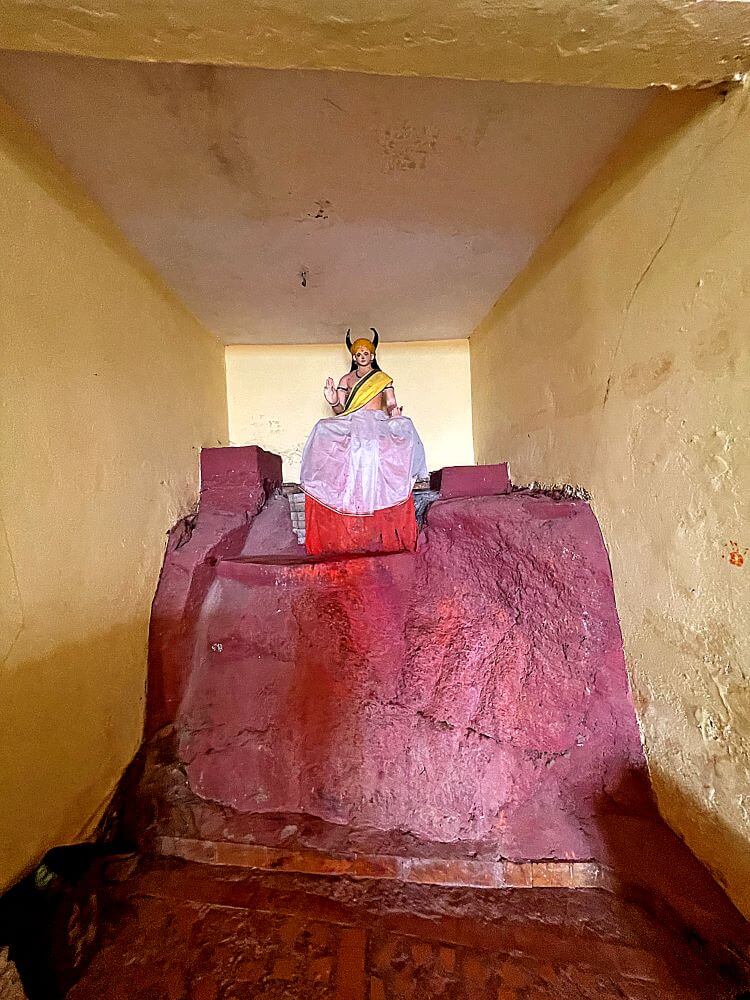
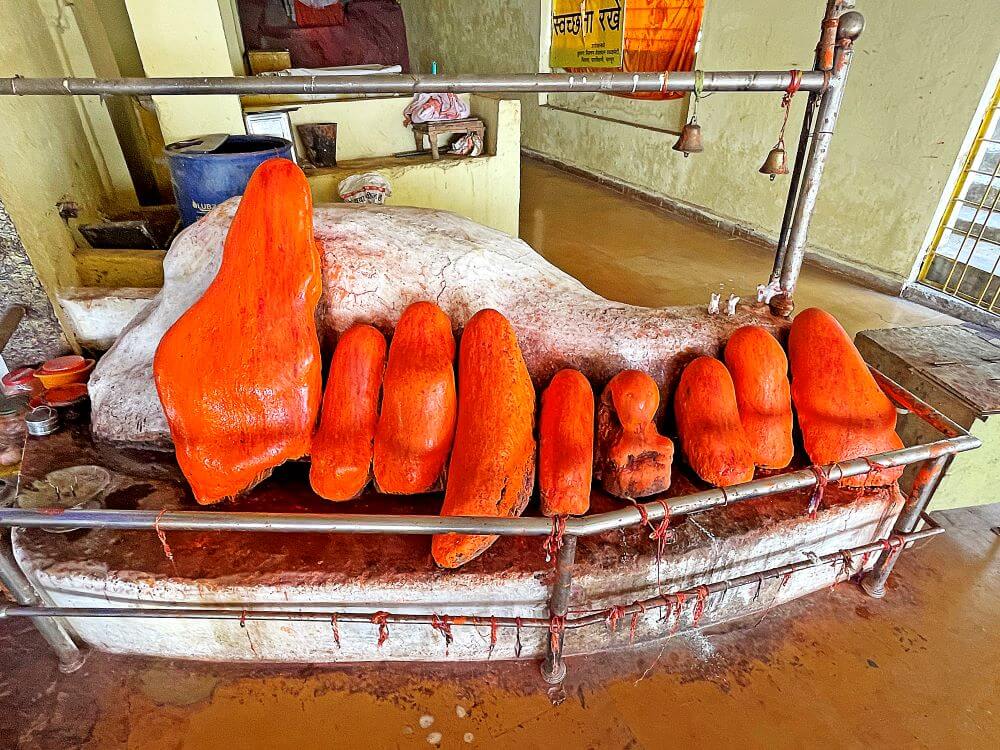
As the time of childbirth drew closer, it became increasingly difficult for the queen to ascend the fort. Therefore, she earnestly requested Bhima to come down with her. Accepting the queen’s request, Bhima laid down a condition, saying, “Walk down in the opposite direction to the path you take, but do not look back.” Once the queen came down, Bhima assumed a terrifying form and began striding forward. At that very moment, lightning flashed fiercely and rain began to pour. Overwhelmed with fear, she looked back and beheld the terrifying form of Bhima. Upon seeing this, she fainted and gave birth to a handsome baby right there. Because the queen violated the condition laid down by Bhima, he vanished from that very spot. The footprints left by him are still displayed here today. Devotees have consecrated his idol precisely at the spot where Bhima disappeared.
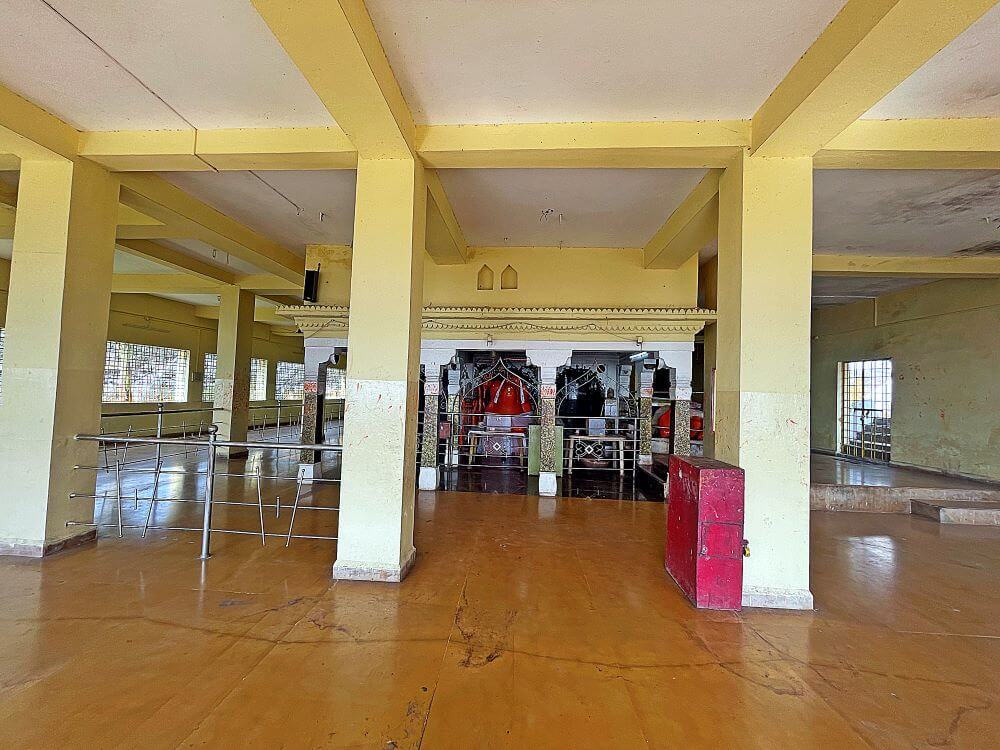
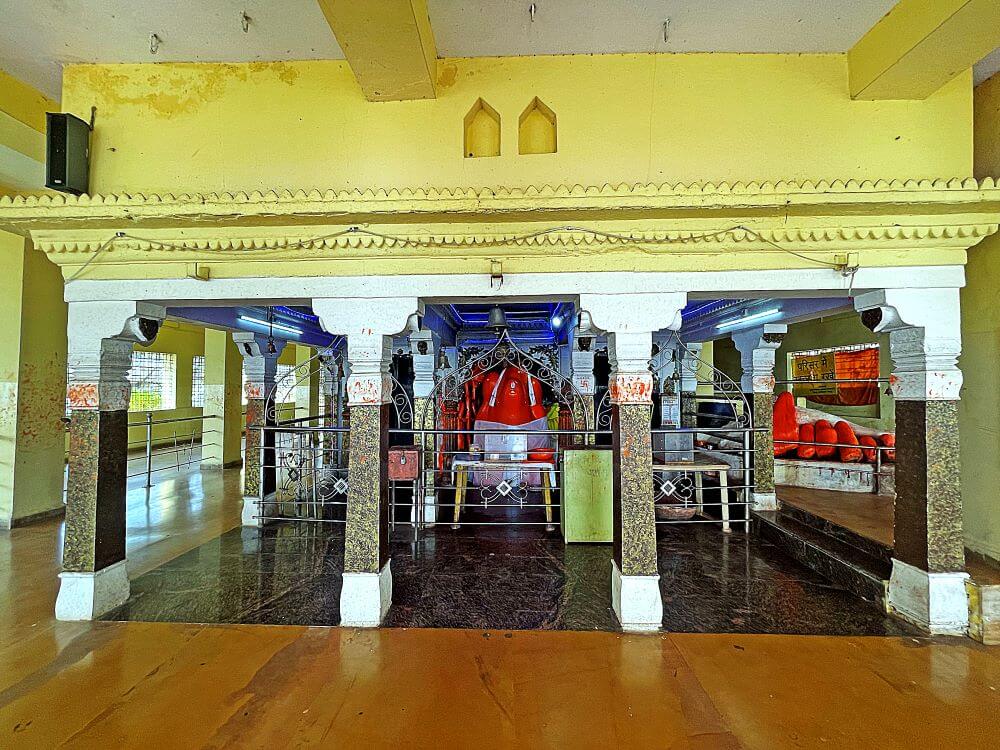
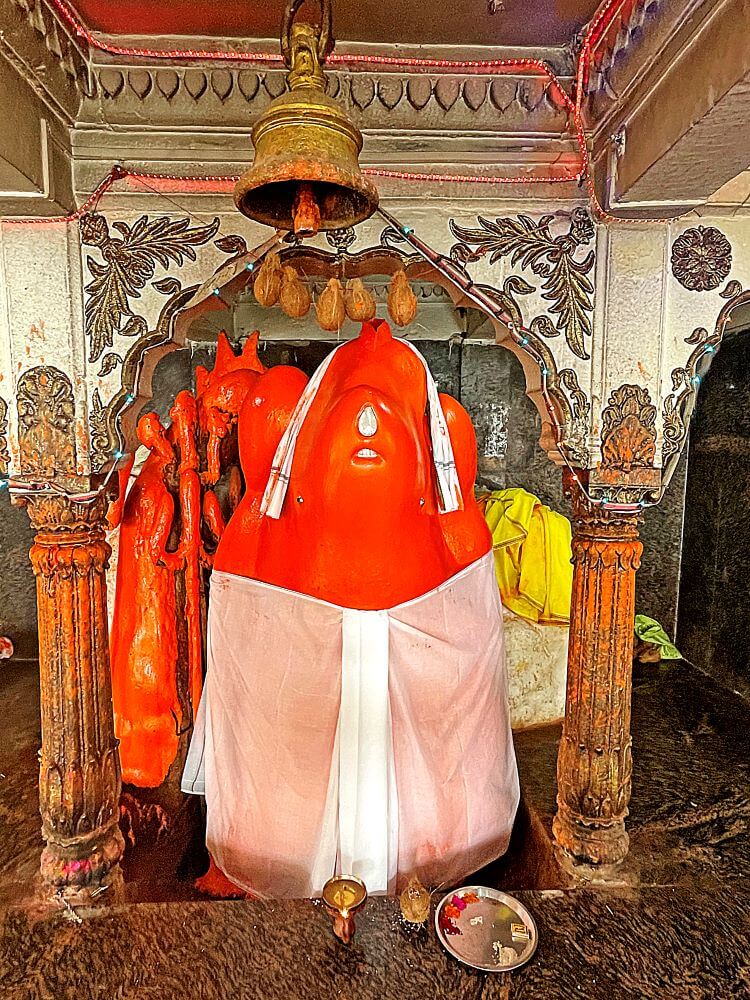
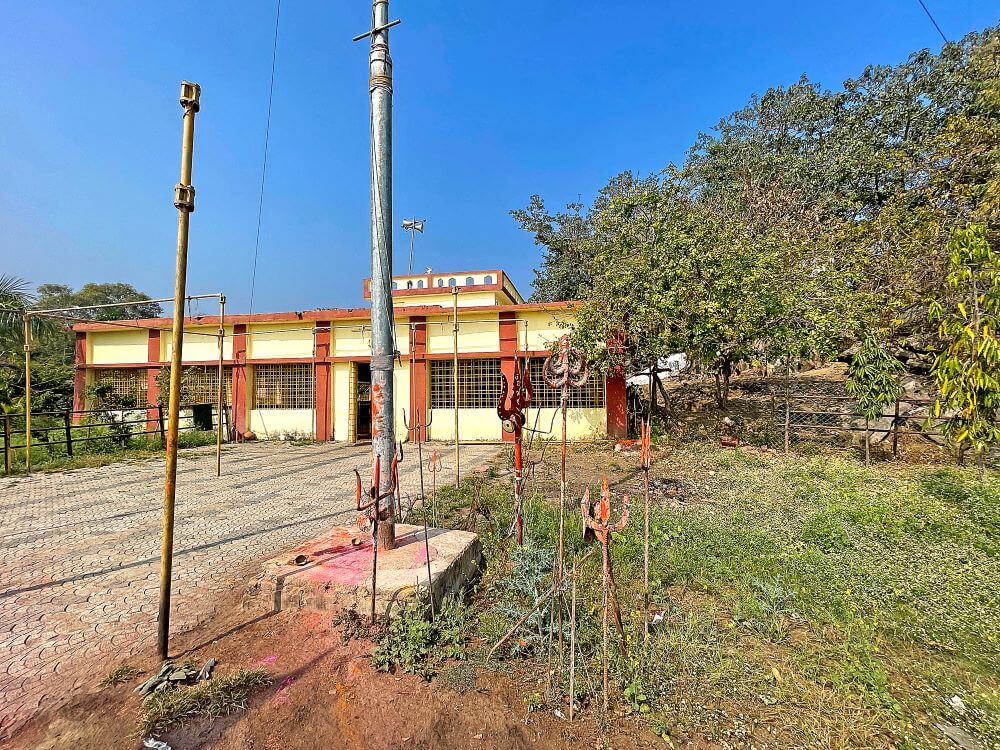
Devotees firmly believe that Kunwara Bhivasan, also known as Bhima or Bhimalpen, is a divine incarnate being. The shrine of Kunwara Bhivasan is located close to the flow of the Pench River. Presently, this temple and its surrounding area are well-known as a tourist destination. The temple architecture consists of a assembly hall (sabhamandap) and a sanctum sanctorum (garbhagriha). In the center of the temple’s assembly hall is the sanctum sanctorum, which houses an idol of Kunwara Bhivasan approximately ৫ feet in height. A dedicated queue system for darshan has been arranged in the assembly hall to manage the influx of devotees. One entrance of the temple faces the river, while the other opens towards the village. Situated in the forest on one side of the temple is the Rani Mahal (Queen’s Palace), which is known as Queen Kajla’s resting place. Currently, this structure is surrounded by the waters of the Pench Dam, with settlements of the Gond community residing in its vicinity. This sacred place is widely famous as ‘Bhivgarh’.
Since Bhimalpen was born on Chaitra Purnima, the temple festival (yatra) is held for a quarter of a month starting from Purnima. Thousands of devotees belonging to all clans (padi) of the Gond and Pardhan communities attend this yatra. Along with devotees, a large number of tourists also visit the place during this time. During the festive period, the palanquin of Bhimalpen is carried in a celebratory dance procession. This is followed by the hoisting of the seven-colored flag (saptarangi jhandavandan). Mahaprasad is distributed to all attending devotees. During this period, aarati is performed daily at ০৭:০০ in the morning and ০৭:০০ in the evening. Religious programs are held throughout the day on Panchami. From ০৮:০০ to ১০:০০ at night, a Gondi folk dance named ‘Khapri’ is performed. Believing that this deity fulfills all heartfelt prayers (navas), numerous devotees visit the place during the yatra period to fulfill their vows. A magnificent pilgrim guesthouse (bhakt niwas) has been constructed by the temple committee for the convenience of devotees, ensuring comfortable accommodation for visitors coming from afar. This sacred shrine has been granted ‘C’ grade pilgrimage status by the State Government.
This sacred temple stands as a testament to deep spiritual devotion, ancient architectural grandeur, and rich local cultural traditions.
The sanctum sanctorum houses the divine idol consecrated according to ancient Vedic traditions, surrounded by serene courtyards and traditional temple architecture.
Navratri, Maha Shivratri, Annual Temple Jatra & Deepotsav
Compare and book flights, secure top-rated local hotels near the temple, hire reliable guides, and rent cars instantly.
Extend your pilgrimage by visiting other highly sacred temples located nearby.


Add ₹999 more to unlock FREE SHIPPING!
Your sacred cart is currently empty.
Shop Photo FramesFill in your delivery details below to place your order.
Add comment