
Add ₹999 more to unlock FREE SHIPPING!
Your sacred cart is currently empty.
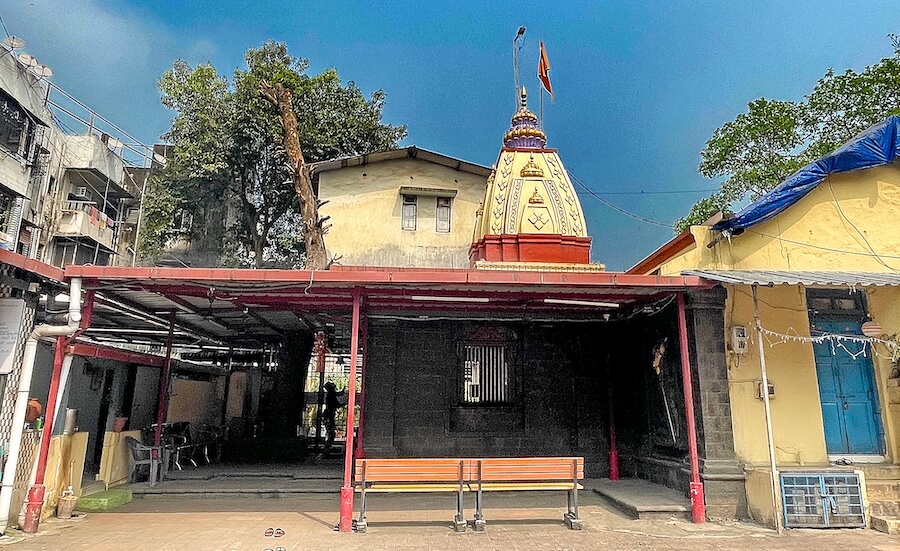
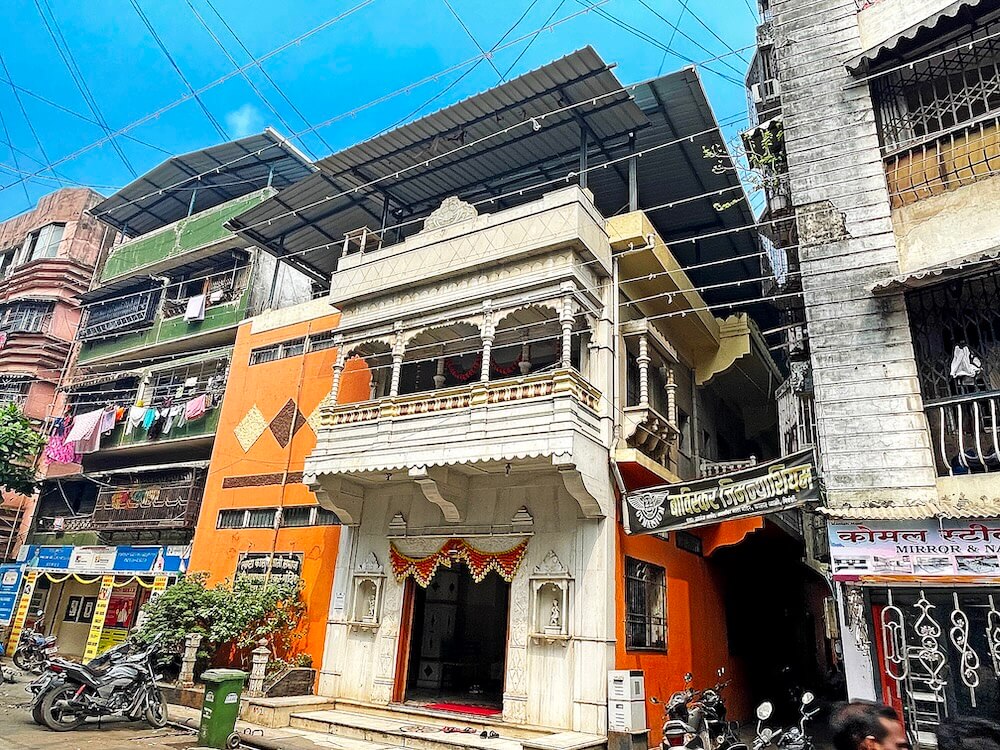
Shop Photo FramesBhiwandi city, known since ancient times as a major commercial center of the state, is home to many ancient temples. Among them is the Mahakalika Temple, which dates back to the era of Chhatrapati Shivaji Maharaj. It is said that Chhatrapati Shivaji Maharaj as well as Chimaji Appa had the darshan of the Goddess in this temple, which is over four hundred years old. Devotees have a deep faith that the Goddess Mahakalika in this temple is very powerful and benevolent (Jagrrit). Hundreds of devotees visit this temple daily for darshan of the Goddess, who is the principal deity (Aradhya Daivat) of the Twashta Kasar community.
The temple of Mahakalika Devi is located in Kasar Ali, Bhiwandi. She is renowned as a wish-fulfilling goddess who readily grants the prayers of her devotees. It is believed that the Goddess constantly watches over the neighborhood. Every night, she sets out to patrol the area. After her rounds, she rests at the nearby Kalbhairav Temple and returns to her own temple around four-thirty in the morning. Before embarking on his expedition to the Durgadi Fort in Kalyan, Chhatrapati Shivaji Maharaj visited Bhiwandi. At that time, he came here and sought the darshan of Mahakalika Devi. Prior to his campaign on Vasai, Chimaji Appa also visited Bhiwandi along with his armed forces. During that time, he too visited this temple and partook in her darshan.
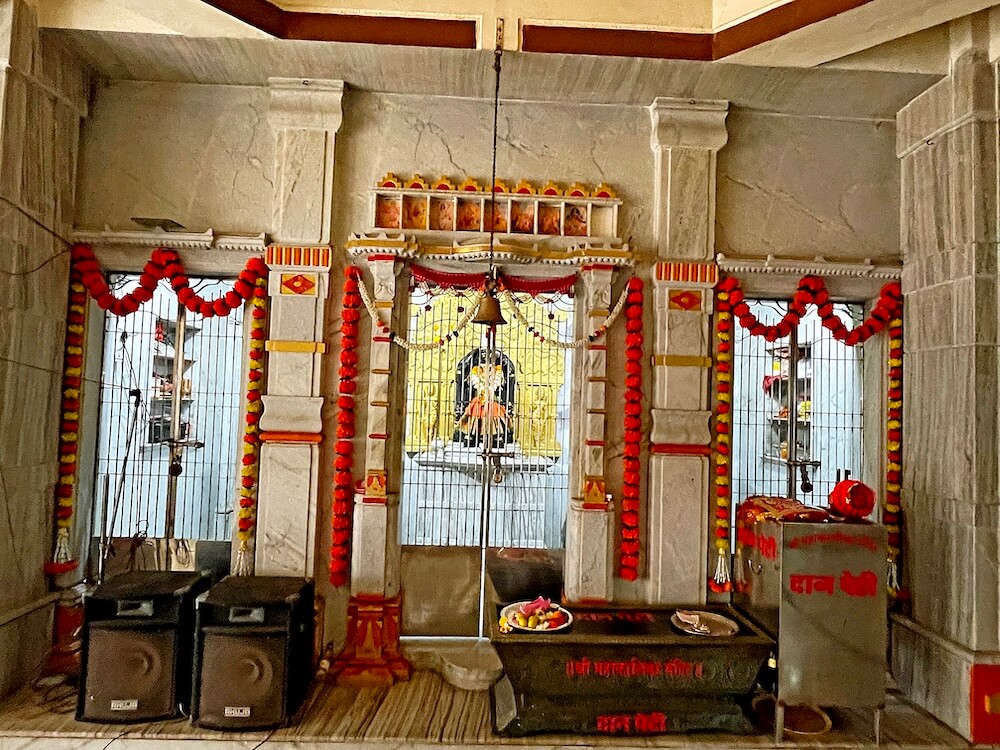
Previously, this temple resembled a traditional mansion (wada). Although this temple is owned by the Twashta Kasar community, there are no official records available regarding who exactly built it or how the idol of the Goddess was discovered. Over time, the tiled structure of the temple grew old and was infested by termites, prompting the Twashta Kasar community to renovate the temple in 2013 through public donations. During that time, a two-story temple structure was built in place of the old mansion. Near the temple entrance, there are idols of guardian deities (dwarapalas) in niches on both sides. On the ground floor of the temple, there is a small lamp pillar (deepmal). While ascending the stairs to the upper floor, an image of Swami Nityanand is visible. The temple office-bearers had made a vow to Swami Nityanand that “Your image will be installed if the temple renovation work is completed without any obstacles.” After the new temple structure was built, his image was installed, fulfilling the vow. On the first floor, there is the assembly hall (sabhamandap) and the sanctum sanctorum (garbhagriha). From the second floor, one can have a close view of the temple spire (shikhar) and pinnacle (kalash).
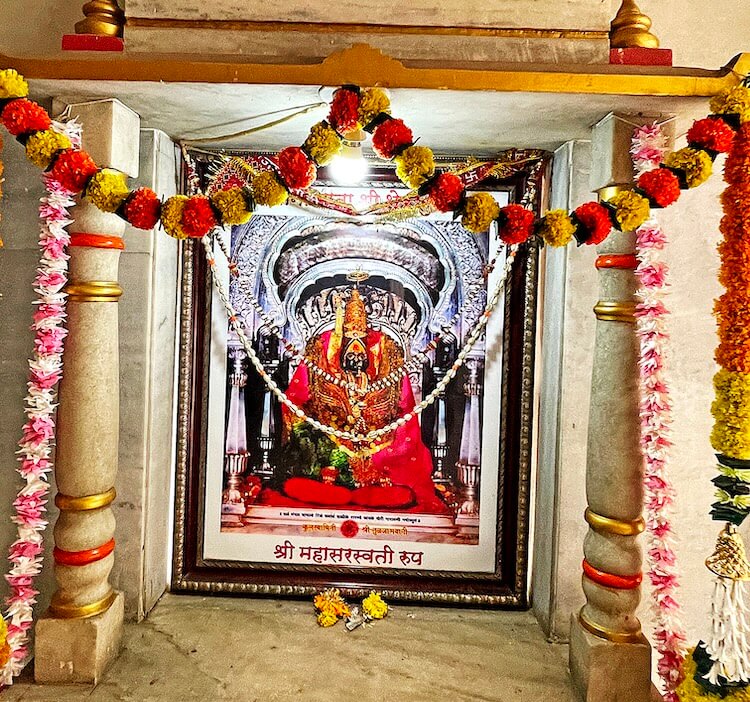
On the walls of the spacious assembly hall, facing the sanctum sanctorum, are depictions of the goddesses Tulja Bhavani of Tuljapur, Mahalakshmi of Kolhapur, Renukamata of Mahur, and Saptashrungi on the Saptashrungi fort. Near the temple structure stands an ancient Audumbara tree. The structure was built without disturbing this tree, and a portion of it is visible in the corner of the assembly hall. A depiction of the old, mansion-like temple is also installed in the assembly hall. From the assembly hall, there is a pathway to circumambulate the sanctum sanctorum. Above the lintel of the entrance to the sanctum sanctorum are the nine forms of the Goddess. In the center of the sanctum sanctorum, seated on a Vajrapitha, is the benevolent idol of Mother Mahakalika. To the left of this idol is Lord Ganesha, and to her right is the idol of Lord Dattatreya. The idol of the Goddess, about three and a half feet tall, is carved from black stone. The original idol from the old temple has been consecrated here. The four-armed Goddess holds a sword in her upper left hand, a hammer (the weapon of the Kasar community) in her lower left hand, a Trishula in her upper right hand, and a Kalasha in her lower right hand. To the lower right of the Goddess is the figure of an attendant. Near the feet of the Goddess at the lower side, three faces are carved, which are believed to be symbols of the three goddesses of Vajreshwari. There is a tradition in the Sindhi community of offering garlands of limes to this Goddess.
Every day, numerous devotees arrive here for the *darshan* of this Goddess, who is renowned for instantly rushing to the call of her devotees. A massive gathering of devotees is witnessed here during both the Chaitra and Sharad Navaratra festivals. During both of these Navaratra festivals, the traditional ritual of filling the *wadi* of the Goddess is performed. On this occasion, the Goddess is duly worshipped by adorning her with flower garlands, crowns, and *gajras* on her hands. Thereafter, following the *haldi-kunkum* ceremony and the *Maha Aarti*, the *wadi* is filled. Throughout the nine days of the Sharad Navaratra festival, the attire of the Goddess is changed daily, and she is worshipped according to scriptural injunctions. On this occasion, various religious programmes are also organised at the temple.
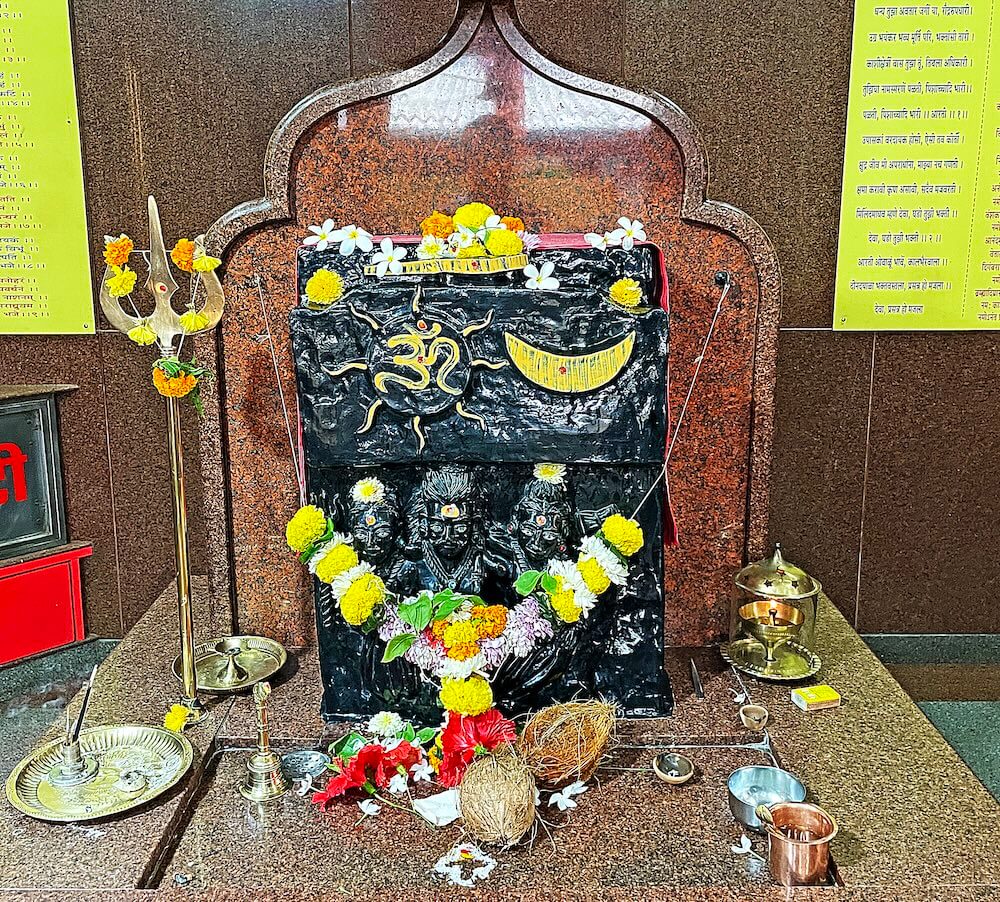
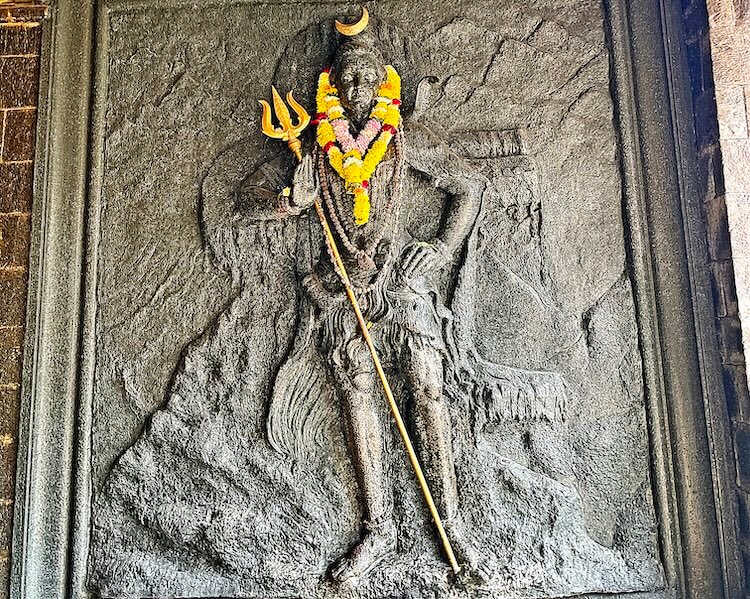
Near the Mahakalika Temple, in the nearby Brahmin Galli, stands the ancient temple of Kalabhairava. A unique feature of this temple is that on the sacred stone (shila) of Lord Kalabhairava located in the inner sanctum (garbhagriha), the divine circle of eight deities (ashtamandala) is carved. Situated amidst a bustling residential area, the temple is entered through a gateway with a low wall. In the temple courtyard, there is a hall dedicated to children’s moral education (balasanskara), scriptural recitation (granthaparayana), and devotional singing (bhajan). On a wall near the temple, a sculpture of Lord Shiva holding a trident in his hand is carved. In front of the temple stands an ancient Umbar (fig) tree.
At the center of the lintel on the entrance frame of the temple’s sanctum sanctorum, an idol of Lord Ganesha is carved. On both sides of this idol are celestial elephants with raised trunks. In the center of the sanctum, on a Vajra Pitha, stands a slab bearing the idol of Kalbhairava. In the upper central portion of the slab, above the Shiva Linga, are the abodes of Brahma, Vishnu, and Mahesh. In the upper left corner of the slab is Suryanarayana, on the right is the Moon, below is Goddess Jogeshwari, in the center is Kalbhairava, and to the right of Kalbhairava is Goddess Chamunda, together forming an octet of deities (Ashtamandala). Bhajans are performed daily in this temple. This tradition has been ongoing for about forty years.
Here Kalabhairav Jayanti is celebrated on Margashirsha Krishna Ashtami. On this occasion, the Shrimad Bhagavata Katha is recited. In the evening, a grand palanquin procession of Kalabhairav, accompanied by traditional music, is taken out from the temple. Thereafter, Prasad is distributed. Offerings (Naivedya) such as lapsi, shira, jalebi, pedha, puranpoli, bajri bhakri, and brinjal bharit are offered to Kalabhairav. Thousands of devotees are present here on this occasion.
This sacred temple stands as a testament to deep spiritual devotion, ancient architectural grandeur, and rich local cultural traditions.
The sanctum sanctorum houses the divine idol consecrated according to ancient Vedic traditions, surrounded by serene courtyards and traditional temple architecture.
Navratri, Maha Shivratri, Annual Temple Jatra & Deepotsav
Compare and book flights, secure top-rated local hotels near the temple, hire reliable guides, and rent cars instantly.
Extend your pilgrimage by visiting other highly sacred temples located nearby.


Add ₹999 more to unlock FREE SHIPPING!
Your sacred cart is currently empty.
Shop Photo FramesFill in your delivery details below to place your order.
Add comment