
Add ₹999 more to unlock FREE SHIPPING!
Your sacred cart is currently empty.
Shop Photo FramesThe village of Koladhe in the Ratnagiri district of the Konkan region, blessed with nature’s bounty, also possesses a rich historical heritage. This is the ancestral village of Rani Lakshmibai of Jhansi, the dietary expert Kakasaheb Tambe, and Sadashiv Dhondo, also known as Tambe Shastri. The ancient Mallikarjun Temple in this village, dating back to the fourteenth century, is quite famous. The Mahashivratri festival celebrated at this sacred and self-manifested (Swayambhu) Mallikarjun Temple is considered one of the most significant festivals in the taluka.
The legend of the temple states that the area where the temple currently stands was once a forest. A Brahmin named Tambe from the village owned several cows. A cowherd named Rewal used to bring these cows to graze in this forest. One of these cows would release her milk over a particular stone here. This had been her daily routine for many days. The cowherd, who had been observing her for a long time, arrived at the spot one day while she was releasing her milk and discovered a Shiva Linga. After learning of this from him, Tambe, with the help of the villagers, built a Shiva temple here. The villagers believe that the replicas carved on the upper sides of the wooden pillars in the temple’s antarala (vestibule) are related to this story.
Some families in the village with the surname Tambe possess manuscripts belonging to their ancestors. These indicate that the progenitor of these families lived in the fourteenth century. These manuscripts mention that the temple existed even before that time. The manuscripts written by Sadashiv Tambe, or Tambe Shastri, mention that Rani Lakshmibai of Jhansi made donations to the Mallikarjun Temple at Koladhe, the Adityanarayan Temple, and the Lakshmipallinath Temple at Pali. The temple attained its present form after a renovation carried out between 1978 and 1982.
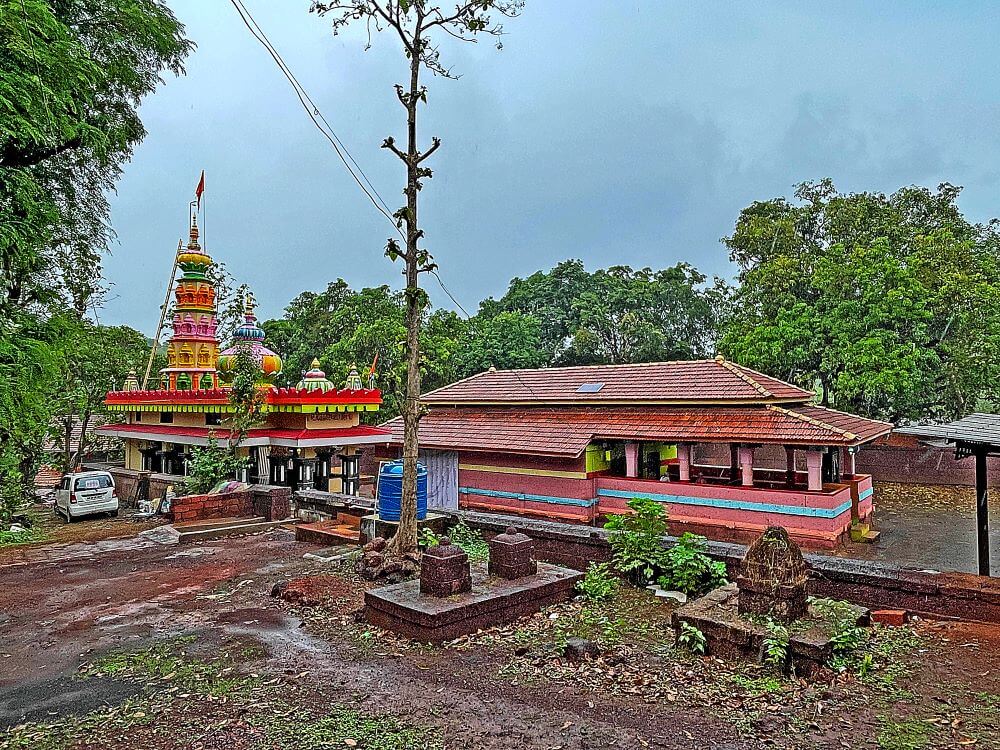
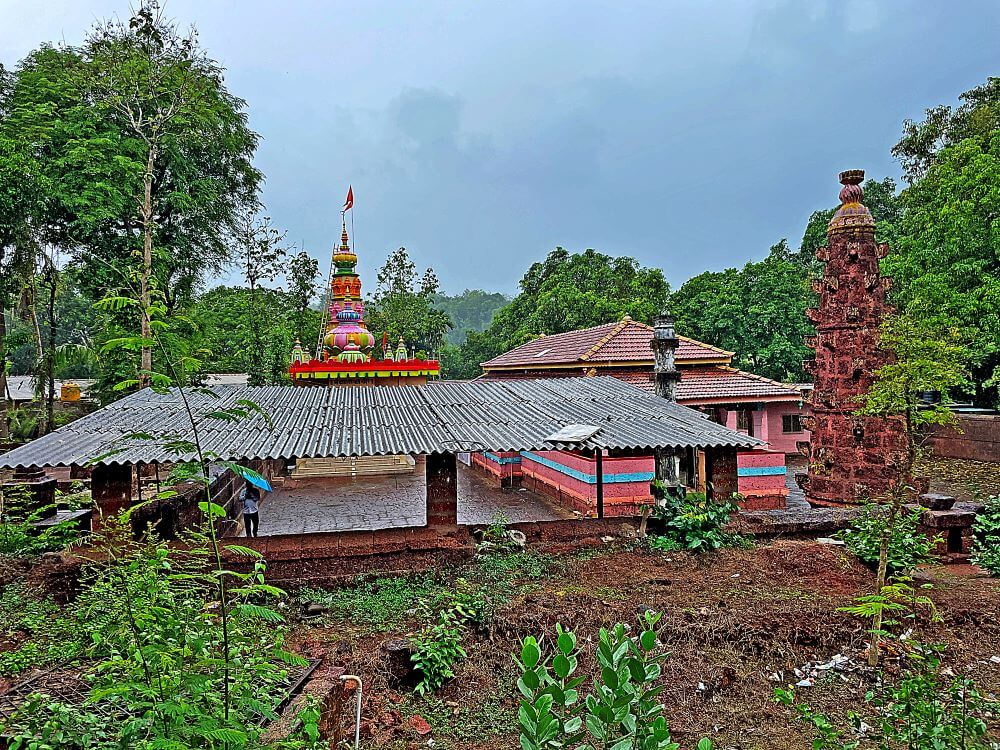
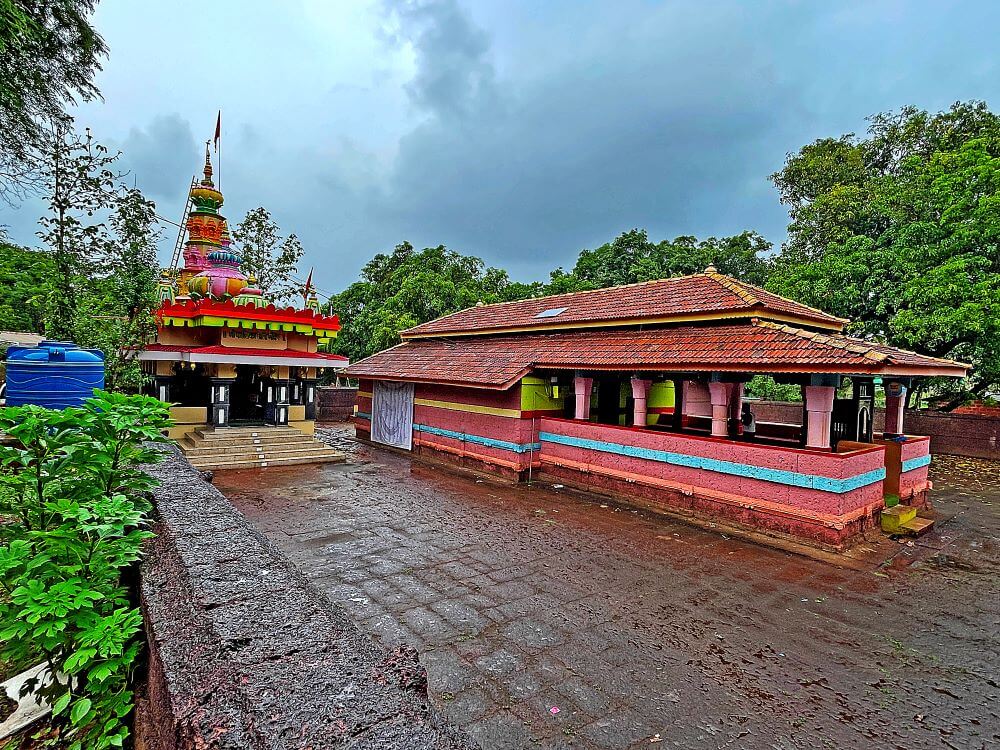
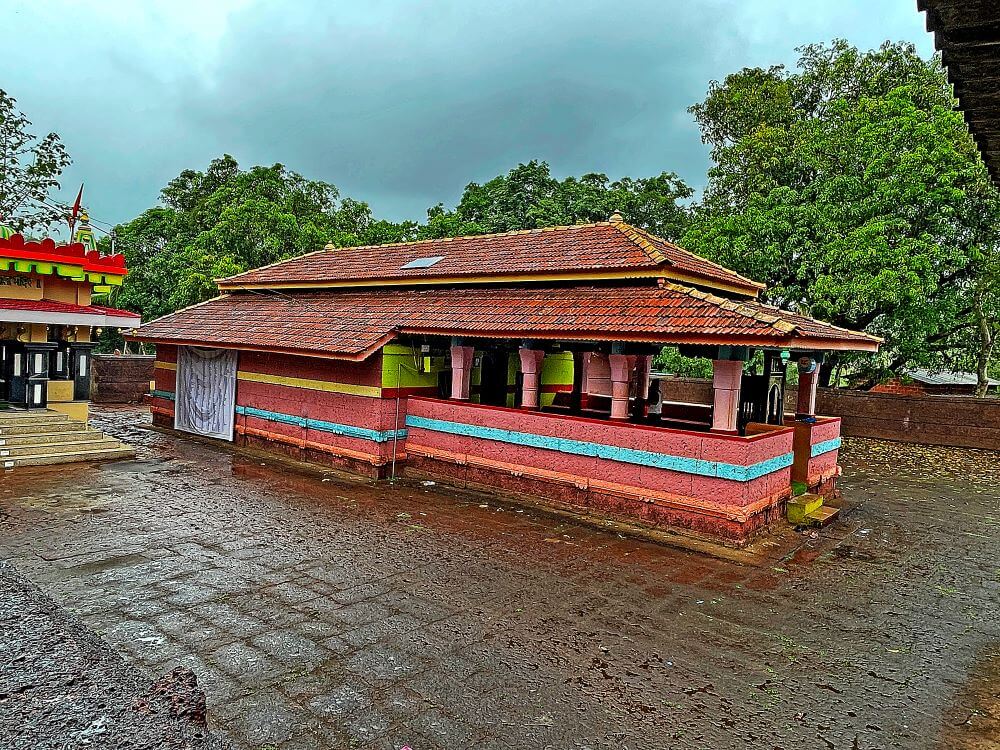
The village of Koladhe is nestled in a nature-rich area featuring traditional paddy fields, coconut and areca nut groves, and trees of mango, jackfruit, cashew, and kokum. The village is famous in the taluka due to this ancient Mallikarjun Temple. The temple is surrounded by a fortification wall (tattabandi) built of laterite stone. Upon entering the temple courtyard through the gateway of the fortification, one sees four lamp pillars (deepmalas)—three small and one large. On Tripurari Purnima, various designated individuals light lamps on these pillars according to their traditional rights. The courtyard is paved with laterite stones.
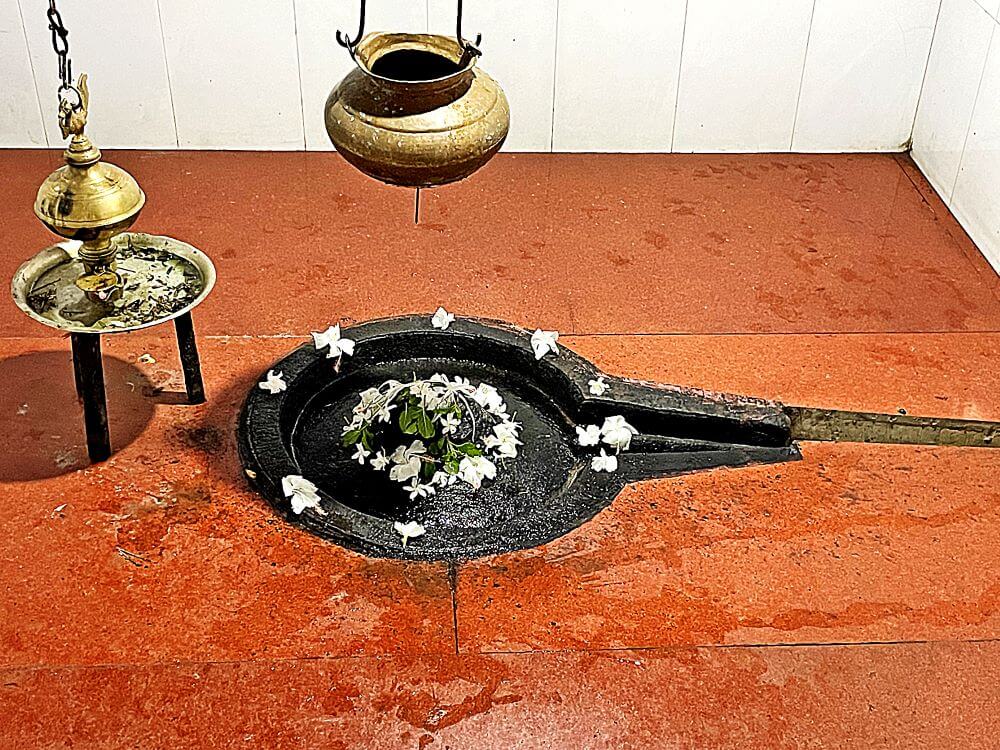
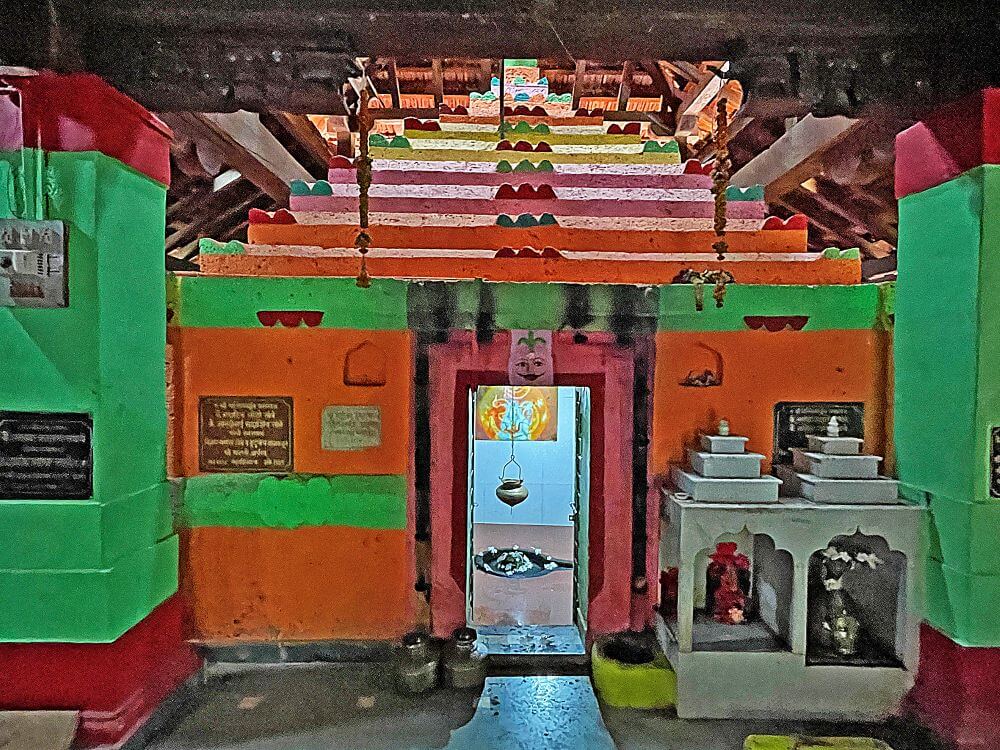
The temple structure consists of a sabhamandapa (assembly hall), an antarala (vestibule), and a garbhagriha (sanctum sanctorum). The temple is roofed with tiles, and its entire construction is made of laterite stone. No cement has been used anywhere in its construction. Following the Hemadpanti style, two stones have been joined with precision and accuracy. One enters the sabhamandapa through an intricately carved wooden entrance. This sabhamandapa is in the form of an ardhamandapa (half-hall). There are stone benches along the sides for devotees to sit. The upper parts of the pillars in the wooden sabhamandapa are adorned with artistic carvings. In the antarala, near the entrance to the garbhagriha, one can see a Nandi carved from a single stone. On the right side of the antarala, there is a brass Shiva mask with a serpent hood. There is a kirtimukha on the wooden entrance of the garbhagriha. Despite the prevalence of laterite stone in this area, the Mallikarjun Linga in the garbhagriha is made of a single piece of black stone. Behind this temple is the Kalkai Temple, which is of modern construction.
A grand Mahashivratri festival is held here from Magh Vadya Dashami to Falgun Shuddha Pratipada. The area becomes crowded due to the fair held during this time. During this festival, a silver mask of the deity is placed in a palanquin and taken out in a procession. Another silver mask is placed on the Shiva Linga. During the festival, devotees participate in the ‘Bhovtya’ dance, becoming absorbed in the rhythm of the cymbals and mridangam. (Bhovtya is a traditional dance of the Konkan region. During the festivals, after the aarti, a procession is taken around the temple while chanting abhangs and bhajans. After that, devotees form a circle in the temple courtyard and dance in a traditional manner to the rhythm of a song.) Additionally, there is a large influx of devotees on Mondays in the month of Shravan and Mondays in the month of Kartik. Various programs are held throughout the year, such as Rudra Ekadashni every month, Ekka (24 hours of continuous chanting) and Laghurudra in the month of Ashadh, and Tripur Puja and lighting of lamps on Tripurari Purnima.
The village of Koladhe is the maternal home of Rani Lakshmibai, a symbol of valor, bravery, sacrifice, and patriotism. This is the ancestral village of her father, Moropant Tambe, who worked as a manager for the Peshwas. Rani Lakshmibai’s original name was Manikarnika. Born in Kashi, Rani Lakshmibai lost her mother, Bhagirathibai, when she was three or four years old. After that, Moropant took Lakshmibai and went under the patronage of the Peshwas. Having mastered the art of warfare there, Lakshmibai was married at the age of seven in 1842 to Raja Gangadharrao Newalkar of Jhansi. The ancestral village of the Newalkars is also Kot, near Lanja. Besides the Mallikarjun Temple, there are temples of Shri Mahalaxmi, Lakshmikant, and Adityanarayan in Koladhe village. It is said that these temples are also 400 to 500 years old.
This sacred temple stands as a testament to deep spiritual devotion, ancient architectural grandeur, and rich local cultural traditions.
The sanctum sanctorum houses the divine idol consecrated according to ancient Vedic traditions, surrounded by serene courtyards and traditional temple architecture.
Navratri, Maha Shivratri, Annual Temple Jatra & Deepotsav
Compare and book flights, secure top-rated local hotels near the temple, hire reliable guides, and rent cars instantly.
Extend your pilgrimage by visiting other highly sacred temples located nearby.


Add ₹999 more to unlock FREE SHIPPING!
Your sacred cart is currently empty.
Shop Photo FramesFill in your delivery details below to place your order.
Add comment