
Add ₹999 more to unlock FREE SHIPPING!
Your sacred cart is currently empty.
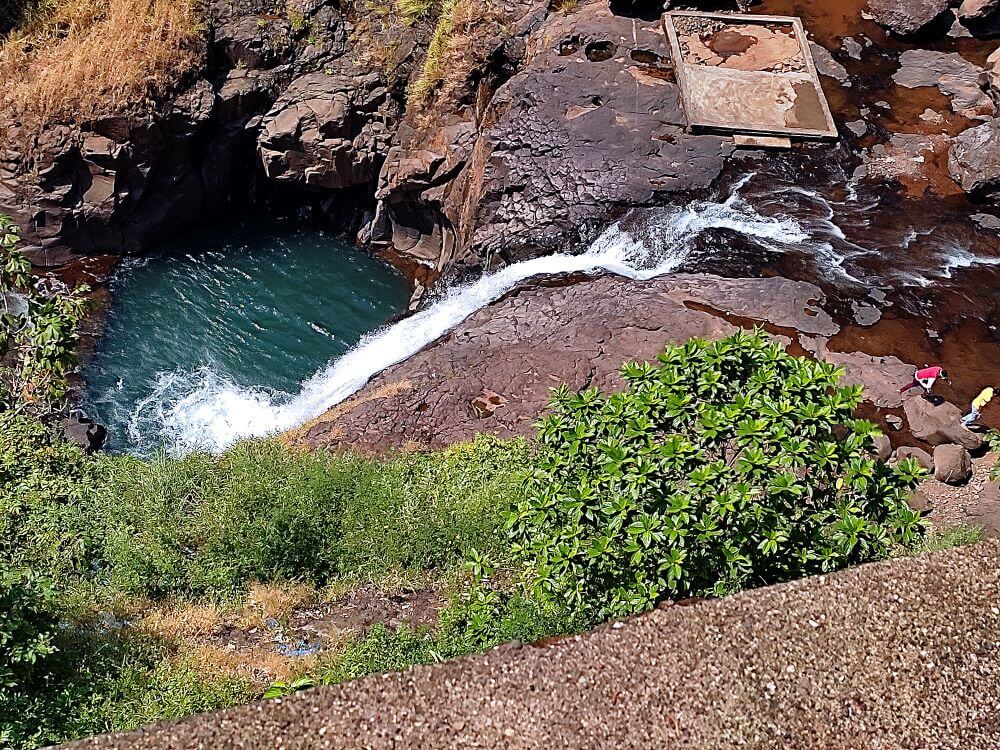
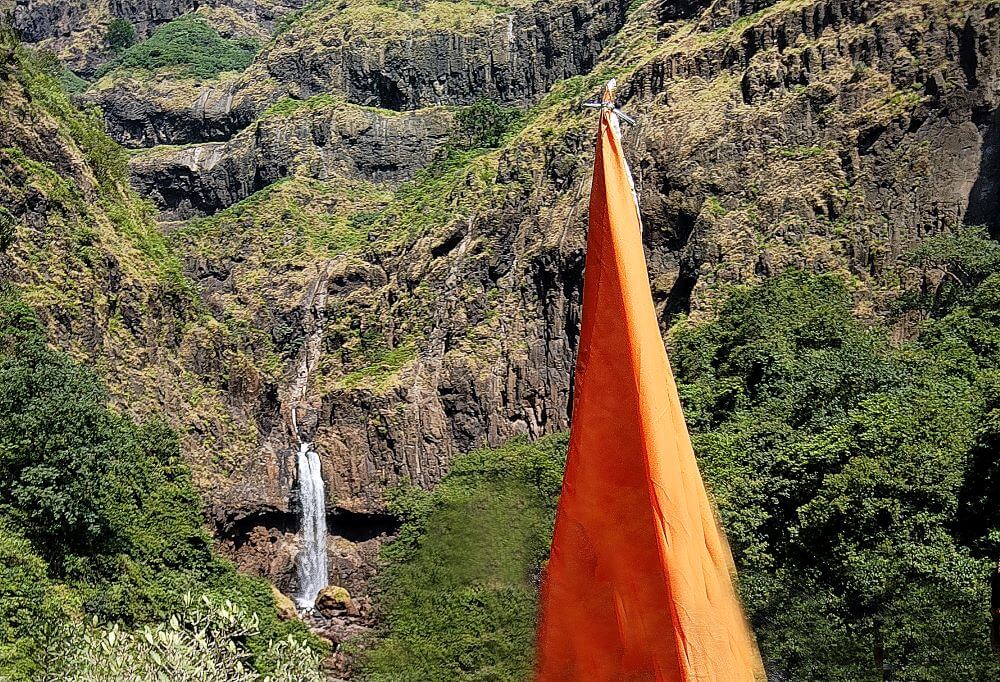
Shop Photo FramesKnown as the “Prati-Kailas” (the second Kailas), the Marleshwar Temple in Ratnagiri district is one of the most ancient and renowned Shiva temples in the state. Located in a cave within the Sahyadri mountain ranges in Maral village of Devrukh taluka, this is a vibrant (jagrut) and self-manifested (swayambhu) abode of Lord Marleshwar. The wedding ceremony of Marleshwar and Goddess Girijadevi from Sakharpa, held on Makar Sankranti, is the primary festival here, attracting numerous devotees from across the state. Adjacent to this pilgrimage site is the Dhareshwar Waterfall, which cascades perennially from a height of about two hundred feet, serving as a major attraction for both devotees and tourists.
The legend of the temple states that the deity was previously located in the Devrukh area of Sangameshwar and was established by Lord Parashurama. However, as the Shilahara dynasty began to decline, foreigners spread chaos in the region. The local population was distressed by the daily killings, skirmishes, and looting. Finding this unbearable, the Lord of Devrukh began his journey toward the Sahyadri mountains. When the villagers realized the deity had vanished from the temple, they tried to search for him but were unsuccessful. With the departure of the deity, diseases spread in the village, and foreign invasions increased. Nevertheless, the citizens united to fight against these crises and eventually eliminated the foreign enemy. The place where this battle took place, where the enemy was “killed” (marla), came to be known as Maral.
Later, while Sardar Anerao Salunkhe was hunting in the forests of the Sahyadri near Maral, a prey escaped him. As it fled, it entered a cave, and suddenly a stone fell at the mouth of the cave, sealing it. When Anerao moved the stone aside, he beheld a swayambhu Shiva Linga inside this natural cave. As the deity of Maral village, this site was named Marleshwar.
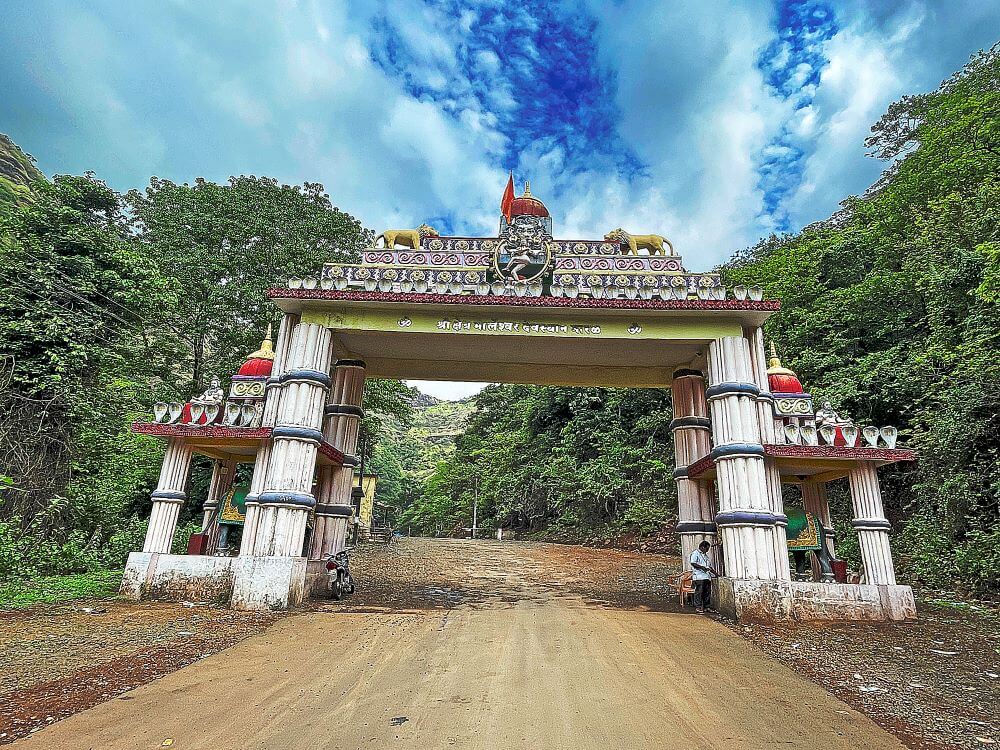
There is a route from Devrukh through Maral village leading to the Marleshwar temple. One can travel along this path to the grand arched entrance of the temple. From there, a winding staircase leads up to the temple on the mountain. This path consists of about 500 steps, and as one climbs, the Sahyadri mountain ranges competing with the sky, dense greenery, and waterfalls cascading from the mountains come into view. It takes half an hour to reach the temple via this path. There are many stalls for puja materials, tea, snacks, and meals along the staircase path.
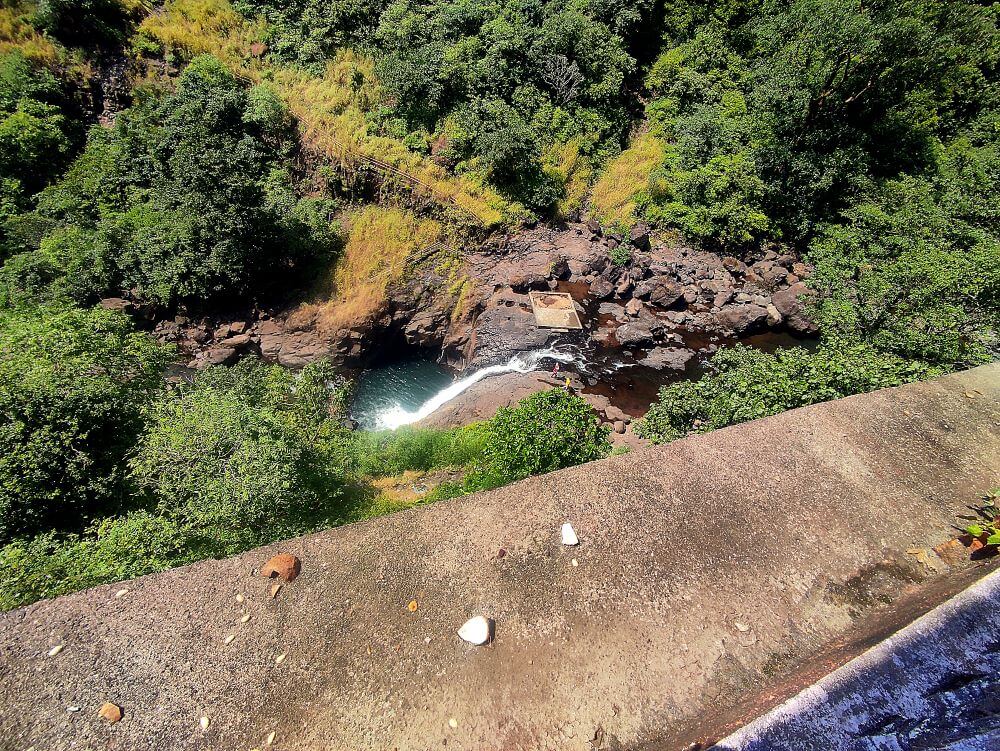
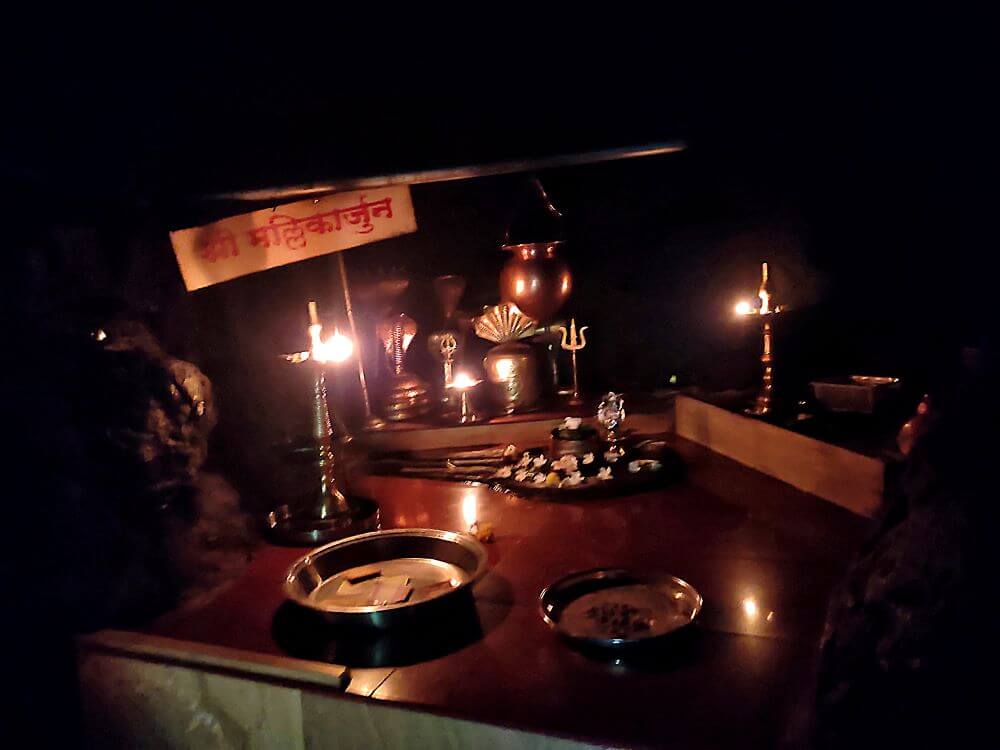
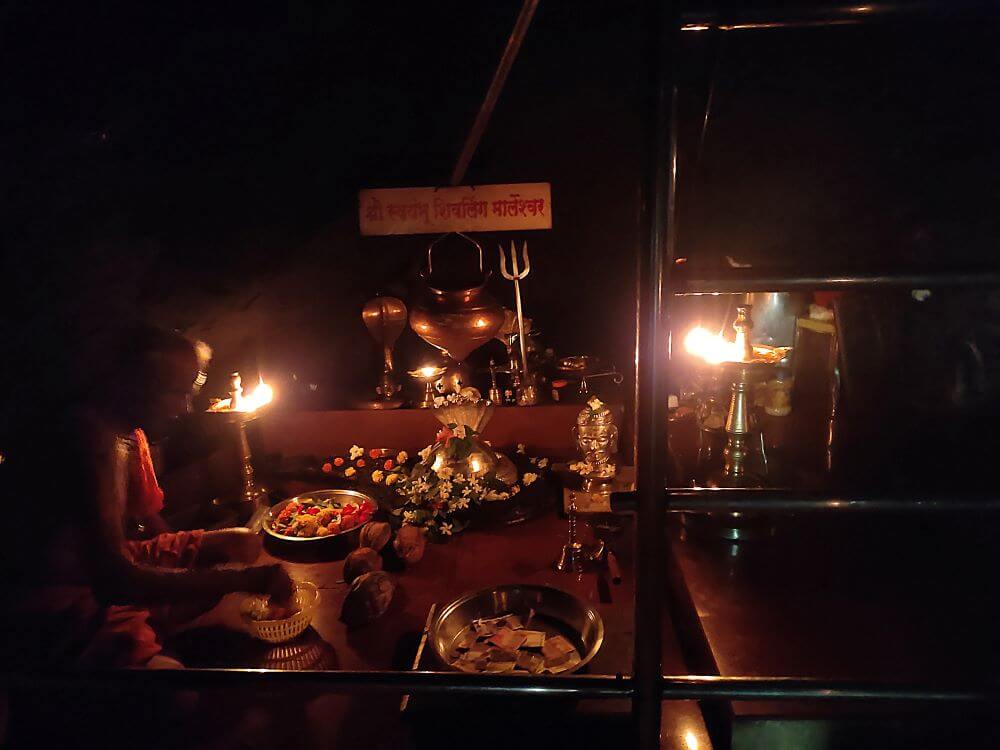
The natural cave of Marleshwar is situated adjacent to a small plateau on the mountain. In front of this cave, the area has been paved, covered with a tin shed, and secured with iron railings. Looking from these railings, one can view the Dhareshwar Waterfall. Near the entrance of the cave, there is a small temple of Lord Ganesha. From there, one climbs a few stone steps to enter the sanctum sanctorum of Marleshwar within the cave. This cave has no door. The sanctum has enough space for 15 people to have darshan at a time. No light sources other than oil lamps (samai) and earthen lamps (pantya) are used here. In the sanctum of the cave, on a platform measuring eight feet by five feet, are the Shiva Lingas of Mallikarjuna and Marleshwar. It is said that Mallikarjuna is the elder brother of Marleshwar. The Linga of Mallikarjuna is on the left, and that of Marleshwar is on the right. In front of both Shiva Lingas are Nandi idols carved from solid stone. Near the Linga of Marleshwar is a Shiva mask, while near the Linga of Mallikarjuna are idols of serpent deities made of five metals (panchadhatu).
During the monsoon season, water drips from the rocks above the cave in many places. Many snakes are also found here. Due to the darkness in the cave, they are not easily visible. These snakes, known as the Durkya Ghonas (a type of boa), are non-venomous. The priests here claim that they have never bitten anyone to date. Many devotees believe that Lord Shiva manifests here in the form of a serpent. Adjacent to the cave is a small Ganga Kund (sacred pool) with four steps. The water level in this pool remains constant throughout all twelve months.
The day Sardar Anerao beheld the Shiva Linga of Marleshwar was Makar Sankranti. Since then, a large fair is held here every year on Sankranti. This cave originally housed only Lord Shiva, not Goddess Parvati. Therefore, it is a tradition to perform the wedding of Goddess Girijadevi from Sakharpa and Marleshwar here. For this ceremony, Goddess Girijadevi is brought from Sakharpa in a grand palanquin procession accompanied by music. The distance from Marleshwar to Sakharpa is about 16 km. Devotees carry the palanquin on foot through the mountain paths. It is said that after leaving Devrukh, Marleshwar stayed for some time at Angavali. Therefore, this palanquin stops for a while in Angavali village. When the palanquin arrives at Marleshwar, the wedding ceremony is performed according to Lingayat rituals. At this time, palanquins from many surrounding villages also arrive here. According to records, more than two lakh devotees attend to witness this ceremony. Apart from this, a large number of devotees visit here every Monday, Saturday, on Mahashivratri, and on Shravani Mondays.
Below the Marleshwar temple lies the Pandava-era Karambeli Doh (deep pool). This pool is very deep. Another attraction for devotees and tourists visiting here is the Dhareshwar Waterfall in front of the temple. The area around the perennial waterfall has been secured with railings as it is slippery. Looking at the waterfall cascading from about 200 feet, one gets the illusion of the Ganga flowing from the matted hair of Lord Shiva. Twelve small and large waterfalls join this waterfall. Its water flows down to form the Bavnadi river. Bathing under the waterfall in the month of Magh is considered sacred. Above the waterfall, on the high mountain in front of the temple, there are four more waterfalls. Since there is a Shiva Linga at the peak of this mountain, it is called Linga Dongar. One can reach its summit after a strenuous three to four-hour trek through the dense forest.
This sacred temple stands as a testament to deep spiritual devotion, ancient architectural grandeur, and rich local cultural traditions.
The sanctum sanctorum houses the divine idol consecrated according to ancient Vedic traditions, surrounded by serene courtyards and traditional temple architecture.
Navratri, Maha Shivratri, Annual Temple Jatra & Deepotsav
Compare and book flights, secure top-rated local hotels near the temple, hire reliable guides, and rent cars instantly.
Extend your pilgrimage by visiting other highly sacred temples located nearby.


Add ₹999 more to unlock FREE SHIPPING!
Your sacred cart is currently empty.
Shop Photo FramesFill in your delivery details below to place your order.
Add comment