
Add ₹999 more to unlock FREE SHIPPING!
Your sacred cart is currently empty.
Shop Photo FramesBefore the Portuguese invasion, Goa, adorned with natural beauty, was home to many beautiful temples. However, during the era of fanatical rulers, many temples were destroyed. The idols from some temples were relocated. During that same period, as the Pernem region of Goa remained under the secure protection of the Bhonsle kings of Sawantwadi, the temples here remained safe. The ancient and famous Mulvir Mahadev Temple in Malpe, Pernem taluka, is one of them. The ancient paintings on the walls of this temple still capture the attention of scholars today.
The legend of the temple is that in ancient times, this area was a dense forest. Herdsmen from the surrounding areas would bring their cattle to graze in this forest. When the herdsmen noticed that many of these cows were releasing their milk at a specific spot by turns, they reported this matter to their king, named Mulraj. To verify this, the king had the ground at that spot dug up, and a Swayambhu (self-manifested) Shiva Linga appeared. Considering this a divine revelation, the king built a temple at that location. Since the king named Mulraj built the temple here, it came to be known as the Mulvir Devasthan.
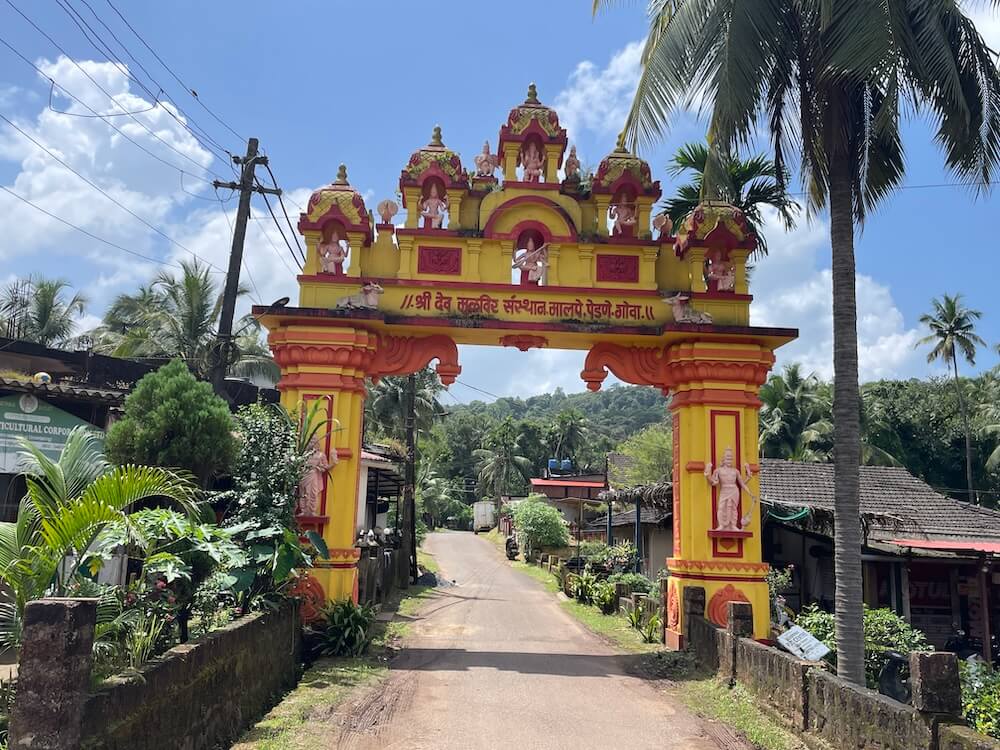
There is a welcome arch for the temple on the road leading from the village. On both sides of the road, there are guardian deity sculptures on two pillars, and on the horizontal eaves above the pillars, there are idols of various deities in six canopies (Meghadambari). There are finials (Kalash) at the top of the canopies. There is a paved road to this temple, which is near the village yet outside it. There is a footpath from the parking lot, located a short distance from the temple, to reach the temple. This temple is situated in a nature-rich area of lush greenery.
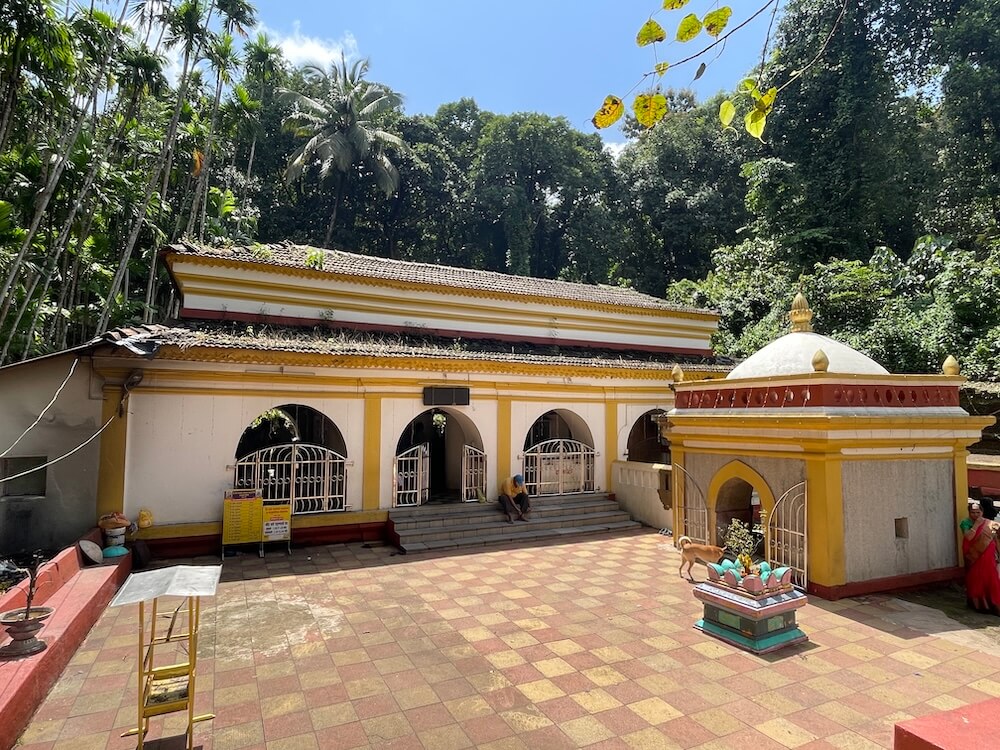
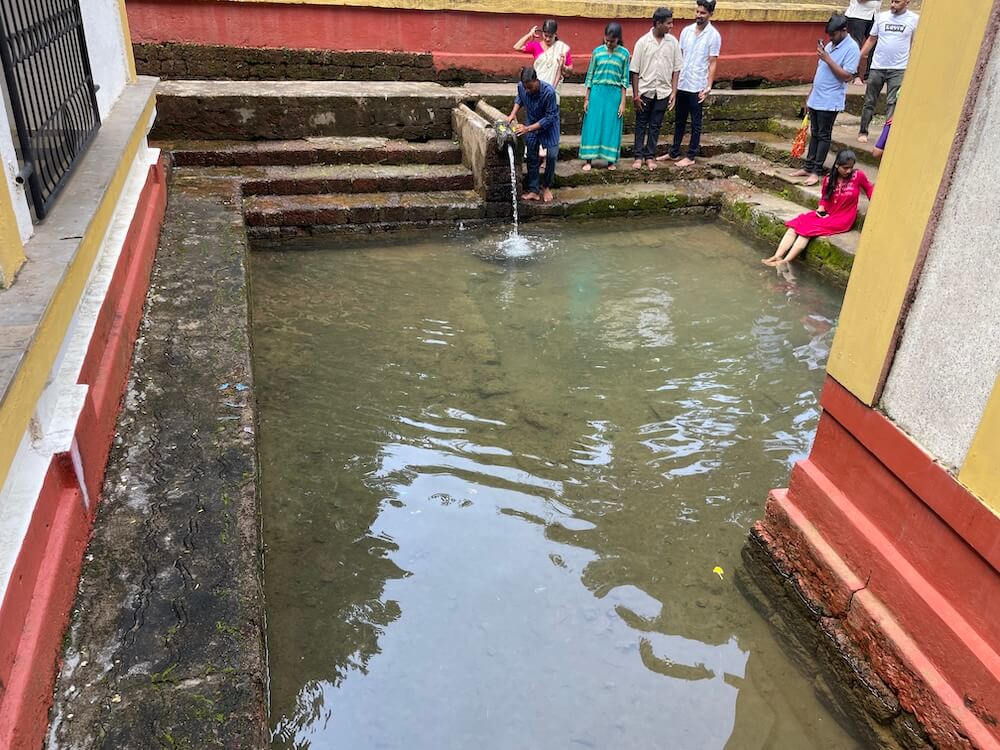
The entrance to the temple is within the sturdy fortification wall surrounding it. In the paved courtyard of the temple, there is a Tulsi Vrindavan and a lamp tower (Deepmal). In the pond adjacent to the temple in the courtyard, there is a Gomukh. A continuous natural source of water flows from this Gomukh. Devotees believe that the water of this pond has medicinal properties and that bathing here cures skin diseases. The walls and steps of the pond are built of carved stone. There is a tradition of purifying oneself here before going into the temple for Darshan.
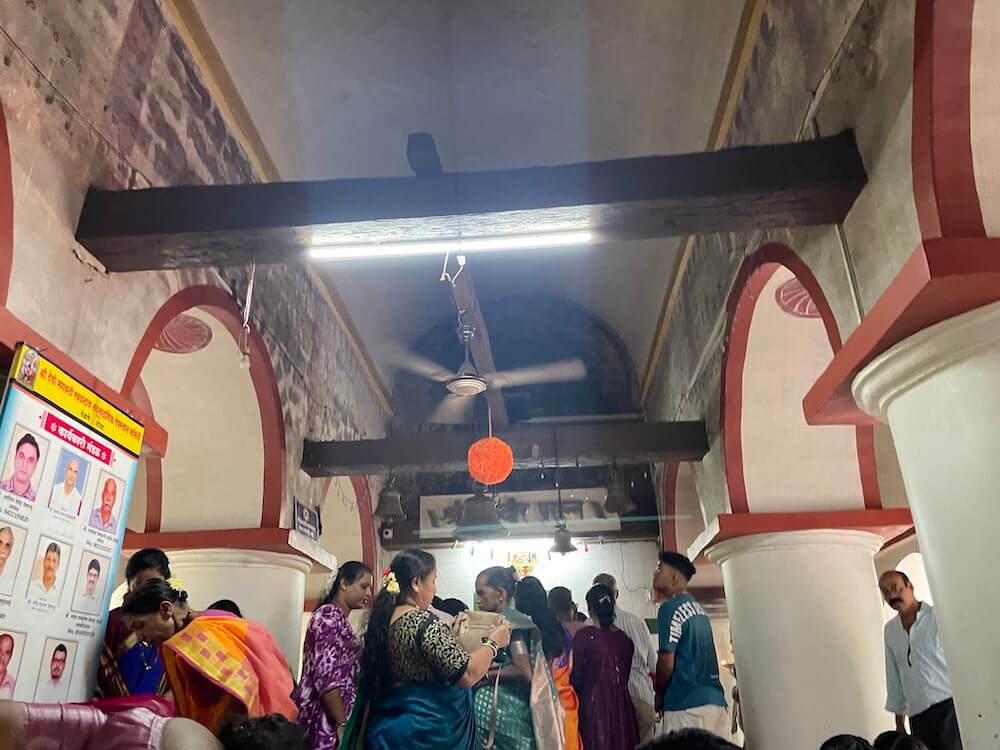
The temple structure consists of a Sabha Mandap (assembly hall), Antaral (vestibule), and Garbhagriha (sanctum sanctorum). The Sabha Mandap is semi-open. The relief-style paintings created from earth and clay on the ceiling of this Sabha Mandap attract attention. These include lotus flowers, wheels, and other artistic designs. Further ahead, in front of the Garbhagriha, there are Paduka (footprints) on a table. During crowded times, devotees have to take Darshan of Mahadev from here. Further ahead is the entrance to the Garbhagriha. In the center of the floor in the Garbhagriha is the Swayambhu Shiva Linga. A brass cobra holding a canopy and a copper Abhishek vessel holding a water stream are hung from the ceiling over this Shiva Linga. Lamandive (hanging oil lamps) are lit on both sides of the Shiva Linga. Behind the Shiva Linga is a decorative silver Prabhaval (halo).
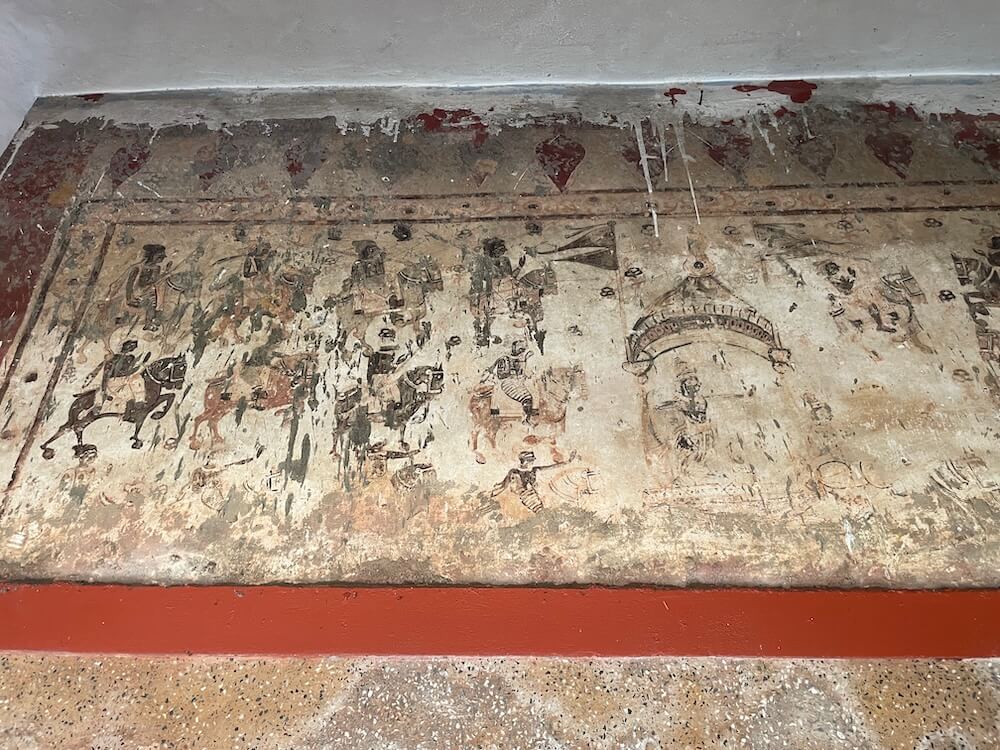
There is a semi-circumambulation path around the exterior of the Garbhagriha. Ancient paintings are painted on the outer walls of the Garbhagriha. These paintings, created with natural colors, are considered historically important. Some of these relief-style paintings were created using earth and clay. Many of these paintings have disappeared over time, and some have become blurred. The paintings that can be seen today include the Krishna Leela, mythological episodes, and some other images. One of these paintings depicts the ‘Samudra Manthan’ (churning of the ocean) performed by gods and demons together, along with the fourteen gems that emerged from it, in great detail. Another painting depicts Shri Krishna lifting the Govardhan mountain, along with other cowherds. Other notable paintings include Mahishasuramardini, Venugopal, the great war of the Mahabharata, the royal court, Dashavatar, etc. The Sabha Mandap and Garbhagriha of this temple have a tiled roof.
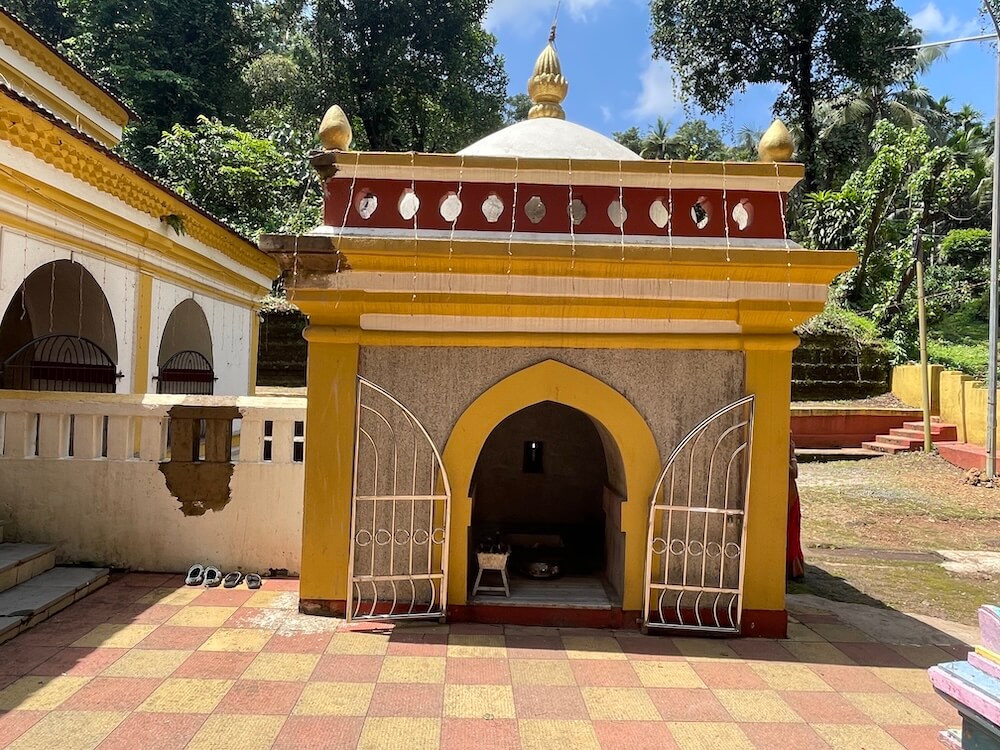
In front of the temple, by the side of the pond, there is a small temple. In this temple, there is a Swayambhu stone of the local deity. The roof of the temple has a safety railing on all four sides and a dome-shaped spire in the center. At the top of the spire, there is an Amalaka and a Kalash. In the temple courtyard, there is another ancient Shiva Linga on the platform of a Banyan tree. Mahashivratri is the main annual festival celebrated here with great enthusiasm. On all Mondays of Shravan, there is a crowd of devotees coming to the temple for Darshan. All festivals and celebrations throughout the year, such as Chaitra Padwa, Holi, Kartik Purnima, Kojagiri Purnima, Dussehra, and Diwali, are celebrated in the temple.
This sacred temple stands as a testament to deep spiritual devotion, ancient architectural grandeur, and rich local cultural traditions.
The sanctum sanctorum houses the divine idol consecrated according to ancient Vedic traditions, surrounded by serene courtyards and traditional temple architecture.
Navratri, Maha Shivratri, Annual Temple Jatra & Deepotsav
Compare and book flights, secure top-rated local hotels near the temple, hire reliable guides, and rent cars instantly.
Extend your pilgrimage by visiting other highly sacred temples located nearby.


Add ₹999 more to unlock FREE SHIPPING!
Your sacred cart is currently empty.
Shop Photo FramesFill in your delivery details below to place your order.
Add comment