
Add ₹999 more to unlock FREE SHIPPING!
Your sacred cart is currently empty.
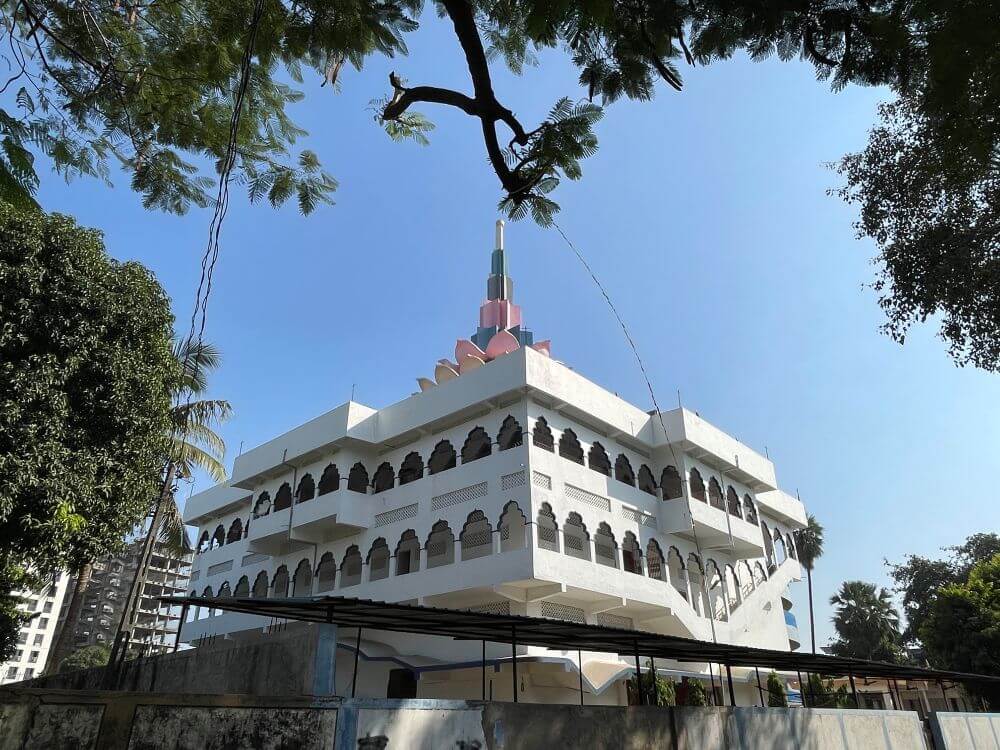
Shop Photo FramesThe Rajarajeshwari Mahalaxmi Temple, based on the revered Meru Lakshmi Yantra, holds a unique place in the Indian Tantric tradition. According to the temple’s plaque, it is the first temple of its kind in the world. The temple houses idols of Mahakali, Mahalaxmi and Saraswati seated on a lotus pedestal with 190 petals. Constructed approximately 30 years ago on Surat’s Tadwadi-Randher Road, the temple attracts devotees and tourists alike due to its architectural and spiritual significance.
In Hinduism, Buddhism and Jainism, Tantra Shastra holds a significant place as an ancient spiritual tradition. A Yantra (mystical diagram) is an integral part of ritualistic worship within the tantric path. These Yantras are constructed using various geometric shapes such as dots, triangles, crescents, circles, squares, hexagons and other symbolic motifs like swastikas and lotuses. These shapes are meticulously drawn in a prescribed manner, filled with specific colours and used to create sacred Yantras. The Yantras often contain seed syllables (Bija mantras) and invocatory mantras representing deities and they are worshipped and meditated upon. It is believed that these Yantras symbolise the divine forms of the deities themselves.
Some Yantras or mandalas serve as architectural blueprints for constructing temples, following an ancient tradition. Among all tantric symbols, the Sri Yantra (or Sri Chakra) is regarded as the most auspicious, granting prosperity, success and liberation. It is extensively worshipped throughout India and typically comprises 43 interlocking triangles, symbolising the cosmos. Depending on its design, the Sri Yantra can take different forms such as Meru, Kailas, or Bhu Sri Yantra.
The Maha Meru or Meru Lakshmi Yantra, in particular, features a three-dimensional arrangement of triangles, forming a pyramid-like structure. This Yantra is believed to represent the entire universe, with its centre being the seat of divine energy known as Tripura Sundari or Lalita Tripuri Sundari, the supreme goddess of beauty and power.
Temples in India often feature replicas of the Sri Yantra on their ceilings or walls and some even use it as the basis for their architectural design.
The Lakshmivallabh Parshwanath Temple (commonly known as the 72 Jinalaya Temple) located in Bhinmal, Jalore district, is based on the Sri Yantra. This temple underwent its prana-pratishtha (consecration ceremony) in 2011. Similarly, the Vishwakalyan Sadhanayatan Temple in Haridwar, established in 1911 along the banks of the Ganges, is also known as a Sri Yantra Temple, as its design is inspired by the sacred geometric figure.
Another noteworthy example is a Durga Temple in the Chowk area of Lucknow, built by Nawab Wajid Ali Shah, which was constructed based on the Sri Yantra. Furthermore, the Mendhak (Frog) Temple near Lakhimpur-Kheri in Uttar Pradesh’s Oyal village is a unique structure combining Manduka Tantra (frog symbolism in tantric traditions) and the Sri Yantra. This temple was built around 230 years ago by the ruler of the Oyal state, Raja Baksh Singh.
Inspired by this tradition, Poonamchand Madhavlal Shah, a devotee of Chamunda Devi, conceived the Rajarajeshwari Mahalaxmi Temple in Surat. In 1974, he established the Shri Devi Mandal Trust, which funded and oversaw the construction. The temple was completed in 1995 and the idols were consecrated in July of the same year.
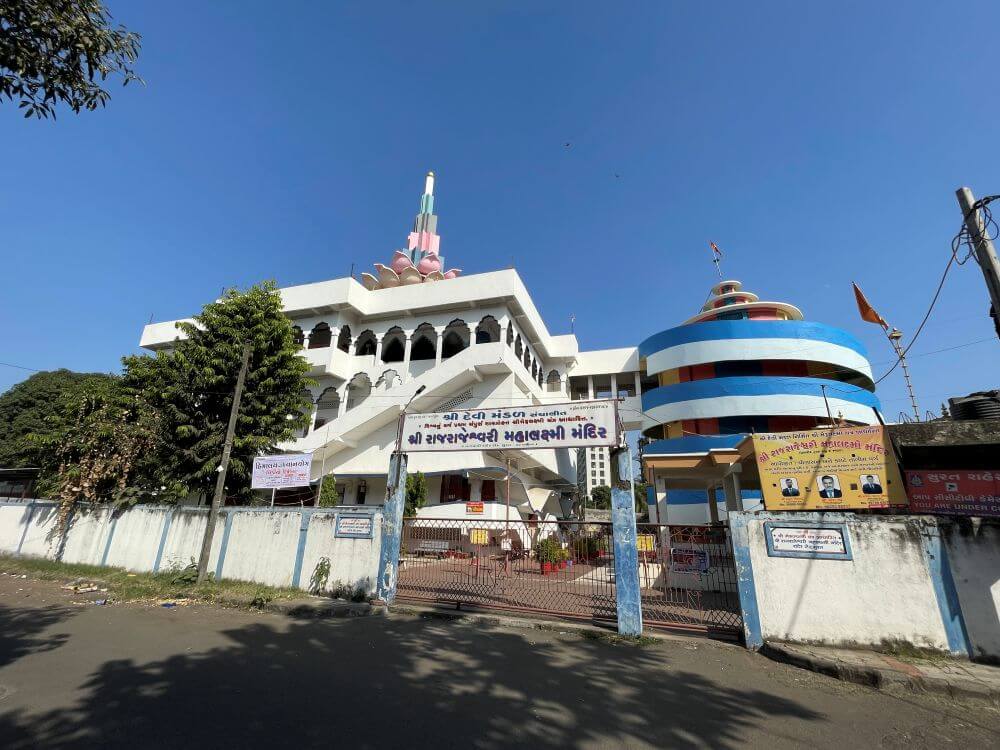
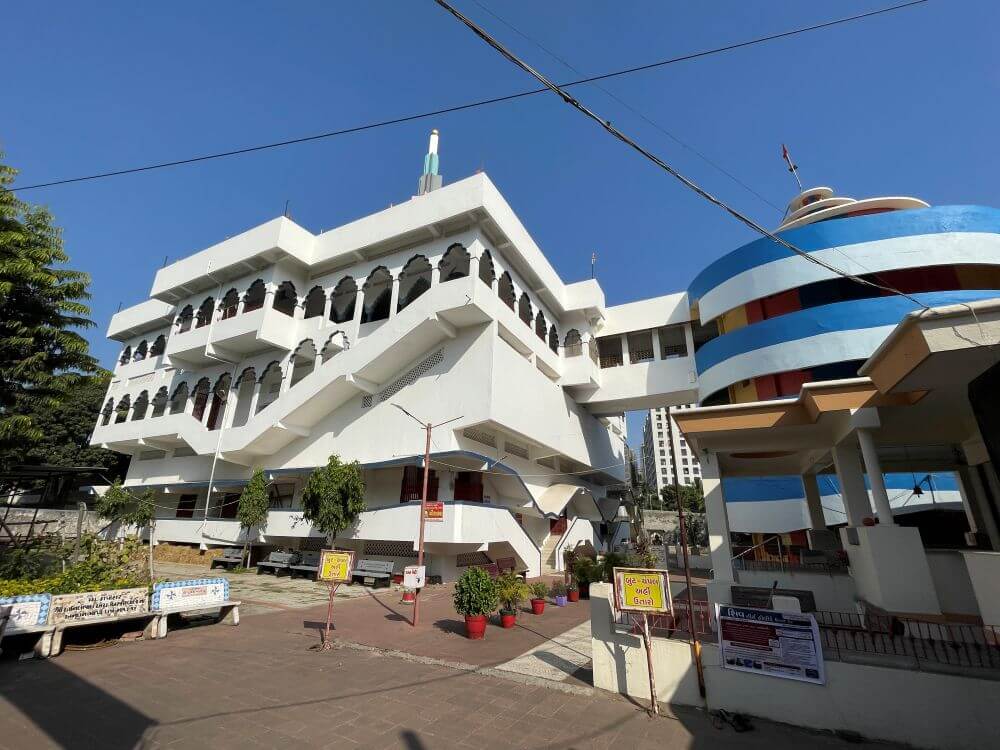
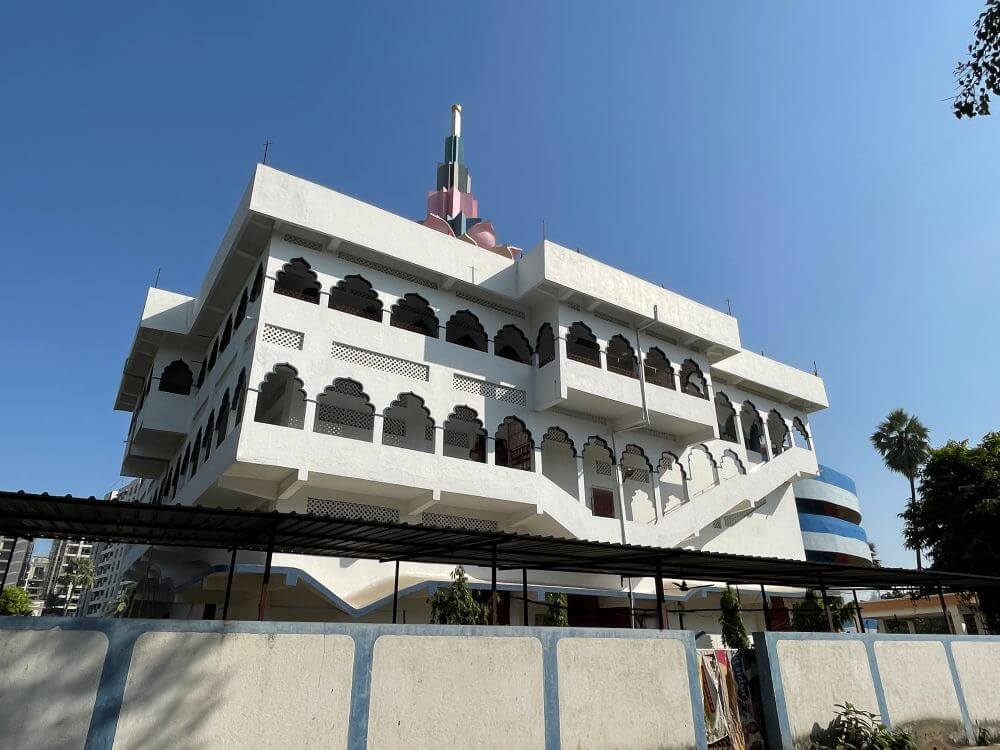
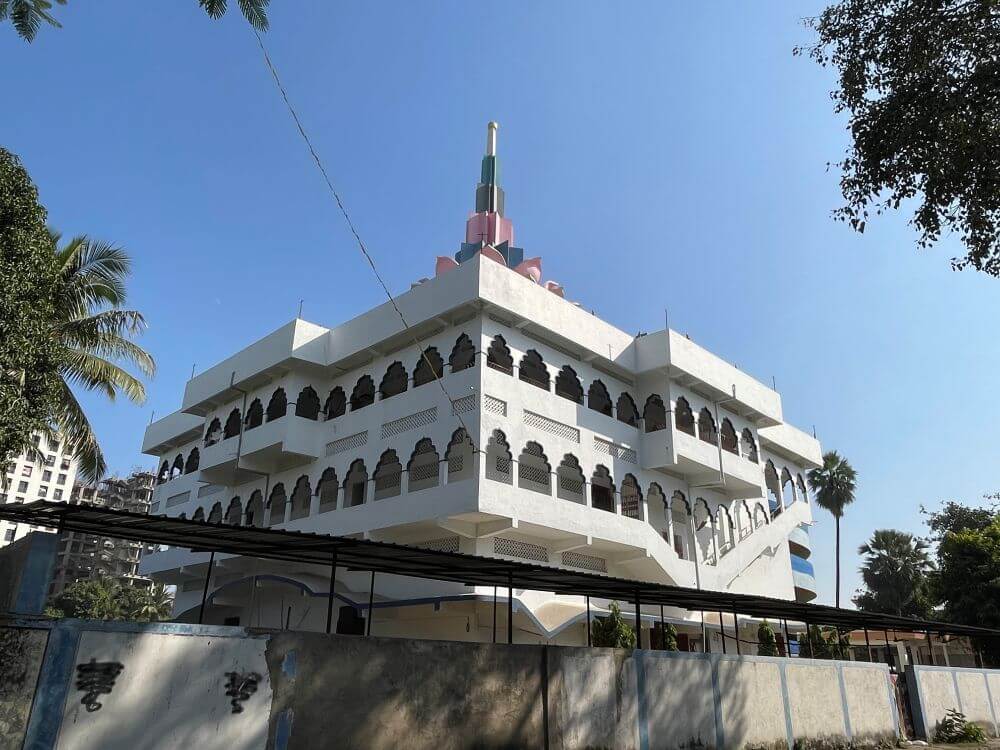
The Rajarajeshwari Mahalaxmi Temple is a magnificent three-story structure built on approximately 4,500 square yards (40,500 square feet) of land. It features a rectangular main building attached to a circular structure. Constructed using RCC (Reinforced Cement Concrete), most of the temple’s flooring is adorned with marble tiling. The temple spans 80 feet x 80 feet in length and width and rises to a height of 131 feet, with its pinnacle shaped like a Sri Yantra, symbolising cosmic energy.
As visitors enter the temple through the grand gateway on Rander Road, they are greeted by a half-bust statue of Poonamchand Shah, the visionary behind the temple. The ground level houses a shrine dedicated to Sheshanaga (the divine serpent associated with Lord Vishnu).
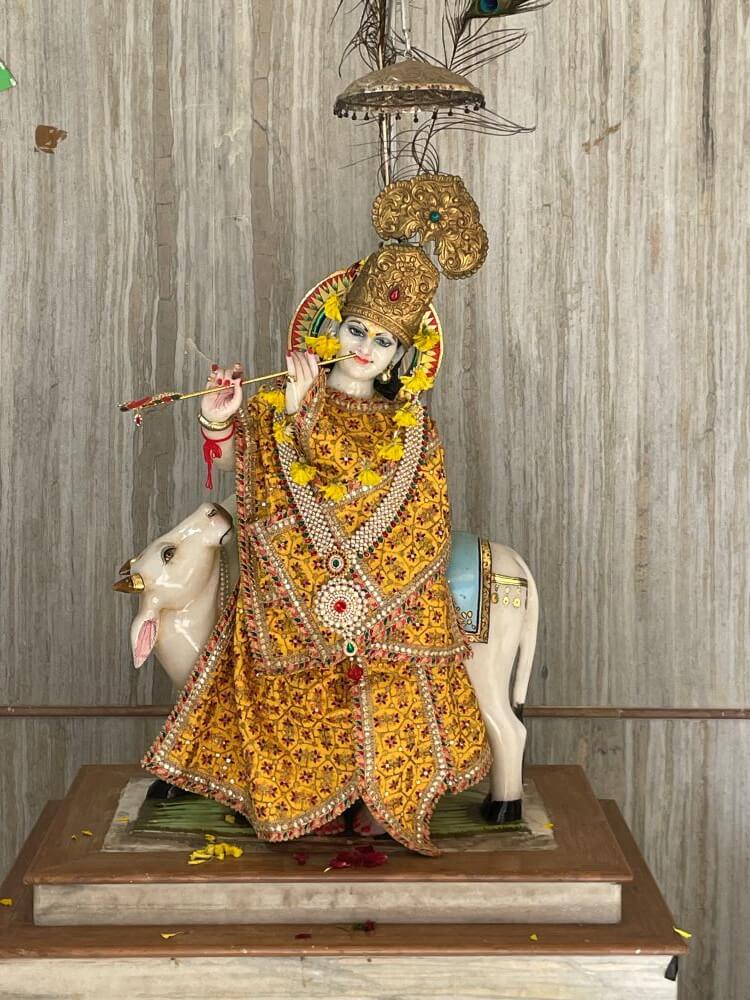
The main temple is located on the third floor, but there are no conventional stairs. Instead, visitors ascend via a spiral pathway built within the adjoining circular structure. On the lower levels of the circular building, there are shrines dedicated to Padmavati Devi, Radha-Krishna and Rinamukteshwar Mahadev (Lord Shiva as the remover of debts).
The upper floor of the circular structure houses a shrine featuring the deities Brahma, Vishnu and Mahesh (Shiva). At the centre of this shrine is a homakund (fire altar). Surrounding it are idols of Ambamata, Hinglaimata, Padmavati, Surya Narayan (Sun God), Navagraha (the nine celestial planets), Dattatreya, Vishwakarma and Rama-Lakshmana-Seeta.
The main temple is connected to the circular building via a passageway. The grand sabhamandap (assembly hall) greets visitors with a large lion statue on an elevated platform at the entrance. To the left of the lion is a Ganesh idol and to the right, an idol of Hanuman. The assembly hall also features idols of deities representing the four cardinal directions: Indra (East), Varuna (West), Kubera (North) and Yama (South). At the centre of the assembly hall, a lotus-shaped sanctum houses the temple’s garbhagriha (inner sanctum). The sanctum features three primary deities: Mahalaxmi in the centre, representing prosperity and abundance, Mahakali on the left, symbolising strength and protection, Mahasaraswati on the right, embodying wisdom and learning.
Above the sanctum’s ceiling, 18 lotus petals form a stunning dome, upon which lies a grand Sri Meru Lakshmi Yantra, mirroring the temple’s pinnacle design.
This architectural masterpiece combines devotional practices and spiritual symbolism, blending Sri Yantra geometry with a traditional temple layout. Each deity and architectural element reflects cosmic order and divine harmony, making the temple a spiritual and aesthetic landmark.
The temple is open for darshan (visits) from 7:00 AM to 12:00 PM and 4:00 PM to 8:30 PM. Daily worship includes elaborate decoration of the deities, rituals and regular yagna (fire offerings). The temple trust manages several initiatives, including an Ayurvedic dispensary, a cow shelter (gaushala) and yoga classes for women.
This sacred temple stands as a testament to deep spiritual devotion, ancient architectural grandeur, and rich local cultural traditions.
The sanctum sanctorum houses the divine idol consecrated according to ancient Vedic traditions, surrounded by serene courtyards and traditional temple architecture.
Navratri, Maha Shivratri, Annual Temple Jatra & Deepotsav
Compare and book flights, secure top-rated local hotels near the temple, hire reliable guides, and rent cars instantly.
Add ₹999 more to unlock FREE SHIPPING!
Your sacred cart is currently empty.
Shop Photo FramesFill in your delivery details below to place your order.
Add comment