
Add ₹999 more to unlock FREE SHIPPING!
Your sacred cart is currently empty.
Shop Photo FramesThe Balgir Maharaj Math is a place of immense historical and religious significance in Nanded city. Situated in the Gadipura area of the city, this Math belongs to the Giri tradition of the Dashnam Gosavi sect. This Math was established about three hundred years ago by the great ascetic Saint Balgir Maharaj. Even today, the Mahants are appointed in this Math through the Guru-Shishya tradition. Annadaan (offering of food) is performed in this Math on every full moon day (Purnima).
‘Raher’ in the Naigaon taluka of Nanded district is considered the birthplace of Balgir Maharaj. The Maharaj spent his childhood in this sacred land. For this reason, Raher, situated on the banks of the Godavari River, is considered a region sanctified by the presence of saints. He had a deep inclination towards spirituality from a young age. He took initiation into the Dashnam Gosavi sect and performed rigorous penance. He practiced divine devotion by traveling along the banks of the Godavari at Raher and other pilgrimage sites.
Balgir Maharaj holds a prominent place among the lineage of saints who provided the right direction for conduct and thought to society. Teaching humanity beyond the boundaries of caste, the Maharaj gave messages to provide food to the hungry, water to the thirsty, and help students with their education. To ensure this social work continues incessantly, he adopted the Guru-Shishya tradition. To turn society towards the path of devotion and to preserve the heritage of the Gosavi sect, he established Maths at Mahur (Vadgumpha) and later in his life at Nanded. Due to his work, a large number of Dattatreya devotees are seen in Nanded and the surrounding areas even today.
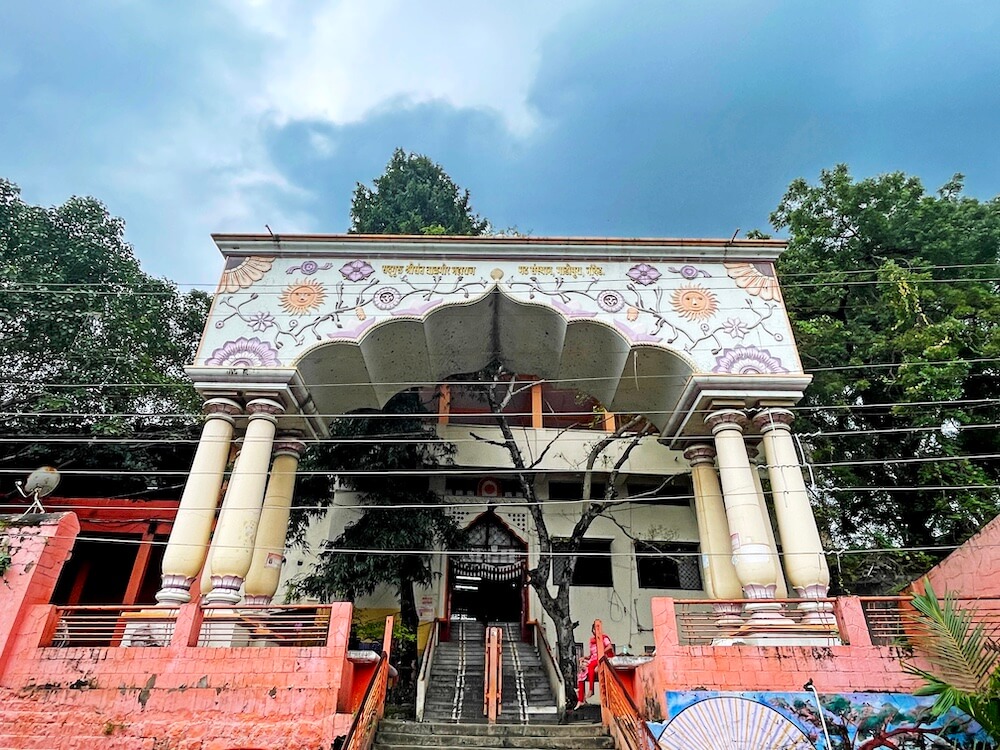
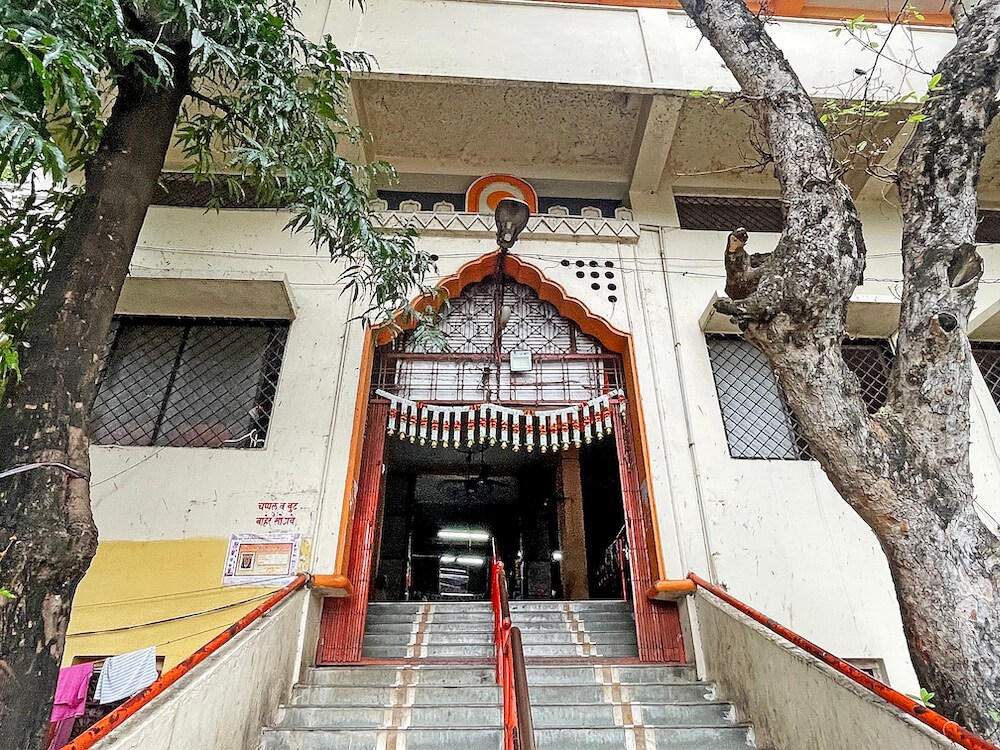
The Sant Balgir Maharaj Math is located in the Gadipura area of Nanded city, on the banks of the Godavari River. Situated at a higher elevation than the road, this Math has strong fortifications and a grand entrance gate. This entrance is about eight feet high and has ten steps. There are safety railings on both sides of the steps. On both sides of the entrance, there are two circular pillars each, topped with an archway (toran) and a balcony (sajja). One enters the courtyard through this gate. There are about fifteen more steps to reach this two-story Math, which is situated higher than the courtyard. There are protective railings on both sides and in the middle of these steps, which are about eight feet long.
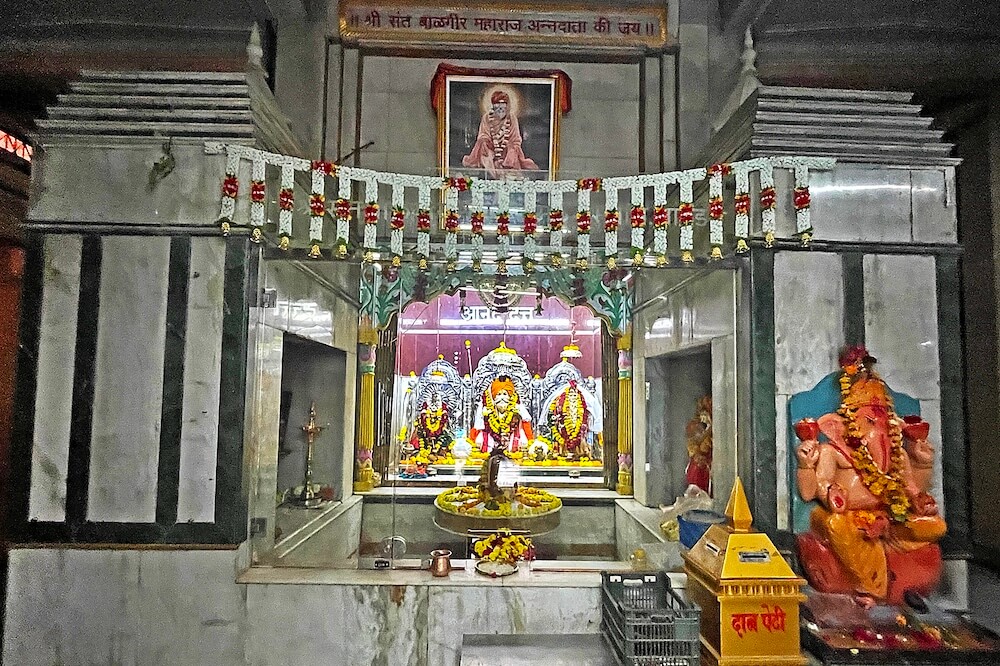
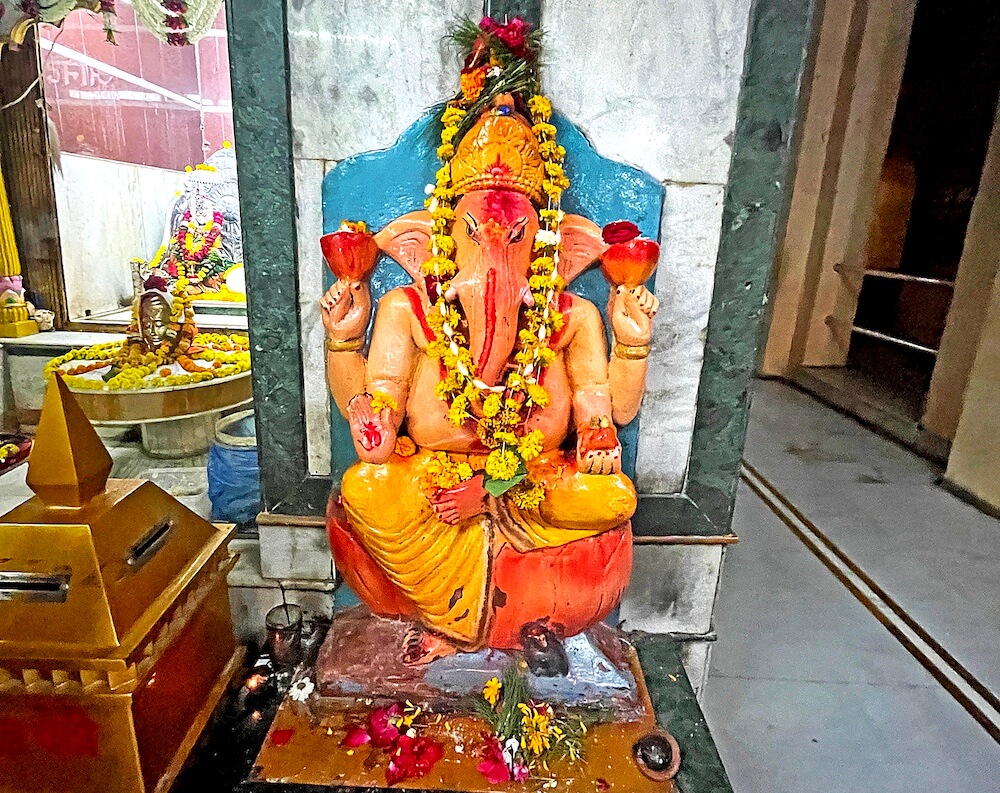
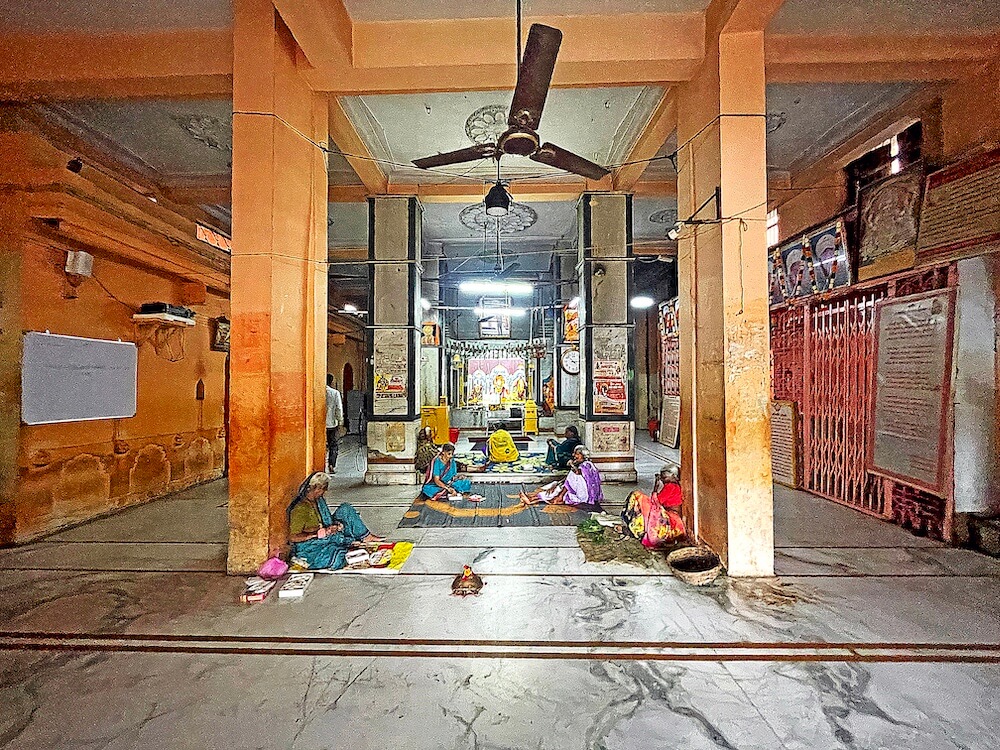
In the front part of the Math is the Samadhi temple of Balgir Maharaj. The structure of this temple consists of a Sabha Mandap (assembly hall), Antaral (vestibule), and Garbhagriha (sanctum sanctorum). There are square pillars in the Sabha Mandap and Antaral, and brass bells are hung from the ceiling. In the Antaral, on the right side, there is an idol of Lord Ganesha on a Vajrapitha (pedestal). Further ahead is the entrance to the Garbhagriha. In front of it, on a table, is a brass mask of Balgir Maharaj. The archway of the entrance pillars is carved with leaf and flower motifs. In the center of the Garbhagriha, on a Vajrapitha, the idol of Balgir Maharaj is seated. To the left of the Maharaj’s idol is the idol of Ekamukhi Dattatreya, and to the right is the idol of Mother Anusuya. Behind these idols are ornate silver prabhavalis (halos).
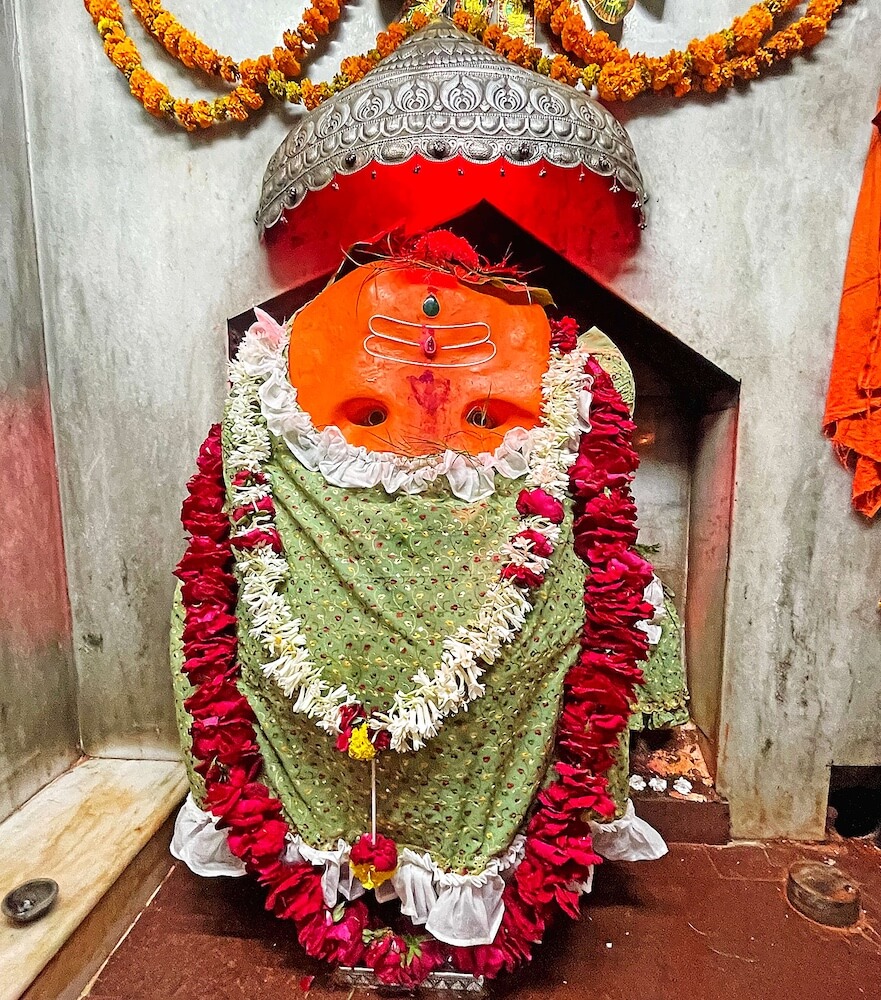
On the outer wall to the right in the Math, photographs of the Ashtavinayakas are displayed. Here, on the right, there is a separate Ganesha temple with a structure consisting of a Sabha Mandap, Antaral, and Garbhagriha. The entrance to the Sabha Mandap is simple, and the hall is somewhat narrow. The entrance to the Antaral, which has a semi-circular arch, is elevated and has four steps. Further ahead is the entrance to the Garbhagriha, which is narrow and low. Its door frames have vertical edge carvings. In the Garbhagriha, on a Vajrapitha, is the self-manifested (Swayambhu) idol of Shri Ganesha, smeared with vermilion. An emerald is set on the head of the idol. There is a circumambulation path (pradakshina marg) around the exterior of the Garbhagriha and Antaral.
In the room at the back of the Math are the Samadhis of the late Mahants. As soon as one comes out through the back door of this room, a small temple is visible in the courtyard. The entrance to the temple is simple, and here, on a Vajrapitha, is a marble idol of Trimukhi Dattatreya. In front of the idol, on the Vajrapitha, are the Padukas (footprints) of Shri Dattatreya. Next to the Dattatreya temple is the temple of Lord Mahadeva. In the center of the temple, on the floor, is a large Shiva Linga. A copper vessel for holding water (abhishek patra) is hung from the ceiling to drip water over it. There is a brass trident on the side. The Math complex includes an Annachhatra building and residences for the priests, attendants, and Mahants.
The main annual festival of ‘Datta Jayanti’ is celebrated here with great enthusiasm. Apart from this, there is a festival in the temple on every full moon day. At this time, Mahaprasad is distributed to the visiting devotees. Festivals like Chaitra Padwa, Ram Navami, Ganesh Jayanti, Dussehra, and Diwali are celebrated here in the traditional manner. During these times, programs like Bhajans, Kirtans, discourses, music, and Mahaprasad are organized in the temple. In the month of Magh, a foot procession (Dindi) is organized from the Math. This Dindi reaches the Datta Shikhar temple at Mahur on Magh Shukla Chaturdashi and returns after performing a grand Abhishek on Magh Purnima. There is a large crowd of devotees visiting the temple on Mondays, Tuesdays, Thursdays, full moon days, and new moon days.
Navratri, Maha Shivratri, Annual Temple Jatra & Deepotsav
Compare and book flights, secure top-rated local hotels near the temple, hire reliable guides, and rent cars instantly.
Extend your pilgrimage by visiting other highly sacred temples located nearby.


Add ₹999 more to unlock FREE SHIPPING!
Your sacred cart is currently empty.
Shop Photo FramesFill in your delivery details below to place your order.
Add comment